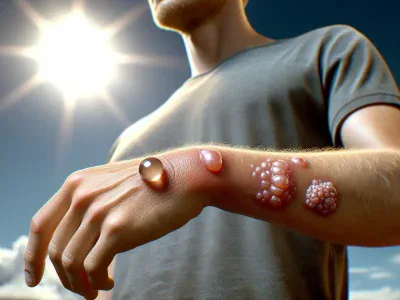
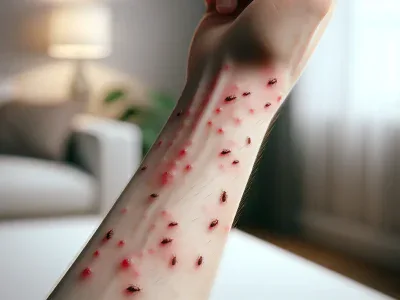
Picture sunlight streaming through your window painting your skin with tiny constellations. Each spot tells a story but do you ever wonder what separates a playful freckle from a mysterious mole? You might trace your fingers across your arm noticing how some marks seem to shift with the seasons while others remain unchanged—quiet observers on your skin’s canvas.
Most people see these spots as simple quirks or badges of summer days but there’s more beneath the surface. Knowing the subtle differences between moles and freckles can unlock surprising benefits for your health and confidence. When you understand what your skin is saying you’re better equipped to care for it—maybe even catching early signs of change before anyone else.
Understanding Moles and Freckles
Every skin tells a story, but yours speaks in the language of moles and freckles. You’ve probably glanced at your reflection and wondered—why does one spot stay unchanged for years, while another seems to come and go with the sun? Those questions trace the complex dependency grammar of your skin’s unique marks, hinting at the interplay between genetics and environment.
Moles, technically called nevi, usually anchor themselves on your skin like little milestones of your journey. They often emerge due to clusters of melanocytes, the pigment-producing cells, that group together instead of spreading evenly. Some people collects thirty or more, marking moments from early childhood through adulthood. They tend to persists year-round, darkening or lightening slightly but rarely vanishing altogether. Did you knew that about one in every hundred newborns arrives already sporting a congenital mole? You might want to ask a dermatologist about any mole that changes in size, color, or texture—sometimes these signals point to melanoma, a serious form of skin cancer (American Academy of Dermatology Association, 2023).
Freckles, called ephelides by dermatologists, dances to a lighter, more seasonal tune. Unlike moles, you only see them flourish when UV light boosts melanin production in your top layer of skin. Red-haired or fair-skinned individuals, for instance, often find a constellation appearing across their nose and cheeks after a few hours in summer sunshine. A question arises: are these tiny dots fading each winter just as quickly as they scatter across your face in June? In most cases, yes, since the underlying melanocyte distribution remains unchanged. Scientists links the appearance of freckles to a variation in the MC1R gene, showing how close the biosciences and your own bathroom mirror might be.
Sometimes confusion persists when people use the terms interchangeably. You might encounter someone with a dark spot and wonder, “Is it dangerous?” The key is paying attention to the details: moles generally protrude slightly or feel raised, while freckles sits completely flat and blend into your natural skin tone.
If you’ve ever documented the pattern of spots on your arms after a sun-drenched vacation, you’ve started participating in your skin’s story—and taking the first actionable step toward health awareness. Share your experiences with friends or family members and challenge yourself to learn the difference between a permanent mole and a fleeting freckle. As you study your own skin language, consider: does your story already reveal a new chapter, or is it waiting for your next discovery?
Causes and Formation
Understanding what causes moles and freckles to form on your skin unlocks a hidden narrative about your genetics, your environment, and your personal history under the sun. Each spot tells its own story—sometimes reassuring, sometimes raising questions about deeper health signals.
How Moles Develop
Moles often form when melanocytes, the pigment-producing cells, group up in clusters instead of spreading evenly across your skin. You might notice new moles appear during childhood or adolescence, especially if someone in your family also has plenty. Genetics play their part—if your parents have a lot of moles, you’ll likely experience the same. Birthmarks, which are a type of mole, can be present at birth or show up soon after, like a signature from your earliest days.
Triggers for mole development include hormonal changes. For example, during puberty or pregnancy, you’re likely too see new moles emerge or existing ones to change. Medical case studies from the American Academy of Dermatology show that UV radiation, though not the primary cause, can influence mole color and occasionally spark atypical behavior in moles (AAD, 2022). Ever notice a mole darken after a beach summer? That’s UV rays at work. You might even wonder, does a changing mole mean something serious? Sometimes it does, so any new or rapidly altering moles deserve a dermatologist’s attention.
How Freckles Appear
Freckles burst onto your skin’s surface because of a different dance between genes and sunlight. Your DNA, specifically the MC1R gene, sets the stage—those with one or two MC1R variants (often with red or fair hair) develop freckles more quickly once sunlight enters the scene (“MC1R Gene and Freckles,” NIH Genetics Home Reference, 2023).
Picture freckles like shadows that play on your shoulders after a picnic—the more sunlight, the more pronounced these little marks become. Summer brings them out, while winter sees them fade, hinting at their temporary and adaptive nature. Freckles don’t signal any underlying illness. Children with fair skin, for example, often notice speckled patches developing after only an hour on a sunny playground. Even though their whimsical appearance, freckles serve as a gentle hint to limit sun exposure, since your skin’s already reacting to UV.
Ever ask yourself why freckles cluster so densely on your nose or cheeks? That’s photodistribution: areas facing the sun, getting the most UV, collect the most freckles. You might picture them as a living diary of your sun habits—a constellation that waxes and wanes with the seasons.
Physical Characteristics
Moles and freckles decorate your skin’s landscape like constellations across a midnight sky. Each mark tells a different story—one rooted in genetics, sunlit days, and biological artistry. Ever wondered what makes your mole stand out from your freckles after a summer by the ocean?
Color and Texture Distinctions
Color and texture of these skin markings can seem deceptively similar at first glance, yet, if you look closely, the differences become striking.
Freckles usually dot your cheeks and nose with light brown or tan shades, sometimes blurring into gold under the sun. UV exposure brings them out, but the texture? Always silky-smooth, blending seamlessly with your surrounding skin. If you touch it, there’s never a bump—just a whisper of pigment.
Moles, on the other hand, ranges from flesh-colored to deep brown or even black. National Center for Biotechnology Information highlights that moles may feature a raised profile, sometimes rough or pebbly, and often feel firmer than the skin around them. Some moles might even sprout a hair, while freckles never do that. Have you ever noticed a mole that catches on your sleeve? That’s texture making itself known.
Size and Shape Differences
Mole and freckle size and shape tell tales about their origins and evolution.
Freckles generally stay tiny—think pinhead to pencil eraser in diameter. They keep their shape mostly circular and have soft, well-defined borders. If you trace their outline in the mirror, you’ll rarely find jagged or unpredictable edges.
Moles introduce variability. Most appear during childhood, but they can change over time and may reach several millimeters across. The American Academy of Dermatology notes that moles may be round, oval, or even irregular, with borders that sometimes blur or peek outside the lines like a child’s crayon drawing. Occasionally, a new mole emerges, making you question: Has that always been there or is it a sign you should see a dermatologist?
Let’s compare these physical features at a glance:
Feature
Moles
Freckles
Color
Tan, brown, black
Light brown, tan
Texture
Raised/flat, smooth/rough, hairy
Always flat, smooth
Size
1-10+ mm, can grow
1-5 mm, stable
Shape
Round, oval, irregular
Circular, uniform
Each pattern hints at your story: are you a collector of fleeting freckles or a guardian of childhood moles? When you examine your skin, you’re not just seeing spots—you uncover a living document, with each mark offering a clue about your journey, health, and heritage.
Risk Factors and Health Implications
Skin tells stories, and every spot—whether a tiny sun-kissed freckle or a long-standing mole—acts as a word in that narrative. While freckles and moles often live harmoniously on your skin, their health implications couldn’t be more divergent. Curious how your summer freckles or childhood moles might change your lifelong skin journey? Let’s look closer.
Sun Exposure Effects
Sun’s ultraviolet (UV) rays interact with your skin cells, acting like an invisible painter. Freckles (ephelides), for example, appear or darken after sun exposure, especially in people with MC1R gene variants—think redheads or those with fair complexions (J Invest Dermatol, 2015). Your freckles may fade in winter but return with a vengeance when plenty of light floods in—making them seasonal storytellers. Moles, on the other hand, aren’t direct sun souvenirs. Some nevi arise or deepen in color after repeated sunburns in childhood, but many remain unchanged even though years in the sun.
Do you remember the first time you noticed a new mole after a beach trip? Dermatologic studies (JAMA Dermatology, 2017) show high UV exposure in childhood correlates with increased mole count, but only for some genes. Ever wondered why one family member is freckled and the other isn’t, even after the same vacation? Genetics weave unique tapestries on each person’s skin.
Potential for Skin Cancer
All moles and even freckle clusters wear their own risk labels, but they’re not created equal. Dermatologists agree that moles—especially those that are asymmetrical, rapidly changing, or unevenly colored—carry an increased risk for melanoma (Skin Cancer Foundation, 2023). In contrast, freckles rarely signal malignancy; they simply remind you of yesterday’s sun.
Some people ignore a new black mole, assuming it’s just another sunmark. But, a 50-year-old man who developed a dark spot, believing it to be a harmless freckle, later found it to be melanoma (British Journal of Dermatology, 2016). Early intervention saved his life—the difference was recognizing that freckles stay flat and fade, but suspicious moles demand medical attention.
Freckles serve as warning lights, telling you that UV exposure’s high and advocating for SPF use and shade-seeking. Moles serve as anchors, holding genetic and environmental clues that might tip you toward surveillance or preventive care. Which story’s unfolding on your skin? Chat with a dermatologist, especially if a spot writes a new chapter—bleeding, growing, or becoming multicolored. Your skin’s narrative evolves with every day in the sun.
Treatment and Prevention Options
You notice a new mole—or did that freckle just darken overnight? Skin tells stories through these marks, but how do you help shape the next chapter? Dermatologists like Dr. Zoe Draelos (American Academy of Dermatology, 2022) recommend vigilant monitoring as the most powerful tool for both moles and freckles.
Treatment options for moles change depending on their appearance and risk. Simple, stable moles usually just sit quietly, mapped on your skin without any trouble. When a mole changes color, size, or shape, though, you might wind up scheduling a biopsy. Some people opt for removal—not because of risk, but for cosmetic reasons. Procedures like excision, shave removal, and laser ablation work quickly, but they’re always best done by a board-certified dermatologist. Did you ever had a mole that vanished after removal, only to leave a ghostly scar behind? It’s common, and it’s a small price for peace of mind.
Freckles play a different game. They often fade in winter and return with the sun, much like distant relatives who only show up for summer picnics. If you wish to lighten freckles, topical retinoids and hydroquinone can gently encourage them toward invisibility. Some choose chemical peels or laser therapies, especially when freckles clump together in unexpected patterns. None of these treatments work instantly; patience dance alongside persistence.
Prevention intertwines your habits with both genetics and sunlight. You can’t swap out your MC1R gene or erase your family tree’s legacy of spots, but you can block UV rays. Daily sunscreen with broad-spectrum SPF 30+ acts like invisible armor, while hats and clothing shield your skin from the sun’s relentless narrative. Did you ever skip sunscreen one cloudy day, only to find new freckles joining your collection? UV rays pierce clouds, rewriting your skin’s story when you least expect it.
Regular skin checks empower you to become the protagonist in your own dermatological saga. Try using your phone to snap monthly skin selfies—these digital time capsules reveal subtle changes you might overlook in the mirror. Ask: Has that mole always had jagged edges? Do freckles cluster more tightly after last summer’s beach trip? Invite your dermatologist into the conversation, turning questions into answers. that early detection saves lives (CDC: Skin Cancer Statistics, 2023). When you trace patterns and investigate changes, you actively script a safer narrative. Your skin, with every mole and freckle, documents your past and forecasts future chapters. Will yours be one of vigilance or neglect?
Conclusion
Your skin tells a story that’s uniquely yours. By tuning in to the subtle differences between freckles and moles, you’re taking important steps toward understanding and protecting your health.
Make it a habit to observe your skin and track any changes. If you notice anything unusual, don’t hesitate to reach out to a dermatologist. With consistent care and attention, you can keep your skin healthy and embrace every mark as part of your personal journey.
To provide the best experiences, we use technologies like cookies to store and/or access device information. Consenting to these technologies will allow us to process data such as browsing behaviour or unique IDs on this site. Not consenting or withdrawing consent, may adversely affect certain features and functions.
Functional
Always active
The technical storage or access is strictly necessary for the legitimate purpose of enabling the use of a specific service explicitly requested by the subscriber or user, or for the sole purpose of carrying out the transmission of a communication over an electronic communications network.
Preferences
The technical storage or access is necessary for the legitimate purpose of storing preferences that are not requested by the subscriber or user.
Statistics
The technical storage or access that is used exclusively for statistical purposes.The technical storage or access that is used exclusively for anonymous statistical purposes. Without a subpoena, voluntary compliance on the part of your Internet Service Provider, or additional records from a third party, information stored or retrieved for this purpose alone cannot usually be used to identify you.
Marketing
The technical storage or access is required to create user profiles to send advertising, or to track the user on a website or across several websites for similar marketing purposes.