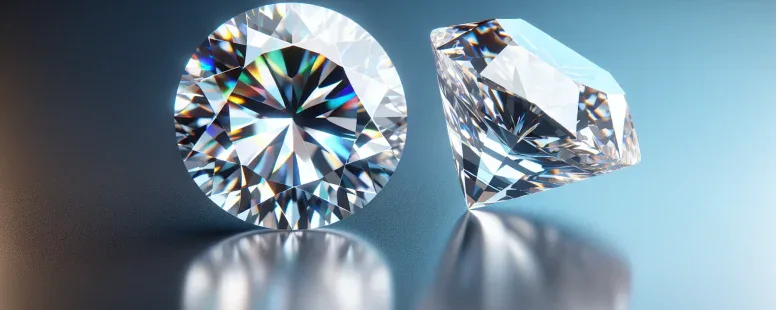
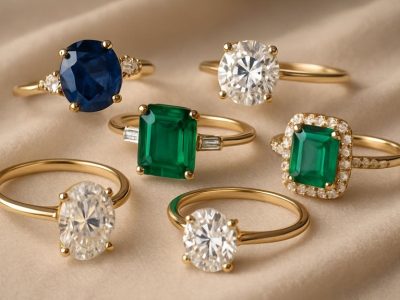
Picture sunlight streaming through a sparkling gem on your finger—each facet catching fire and scattering rainbows across the room. Now picture two stones side by side: one’s a legendary symbol of love and luxury, the other a dazzling newcomer that’s rewriting the rules of brilliance. Can you really tell them apart?
You might be surprised at just how much moissanite and diamond have in common, yet the differences between them can change everything—from your budget to your beliefs about beauty and sustainability. Whether you’re searching for a ring that turns heads or a stone that aligns with your values, understanding these subtle contrasts could transform the way you see fine jewelry forever.
Overview of Moissanite and Diamond
You probably see moissanite and diamond sparkle across jewelers’ displays, yet these two gems walk different paths. Moissanite, discovered in 1893 by Henri Moissan within a meteorite crater, didn’t enter the jewelry world until labs started growing it. That kind of cosmic beginning adds to its mystique. By contrast, diamonds form deep under Earth’s crust over millions of years, shaped by immense pressure and heat—a fact that’s fueled countless legends and pop-culture moments, think Marilyn Monroe’s “Diamonds Are a Girl’s Best Friend”.
Diamonds hold the Mohs scale’s top score, a solid 10. Moissanite’s right behind at 9.25, still tougher than most gemstones, but you might notice a difference in scratch-resistance if you’re rough on jewelery. Their visual fire also diverges. Moissanite refracts light with double the brilliance (2.65–2.69 RI) of a typical diamond (around 2.42 RI). Some describe moissanite as creating a rainbow-like “disco ball” effect, while diamonds typically sparkle white. Ever tested their sparkle under sunlight? You’d catch moissanite giving off much more vivid colored flashes.
You’ll spot price gaps too. Lab-created moissanite examples cost about 90% less than similar-sized mined diamonds, according to data from the International Gem Society in 2023. When considering environmental impact, moissanite’s origin in labs generally results in less ecological disruption than diamond mining, which’s scrutinized for habitat destruction and carbon emissions. Still, some jewelers argue that ethically sourced diamonds, for instance, Canadian or lab-grown, also support community development and lessen negative footprints.
Would you value cosmic heritage, price accessibility, and ethical sourcing above tradition? Or does the weight of a centuries-old legacy and unmatched hardness win you over? Jewelers and gemologists agree that both options are dazzling, but your answer shapes a story that goes way beyond aesthetics.
Physical and Chemical Properties
Moissanite and diamond both sparkle under light, still their origins and makeup set them apart entirely. You might glance at them side by side and wonder how their differences run so deep.
Composition and Structure
Diamonds contain only carbon atoms, packed in a rigid crystal lattice. Moissanite—by contrast—features both silicon and carbon in a ratio of 1:1, forming silicon carbide (SiC) crystals. For example, a diamond wedding ring’s brilliance emanates from the pure carbon bonds that cradle each facet, while a moissanite engagement ring diffuses light through silicon carbide, which causes a rainbow fire. If you looked at these stones under a microscope, you’d see the symmetry in a diamond’s structure creates its hallmark hardness but limits the colors it reflects; moissanite’s arrangement bends light more, which is why some folks see “disco ball” flashes in sunlight. Researchers at GIA (Gemological Institute of America) found that defects in diamond lattices—even tiny ones—can increase rarity and value, while similar imperfections in moissanite generally pass unnoticed due to their manufacturing control.
Hardness and Durability
Diamonds register a 10 on the Mohs hardness scale, so they rarely gets scratched by other materials—think of it as armor forged over eons beneath Earth’s crust. Moissanite, with a Mohs score around 9.25, remains incredibly hard—harder than sapphire or ruby—but not quite immune to abrasion from things like dust containing diamond particles. You’ll easily wear both for years without visible dings, though a jeweler might notice minute differences in edge sharpness after decades. Scientists have shown in wear tests (Smithsonian Magazine, 2022) that, although moissanite resists chips and cracks almost as well as diamond, continuous rough knocks could open micro-fissures faster in moissanite. If your lifestyle involves lots of gardening,, rock climbing, or construction, you probably won’t see chips in either gemstone unless extraordinary force is applied.
Property
Diamond
Moissanite
Chemical formula
C (carbon)
SiC (silicon carbide)
Crystal structure
Cubic
Hexagonal
Mohs hardness
10
9.25
Toughness
Excellent
Very good
Typical inclusions
Pinpoints, clouds
Few, due to lab control
Thermal conductivity
High
High
Are these differences profound for everyone? Some buyers love diamond for its unparalleled geologic journey and legendary lore, while others marvel at moissanite’s cosmic dust ancestry. You’d notice, whatever your choice, each stone carries its own story, chemistry, and resilience—anchoring a lifetime of sparkle.
Visual Differences
Spotting the visual differences between moissanite and diamond takes more than just a quick glance. Under natural or showroom light, these stones compete for your attention using very different techniques.
Brilliance and Fire
Brilliance and fire set moissanite and diamond apart when you view them side by side. Moissanite sparkles with a wild, vivid play of rainbow-colored flashes—gemologists call this “fire.” Diamonds shine with a crisp, white brilliance that’s steadier but less colorful, giving off sharp, clean reflections almost like static in a clear sky. Under LED lighting, moissanite often throws splashes of color that people describe as a “disco ball” effect, which can feel dazzling or even overpowering. Some buyers love this extra flair, while others find it unnatural. Diamonds, especially those with an “Excellent” cut grade, show flashes of light known as “scintillation” that feel more subdued and classic (GIA, 2023).
Color and Clarity
Color and clarity mark another major way you’ll tell these stones apart. Moissanite usually appears near-colorless, but up close, it sometimes shows subtle gray or greenish undertones, especially in large carat weights. Diamonds cover a full spectrum, from icy D (colorless) to the tinted Z range (yellow or brown), and you’ll often find price tags that climb with every drop on the color scale. Moissanite, since it’s lab-grown, gets produced for visual near-perfection, usually with minimal inclusions and top clarity. Natural diamonds, formed over millions of years, carry unique “fingerprints”—sometimes tiny carbon spots, feathers, or clouds. Under magnification, moissanite may display tiny, needle-like patterns called “strain,” which gemologists use for identification (IGI, 2022).
Thinking of proposing under starlight, you’d quickly notice how moissanite catches every photon, spraying color everywhere, while a diamond quietly blinks like a constant, singular star. Shoppers often ask, “Will people notice if my ring isn’t a diamond?” Up close, a trained eye can spot the differences; across a dinner table, most can’t. Still, when comparing side by side, each gemstone announces its own personality.
Cost and Value Comparison
Choosing between moissanite and diamond involves more than numbers—it’s a journey through value, beauty, and expectations. Picture you’re at a jeweler’s counter, comparing stones that look almost identical under the bright lights. Which one whispers “forever” to you, and which one shouts “practicality!”? Cost and value, two sides of the same sparkling coin, become important companions in this decision.
Price Differences
Price variations between moissanite and diamond can suprise even seasoned shoppers. Moissanite rings, for example, often cost just $500 for a 1-carat stone, while a similar-sized natural diamond easily reaches $5,000 or more. (Rapaport Group, 2023; Charles & Colvard, 2024). You might’ve seen side-by-side displays in store windows: both stones dazzling under LED lighting, but only one leaves your wallet feeling light as a feather. With most moissanite being lab-grown, prices stay steady, without the ethical or supply-chain markups diamonds have.
Some may ask, “Why does moissanite cost so much less?” The answer, moissanite grows in labs using silicon carbide, bypassing costly mining, labor, and market-driven markups. Mined diamonds, in contrast, accumulate value from rarity, mining expenses, and brand legacy. If you compare loose gems at jewelry expos, a moissanite sparkler next to a GIA-certified diamond demonstrates the price gap. For those prioritizing a bold look on a tighter budget, moissanite stands out.
Resale Value
Resale value often becomes the silent question in every jewelry purchase—”Will this stone hold its worth if circumstances change?” Diamonds generally retains more resale value due to their established market and enduring status symbols. For instance, resellers like WP Diamonds or online auctions often offer 20–60% of the original diamond purchase price back, depending on cut, clarity, and demand. In contrast, moissanite resale prices hover significantly lower, sometimes at 20% or less of the purchase value, and some buyers discover that pawnshops or resellers rarely accept moissanite at all unless explicitly requested.
Even though both stones last lifetimes, diamonds connect with investment-minded buyers seeking tangible long-term value. But, others sees jewelry as personal adornment rather than a future asset, which makes moissanite’s low upfront cost more appealing even though weak resale prospects. Ask yourself: Is your stone more of a family heirloom or a statement accessory? This perspective often guides which path feels richest in value.
Stone
Average 1-carat Price
Typical Resale %
Accepted by Pawnshops
Moissanite
$500
~20%
Rarely
Natural Diamond
$5,000+
20–60%
Commonly
With each facet reflecting your budget, priorities, and relationship with luxury, the moissanite vs. diamond debate goes deeper than just sticker prices. Which story fits your life’s next chapter?
Suitability for Jewelry
When you picture iconic jewelry, diamonds likely dance in your mind. Moissanite—but lesser-known—has started making waves. Whether your heart beats for cosmic sparkle or classic elegance, both stones own strengths. Let’s break down how diamonds and moissanite fit into your jewelry story.
Engagement Rings
Picture the moment—your partner opens a small box, and a single stone catches the light. Which gemstone whispers “forever” to you? Diamonds, with their legendary symbolism, have decorated engagement rings for centuries. Their hardness, measured at 10 on the Mohs scale, makes them a trusted guardian for sentimental treasures (GIA, 2023). From celebrities like Priyanka Chopra to royalty like Meghan Markle, diamonds hold emotional and social power, intertwining love with legacy.
Moissanite brings a contemporary twist, spinning sunlight into multicolored rainbows. Many modern couples, drawn by its affordability and eco-friendly story, choose moissanite for a stand-out sparkle—its “disco ball” brilliance explodes under LED lights. Consider Sara and Luis, who opted for a 1.5-carat moissanite ring for its eye-catching fire and budget-friendly tag. The glimmer turned heads at their engagement party, sparking conversations about sustainable choices and personal meaning.
If tradition matters most to you, a diamond channels old-world allure and enduring value. Shift gears, and you’ll see moissanite as a vibrant statement for those rewriting the rules. Which matters more—the social legacy or the story you forge yourself?
Daily Wear Considerations
Daily wear brings its own challenges. Diamonds—tough as ancient mountain roots—shrug off scratches and maintain their polish, even decades later. If you lead an active life, climbing, gardening, or just hustling from meeting to meeting, a diamond’s resilience offers consistent shine and less worry about damage.
Moissanite’s no pushover but sits a step lower on the durability ladder (Mohs 9.25). Over years, tiny surface scratches or micro-fissures might eventually appear, especially if your ring encounters abrasive surfaces daily. Still, most owners, like Mia, who wears the same moissanite band through workouts and travel, report almost no changes after two years of constant wear.
Maintenance matters, too. Both stones attract the same dirt and oils, so routine cleaning keeps them sparkling. Some jewelers, but, argue that moissanite’s unique fire sometimes hides small smudges better. On the other hand, diamond might maintain a crisper clarity in dull lighting, making it ideal for formal or low-light events.
Ask yourself: Is everyday invincibility your goal, or do you crave a dynamic, conversation-starting sparkle? For most, both gems serve well, but your routines and style might tip the scale. If you love changing up settings or stack your jewelry, check that the prongs are secure, since both stones—though durable—could loosen over time.
Attribute
Diamond
Moissanite
Mohs Hardness
10
9.25
Engagement Ring Default
Traditional choice
Modern alternative
Daily Durability
Extreme (minimal scratching)
Excellent, but may micro-chip
Brilliance
White, steady sparkle
Rainbow flashes, “disco” effect
Typical Value Retention
Higher (20–60% resale)
Lower (up to 20% resale)
Ethical and Environmental Factors
If you’re holding two sparkling stones—one moissanite and one diamond—pause for a moment and dig deeper: What histories pulse beneath their surfaces? Moissanite, almost every piece, emerges from a pristine lab. That’s right, manufacturers like Charles & Colvard craft near every moissanite under strictly controlled, energy-efficient conditions (Deloitte, 2022). Contrast this with diamonds; some flash from the earth’s crust after colossal mining operations that scar landscapes, shift ecologies, and sometimes displace entire communities.
Many diamonds now bear expert certifications like the Kimberley Process, which aims to choke off “conflict diamonds” that finance civil wars (United Nations). Still, here’s complexity—critics from Human Rights Watch argue that certification may not always stop exploitation or environmental wreckage in artisanal mining regions. Have you heard stories about rivers turned lifeless or villages uprooted for a diamond rush? Angola’s Lunda Norte region witnessed both, according to Global Witness.
Moissanite never stirred wars, nor sent children into hazardous shafts beneath Africa’s red soils. When you slip on moissanite jewelry, you’re carrying a carbon footprint that’s typically 90% lower than a mined diamond’s, based on Carbon Trust estimates. Labs recycle water, use renewable energy, and control emissions. Meanwhile, traditional diamond mining devours forests, displaces wildlife, and dumps tens of tons of rock for a single carat (De Beers 2020 Environmental Report).
Flip the coin—lab-grown diamonds also exist, challenging assumptions. Some people ask: is an eco-conscious synthetic diamond “greener” than a moissanite? Labs need energy, after all. According to a 2021 Trucost study, the energy demands of most lab-grown diamonds now rival or even best natural diamond operations, especially as more labs switch to wind, solar, and hydropower sources.
Ethics slice another way, too. Mined diamonds—when sourced from fair-trade, responsible mining collectives—fund schools, clinics, and roads in Botswana, where government deals require companies like De Beers to invest directly in development (World Diamond Council, 2023). Could buying a responsibly-mined diamond mean you’re supporting progress, rather than pain?
Ask yourself: If your engagement ring could tell a story, would you want it to be cosmic dust reborn inside a laboratory, or an ancient mineral carved from deep earth, sometimes at great social cost? Your decision to choose moissanite or diamond will shape not just a ring but maybe, a ripple of impact across continents.
Conclusion
Choosing between moissanite and diamond comes down to what matters most to you. Whether you’re drawn to the cosmic origins and bold sparkle of moissanite or the timeless tradition and enduring value of diamonds, your decision reflects your unique priorities.
Consider your lifestyle, budget, and values as you explore both options. There’s no right or wrong choice—just the one that feels right for you and your story. Let your preferences guide you toward the gemstone that best captures your vision for a meaningful piece of jewelry.
To provide the best experiences, we use technologies like cookies to store and/or access device information. Consenting to these technologies will allow us to process data such as browsing behaviour or unique IDs on this site. Not consenting or withdrawing consent, may adversely affect certain features and functions.
Functional
Always active
The technical storage or access is strictly necessary for the legitimate purpose of enabling the use of a specific service explicitly requested by the subscriber or user, or for the sole purpose of carrying out the transmission of a communication over an electronic communications network.
Preferences
The technical storage or access is necessary for the legitimate purpose of storing preferences that are not requested by the subscriber or user.
Statistics
The technical storage or access that is used exclusively for statistical purposes.The technical storage or access that is used exclusively for anonymous statistical purposes. Without a subpoena, voluntary compliance on the part of your Internet Service Provider, or additional records from a third party, information stored or retrieved for this purpose alone cannot usually be used to identify you.
Marketing
The technical storage or access is required to create user profiles to send advertising, or to track the user on a website or across several websites for similar marketing purposes.