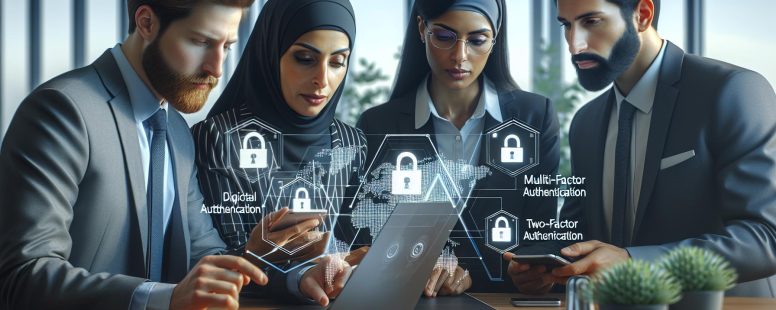
Picture standing at the gateway of your digital world, where a single password feels like a flimsy lock on a treasure chest. In today’s age of cyber threats, safeguarding your online presence demands more than just one layer of protection. That’s where authentication methods like MFA (Multi-Factor Authentication) and 2FA (Two-Factor Authentication) come into play—but they’re not as interchangeable as they might seem.
You’ve probably encountered both terms while securing accounts or enabling extra defenses for sensitive data. But what sets them apart? Understanding their differences isn’t just tech jargon; it’s about choosing the right shield for your personal or professional security needs. Whether you’re protecting emails, financial records, or business systems, knowing how MFA and 2FA operate can make all the difference in staying one step ahead of potential breaches. Let’s demystify these terms so you can take control with confidence.
Understanding MFA And 2FA
Multi-Factor Authentication (MFA) and Two-Factor Authentication (2FA) enhance online security by adding layers of verification. Although related, they differ in structure and application.
What Is MFA?
MFA requires users to verify their identity through multiple authentication factors from at least two distinct categories. These categories include knowledge (passwords), possession (smartphones or tokens), and inherence (biometrics like fingerprints). By combining these factors, MFA makes unauthorized access significantly harder.
For instance, accessing your email might involve entering a password, receiving a one-time code on your phone, and scanning your fingerprint. This layered approach ensures that even if one method is compromised—like someone guessing your password—the others act as barriers.
Organizations widely use MFA to secure sensitive data. According to Microsoft reports, implementing MFA can block over 99% of automated cyberattacks. It’s particularly valuable in industries handling confidential information like healthcare and finance.
What Is 2FA?
2FA is a subset of MFA that uses exactly two authentication factors for identity verification. Typically, it combines something you know (a password) with something you have (a mobile device or token). This dual-layered process adds extra protection compared to single-factor methods.
An example includes withdrawing cash from an ATM: you enter a PIN (knowledge factor) and use the physical card (possession factor). Similarly, logging into social media might require both a password and a code sent via SMS or an authenticator app.
While effective against many threats, 2FA is less robust than full-scale MFA since it relies on only two factors. If both are compromised—such as via phishing attacks targeting SMS codes—it becomes vulnerable. But, it’s still more secure than relying solely on passwords for account protection.
Key Differences Between MFA And 2FA
MFA and 2FA both enhance security by requiring additional layers of authentication, but they differ in complexity and implementation. Understanding their differences helps you choose the right method for protecting sensitive data.
Levels Of Authentication
MFA incorporates multiple factors from at least two categories: knowledge (e.g., passwords), possession (e.g., smartphones or tokens), and inherence (e.g., biometrics). For example, logging into a bank account could involve entering a password, verifying through a smartphone app, and scanning your fingerprint.
2FA exclusively uses two factors, typically combining something you know with something you have. An online service might ask for a password followed by a one-time code sent to your phone. Unlike MFA’s broader approach, 2FA limits its scope to exactly two steps.
Security Strength
MFA offers stronger protection against cyber threats due to its multi-layered structure. It blocks over 99% of automated attacks according to Microsoft security studies when used properly in industries like healthcare and finance that handle confidential information.
2FA enhances security compared to single-factor methods but doesn’t match MFA’s resilience. If one factor gets compromised—such as an intercepted text message—attackers might still gain access if no further verification exists.
User Experience
MFA may require more effort during login processes since it involves multiple checks across different categories. While this increases time spent on authentication, it ensures higher data protection levels for critical accounts or systems.
2FA balances security with usability by limiting authentication steps to just two. This simplicity makes it popular among users prioritizing convenience while improving safety beyond basic passwords alone.
Pros And Cons Of MFA And 2FA
Understanding the strengths and weaknesses of Multi-Factor Authentication (MFA) and Two-Factor Authentication (2FA) helps you choose the right security approach. Each method has unique benefits and challenges that impact usability, cost, and protection levels.
Advantages Of MFA
MFA provides enhanced security by requiring multiple authentication factors from different categories. This layered setup drastically reduces the risk of unauthorized access, even if one factor is compromised. For example, combining a password with biometric verification like a fingerprint ensures robust protection for sensitive data.
This method adapts well to high-security industries such as healthcare, finance, or government sectors where protecting confidential information is critical. It also deters automated attacks like phishing or credential stuffing by adding extra layers hackers must bypass.
Disadvantages Of MFA
Implementing MFA increases complexity in login processes. Users may find it inconvenient to provide multiple forms of verification during authentication. This time-consuming process can lead to frustration, especially when accessing accounts frequently.
Also, deploying MFA incurs higher costs due to specialized hardware (e.g., tokens), software solutions, or IT infrastructure upgrades. Small businesses or individual users might hesitate because of these expenses.
Advantages Of 2FA
2FA balances better security than passwords alone with ease-of-use for most users. By requiring exactly two factors—such as a password and an OTP sent via SMS—it strengthens account protection without overcomplicating access procedures.
It’s particularly suitable for personal use cases like securing emails or social media accounts where convenience matters but additional safety is still needed against basic threats like stolen credentials.
Disadvantages Of 2FA
While more secure than single-factor methods, 2FA remains less resilient than full-scale MFA since its reliance on only two factors creates vulnerabilities if both are compromised—for instance through SIM swapping attacks targeting mobile-based OTPs.
When To Use MFA Vs. 2FA
MFA suits scenarios requiring high-security levels, particularly in industries like finance, healthcare, and government. For example, accessing patient records or confidential financial data often necessitates robust authentication layers to prevent breaches. Using MFA ensures that even if one factor is compromised, additional layers protect sensitive information.
2FA works best for personal accounts or platforms prioritizing convenience alongside security. Examples include social media profiles, online shopping sites, or email accounts. It’s easier to carry out while still offering protection beyond single-factor authentication methods like passwords.
Select MFA when protecting assets critical to operations or compliance standards mandates stringent security protocols. If your organization manages intellectual property or stores client-sensitive data on cloud services, investing in MFA may mitigate risks effectively.
Choose 2FA if simplicity and user experience are key considerations but you still aim to enhance account safety over basic credentials alone. For instance, a freelancer managing multiple accounts might find 2FA sufficient without needing the complexity of full-scale MFA implementations.
Evaluate risks associated with your specific use case before deciding between these two methods since they cater differently based on security needs and usability preferences.
Conclusion
Understanding the differences between MFA and 2FA empowers you to make smarter choices about securing your online presence. While both methods strengthen protection beyond passwords, selecting the right approach depends on your specific needs. Whether you’re safeguarding personal accounts or managing sensitive business data, prioritizing robust authentication systems is a crucial step in defending against cyber threats.
By evaluating the security requirements of your accounts and platforms, you can determine whether the convenience of 2FA or the enhanced protection of MFA better aligns with your goals. Implementing these measures not only protects your information but also builds a stronger foundation for digital safety in an increasingly connected world.
To provide the best experiences, we use technologies like cookies to store and/or access device information. Consenting to these technologies will allow us to process data such as browsing behaviour or unique IDs on this site. Not consenting or withdrawing consent, may adversely affect certain features and functions.
Functional
Always active
The technical storage or access is strictly necessary for the legitimate purpose of enabling the use of a specific service explicitly requested by the subscriber or user, or for the sole purpose of carrying out the transmission of a communication over an electronic communications network.
Preferences
The technical storage or access is necessary for the legitimate purpose of storing preferences that are not requested by the subscriber or user.
Statistics
The technical storage or access that is used exclusively for statistical purposes.The technical storage or access that is used exclusively for anonymous statistical purposes. Without a subpoena, voluntary compliance on the part of your Internet Service Provider, or additional records from a third party, information stored or retrieved for this purpose alone cannot usually be used to identify you.
Marketing
The technical storage or access is required to create user profiles to send advertising, or to track the user on a website or across several websites for similar marketing purposes.