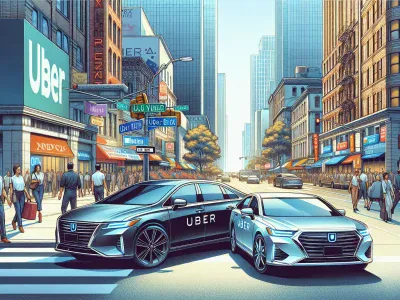
Exploring the bustling streets of your city, you might find yourself torn between the familiar logos of Lyft and Uber. Both promise a ride at your fingertips, but what sets them apart in the crowded world of ridesharing? Picture this: you’re late for an important meeting, the clock’s ticking, and you need a ride—fast. Do you tap on the pink mustache or the sleek black “U”?
Each platform offers a unique blend of features, pricing, and user experience. While they may seem identical at first glance, subtle differences could make or break your journey. Whether it’s the cost, driver availability, or those little perks that elevate your ride, you’ll soon discover that choosing between Lyft and Uber isn’t as straightforward as it seems. Immerse to uncover which app truly aligns with your needs.
Company Overview
History and Background
Lyft and Uber’s origins show just how influential the tech boom has been on transportation. Lyft, launched in 2012 by Logan Green and John Zimmer, started with a mission to foster connections through friendly rides. Uber, on the other hand, debuted in 2009 thanks to Travis Kalanick and Garrett Camp. Uber’s idea was to make premium ridesharing accessible to anyone with a smartphone. While Lyft began as a community-driven venture Uber’s focus was on luxury and convenience.
Ever wondered why Lyft cars often have that fuzzy pink mustache well it’s a nod to their playful and welcoming spirit. Uber, with its sleek branding went for a more professional vibe. The history of these two competitors highlights how they aimed to capture different aspects of the market from the get-go.
Market Presence
Both companies have become giants in the ridesharing industry but their market domination varies by region. In the U.S. Uber generally has a larger share—it’s presence is felt in over 10,000 cities globally. But don’t count Lyft out. Lyft operates in about 644 U.S. cities and has a strong foothold in Canada. Interestingly Lyft got a significant boost when Uber faced regulatory issues, making it a stronger contender.
Globally Uber is more dominant, thanks to its aggressive expansion strategy. Lyft hasn’t gone international in the same way, staying mainly within North America. This suggests differing priorities—Uber seems to seek global market saturation while Lyft focuses on solidifying its domestic influence.
Overall, you might find more Uber drivers available in metropolitan areas. Lyft tends to be more competitive in community-oriented and suburban locales. So, depending on where you are you might likely find one service more pervasive than the other.
Reflect for a moment, which service have you seen more often in your city? Or maybe you’ve noticed certain times when one is more available? Knowing these subtle differences can make your ridesharing experiences smoother and possibly cheaper.
Pricing Comparison
Pricing likely plays a big role in deciding between Lyft and Uber. So, how do they stack up?
Fare Structure
When comparing fare structures, both Lyft and Uber have similar pricing models. They usually charge a base fare, money per mile, and per minute. For instance, the base fare might be $1.50 with an additional $0.25 per minute and $1.00 per mile. Lyft tends to have slightly lower per-mile and per-minute charges. But, Uber’s base fares can sometimes be a bit lower, especially in larger cities where they have more competition.
For example, in New York City, Uber’s base fare is $2.50, but Lyft’s may be closer to $2.75. So, while Lyft is often cheaper for long-distance trips, short rides might end up being more expensive. Ain’t that a curveball?
Surge Pricing
Surge pricing can be a game changer. Both Lyft and Uber use dynamic pricing during high-demand periods. When everyone’s trying to get a ride home after a concert, prices can skyrocket.
Uber calls it “Surge Pricing,” while Lyft opts for “Prime Time.” With Uber, you might see surge multiples like 1.5x or 2x the usual price. Lyft, on the other hand, often shows it as a percentage increase, like 25% or 50% more. This can make comparing the two a little tricky, but generally speaking, Lyft’s percentage-based system is easier to understand at a glance.
But, both companies use algorithms to decide when surge pricing applies, so it can vary. There’s no sure way to predict this accurately, suggesting it’s always good to check both apps if you wanna save some cash.
Safety and Security
Here’s where rubber meets the road—literally. Safety’s a biggie when choosing between Lyft and Uber. Ever wondered who’s the safest driver?
Driver Screening
Curious about how drivers get the gig? Both Lyft and Uber screen their drivers but use different processes. Lyft screens drivers annually, checking criminal records and driving history. Uber, on the other hand, conducts continuous background checks. They’ve partnered with a startup called Checkr to keep tabs 24/7. So, while both offer solid vetting, Uber’s approach might ensure ongoing safety, if you’re worried about changes down the road.
Rider Safety Features
You’re probably thinking, “What about me?” Both platforms take rider safety seriously. Uber’s got an in-app emergency button that’ll connect you to 911 faster than you can say “help.” Lyft’s not left behind either—they’ve got one too, plus you can share your ride details with trusted contacts. Both apps also show driver ratings and vehicle details, so you can verify your chariot before hopping in. Deciding between Lyft and Uber on this front might just come down to which buttons and features you prefer exploring.
Service Options
When it comes to choosing a ride, Lyft and Uber offer a range of service options to fit various needs and budgets. Whether you’re looking for a budget-friendly ride or a luxurious experience, both platforms have you covered. So, what types of rides can you expect from each?
Ride Types
Lyft users can choose from several categories like Lyft, Lyft XL, Lux, Lux Black, and Lux Black XL. For instance, Lyft is the standard option offering economical rides for solo passengers or small groups. Lyft XL provides larger vehicles for up to six passengers, great for group travels or extra luggage. Need something fancy? Lux, Lux Black, and Lux Black XL offer premium and luxury vehicles, ensuring a comfortable and stylish ride.
Uber’s lineup includes UberX, UberXL, Uber Comfort, Uber Black, and Uber Black SUV. For example, UberX is the standard ride similar to Lyft, while UberXL caters to larger groups with spacious vehicles. Uber Comfort provides newer cars with more legroom, ideal for a slightly more luxurious ride. Uber Black and Uber Black SUV are the top-tier options, offering luxury sedans and SUVs driven by professional chauffeurs. Both platforms strive to cater to various preferences and budgets.
Geographic Coverage
In terms of geographic coverage, Uber has the upper hand with its presence in over 10,000 cities globally. Whether you’re in New York, Paris, or Tokyo, you’ll likely find an Uber ready to pick you up. This extensive reach makes Uber a convenient choice for international travelers and those in urban areas.
Lyft, on the other hand, focuses primarily on the U.S. and Canada, with strong coverage in about 644 cities. Its presence is robust in cities like San Francisco, Los Angeles, and Austin. Lyft might be a better option if you’re traveling within the U.S. or Canada, especially in cities where its community-oriented approach resonates with users.
By understanding the service options and geographic coverage of Lyft and Uber, you can make a more well-informed choice for your travel needs. Whether you’re seeking affordability, luxury, or convenience, both Lyft and Uber offer diverse options to suit different preferences and budgets.
User Experience
Understanding user experience can significantly influence your choice between Lyft and Uber. Let’s check out the key factors.
App Features
Both Lyft and Uber apps offer intuitive designs. You’ll find user-friendly interfaces, but how do they stack up on features? Lyft’s app features a clean, vibrant look. It’s like flipping through a well-organized magazine, easy to navigate with large icons and friendly prompts. From requesting a ride to tipping your driver, Lyft keeps things simple.
Uber, on the other hand, packs in more features. Fancy scheduling rides ahead of time? Uber’s got you. Riders can share their estimated time of arrival (ETA) directly from the app. The design feels sleek, matching Uber’s professional brand image. Uber provides detailed profiles of drivers, helping you feel safer on your journey immediately.
Ride Quality
Ride quality often depends on location, but noteworthy differences exist. Lyft aims for a friendly, casual vibe. Expect conversations and even some local tips if chatty drivers are your thing, but silent rides are equally respected. Their rating system encourages drivers to maintain clean, comfortable cars.
Uber’s approach can feel more business-like. Their higher-tier services like Uber Black offer luxury rides with professional drivers. UberX might give you a similar experience to Lyft Standard rides, but with a varying degree of driver interaction. The quality can also range significantly, so checking recent reviews may be a good idea before your ride.
Customer Support
Wondering how Lyft and Uber handle customer support? You’re in the right place. Let’s jump into it and see what each service offers.
Availability
Need help at a weird hour? You might find yourself checking both apps. Uber’s customer support operates 24/7, while Lyft’s is accessible via the app and website but their chat support is limited to specific hours. This may affect your decision if you often require assistance late at night.
Resolution Process
Encountered an issue mid-ride? Worry not, both Lyft and Uber have resolution processes in place, though they differ slightly.
Lyft: You can report issues directly through the app. Expect a response within 24 hours. Lyft often sends compensation for minor inconveniences like minor wait times or driver route discrepancies.
Uber: Uber’s process also starts through the app. They aim to resolve complaints swiftly, focusing on immediate solutions and offering credits or refunds when necessary.
Ever found yourself wishing someone would just pick up the phone? Uber may have the edge with their integrated phone support for more complex issues, while Lyft encourages submitting detailed reports online.
Got questions now? Feel free to pop them into your app and see who responds first.
Conclusion
Choosing between Lyft and Uber hinges on your specific needs and preferences. Whether you prioritize pricing, driver availability, or unique features, both platforms offer compelling options. Lyft’s community-oriented approach and competitive pricing can be appealing, while Uber’s extensive global presence and advanced app features make it a strong contender.
Consider your location and typical ride requirements. For urban areas, Uber’s larger driver pool might be advantageous, whereas Lyft’s focus on suburban and community locales could better suit your needs. Safety and customer support are also crucial factors, with both companies offering robust measures to ensure rider security.
Evaluate what matters most to you in a ridesharing service. By understanding the distinctions between Lyft and Uber, you can make a well-well-informed choice that enhances your travel experience.
To provide the best experiences, we use technologies like cookies to store and/or access device information. Consenting to these technologies will allow us to process data such as browsing behaviour or unique IDs on this site. Not consenting or withdrawing consent, may adversely affect certain features and functions.
Functional
Always active
The technical storage or access is strictly necessary for the legitimate purpose of enabling the use of a specific service explicitly requested by the subscriber or user, or for the sole purpose of carrying out the transmission of a communication over an electronic communications network.
Preferences
The technical storage or access is necessary for the legitimate purpose of storing preferences that are not requested by the subscriber or user.
Statistics
The technical storage or access that is used exclusively for statistical purposes.The technical storage or access that is used exclusively for anonymous statistical purposes. Without a subpoena, voluntary compliance on the part of your Internet Service Provider, or additional records from a third party, information stored or retrieved for this purpose alone cannot usually be used to identify you.
Marketing
The technical storage or access is required to create user profiles to send advertising, or to track the user on a website or across several websites for similar marketing purposes.