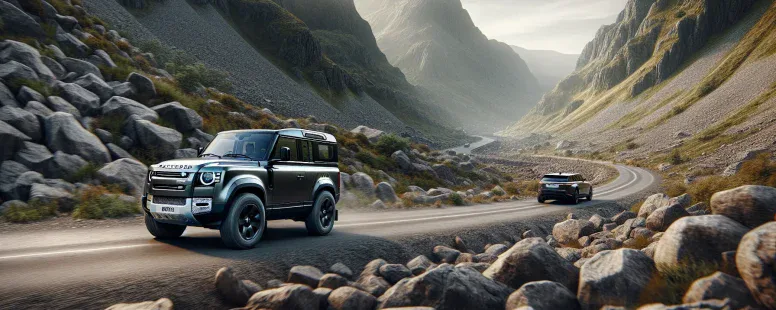
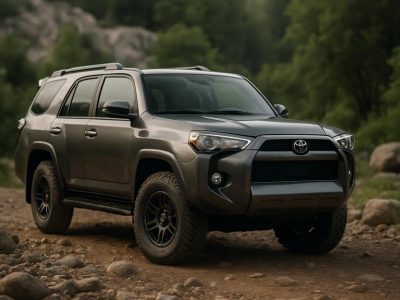
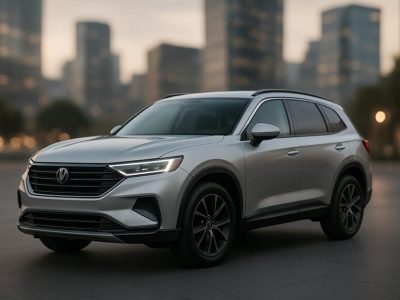
Picture yourself gliding down a winding mountain road, the scent of pine sharp in the air and the world unfolding beneath your wheels. You spot a sleek SUV—its badge gleams in the sunlight, but is it a Land Rover or a Range Rover? The distinction isn’t just a matter of names. It’s a story of heritage, luxury, and adventure that often leaves even the most devoted car enthusiasts guessing.
You might think these vehicles are cut from the same cloth, but there’s more beneath the surface than meets the eye. Unraveling the difference means unlocking a world where rugged capability meets refined elegance and where your next journey could be shaped by the badge you choose. Ready to discover what truly sets them apart?
Overview of Land Rover and Range Rover
Land Rover and Range Rover often get mentioned in the same breath, yet they’re semantically distinct entities. Land Rover, as a British automotive marque, produces all-terrain SUVs, known for durability and off-road performance (Jaguar Land Rover, 2024). Range Rover, meanwhile, functions as a specific luxury SUV line, existing under the wider Land Rover umbrella. For example, you’ll find models like Defender and Discovery labeled as Land Rovers, but only luxury-focused models such as Range Rover, Range Rover Sport, and Range Rover Velar carry the Range Rover name.
Ownership aligns closely, with Jaguar Land Rover (JLR), a Tata Motors subsidiary, overseeing both. Structurally, every Range Rover model inherits the Land Rover chassis and engineering, yet adds luxury finishes—think Windsor leather seats, adaptive cruise, and advanced infotainment (Car and Driver, 2023). If you’re picturing an archetype for each, the Land Rover Defender conjures mountain expeditions and river crossings, while the Range Rover sets a scene of city lights, high tea, and understated elegance.
Ever wondered why Land Rover lists vehicles under both names? This stems from branding. Land Rover designates the brand, whereas Range Rover serves as a sub-brand targeting a premium market. Stories abound in automotive circles—owners taking Defenders across African savannas, while Range Rover drivers cruise the streets of London. That’s why you might spot a muddy Land Rover Discovery parked beside a spotless Range Rover Autobiography at a countryside manor.
Semantic distinctions don’t stop with names. Examine these models up-close: air suspension systems, high-grade paint finishes, and semi-aniline interiors often separate a Range Rover from its Land Rover stablemates. Question if these details warrant the price tag, but industry reviews (Edmunds, 2023) note that luxury buyers see value in refinement, not just ruggedness.
Data on Land Rover and Range Rover
Entity
Brand Position
Example Models
Typical Features
Land Rover
Parent marque
Defender, Discovery
Terrain Response, robust chassis
Range Rover
Luxury sub-brand
Range Rover, Range Rover Sport, Velar
Premium interiors, advanced tech
If heritage excites your curiosity, you’ll find Land Rover roots in 1948 and Range Rover’s debut in 1970, a shift to luxury that challenged then-contemporary automotive norms. For some, the difference matters in the mud; for others, it matters in the valet queue.
Brand History and Evolution
Brand history and evolution helps you trace the connection between Land Rover’s utilitarian roots and the refined identity Range Rover showcases today. You’ll see how post-war necessity, British engineering, and luxury design shaped these legendary vehicles.
Origins of Land Rover
Origins of Land Rover take you back to 1948, where the debut at the Amsterdam Motor Show sparked immediate curiosity. British automaker Rover Company saw an urgent need for tough vehicles after World War II—farmers, soldiers, and explorers craved reliability, not just comfort. Designed by Maurice Wilks, the first Series I Land Rover rolling off the production line came with an aluminum body, chosen because steel were rationed. Think of it like a mechanical tool kit on wheels, intended for tackling muddy fields or wading through remote highlands, not city pavement. The vehicle’s soon earned global prestige when the British royal family used it for expeditions across Africa and Australia. Today you find traces of that original boxy silhouette and utilitarian DNA in the Defender, showing how function became heritage.
Introduction of the Range Rover Line
Introduction of the Range Rover line in 1970 marked a radical pivot—a marriage of rugged four-wheel drive with plush interiors. Why settle for basic benches when you could sink into deep-pile carpeting after a day’s hunting or business meetings? The first Range Rover brought coil-spring suspension, permanent four-wheel-drive, and a V8 engine, creating an unlikely blend of farm vehicle and executive saloon (SUV). Queen Elizabeth II, celebrities like Bruce Springsteen, and city dwellers alike adopted the Range Rover as a symbol of status plus adventure. Road & Track even called it “the Car for All Reasons,” echoing drivers’ changing expectations. Jaguar Land Rover, under Tata Motors since 2008, expanded the Range Rover name—Velar, Evoque, Sport—each infusing the original formula with urban sophistication yet off-road prowess.
You might wonder: Has luxury diluted the adventure? Purists might argue capability’s taken a backseat, but global sales and fan clubs tell a different story. Side-by-side, Land Rover’s legacy of all-terrain mastery set the foundation, while Range Rover drove into a new era—where mud splashes and metropolitan high-rises blend seamlessly in your rearview.
Key Differences Between Land Rover and Range Rover
You notice how Land Rover and Range Rover often show up together, yet they seldom travel the same road. Each badge signals a different promise, whether you’re aiming for a mountain pass or valet parking at a downtown hotel.
Branding and Positioning
Land Rover sits as a master brand, while Range Rover stands as its crowned jewel. Every Defender, Discovery, or Freelander wears the Land Rover marque, offering reliability, utility, and engineering for tough terrain—think of wildlife documentaries and UN convoys (BBC News, 2023). Range Rover separates itself in taxonomy by serving as a luxury sub-brand. Range Rover models—like Velar and Evoque—display exclusive badges, plush interiors, and distinctive design arcs. You might ask: does driving a Defender invite more grit into your journey, while a Range Rover suggests you’re already at your destination? Brand history roots this division, with Land Rover’s utilitarian ethos and Range Rover’s positioning as a status symbol. Visit a high-end mall parking lot in Manhattan or a game reserve in Kenya and the contrast appears, not just in vehicle silhouette but in cultural cachet.
Design and Features
Design choices reflect identity. Land Rover vehicles typically favor angular, practical shapes for function—just picture the squared-off Defender or the rugged Discovery. Range Rover models opt for soft arcs, floating roofs, and flush door handles, like the coupe-influenced Velar or the opulent flagship Range Rover. Interiors show you the real split: Windsor leather seats, digital instrument clusters, 29-speaker Meridian sound systems create a cocoon inside Range Rover models. Land Rover’s trims tend to emphasize wash-down surfaces, durable materials, and modular storage. The features aren’t just about luxury; air suspension, adjustable ride height, and advanced terrain response settings deliver comfort at speed and capability off-road simultaneously. If you ever wanted to wash mud off your boots while streaming Tidal in surround sound, a Range Rover makes it possible.
Performance and Capability
Land Rover builds vehicles for rough ground. Models like Defender use two-speed transfer cases, locking differentials, and ground clearance exceeding 11 inches—specs matched by few SUVs outside the Toyota Land Cruiser or Jeep Wrangler (Car and Driver, 2024). Range Rover adopts the same robust platforms but tunes the ride for refinement: adaptive dynamics systems, air suspension that glides over potholes, mild hybrid and V8 powertrains. Range Rover still fords rivers and climbs boulder fields, yet does so while isolating you from vibration and wind noise. Capability stats say one story, while purpose says another: Land Rovers show up at mountain rescues and remote research stations; Range Rovers arrive on red carpets and luxury ski resorts. That transactional difference, sometimes lost in the glimmer of badges, shapes the experience—and yes, the price tag.
If you’ve ever questioned whether splashing through muddy ruts with massage seats is overkill, Range Rover invites that paradox. Which path do you want, and which badge will you wear when the road splits?
Model Lineup Comparison
Model lineup between Land Rover and Range Rover separates adventure from indulgence. You might notice these SUVs share a parent, but the paths they take winds in different directions.
Land Rover Models
Land Rover models sit in the rugged lane, designed for unyielding landscapes. Defender, an icon reborn, still scales muddy trails and rocky scrambles just like the Series I once did for British sheep farmers in 1949. Defender wears durable steel and a boxy silhouette that’s not there for looks—it’s pure function. Discovery joins the lineup as a family adventurer, using seven-seat flexibility and clever underfloor storage. Both models hold the legacy of Land Rover’s reputation—reliability, durability, and go-anywhere spirit. Did you see a Land Rover in documentaries about rainforests or deserts? Those stories stick, don’t they? According to Car and Driver, the Discovery earned a spot as a top choice for explorers by blending technology such as Terrain Response System (TRS) with old-school off-road power.
Range Rover Models
Range Rover models cruise down the boulevard of luxury, but don’t be fooled—beneath elegant lines lies Land Rover DNA. Range Rover, the flagship, epitomizes status with Windsor leather seats, veneer wood trims, and a head-up display that feels futuristic. Range Rover Sport attracts urban risk-takers, with dynamic handling, hybrid options, and even a high-performance SVR variant that clocks 0–60 mph under 4.5 seconds. Range Rover Velar, a fashion-forward sibling, turns heads on city streets but still dares to get dirty with adjustable air suspension. Range Rovers cost more, reflecting appointments once reserved for chauffeured limousines—massaging seats, Meridian 3D audio, and advanced driver assistance. Jaguar Land Rover’s CEO once called Range Rover “a celebration of modern luxury,” and automotive journalists spot more Range Rovers valet-parked outside Michelin-starred restaurants than splashing through rivers.
Would you ride up a mountain pass in a Defender, or glide over cobblestone in a Velar? This is the paradox—capability and luxury, all rooted in one British legacy. For every taste and ambition, a model aligns with your purpose.
Pricing and Market Segment
Pricing between Land Rover and Range Rover draws a clear line—one that stretches from rugged terrain to city skylines. Land Rover, known for models like the Defender and Discovery, covers a broad price spectrum. You spot a Land Rover Discovery on the lot, its base price around $60,000 in the US market (Jaguar Land Rover, 2023). Entry-level Defenders sometimes show a lower tag, around $56,000, offering robust 4×4 capability without luxury trimmings. These models targets buyers seeking adventure, utility, and reliability before prestige—outdoor enthusiasts, rural professionals, and those who value function over flash.
Look at Range Rover, and the narrative shifts. Range Rover badge means instantly jumping to a premium tier, often beginning near $107,400 for the flagship model in 2024 (U.S. News & World Report, 2024). Range Rover Sport follows close, its starting MSRP above $83,000. Walk inside a dealership, and you’ll feel the difference: quilted Windsor leather, open-pore wood veneers, and a lingering scent of exclusivity infuse the cabin air. Here’s the market segment—urban executives, celebrities, and buyers who wants status and comfort blended with off-road heritage.
Model
Starting Price (USD)
Market Segment
Example Features
Land Rover Defender
$56,000
Adventurers, rural professionals
Durable interior, towing tech, off-road modes
Land Rover Discovery
$60,000
Families, utility-driven users
7 seats, practical storage, all-terrain tech
Range Rover
$107,400
Luxury urbanites, celebrities, CEOs
Luxury seating, adaptive cruise, SV trim
Range Rover Sport
$83,000
Status-driven, tech-seeking professionals
Performance engines, semi-aniline leather
Sitting in a Defender, you might recall Sir Edmund Hillary’s Himalayan expeditions—the essence of “go anywhere” engineering. Standing beside a Range Rover, perhaps at a valet stand outside Manhattan’s The Mercer, you sense a different expectation: not just capability, but presence.
Which story resonates with you? Some see value in understated capability—choosing a Discovery for cross-country road trips, muddy boots, and family camping. Others find aspiration fulfilled when stepping into a Velar, where exterior curves reflect city lights and the Meridian sound system draws envy. Price, in this ecosystem, signals not only what you’re buying, but who you are.
Does luxury come from material or heritage? If a trailhead calls, you might prefer reliability over plushness. If evening galas and boardrooms fill your schedule, refinement and prestige may outweigh the call of the wild. Will you follow your compass or your calendar? The choice shapes not just your drive, but the story your driveway tells.
Which One Should You Choose?
Sitting behind the wheel of a Land Rover Defender, you feel the old-school DNA—it’s like commanding an armored explorer built for mud, rocks, and deserts. The doors thud with authority, the dashboard bristles with switches that promise discovery. Land Rover’s legacy speaks to adventurers and practical dreamers, people who see the world as a map full of challenge rather than a calendar of appointments. , if you crave rain-splattered mountain passes more than polished parking garages, a Land Rover like the Defender or Discovery becomes your trusty compass. Sir Edmund Hillary used a Land Rover in 1953 as his Everest support vehicle. That’s no marketing myth (Smithsonian Magazine, 2017).
You slip into a Range Rover’s perforated Windsor leather and suddenly, London feels closer than Lesotho. Range Rover is another story—a mobile penthouse on 22-inch wheels. There’s swirling ambiance lighting, power-closing doors, and a cabin more padded than a private jet. Luxury trumps ruggedness when you choose Range Rover. Urbanites, celebrities, and C-suite execs gravitate toward the Range Rover badge for its prestige as much as its performance. Think of England’s Royal Family, who sometimes arrives at state functions in a Range Rover Autobiography, not a Defender. Journalists at Car and Driver (2023) noted that Range Rover offers the “best seats in any SUV, period.”
So, ask yourself: are you the architect of wild getaways, fixing to plot GPS coordinates in Patagonia? Or, do you picture gliding from Michelin-starred restaurants to city boardrooms, every detail in your ride designed to hush stress and turn heads? That’s the true dynamic: Land Rover isn’t Range Rover; need for luxury has met thirst for grit. If you rank capability as your north star, Land Rover Defender or Discovery delivers. Yearning for comfort, status, and a tech-laden sanctuary, Range Rover’s lineup awaits.
Some buyers blend both worlds. There’s Range Rover Sport—more athletic than its siblings, but keeps its velvet touch. Or Discovery, which packs kid-friendly practicality with mountain-taming hardware. Several client testimonials from Land Rover’s 75th anniversary event recount switching between brands as their lifestyles shifted: “I bought a Defender when I trekked through Malawi, now I commute in a Velar,” says one guest.
Don’t just consider features; think about which story you want your SUV to tell. Land Rover sculpts your narrative around resilience and exploration. Range Rover crafts your journey through refinement and innovation. Where you see yourself—makes all the difference.
Conclusion
Choosing between Land Rover and Range Rover isn’t just about picking a vehicle—it’s about defining your journey. Whether you crave the thrill of exploring wild landscapes or prefer the comfort of city streets, each brand offers a unique path.
Let your priorities guide you. Consider what matters most to you: rugged reliability, luxurious refinement, or perhaps a balance of both. Whichever you choose, you’re not just driving an SUV—you’re making a statement about your lifestyle and ambitions.
To provide the best experiences, we use technologies like cookies to store and/or access device information. Consenting to these technologies will allow us to process data such as browsing behaviour or unique IDs on this site. Not consenting or withdrawing consent, may adversely affect certain features and functions.
Functional
Always active
The technical storage or access is strictly necessary for the legitimate purpose of enabling the use of a specific service explicitly requested by the subscriber or user, or for the sole purpose of carrying out the transmission of a communication over an electronic communications network.
Preferences
The technical storage or access is necessary for the legitimate purpose of storing preferences that are not requested by the subscriber or user.
Statistics
The technical storage or access that is used exclusively for statistical purposes.The technical storage or access that is used exclusively for anonymous statistical purposes. Without a subpoena, voluntary compliance on the part of your Internet Service Provider, or additional records from a third party, information stored or retrieved for this purpose alone cannot usually be used to identify you.
Marketing
The technical storage or access is required to create user profiles to send advertising, or to track the user on a website or across several websites for similar marketing purposes.