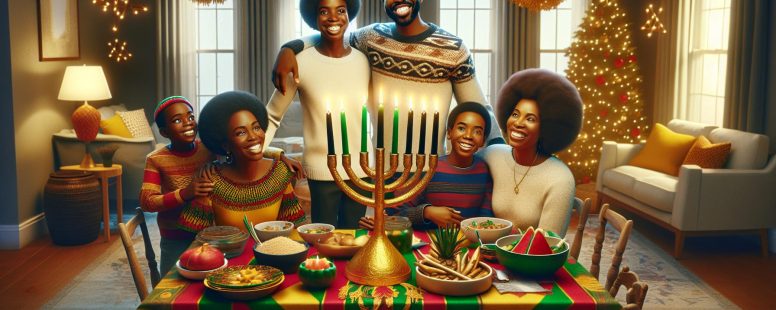
December brings with it a world of cultural celebrations that illuminate the darkest days of winter. Among these traditions, Kwanzaa and Hanukkah stand out as meaningful observances with rich histories and unique customs. While you might see their decorations side by side in seasonal displays, these celebrations have distinctly different origins, practices, and significance.
Understanding the differences between Kwanzaa and Hanukkah can deepen your appreciation for cultural diversity during the holiday season. Hanukkah, the Jewish Festival of Lights dating back over 2,000 years, commemorates a historical miracle of faith. Kwanzaa, created in 1966, celebrates African heritage and cultural values through seven core principles. Both holidays feature candle-lighting rituals yet emerge from completely different historical contexts and traditions.
Understanding Kwanzaa and Hanukkah: Cultural Origins and Significance
Kwanzaa and Hanukkah originate from distinct cultural backgrounds that shaped their development and meaning. These celebrations represent important historical moments and cultural values that continue to resonate with communities worldwide.
Kwanzaa’s African Roots
Kwanzaa emerged in 1966 as a creation of Dr. Maulana Karenga, a professor of African Studies. The holiday draws inspiration from African harvest festivals, particularly those practiced in West Africa. Kwanzaa’s name derives from the Swahili phrase “matunda ya kwanza,” meaning “first fruits.”
Unlike religious holidays, Kwanzaa serves as a cultural celebration focused on honoring African heritage and strengthening community bonds. The seven-day festival (December 26 to January 1) centers around seven principles called Nguzo Saba:
Umoja: Unity in family and community
Kujichagulia: Self-determination and defining oneself
Ujima: Collective work and responsibility
Ujamaa: Cooperative economics and supporting businesses within one’s community
Nia: Purpose in building community
Kuumba: Creativity to make communities better
Imani: Faith in people, parents, and leaders
Each principle corresponds to a specific day and represents core values that strengthen African American communities. The kinara, a candle holder with seven candles (one black, three red, and three green), symbolizes these principles and African ancestry.
Hanukkah’s Historical Foundations
Hanukkah’s roots stretch back over 2,200 years to the Maccabean Revolt against Seleucid Empire oppression. The eight-day celebration commemorates the rededication of the Second Temple in Jerusalem after its desecration by Antiochus IV Epiphanes.
The holiday’s central miracle occurred when the Jews found only enough purified oil to light the Temple menorah for one day, yet it burned for eight days until new oil could be prepared. This event gives Hanukkah its other name, the “Festival of Lights.”
Hanukkah holds religious significance while also celebrating Jewish identity, resilience, and the triumph of light over darkness. Key elements include:
Lighting the menorah (hanukkiah) each night
Playing with dreidels (four-sided spinning tops)
Eating foods fried in oil like latkes (potato pancakes) and sufganiyot (jelly doughnuts)
Exchanging gifts and gelt (chocolate coins)
The holiday occurs on the 25th day of Kislev according to the Jewish calendar, typically falling in December in the Gregorian calendar.
Cultural Significance in Modern Society
Both Kwanzaa and Hanukkah have evolved beyond their origins to address contemporary challenges faced by their communities. Kwanzaa provides African Americans with a framework to reconnect with their heritage and build community strength during a season dominated by commercial holidays. It’s celebration has expand beyond the United States to African diaspora communities worldwide.
Hanukkah has gained greater prominence in modern times, particularly in countries where Christmas is the dominant December holiday. Many Jewish families have adapted Hanukkah traditions to create a meaningful alternative celebration while preserving its core message of religious freedom and cultural perseverance.
Though different in their histories, both holidays share common themes of resistance against oppression, cultural preservation, and the importance of community identity. Their continued relevance demonstrates how cultural celebrations adapt to meet the changing needs of communities while maintaining connections to historical roots.
The History of Kwanzaa
Kwanzaa’s rich history stems from the African American cultural renaissance of the 1960s. This seven-day celebration emerged during a pivotal time in American history when Black communities sought to reconnect with their African heritage and strengthen cultural identity.
Founding and Purpose
Kwanzaa was created in 1966 by Dr. Maulana Karenga, a professor of Black Studies at California State University, Long Beach. Following the Watts riots in Los Angeles, Dr. Karenga sought to develop a cultural framework that would unite African Americans and reconnect them with their African roots. The name “Kwanzaa” derives from the Swahili phrase “matunda ya kwanza,” meaning “first fruits,” reflecting the agricultural harvest celebrations that inspired the holiday. Dr. Karenga designed Kwanzaa as a non-religious celebration focused on family, community, and culture rather than as an alternative to existing religious holidays.
The first Kwanzaa celebration took place from December 26, 1966, to January 1, 1967. Dr. Karenga established this timing to coincide with the end-of-year harvest celebrations observed in many African cultures. Unlike Hanukkah’s ancient origins, Kwanzaa’s relatively recent establishment gives it a distinct place in cultural history as a conscious effort to create tradition rather than preserve one. The holiday gained popularity throughout the 1970s and 1980s, becoming a significant cultural observance for many African American families and communities across America.
Seven Principles of Kwanzaa
The foundation of Kwanzaa rests on seven core principles known as the Nguzo Saba, each representing values drawn from African cultural traditions. These principles, expressed in Swahili, are commemorated on each of the seven days of the celebration:
Umoja (Unity) – Building and maintaining unity in family, community, and race
Kujichagulia (Self-Determination) – Defining, naming, and speaking for oneself
Ujima (Collective Work and Responsibility) – Building and solving problems together
Ujamaa (Cooperative Economics) – Building and supporting Black businesses
Nia (Purpose) – Developing collective vocations to restore people to greatness
Kuumba (Creativity) – Leaving communities more beautiful than inherited
Imani (Faith) – Believing in people, parents, teachers, and leaders
Each principle is symbolized by lighting one of the seven candles in the kinara, a candleholder that’s central to Kwanzaa celebrations. The kinara holds three red candles (representing struggle), three green candles (representing the future and hope), and one black candle (representing the African American people). Unlike Hanukkah’s menorah which holds nine candles, the kinara’s seven candles directly correspond to Kwanzaa’s week-long duration and its seven principles.
Families practicing Kwanzaa often decorate their homes with colorful African cloths, artwork, and fresh fruits that represent African idealism. Children might receive educational and cultural gifts that reinforce the principles. These observances create a powerful connection to African heritage while fostering a sense of pride and community among African Americans.
The History of Hanukkah
Hanukkah’s rich history stretches back over 2,200 years, rooted in ancient Jewish resistance and religious dedication. This eight-day festival commemorates historical events that shaped Jewish identity and continues to resonate with Jews worldwide.
Ancient Origins
Hanukkah originated in 164 BCE during the reign of Antiochus IV Epiphanes, the Seleucid king who controlled Judea. After his forces defiled the Second Temple in Jerusalem by erecting an altar to Zeus and sacrificing pigs, a Jewish revolt led by Judah Maccabee began. The Maccabean Revolt (167-160 BCE) was sparked by Greek attempts to Hellenize the Jewish population, prohibiting Jewish religious practices like circumcision and Sabbath observance.
The rebellion started when Mattathias, a Jewish priest from Modi’in, refused to perform sacrifices to Greek gods and killed a Hellenistic Jew who stepped forward to do so. His son Judah, nicknamed “Maccabee” (meaning “hammer”), led guerrilla warfare against the larger Syrian-Greek army. Even though being vastly outnumbered, the Maccabees recaptured Jerusalem and the Temple after three years of fighting.
Historical accounts of the revolt appear in the First and Second Books of Maccabees, though these texts aren’t included in the Hebrew Bible. They remain important historical documents that chronicle this pivotal period in Jewish history.
The Miracle of Light
When the Maccabees reclaimed the Second Temple, they found it in desecration and disrepair. They immediately set about cleansing and rededicating the Temple to Jewish worship. According to the Talmud, when preparing to light the Temple menorah (the seven-branched candelabrum), they discover only enough ritually pure olive oil to burn for one day.
The miracle of Hanukkah occured when this small amount of oil inexplicably burned for eight full days – exactly the time needed to prepare fresh oil under conditions of ritual purity. This miracle of the oil isn’t mentioned in the earlier historical accounts of the Books of Maccabees but emerged later in Talmudic literature.
Rabbinical authorities in the Talmud deliberately emphasized the miracle of the oil rather than the military victory. This shift focused Hanukkah on divine intervention instead of human military achievement, transforming it from a celebration of nationalist triumph into a spiritual commemoration. The festival’s hebrew name “Hanukkah” means “dedication,” referring to the rededication of the Temple.
The Hanukkah story demonstrates how a small group of determined believers preserved their religious freedom against overwhelming odds. It’s significance has evolved beyond its historical roots to become a powerful symbol of religious perseverance, cultural identity, and the triumph of light over darkness in Jewish tradition.
Celebration Periods and Timing
Kwanzaa and Hanukkah occur during December but follow different celebration schedules. Hanukkah spans eight nights, while Kwanzaa lasts seven days, each with distinct timing traditions that reflect their unique cultural origins.
Hanukkah begins on the 25th day of Kislev in the Hebrew calendar, typically falling in December in the Gregorian calendar. The exact dates change annually because the Hebrew calendar is lunisolar. In 2023, Hanukkah runs from December 7th to December 15th. The eight-day celebration commemorates each day the temple oil miraculously burned.
Kwanzaa maintains fixed dates, running from December 26th through January 1st every year. Dr. Karenga established these specific dates to provide a consistent timeframe for reflection and celebration. Each of the seven days corresponds to one of the Nguzo Saba principles:
December 26th: Umoja (Unity)
December 27th: Kujichagulia (Self-Determination)
December 28th: Ujima (Collective Work and Responsibility)
December 29th: Ujamaa (Cooperative Economics)
December 30th: Nia (Purpose)
December 31st: Kuumba (Creativity)
January 1st: Imani (Faith)
The different duration of these holidays reflects their historical significance. Hanukkah’s eight nights directly connects to the story of the oil that lasted for eight days in the reclaimed temple. Kwanzaa’s seven-day structure aligns with its seven principles and creates a meaningful bridge between years, starting after Christmas and ending on New Year’s Day.
Both celebrations involve daily rituals. During Hanukkah, families light one additional candle on the menorah each night until all eight are illuminated. Kwanzaa celebrants light one candle on the kinara daily, starting with the black center candle and alternating between the red and green candles to emphasize the connection between the principles.
While both holidays occur in December, they rarely overlap completely due to Hanukkah’s shifting dates. This timing distinction highlights the independent nature of these cultural celebrations even though their contemporary coexistence during the winter holiday season.
Key Differences in Traditions and Practices
Kwanzaa and Hanukkah feature distinct traditions that reflect their unique cultural origins and purposes. Even though occurring in December, these holidays employ different symbols, rituals, and customs that embody their respective historical narratives and values.
Kwanzaa’s Symbols and Rituals
Kwanzaa’s rituals center around seven core symbols that represent African heritage and communal values. The mkeka (straw mat) serves as the foundation for all Kwanzaa symbols, representing tradition and history. Upon this mat sits the kinara, a candleholder with seven candles—one black, three red, and three green—representing the people, their struggles, and hope for the future.
Each evening during Kwanzaa, families gather to light one of the mishumaa saba (seven candles), starting with the black candle at the center. The lighting ceremony includes discussions about the principle of the day, such as Umoja (unity) or Kujichagulia (self-determination). After lighting the candle, participants often recite “Harambee!” (Let’s pull together) seven times.
Other important symbols include:
Mazao (crops) symbolizing the rewards of collective labor
Kikombe cha umoja (unity cup) used for pouring libations to honor ancestors
Zawadi (gifts) typically handmade or educational items given to children
Muhindi (corn) representing children and the future they embody
The Karamu feast on December 31st marks Kwanzaa’s culminating celebration, featuring African-inspired cuisine, music, dance, and storytelling that connects participants to their cultural roots.
Hanukkah’s Customs and Observances
Hanukkah traditions revolve around the menorah (technically called a hanukkiah), a nine-branched candelabrum. The shamash (helper candle) sits higher or apart from the other eight candles and is used to light the other candles. Each night, one additional candle is lit, proceeding from right to left, while special blessings are recited.
The menorah is typically displayed in windows or doorways to publicize the miracle (pirsumei nisa) of the oil lasting eight days. This practice reflects the Jewish value of openly celebrating religious freedom and divine intervention.
Distinctive Hanukkah traditions include:
Playing with the dreidel, a four-sided spinning top with Hebrew letters representing “A great miracle happened there”
Eating foods fried in oil, such as latkes (potato pancakes) and sufganiyot (jelly donuts)
Giving gelt (chocolate coins or money) to children, encouraging charity
Reciting Hallel prayers of praise and thanksgiving during morning services
Unlike Kwanzaa, Hanukkah doesn’t prohibit work except during candle-lighting time. Many families exchange gifts each night, though this custom developed relatively recently as a response to the Christmas gift-giving tradition in predominantly Christian societies.
The contrasts between these holidays extends beyond their symbols. Kwanzaa emphasizes community renewal and cultural reconnection, while Hanukkah commemorates religious freedom and divine protection. Kwanzaa’s celebrations often include colorful cultural displays and community gatherings, whereas Hanukkah tends to be more family-centered with an emphasis on home-based rituals and synagogue attendance.
Religious vs. Cultural Celebration
Hanukkah’s Religious Foundations
Hanukkah stands firmly as a religious holiday with deep spiritual significance in Judaism. This eight-day celebration commemorates the miracle of the oil that occurred during the rededication of the Second Temple in Jerusalem. Jewish families gather to light the menorah, recite specific prayers, and study Torah passages related to the Maccabean revolt. The lighting of the menorah isn’t merely symbolic but represents a religious commandment or mitzvah. Many Jewish families attend synagogue services during Hanukkah to connect with their faith community and honor their religious traditions. The holiday’s customs—from the blessings recited during candle lighting to the religious songs sung—reinforce its foundation in Jewish religious practice and theology.
Kwanzaa’s Cultural Framework
Kwanzaa functions primarily as a cultural celebration rather than a religious observance. Created specifically to honor African heritage and promote cultural identity, Kwanzaa transcends religious boundaries. People from various religious backgrounds—Christians, Muslims, Jews, and those practicing traditional African religions—participate in Kwanzaa celebrations without conflict with their faith traditions. The holiday focuses on strengthening community bonds through cultural education and affirmation rather than religious doctrine. The seven principles (Nguzo Saba) of Kwanzaa—unity, self-determination, collective work and responsibility, cooperative economics, purpose, creativity, and faith—represent universal values that connect to African cultural traditions rather than specific religious beliefs. Dr. Karenga designed Kwanzaa to be inclusive, allowing African Americans of different religious backgrounds to celebrate their shared cultural heritage together.
Observance Differences
The observance patterns between these holidays reveal their distinct religious and cultural orientations. Hanukkah ceremonies center around religiously prescribed rituals with specific prayers, blessings, and readings from sacred texts. Jewish religious authorities provide guidance on proper menorah lighting sequence and timing. Families observing Hanukkah often incorporate religious education about the holiday’s significance in Jewish history and faith.
In contrast, Kwanzaa ceremonies emphasize cultural expression through libations honoring ancestors, storytelling, artistic performances, and discussions about African values. While the principle of “faith” (Imani) is included in Kwanzaa’s seven principles, it refers broadly to believing in people, parents, teachers, and leaders rather than adherence to specific religious doctrine. The holiday doesn’t include religious services or references to divine intervention. Instead, Kwanzaa celebrations feature educational components about African history, cultural achievements, and community building strategies.
Community Impact and Modern Relevance
Both celebrations strengthen communal bonds through different lenses. Hanukkah reinforces Jewish religious identity by connecting modern Jews to their spiritual ancestors who fought for religious freedom. The holiday serves as a religious anchor, particularly in societies where Judaism is a minority religion. Many Jewish communities organize public menorah lightings that simultaneously affirms their religious practices and educates the broader public about Jewish traditions.
Kwanzaa builds community through cultural reclamation and affirmation rather than shared religious practice. During Kwanzaa gatherings, participants discuss how to apply the seven principles in contemporary contexts to address social challenges facing their communities. The holiday provides a framework for cultural education that complements, rather than replaces, participants’ existing religious beliefs. Community centers, schools, and museums often host Kwanzaa events that bring together diverse groups to learn about African cultural contributions and values.
These distinctions highlight why many families celebrate both holidays simultaneously without conflict—Hanukkah addressing religious needs while Kwanzaa fulfills cultural connections to African heritage.
Food Traditions That Define Each Holiday
Kwanzaa’s Culinary Heritage
Kwanzaa’s food traditions center around dishes that celebrate African diaspora cuisine and cultural heritage. The Karamu feast, held on December 31st, features foods from various African countries and the African American experience. Traditional Kwanzaa meals include black-eyed peas, collard greens, yams, and cornbread—dishes that represent prosperity and sustenance. Many families serve muhindi (corn), which symbolizes children and the future they represent in the community. Fruits, nuts, and vegetables commonly appear on the Kwanzaa table, reflecting the agricultural roots of many African cultures. The shared meal emphasizes community bonds and cultural continuity, with recipes often passed down through generations.
Hanukkah’s Oil-Centered Cuisine
Hanukkah’s cuisine revolves around foods fried in oil, commemorating the miracle of the temple oil that lasted eight days. Latkes (potato pancakes) and sufganiyot (jelly-filled doughnuts) are iconic Hanukkah dishes enjoyed in Jewish households worldwide. The golden, crispy exterior of latkes symbolizes the warmth and light celebrated during the Festival of Lights. Sephardic Jewish communities prepare buñuelos or bimuelos, fritters drizzled with honey or sprinkled with powdered sugar. Dairy products also feature prominently in Hanukkah meals, connecting to stories of Judith, a Jewish heroine who fed cheese to an enemy general before defeating him. Brisket, kugel, and applesauce often complement the fried foods, creating a hearty winter feast that brings families together around the table.
Symbolic Foods and Their Meanings
Kwanzaa’s food symbolism draws directly from the Nguzo Saba principles, with each dish representing cultural values and African heritage. The mazao (crops) placed on the mkeka mat symbolize the rewards of collective planning and work. Corn represents fertility and the potential for children to carry forward cultural traditions. The unity cup (kikombe cha umoja) is used for pouring libations to honor ancestors, creating a spiritual connection across generations.
Hanukkah foods carry powerful religious symbolism tied to the holiday’s historical context. The oil used in cooking represents the miraculous oil that burned for eight days in the rededicated Temple. Gelt (chocolate coins) reminds children of the coins minted by the Maccabees after their victory. The round shape of sufganiyot symbolizes the cyclical nature of the calendar and life. Some families serve cheese-based dishes to honor Judith’s bravery in saving her people. These symbolic connections transform simple meals into meaningful cultural experiences that reinforce the holiday’s significance.
Contemporary Adaptations and Fusion Cuisine
Modern Kwanzaa celebrations often feature creative adaptations of traditional African and African American recipes. Southern soul food classics like fried chicken, mac and cheese, and peach cobbler appear alongside West African jollof rice and Caribbean plantains. Plant-based versions of traditional dishes have become increasingly popular, with vegan collard greens and bean-based stews accommodating diverse dietary preferences. Many families create fusion dishes that bring together various culinary traditions from across the African diaspora, reflecting the holiday’s emphasis on cultural connection.
Hanukkah cuisine has evolved with contemporary culinary trends while maintaining its symbolic elements. Sweet potato latkes, cauliflower latkes, and gluten-free variations have expanded the traditional potato pancake repertoire. Creative sufganiyot flavors like salted caramel, chocolate-filled, and even savory options have modernized this classic treat. Jewish-American families often blend Hanukkah foods with local cuisines, creating dishes like latke tacos or sufganiyot ice cream sandwiches. These innovations maintain the oil-centric tradition while allowing for personal expression and adaptation to modern tastes.
Global Recognition and Observance
Worldwide Distribution
Hanukkah and Kwanzaa have distinctly different global footprints. Hanukkah enjoys widespread recognition across 94 countries with significant Jewish populations, particularly in Israel, the United States, and France. Approximately 14.8 million Jews worldwide celebrate this festival annually. The holiday gained international visibility through media representation, public menorah lightings in prominent locations like Times Square and the White House, and cultural integration in diverse communities.
Kwanzaa’s observance remains primarily concentrated in the United States, where an estimated 5 million African Americans participate in the celebration. The holiday has gradually expanded to parts of Canada, the Caribbean, and regions of Africa. Countries including Senegal, Ghana, and South Africa have adopted elements of Kwanzaa, recognizing its connection to Pan-African values. International awareness has grown through educational programs, cultural exchanges, and diaspora communities embracing their African heritage.
Official Recognition
The official status of both holidays varies significantly across nations. Hanukkah isn’t typically recognized as a national holiday in most countries, including Israel, where it’s considered a minor religious festival compared to high holy days like Yom Kippur. But, it’s acknowledged in public institutions through menorah displays alongside other seasonal decorations in the U.S., Canada, and many European countries. School calendars in areas with substantial Jewish populations often incorporate Hanukkah-related educational activities.
Kwanzaa hasn’t received formal governmental recognition as an official holiday in any country. It’s acknowledged through cultural proclamations, museum exhibitions, and educational initiatives at local and state levels in the United States. The U.S. Postal Service issued commemorative Kwanzaa stamps beginning in 1997, providing institutional acknowledgment of the celebration’s cultural significance. Schools frequently include Kwanzaa in multicultural holiday programs alongside Christmas and Hanukkah.
Media Representation
The portrayal of these holidays in global media reflects their differing levels of recognition. Hanukkah receives extensive media coverage across platforms, with dedicated programming on major networks, streaming services featuring Hanukkah-themed content, and holiday episodes in popular television shows. News outlets regularly cover large public celebrations, and social media campaigns by Jewish organizations further amplify awareness during the festival.
Kwanzaa’s media presence has grown but remains more limited in scope and often concentrated in specialized publications and platforms. Media coverage typically peaks during the holiday season with feature stories highlighting local celebrations. Cultural outlets, African American publications, and educational programming provide the most consistent and in-depth coverage of Kwanzaa’s principles and practices. The holiday sometimes gets overlooked in mainstream holiday coverage that focuses primarily on Christmas and Hanukkah.
Tourist Attractions
Both holidays have generated cultural tourism opportunities, though at different scales. Hanukkah attracts tourists to historic Jewish quarters in cities like Jerusalem, New York, and Prague, where visitors can witness traditional celebrations and explore Jewish heritage sites. Museums worldwide feature Hanukkah-related exhibits, displaying historic menorahs and artifacts that tell the story of the holiday across generations.
Kwanzaa celebrations have become cultural attractions in cities with large African American populations such as Atlanta, Chicago, and Washington D.C. Museums like the National Museum of African American History and Culture host special Kwanzaa programming. Cultural centers offer immersive experiences featuring traditional music, dance, and educational workshops about the holiday’s principles. These events draw primarily domestic tourists interested in exploring African American heritage rather then international visitors.
Conclusion
While Kwanzaa and Hanukkah both illuminate December with meaningful traditions they represent distinct cultural journeys. Hanukkah’s 2,200-year history commemorates Jewish resilience and religious freedom through the miracle of oil while Kwanzaa’s more recent establishment honors African heritage through seven principles.
Both holidays showcase how communities preserve their identity through symbolic rituals foods and gatherings. Their different origins – one ancient and religious the other contemporary and cultural – demonstrate diverse ways people maintain connection to their roots.
As you encounter these celebrations remember they’re more than winter festivities. They’re living expressions of cultural pride resistance to oppression and community strength. Understanding their unique significance can enrich your appreciation for the beautiful diversity of December traditions worldwide.
To provide the best experiences, we use technologies like cookies to store and/or access device information. Consenting to these technologies will allow us to process data such as browsing behaviour or unique IDs on this site. Not consenting or withdrawing consent, may adversely affect certain features and functions.
Functional
Always active
The technical storage or access is strictly necessary for the legitimate purpose of enabling the use of a specific service explicitly requested by the subscriber or user, or for the sole purpose of carrying out the transmission of a communication over an electronic communications network.
Preferences
The technical storage or access is necessary for the legitimate purpose of storing preferences that are not requested by the subscriber or user.
Statistics
The technical storage or access that is used exclusively for statistical purposes.The technical storage or access that is used exclusively for anonymous statistical purposes. Without a subpoena, voluntary compliance on the part of your Internet Service Provider, or additional records from a third party, information stored or retrieved for this purpose alone cannot usually be used to identify you.
Marketing
The technical storage or access is required to create user profiles to send advertising, or to track the user on a website or across several websites for similar marketing purposes.