Picture the hum of a powerful motor as it whirs to life and the smooth curve of polished metal catching the morning light on your countertop. You reach for your KitchenAid mixer—only to pause. With so many models gleaming in the aisles and online, how do you know which one truly fits your culinary dreams?
Choosing the right KitchenAid mixer isn’t just about color or price. Each model hides unique features and surprising capabilities that can transform simple recipes into showstoppers. Whether you crave pillowy bread or want to whip up decadent desserts with ease, understanding these differences can unlock a whole new level of creativity in your kitchen. Get ready to discover the secrets behind those iconic mixers and find the one that feels made just for you.
Overview of KitchenAid Mixers
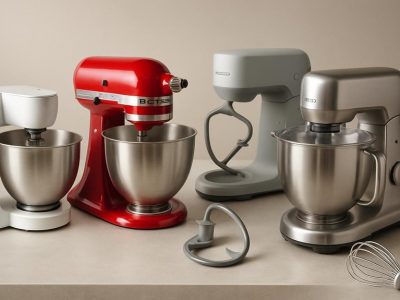
KitchenAid mixers, with their iconic tilt-head design and robust bowl-lift build, occupy kitchens in over 100 countries, each model whispering hints of different culinary promises. Picture you at a holiday dinner, with a KitchenAid Artisan Mixer spinning dough—its planetary mixing action reaching every corner, just as a conductor guides every instrument in a symphony. But then, consider the Professional 600 Series, tasked with mixing dense bread dough for a weekend baking marathon; the heavy-duty motor barely breaking a sweat.
People often ask, “Why are there so many models?” The answer lies in how different kitchens need unique solutions. Artisan Series, for example, specializes in small family batches and colorful countertops, offering over 20 shades like Empire Red or Aqua Sky. Meanwhile, the Classic Series (seen in America’s Test Kitchen) prioritizes simplicity, perfect for beginners who mix cookies just once a week. In contrast, commercial-grade KSM8990 caters to pastry chefs preparing croissant dough for hours at a stretch in bustling bakeries.
Some home cooks recall the first time they locked the bowl into a KitchenAid Classic, expecting it to whir like every hand mixer before—but instead, it hummed quietly, promising decades of use. Others discover the value of build material: stainless steel bowls resist scratches in high-traffic kitchens, while glass bowls add measuring convenience for those baking recipes that require exact measurements.
Manufacturers like Whirlpool (source: Whirlpool Corporation Annual Report 2022) continually innovate. Digital controls, slow-start features, and bowl sizes ranging from 3.5 to 8 quarts offer you flexibility whether crafting a single layer cake or 13 dozen cookies at once. You might wonder, “Does one mixer do it all?” Technically, all tilt-head models share attachment compatibility, but bowl-lift models accept larger capacities for bigger ambitions.
Choosing among KitchenAid’s lineup involves balancing workflow needs with preference for aesthetics, noise level, and ease of storage. For every bread baker, cupcake decorator, or pizza lover, there’s a distinct model waiting. You’re invited to ask: which mixer’s melody plays best in the rhythm of your kitchen?
Key Features to Compare Across Models
KitchenAid mixers show real variety where you notice every detail shapes how you work in your kitchen. You find unique features in every model, which gives you reasons to match your ambitions with the perfect mixer.
Bowl Capacity and Material
Bowl capacity tells you how much dough or batter fits at once, setting the rhythm for your baking sessions. Some models like the Classic Series offer a 4.5-quart stainless steel bowl, where you comfortably whip up a dozen cookies at a time. Larger mixers, such as the Professional 600, features a 6-quart bowl—enabling you to knead dough for three loaves of bread in one go. Stainless steel bowls resist stains and dents, glass bowls gives you a clear view of mixing progress, and ceramic bowls bring weight and decorative patterns. Family gatherings or bake sales, bowl choice determines if your workflow speeds up or slows down.
Motor Power and Performance
Motor power defines a mixer’s ability to tackle heavy tasks. Entry-level models like the Classic uses a 250-watt motor, handling cake batters and mashed potatoes with ease. Artisan Series steps up to 325 watts, crushing denser cookie doughs. Professional models boasts 575 watts or more, powering through triple batches of pizza dough weekly. Direct-drive motors, found in most stand mixers, transmit force efficiently from the engine to the beater, so you lose less power to friction. Choosing a high-wattage model benefits multitaskers, but if you rarely bake bread, less wattage means quieter operation.
Attachment Compatibility
Attachment compatibility expands mixer versatility far beyond whisking and kneading. All KitchenAid stand mixers share the same power hub, letting you connect over 15 official attachments like the pasta roller, food grinder, or ice cream maker. Still, bowl-lift designs, such as in the Professional 600 and Commercial models, sometimes need unique bowl or beater attachments, raising questions about accessory fit. If making fresh pasta or grinding meat sparks your curiosity, checking compatibilities saves frustration later.
Color and Design Options
Color and design options lets you express style while staying practical. Over 20 hues in the Artisan Series, including Empire Red or Matte Black, turn counters into art displays. Classic and Professional models offers fewer colors, but prioritize timeless appeal and robust finish. Design details, like tilt-head versus bowl-lift functions, determine how you add ingredients or clean up after a baking marathon. Home bakers often chooses designs that match existing appliances, but sometimes a bold color helps set the kitchen apart.
Comparing KitchenAid models in these ways helps you match mixer features to everyday kitchen stories—birthday cakes, family bread-making, quick pancake mornings, or experimental pasta nights.
Popular KitchenAid Mixer Models Compared
Different mixers shape kitchen routines with unique capacities, looks, and performance. If you compare these popular KitchenAid mixers, you’ll spot key differences that might just match your baking habits, party plans, or the soundtrack of your weeknight dinners.
KitchenAid Classic Series
Classic Series mixers combine simplicity, durability, and KitchenAid style. Their 4.5-quart stainless steel bowl fits enough dough for a small pizza night or two loaves of banana bread. Home cooks starting out usually gravitate toward this model. Its 250-watt motor handles cake batters and mashed potatoes, although, when you tackle thick whole-wheat bread, you may see it strain a bit compared to larger siblings.
Many users—students in their first apartments or empty nesters—find its tilt-head design and lighter build easy to move and store. Attachment compatibility brings the power hub to your kitchen for pasta or spiralizing, with all Classic models supporting those same extras as pricier mixers.
KitchenAid Artisan Series
Artisan models, like the KSM150, stand out with their 5-quart capacity and strong, 325-watt motors. Their rainbow of over 20 color choices invites decorators and bakers to match moods and cabinets. With the Artisan, you can whisk a dozen cookies or knead dough for a big focaccia. Families who bake together on Sunday mornings usually reach for this model.
The tilt-head mechanism allows quick bowl access. Most reviewers praise that versatility, while some, those trying double bread batches, note that Artisan sometimes needs a scrape-down to finish thick mixes. The pouring shield included with many Artisans helps keep flour explosions in check.
KitchenAid Professional Series
Professional Series mixers, such as the Professional 600 and Pro Line, elevate kitchens with a bowl-lift design and motors reaching 575 watts. Their 6-quart or 7-quart bowls dominate large-family gatherings, holiday pie marathons, or catering prep. If a neighbor asks how you handled triple batches for that PTA bake sale, the Pro series bowl-lift mechanism likely kept you going when tilt-head designs flinched.
Serious breadmakers—think sourdough, rye, and multi-grain—rely on this series for the horsepower. You’ll see these at culinary schools and busy home kitchens. With the power, though, some kitchens find the Professional Series bulkier and louder, so planners with smaller counters sometimes opt for the Artisan. Pro’s arms and heft may be what you need if you’re shaping traditions night after night.
Model
Bowl Capacity
Motor Power
Design Type
Color Options
Typical Use Case
Classic Series
4.5 qt
250 W
Tilt-head
2-3
Basic baking, small-batch tasks
Artisan Series
5 qt
325 W
Tilt-head
20+
Family baking, decorative kitchens, everyday use
Professional Series
6-7 qt
575 W
Bowl-lift
8-10
Batch baking, bread, professional/home chef tasks
Pros and Cons of Each Model
Every KitchenAid mixer kind of tells its own story, blending design with utility and sometimes tossing in a surprise or two. While you might picture baking cookies with a Classic Series, on a quiet Sunday, others may see themselves whipping meringue for a hundred macarons using the Professional 600. Let’s parse the grammar of these models—how one dependency leads to the next, and what each entity brings (or doesn’t bring) to your countertop.
Classic Series
Pros: Simple controls make this mixer welcoming for beginners who wants less fuss and easy cleanup. The 4.5-quart bowl fits most everyday recipes like banana bread or mashed potatoes, so you’re not left with wasted batter.
Cons: This model sometimes stirs expectations but lacks the horsepower (250 watts) to knead dense doughs frequently. Some users reports the tilt-head design feels a bit less sturdy during heavy use, especially with thicker batters.
Picture your first experiment making pretzel dough for game day—power matters here. Classic Series will try, but you might find yourself wrestling with the motor’s limits, wondering if this mixer’s syntax fits your aspirations.
Artisan Series
Pros: More color options (over 20) let your kitchen express itself, like choosing the “star” of a culinary play. At 325 watts and 5-quart capacity, you get flexibility to try soft ciabatta dough or triple batches of cookie dough, so you’re not pausing for refills.
Cons: The heavier body and glass bowl can feel a bit daunting on small counters. Some experiences recount having to shuffle kitchen gadgets each time you pull this mixer out—the Artisan loves the spotlight, but sometimes hogs the stage.
Picture prepping birthday cakes for your twins, with sprinkles flying and frosting in every hue. The Artisan’s mixer-bowl agreement turns chaos into choreography, but if space is at a premium, you might negotiate for extra storage.
Professional 600 Series
Pros: This bowl-lift design stands like a stage rig—solid, engineered for crowds. The 575-watt motor powers through thick bread doughs, making holiday stollen or whole-wheat pizza crusts a breeze. Bowl sizes up to 6 quarts expands your audience.
Cons: Bulkier frame pushes lighter mixers off the metaphorical stage. Several reviews (Consumer Reports, 2023) cite the noise as a surprise guest in the mix—think drum solo, not quiet sonata.
Can your counter handle the Professional 600’s weight and drama? When a thunderous dough hook kneads for hours, neighbors might wonder about the source of the kitchen symphony.
Commercial KSM8990
Pros: This mixer plays in a whole new key—an 8-quart bowl and commercial-grade motor lets you batch for bake sales, pop-ups, or charity drives. Restaurants, test kitchens, and serious home bakers cite its reliability (KitchenAid, 2022 product survey).
Cons: At over 30 pounds, relocation is rarely casual. Power needs may exceed some home kitchens; be mindful of outlets and clearances, if you’re composing for a domestic audience.
Folks dreaming of running a micro-bakery from their moonlit kitchen counters might find this model tempting, but which home really wants a bakery boss taking up residency?
Model
Bowl Size
Motor Power
Notable Pros
Notable Cons
Classic Series
4.5 qt
250 watts
Simple to use, great for daily basics
Limited power for heavy dough, tilt-head
Artisan Series
5 qt
325 watts
Color variety, versatile capacity
Large footprint, heavier body
Professional 600
6 qt
575 watts
Robust motor, bowl-lift for batch baking
Noisy, bulky
Commercial KSM8990
8 qt
>650 watts
Industrial reliability, high volume, durable
Heavy, requires more space and power
You may start to wonder—do you want to script simple Sunday pancakes or stage Broadway production breads? Each KitchenAid model’s dependencies build upon the last, like sentences shaping a delicious story in your kitchen. Notice if your recipes need a gentle whisk or powerful narration. The choice dances across practicality, dreams, and all the unfinished dough in between.
Which KitchenAid Mixer Model Is Right for You?
Choosing a KitchenAid mixer model involves more than ticking boxes on a features list—it’s a bit like picking a kitchen partner for your culinary adventures. Picture whirling up cinnamon rolls on a Sunday morning in your sun-dappled kitchen with a Classic Series. Its 4.5-quart bowl and 250-watt motor offer enough power for everyday batters, but if you plan to knead thick bread doughs frequently, this model could leave you cranking up your sleeves and wishing for extra strength.
Picture the Artisan Series—a mixer that comes in colors that pop like confetti at a birthday party. Its 5-quart bowl and 325-watt motor bring balance to ambitious recipes and weeknight brownies alike. Home bakers with families often reach for the Artisan, since its versatility and design fit a spectrum of kitchen aesthetics. Cooks who love crafting for bake sales or hosting cooking nights will find that extra bowl capacity lets you whip, beat, and fold with few pauses.
You step into the world of serious baking with the Professional 600 Series, a machine that anchors your countertop like a cast-iron skillet used for decades. Bowl-lift designs and over 575 watts of power meet the demands of dense dough, massive cake batters, or a batch of holiday cookies big enough for a block party. But, its heft means clearing space—on your counter and in your ears, since power comes with volume.
Some kitchens hum with the energy of catering or bustling family events. The Commercial KSM8990, a workhorse built for volume, produces dozens of loaves, whipping meringues that could fill a bakery case. If your aspirations lean toward business or frequent big gatherings, the model’s industrial durability delivers pace and consistency, but its 8-quart bowl and require for a dedicated space can prove too much for smaller settings.
When thinking about which model matches your story, ask: What kinds of dough will you wrestle most? Do you crave a flash of color as much as power, or do you delight in the quiet hum of a smaller, streamlined Classic? Why not compare the noise levels—a seldom-discussed trait except in open kitchens where conversation mingles with whirring motors? According to America’s Test Kitchen, the Pro 600 runs louder than the Classic or Artisan (source: ATK KitchenAid Mixer Reviews 2023).
Attachments turn even the simplest mixer into a Swiss Army knife. All models share the power hub, but weight, size, and motor could affect performance with demanding tools like the pasta roller or food grinder (source: KitchenAid). If you love making fresh pasta on weekends, weigh that in your choice.
Every cook enters their kitchen with unique rhythm and goals. Will your mixer help you set family baking traditions, kickstart a home baking business, or just fill the house with the scent of cookies? Your answer lives not just in charts and specs, but in how you picture the stories—the messes, the laughs, the experiments—that’ll fill your kitchen.
Conclusion
Choosing the right KitchenAid mixer is a personal journey that depends on how you love to cook and bake. Whether you value power, versatility, or a splash of color on your countertop, there’s a model designed to fit your lifestyle and kitchen space.
As you weigh your options, think about the recipes you want to master and the features that matter most to you. The right mixer can transform your kitchen experience and make every baking session more enjoyable.
Let your culinary ambitions guide you and pick the KitchenAid mixer that feels like a natural extension of your creativity. Your next kitchen story is just waiting to unfold.
To provide the best experiences, we use technologies like cookies to store and/or access device information. Consenting to these technologies will allow us to process data such as browsing behaviour or unique IDs on this site. Not consenting or withdrawing consent, may adversely affect certain features and functions.
Functional
Always active
The technical storage or access is strictly necessary for the legitimate purpose of enabling the use of a specific service explicitly requested by the subscriber or user, or for the sole purpose of carrying out the transmission of a communication over an electronic communications network.
Preferences
The technical storage or access is necessary for the legitimate purpose of storing preferences that are not requested by the subscriber or user.
Statistics
The technical storage or access that is used exclusively for statistical purposes.The technical storage or access that is used exclusively for anonymous statistical purposes. Without a subpoena, voluntary compliance on the part of your Internet Service Provider, or additional records from a third party, information stored or retrieved for this purpose alone cannot usually be used to identify you.
Marketing
The technical storage or access is required to create user profiles to send advertising, or to track the user on a website or across several websites for similar marketing purposes.