Understanding the Difference Between Judaism and Islam: Origins, Beliefs, and Modern Contexts
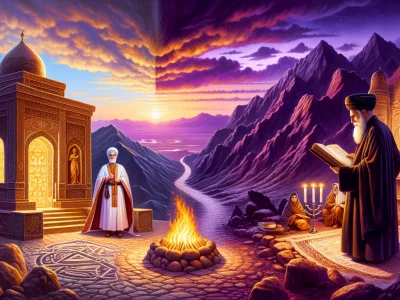
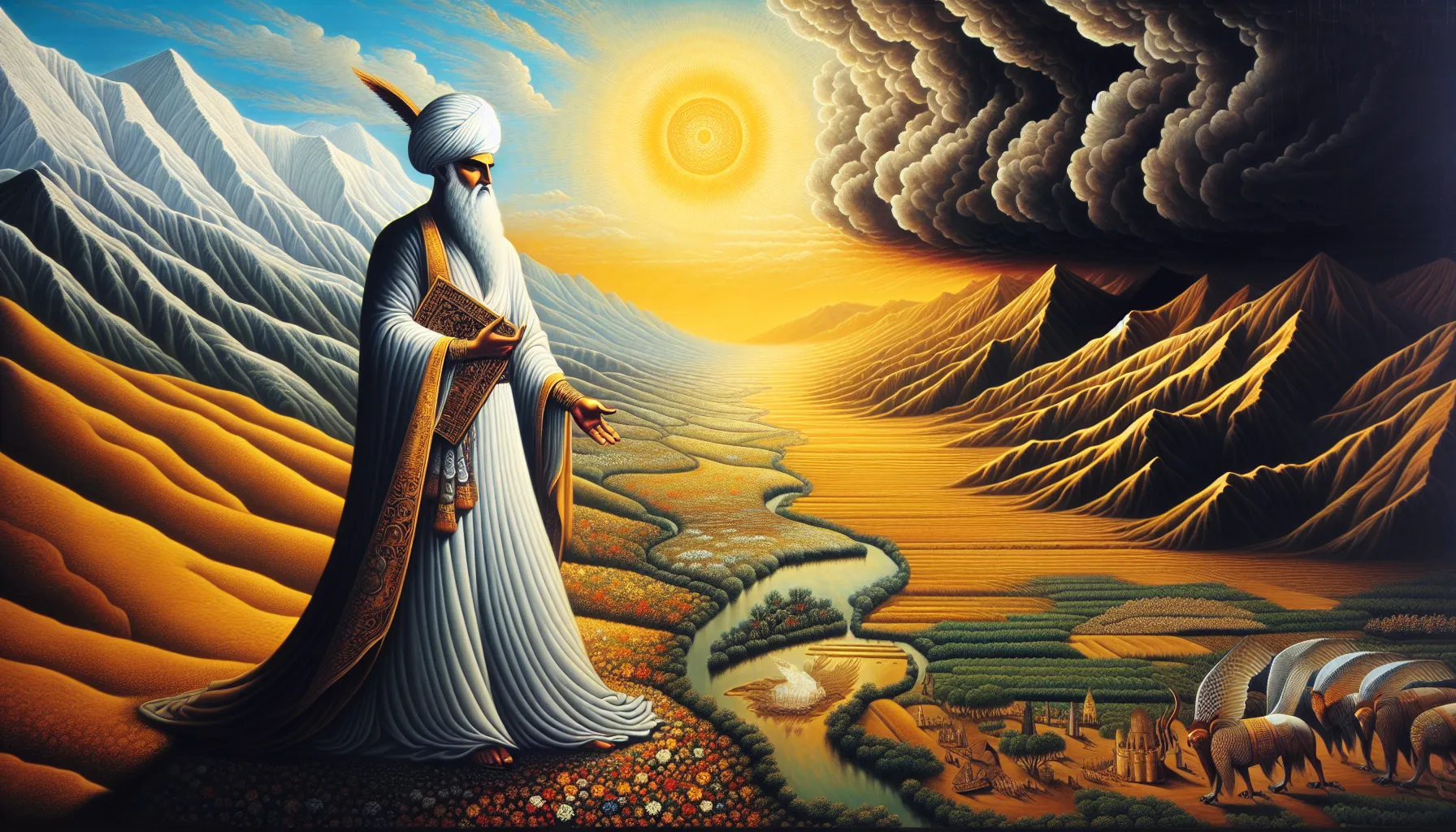
Imagine two ancient rivers flowing side by side, each carving its own path through history yet often intertwining. Judaism and Islam, two of the world’s most influential religions, share profound connections while maintaining distinct identities. Their roots stretch deep into the same soil, yet their branches reach in different directions, shaping cultures, traditions, and beliefs across the globe.
You might be surprised to learn just how much these faiths have in common, from monotheistic foundations to shared figures like Abraham. At the same time, their unique practices and interpretations set them apart in fascinating ways. Understanding these differences and similarities isn’t just an academic pursuit—it’s a window into the rich world of human spirituality and the values that unite and distinguish us.
Historical Origins
Judaism and Islam, while distinct in practice, share influential legacies rooted in ancient history. Both emerged within profound socio-cultural landscapes, impacting their development and growth.
Founding Figures
Judaism attributes its origins to Abraham, regarded as the patriarch of the Hebrew people, and Moses, who is central to the delivery of the Torah. Abraham’s covenant with God established the foundation of Jewish monotheism, shaping a unique identity over centuries. Moses led the Israelites out of Egypt (the Exodus) and received the Ten Commandments at Mount Sinai, forming the core of Jewish law.
Islam traces its beginnings to Prophet Muhammad in the 7th century CE, whose revelations became the Quran. Born in Mecca, Muhammad is considered the final prophet in Islam, confirmed through previous figures like Abraham and Moses. The connection between these faiths extends to shared prophets, demonstrating overlapping theological narratives.
Geographic Beginnings
Judaism originated in the Ancient Near East, specifically in the region of Canaan (modern-day Israel and Palestine). Early Jewish communities settled in this geographic area, establishing temples and synagogues vital for worship and communal identity. The Babylonian Exile (6th century BCE) also played a crucial role in reshaping Jewish traditions and diaspora communities.
Islam began in the Arabian Peninsula, with Mecca and Medina serving as crucial centers. Mecca, home to the Kaaba, held religious significance even before Islam’s emergence. After facing persecution, Muhammad’s migration to Medina (the Hijra) in 622 CE marked the start of the Islamic calendar. Expansion throughout the Middle East, North Africa, and beyond entrenched Islam’s influence across continents.
Core Beliefs
Judaism and Islam share core monotheistic principles but diverge in their interpretations, practices, and spiritual frameworks.
Concept of God
In Judaism, God is referred to as Yahweh and considered eternal, omniscient, and indivisible. The Shema prayer emphasizes the oneness of God: “Hear, O Israel: The Lord our God, the Lord is one” (Deuteronomy 6:4). Judaism doesn’t focus on a personal relationship with God for everyone; it often highlights the collective covenant between God and the Jewish people.
In Islam, God, known as Allah in Arabic, embodies absolute unity and sovereignty. Tawhid, the belief in the oneness of God, is central. The Quran states, “He is Allah, [who is] One, Allah, the Eternal Refuge” (Quran 112:1-2). Muslims emphasize personal submission to Allah through daily acts of worship and following divine guidance.
While both religions affirm God’s oneness, Judaism often emphasizes a historical and communal bond, whereas Islam stresses personal faith and accountability before Allah.
Sacred Texts
Judaism’s sacred text, the Hebrew Bible (Tanakh), comprises the Torah (Law), Nevi’im (Prophets), and Ketuvim (Writings). The Torah, containing 613 commandments, outlines religious laws and ethics. Talmudic interpretations further expand on these concepts, guiding practice and philosophy.
Islam’s Quran, believed to be the verbatim word of Allah as revealed to Prophet Muhammad, serves as the ultimate source of guidance. It consists of 114 surahs (chapters) addressing law, morality, and spirituality. The Hadith collections, recounting Muhammad’s teachings, complement the Quran and shape Islamic jurisprudence.
While the Hebrew Bible and Quran share themes like prophethood, covenant, and divine law, their structures and interpretations cater to each faith’s unique worldview.
Religious Practices
Judaism and Islam incorporate distinct yet deeply structured religious practices. These practices reflect their theological principles and cultural contexts, offering followers a framework for expressing faith and devotion.
Worship and Rituals
Both religions emphasize daily worship, but the approaches and rituals differ significantly. In Judaism, prayer is performed three times a day—Shacharit in the morning, Mincha in the afternoon, and Maariv in the evening. These prayers, often recited in Hebrew, are directed towards a single God, Yahweh, and include readings from the Siddur (prayer book). The synagogue serves as the primary place of worship, where communal prayers are led by a rabbi or cantor. Traditional practices include wearing a kippah (head covering) and tallit (prayer shawl).
In Islam, prayer or Salah, one of the Five Pillars, is conducted five times daily: Fajr, Dhuhr, Asr, Maghrib, and Isha. Unlike in Judaism, the prayers involve a specific physical sequence of movements, including bowing and prostration, symbolizing submission to Allah. These prayers, recited in Arabic, are oriented towards the Kaaba in Mecca. Mosques are central to worship, especially for congregational prayers like Jumu’ah on Friday.
Both faiths incorporate rituals around food. Judaism follows kosher dietary laws detailed in the Torah, like avoiding pork and not mixing meat and dairy. Islam prescribes halal guidelines outlined in the Quran, which also prohibit pork as well as alcohol and mandate specific slaughter methods for meat. The emphasis on dietary laws in both traditions serves as a means of spiritual discipline.
Observance of Holy Days
The religious calendar in Judaism is centered around holidays commemorating historical and spiritual events. Shabbat, the weekly day of rest, begins at sunset on Friday and ends at nightfall on Saturday, emphasizing prayer, family, and cessation of work. Annual holy days include Passover (Pesach), remembering the Exodus from Egypt, and Yom Kippur, the Day of Atonement focused on fasting and repentance. Festivals like Rosh Hashanah (New Year) and Hanukkah (Festival of Lights) also hold cultural and religious significance.
Islam’s holy days align with lunar cycles, notably Ramadan, a month of fasting, prayer, and reflection. During Ramadan, fasting occurs from dawn to sunset, breaking only with the evening meal (Iftar). Eid al-Fitr concludes Ramadan with celebratory prayers and communal meals. Eid al-Adha, the Festival of Sacrifice, commemorates Abraham’s willingness to sacrifice his son as an act of obedience to Allah, paralleled by a ritual animal slaughter shared with others.
While both traditions dedicate specific days to worship and reflection, their structures and symbolic meanings highlight their distinct spiritual frameworks. Each observance roots believers in a shared history while fostering community bonds and personal faith.
Dietary Laws
Dietary laws in Judaism and Islam reflect their respective religious texts and cultural traditions, serving as more than just dietary restrictions. They embody spiritual discipline and a connection to the divine through food-related practices.
Kosher in Judaism
Kosher dietary laws, rooted in the Torah, dictate what foods are permissible and how they’re prepared. You find detailed guidelines in Leviticus and Deuteronomy, emphasizing purity and separation. Meat and dairy cannot be consumed together, and animals must be slaughtered according to shechita, a method ensuring minimal suffering. Only animals with cloven hooves that chew cud, like cows and sheep, are kosher. Seafood options exclude shellfish, permitting only fish with fins and scales.
In Jewish households, separate utensils and cookware for meat and dairy are common. During Passover, additional restrictions ban leavened products (chametz). These practices foster mindfulness about consumption and align daily habits with religious principles.
Halal in Islam
Halal, meaning “permissible,” is derived from Islamic jurisprudence based on the Quran and Hadith. The Quran, particularly in verses like 2:173 and 5:3, outlines halal standards, forbidding the consumption of pork, blood, carrion, and alcohol. Animals must be slaughtered through dhabiha, invoking Allah’s name, to ensure spiritual adherence.
Unlike kosher, halal doesn’t mandate separating food categories like dairy and meat. Halal certification extends to a wide range of products, including pharmaceuticals and cosmetics. Ramadan highlights halal observance, as Muslims fast from dawn to sunset, breaking fast with permissible meals.
Both dietary laws showcase religious devotion, yet their unique elements underline the distinct spiritual frameworks of Judaism and Islam.
Approaches to Law and Ethics
Judaism and Islam both center their legal and ethical systems on divine commandments, yet their frameworks reveal distinctive methods of interpreting and applying these principles.
Jewish Halakha
Halakha, derived from the Torah, Talmud, and rabbinic literature, guides Jewish law and daily conduct. It encompasses religious, civil, and moral laws, reflecting the collective Jewish covenant with God. You see this in practices like observing Sabbath laws, adhering to dietary restrictions, and ethical dealings in business. Rabbis, as interpreters of Halakha, resolve modern dilemmas by relying on these sacred texts, adapting ancient laws to contemporary contexts.
For example, the prohibition of working on Shabbat includes complex debates over what constitutes “work.” In modern times, this has extended to discussions on electricity usage or driving vehicles. Halakha emphasizes a communal identity, with each member participating in the perpetuation of Jewish tradition.
Islamic Sharia
Sharia, rooted in the Quran and Sunnah, governs all aspects of a Muslim’s life. It integrates personal duties, legal rights, and spiritual obligations. Jurisprudence (fiqh) evolves within schools like Hanafi or Shafi’i, offering diverse interpretations. Core principles prioritize justice, mercy, and public welfare, which is evident in laws about charity (zakat), inheritance, and ethical commerce.
For instance, interest (riba) is forbidden in financial transactions, emphasizing equitable economic practices. Sharia also includes criminal law, but implementation varies across societies. Unlike Halakha’s communal framework, Sharia often seeks to establish laws for a broader societal governance.
Both systems reflect a balance between divine revelation and human interpretation, showing the rich layers of legal and ethical reasoning within Judaism and Islam.
Modern Interactions and Perspectives
Judaism and Islam, while historically interconnected, continue to influence and interact within modern societies. These interactions often highlight shared values but also reveal contemporary tensions.
Interfaith Relations
Interfaith dialogues between Jewish and Muslim communities aim to foster understanding. Programs like the Muslim-Jewish Advisory Council in the United States promote cooperation on issues like combating hate crimes and advocating for religious freedoms. Such initiatives underscore shared commitments to justice and social harmony.
Cultural exchanges also bridge gaps. For example, joint celebrations of common figures like Abraham, revered in both faiths, serve as platforms for mutual respect. In regions like the Middle East, but, political conflicts sometimes overshadow these efforts, complicating interfaith collaboration.
Contemporary Challenges
Globalization and migration introduce challenges for Jewish and Muslim minorities in secular or non-monotheistic societies. Religious practices, such as wearing the hijab or the kippah, often lead to debates about religious expression in public spaces.
Antisemitism and Islamophobia remain significant concerns. According to a Pew Research Center survey (2017), hate crimes against both groups have risen in several Western countries. Addressing these requires consistent advocacy and education about the rich traditions of each faith.
Conclusion
Understanding the differences and connections between Judaism and Islam enriches your perspective on these two influential faiths. By exploring their unique practices, shared histories, and modern interactions, you gain a deeper appreciation for their roles in shaping cultures and communities. Recognizing both their commonalities and distinctions fosters greater respect and encourages meaningful dialogue in today’s diverse world.

- Best Vn Codes - September 13, 2026
- Mhd Alternatives - September 13, 2026
- Honda CBR650R Competitors: Top Middleweight Sportbikes - September 13, 2026
by Ellie B, Site Owner / Publisher