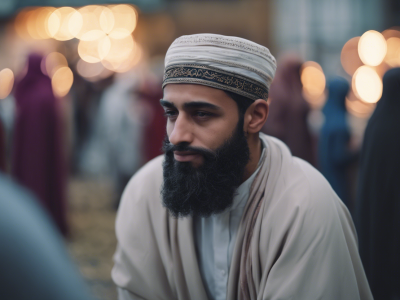
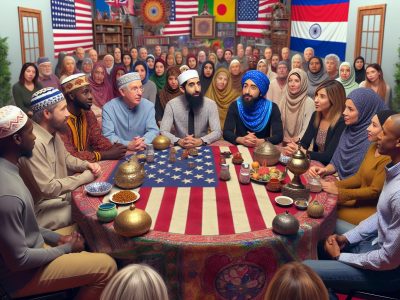
Picture stepping into a bustling market where the scent of spices lingers in the air and voices weave a tapestry of stories. You overhear a conversation—someone mentions Islam and another speaks of being Muslim. The words seem interchangeable but are they really the same?
Peel back the layers and you’ll discover a world where beliefs and identities intersect in unexpected ways. Understanding the difference between Islam and Muslim isn’t just about definitions—it opens doors to deeper respect and richer conversations. You might be surprised at how this simple distinction can reshape your perspective and spark meaningful connections with those around you.
Understanding the Terms: Islam and Muslim
Islam names the religion. Islam means “surrender” or “submission” in Arabic, which refers to surrendering to the will of Allah—the central concept within the faith. You may picture a garden whose beauty stems from unified effort: roots, stems, and petals working together in harmony. Islam’s conceptual “roots” lie in core beliefs—like tawhid (oneness of God), prophethood (risalah), and scripture (Qur’an). The entire structure grows from this foundation, with its culture, rituals, and ethics flowering from these roots.
A Muslim refers to a person who follows Islam. The word “Muslim” itself comes from the root ‘S-L-M’ signifying “one who submits.” Think of this: if Islam’s a path, then Muslims are the travelers, each moving at their own pace, carrying different stories, challenges, hopes. A Muslim could be your neighbor, a world leader, or the soccer coach at your local school. Some Muslims pray five times daily, others struggle to practice; all share an allegiance to the faith, but the diversity of experience is vast, just like you’ll notice in any global community.
Here’s a linguistic breakdown:
Term
Type
Meaning
Example
Islam
Noun (unmarked)
The religion, the faith itself
Islam teaches compassion and justice.
Muslim
Noun (agent)
A follower of the religion of Islam
Your friend Ahmed is a Muslim.
Can a person follow Islam without being called a Muslim? Not really, according to Merriam-Webster and Oxford, the terms directly link: practicing Islam identifies a person as a Muslim (Esposito, 2011). It’s as if “baking” and “baker” relate—one describes the action, the other, the actor.
Here’s a vivid anecdote: On the first day of Ramadan, Leila—a Muslim—steps into the dawn, fasting with intentionality. Her friend, curious about Islam, observes, asks questions, and finds herself inspired by Leila’s devotion. While one lives as a Muslim, the other engages with Islam’s ideas. Their conversation reveals how these terms travel together but don’t merge. This mirrors the difference between practicing a craft and admiring its artistry.
What’d happen if you called a non-Muslim admirer of Islamic art a Muslim? That’s a mislabel, just like calling someone a Buddhist for loving mandalas or statues. Accuracy fosters better understanding and respect.
If you wonder about the social impacts, Pew Research finds that knowing these distinctions improves interfaith relationships and reduces prejudice (Pew, 2017). Have you ever seen how shared language creates bridges rather than walls? That distinction—between belief system and believer—forms a cornerstone for informed, empathetic discussions.
So, when someone mentions Islam, you’re thinking of the beliefs, laws, and spiritual framework. When you hear “Muslim,” your mind should go to the practitioner—the unique individual walking the faith’s path, shaped by history, culture, and everyday life.
The Meaning of Islam
Islam means “submission” in Arabic, pointing to a faith rooted in surrender to one God. You’ll find this term shaping personal identity, community values, and shared history.
Core Beliefs and Principles
Islam centers on the concept of monotheism—worship of Allah. Key principles shape your understanding:
Shahada (Faith) rests on the testimony: “There is no god but Allah, and Muhammad is His messenger.” This statement guides daily spiritual practices for over 1.9 billion Muslims worldwide [Pew Research Center, 2021].
Salat (Prayer) sets a rhythm for life, requiring devotion five times a day, connecting you with both divine and global communities.
Zakat (Charity) enforces social responsibility; you’ll see Muslim charities structuring annual giving, aiming for justice and compassion.
Sawm (Fasting in Ramadan) mirrors discipline and empathy, demonstrated every year when families come together after sunset, sharing dates and stories.
Hajj (Pilgrimage) unites millions in Mecca—take the 2019 Hajj, with nearly 2.5 million pilgrims, all wearing white, embodying equality and humility.
Some might say Islam is just a legal system, but doctrines include ethics, family conduct, economics, and spirituality. Different schools of thought interpret principles, offering diversity—Sunni and Shia, to name two, provide distinct perspectives, sparking questions and debates about tradition versus change.
Origins and Historical Development
Islam began in the Arabian Peninsula in the 7th century CE. Your journey through history starts in Mecca, when Prophet Muhammad, reciting revelations said to be from the Angel Gabriel, transformed tribal society with a monotheistic vision.
From Mecca to Madinah, migration known as the Hijra in 622 CE marks year one in the Islamic calendar. Within a few decades, Islamic civilization extended from Spain to China. Muslim empires, including the Umayyad and Abbasid, developed centers of science, philosophy, and medicine. Baghdad’s House of Wisdom, for instance, helped translate and preserve ancient Greek texts—how many university libraries can claim such a legacy?
Some people question whether Islam “spread by the sword,” but historical records from the Cambridge History of Islam (volume 1) show periods of peaceful exchange and pluralism too: Christians, Jews, and Zoroastrians lived as protected minorities, paying jizya but maintaining autonomy.
You’ll see symbols of Islamic heritage in the architecture of Istanbul’s Hagia Sophia, the patterns of Alhambra in Spain, and the call to prayer echoing from Jakarta to Lagos. Every era brings new interpretations, debates, and reforms—Islam, like a river, adapts to the terrain it flows through, shaping and reshaping itself along with you.
Pillar
Arabic Name
Key Practice
Example Outcome
Declaration
Shahada
Faith statement
Converts recite in public
Prayer
Salat
Worship 5x daily
Congregational prayers in mosques
Charity
Zakat
Giving alms
Funding food banks, orphan support
Fasting
Sawm
Abstaining in Ramadan
Family gatherings, communal empathy
Pilgrimage
Hajj
Travel to Mecca, once if possible
Global reunions, ritual reenactments
Who Is a Muslim?
You might wonder what really defines a Muslim. Does belief alone make you a Muslim, or is it daily practice that truly anchors your identity? Unpacking the question reveals layers of faith, history, and cultural tapestry that stretch across continents and centuries.
Defining a Muslim
A Muslim, at its core, means someone who submits to the will of Allah, following the religion Islam. The word “Muslim” comes from the Arabic root “S-L-M,” the same base for both “Islam” and “salaam” (peace). When you call yourself a Muslim, you adopt the spiritual commitment of monotheism—believing in the oneness of God (Allah), accepting Muhammad as His final Messenger, and recognizing the Qur’an as divine guidance (Pew Research Center, 2022).
Some see Muslims as only those who pray, fast, or wear traditional attire, but these are surface markers, not the definition itself. Muslims include scientists at NASA observing prayer discreetly, street vendors in Jakarta donating zakat, and a quiet grandmother who whispers morning supplications. The label crosses ethnicities, languages, and borders—over 1.9 billion people identify as Muslim, representing about a quarter of the world’s population (World Population Review, 2023).
Have you ever met someone who quietly excused themselves for Salah at a workplace, or politely declined food for Ramadan fasting? Those moments reflect lived expressions of faith, signaling “I am Muslim,” yet the essence lies deeper than the action alone.
The Role of Practice and Belief
Being a Muslim involves both belief and practice, though the emphasis can shifts depending on interpretation. Formally, the Shahada—declaring, “There is no god but Allah, and Muhammad is the messenger of Allah”—constitutes entry into the Muslim community. This declaration, spoken with conviction, is foundational. But, as the Prophet Muhammad reportedly said, “Actions are judged by intentions”—meaning inner belief carries as much weight as outward practice (Sahih al-Bukhari 1:1).
Some Muslims pray five times daily, while others struggle with rituals but still hold fast to faith. Disagreements exists among scholars, too. For example, some schools of thought consider belief the most important determinant, while others argue consistent practice is inseparable from belief.
Think of it like a river—sometimes calm, sometimes fast-flowing, but always moving in a single direction. The riverbed is belief, channeling and supporting the flow of individual practices that can change over time or circumstance. For instance, a teenager in Istanbul reading the Qur’an on her phone reflects private belief, while an imam leading community prayers embodies public practice.
Can you recognize a Muslim by appearances or language? Normally, no. Identity springs from an internal relationship with God, visible in actions but rooted in belief. This balance, with all its diversity, sustains Muslim identity across time and place.
Key Differences Between Islam and Muslim
Understanding the difference between “Islam” and “Muslim” changes how you see faith, identity, and belonging. People often swap these words, but each follows a different path shaped by belief and practice.
Religion vs. Follower
Islam stands as a monotheistic religion originating in the 7th century CE with Prophet Muhammad in the Arabian Peninsula (history.com). Islam structures itself on scripture, law, and tradition. You see its foundation in the Qur’an, which Muslims call the revealed word of Allah (God). Central entities like the Five Pillars—Shahada, Salat, Zakat, Sawm, Hajj—anchor the spiritual and ethical life within Islam. The framework shapes everything from daily prayers to global charity.
A Muslim, on the other hand, represents an individual who identifies with Islam. This role isn’t just about rituals—you encounter stories of Muslims worldwide: A Turkish shop owner fasting through long summer days, an Indonesian teacher leading prayers in a village mosque, or a French student engaging in campus interfaith dialogues. Each example shows that being a Muslim expresses itself through diverse languages, cultures, and choices. Some Muslims interpret core teachings strictly, while others practice with cultural inflections or ask thoughtful questions about tradition. You choose how to express faith—yet your identity connects to the core beliefs of Islam if you call yourself Muslim.
Common Misconceptions
Confusing Islam with Muslims leads to stereotypes and unfamiliarity. For instance, some claim “Islam is violent” if a news story which highlights the actions of a single individual or group, but this mistake assumes all followers think and act identically. Misunderstandings about visible religious practices—like Hijab, beard, or dietary habits—often reduce Muslim identity to appearance, overlooking deep internal faith (pewresearch.org). Many people, even in multicultural cities, ask if all Muslims pray five times daily, yet the answer varies; not every Muslim practices the same—some do not pray at all.
Another misconception treats Islam as a uniform system. In reality, Islam adapts over centuries and across societies. What seems “ordinary” Muslim behavior in Egypt—like reciting poetry at shrines—might differ from practices in Senegal or Malaysia. Sometimes your neighbor’s Ramadan might include unique family recipes, while a friend in Dubai celebrates with citywide festivals.
So, if you wonder, “Is Islam just for Arabs?” the answer uncovers more: Most Muslims live outside the Middle East, for example in Indonesia, India or Nigeria. The term “Muslim” covers a span as wide as humanity itself—each one brings a distinct story, context, and way of surrendering to God.
The next time someone says, “They’re all the same,” you can ask, “Which Islam and which Muslim?” Understanding the grammar of faith reminds you that belief (Islam) and believer (Muslim) may travel together but aren’t joined at the hip. Would you ever confuse jazz with a jazz musician, or poetry with a poet?
Why the Distinction Matters
Understanding the difference between Islam and Muslim shapes your view of world cultures, religious identities, and social connections. This distinction anchors conversations in accuracy, preventing misunderstandings that can breed stereotypes or division.
Cultural and Social Implications
Distinguishing Islam (the faith system) from Muslim (the follower) affects how you approach intercultural communication, community outreach, and educational contexts. If you ever traveled in Malaysia, you might’ve noticed how mosques blend into urban life, with people of many ethnicities attending Friday prayers—all Muslims, not all with the same background. This signals that Muslim identity carries layers beyond just religious practice: it’s colored by history, tradition, and sometimes even food.
Muslims in France, as the Pew Research Center points out, represent over 5 million people, yet their practices range from secular to devout. Some wear hijabs, others don’t, yet all categorize as Muslim—revealing the loose boundary between cultural identity and religious compliance. Islam, as a global religion, offers a doctrinal anchor, setting beliefs and tenets. Muslims, conversely, embody those beliefs through a spectrum of practices that respond to the local culture and social norms.
Ask yourself, what story gets told when a Muslim student celebrates Eid in a U.S. classroom? The community learns about Islamic values like generosity and gratitude, but also about the student’s family rituals, blending Islamic tradition with American customs. The boundaries continually interact and blur, pushing you to find common ground rather than fixed labels.
If you confuse “Islam” with “Muslim,” you risk flattening a vibrant tapestry into a static frame. For instance, the ritual art of calligraphy expresses faith in Islam, yet not every Muslim practices or even knows this tradition. The same goes for holidays: Ramadan stands as a pillar of Islam, but Muslims worldwide adapt its observance to local calendars, foods, and even daylight hours.
When you group Islam and Muslim together without care, it masks the struggles Muslims face when cultures clash with faith—like French bans on face coverings or Indian debates about halal food in public spaces. Sociologist Jocelyne Cesari suggests that acknowledging difference enables more empathetic and constructive dialogues, reducing the “othering” often seen in public debates (Cesari, Cambridge Univ. Press, 2014).
Grasping this distinction makes you more than just a bystander in today’s global conversation. It lets you engage thoughtfully at interfaith dinners, workplace inclusion workshops, or in online debates over religious symbols. The more precise your language, the more bridges you build—turning what seems like a linguistic technicality into genuine social change.
Conclusion
When you recognize the difference between Islam and Muslim you open the door to richer conversations and deeper understanding. Using the right terms helps you respect the beliefs and identities of others while moving past common stereotypes.
As you engage with people from diverse backgrounds your awareness of these distinctions can foster empathy and create more meaningful connections. By choosing your words carefully you contribute to a more inclusive and informed world—one thoughtful conversation at a time.
Published: July 30, 2025 at 4:30 am by Ellie B, Site owner & Publisher
To provide the best experiences, we use technologies like cookies to store and/or access device information. Consenting to these technologies will allow us to process data such as browsing behaviour or unique IDs on this site. Not consenting or withdrawing consent, may adversely affect certain features and functions.
Functional
Always active
The technical storage or access is strictly necessary for the legitimate purpose of enabling the use of a specific service explicitly requested by the subscriber or user, or for the sole purpose of carrying out the transmission of a communication over an electronic communications network.
Preferences
The technical storage or access is necessary for the legitimate purpose of storing preferences that are not requested by the subscriber or user.
Statistics
The technical storage or access that is used exclusively for statistical purposes.The technical storage or access that is used exclusively for anonymous statistical purposes. Without a subpoena, voluntary compliance on the part of your Internet Service Provider, or additional records from a third party, information stored or retrieved for this purpose alone cannot usually be used to identify you.
Marketing
The technical storage or access is required to create user profiles to send advertising, or to track the user on a website or across several websites for similar marketing purposes.