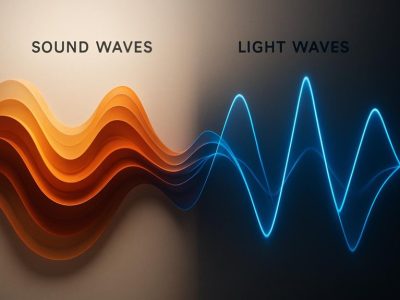
Picture standing in a room filled with sound waves you can’t see but can feel all around you. These invisible vibrations shape the music you love, the technology you use, and even how your brain processes information. But what makes those waves tick? The secret lies in their frequency—measured in hertz (Hz) and kilohertz (kHz).
At first glance, Hz and kHz might seem like simple units of measurement, but they hold the key to understanding everything from the pitch of a song to the speed of your internet connection. Whether you’re tuning into your favorite podcast or exploring cutting-edge tech, knowing the difference between these two terms can unlock a deeper appreciation for how our world works.
Understanding Hertz (Hz)
Hertz (Hz) is the standard unit for measuring frequency. It represents the number of cycles a wave completes in one second, highlighting its role in sound, electricity, and communication systems.
What Is Hertz?
Hertz quantifies how often an event repeats per second. A single hertz equals one cycle per second. For example, when you hear a 440 Hz tone, it’s vibrating 440 times every second. This measurement applies to various fields like physics and engineering.
In audio systems, Hz defines pitch perception. Lower frequencies like 20-50 Hz correspond to bass sounds, while higher ones near 10 kHz relate to treble notes. In electrical currents, AC power supplies usually operate at either 50 or 60 Hz based on regional standards.
Common Applications Of Hertz
You encounter hertz daily without realizing it:
Audio Frequencies
Headphones and speakers reproduce sound within ranges measured in Hz—for instance, “20-20kHz” indicates capability from deep bass (20 Hz) to high trebles (20 kHz).
Electrical Grids
Power grids use specific frequencies: North America operates at 60 Hz; most European countries adopt 50 Hz for alternating current distribution.
Wireless Communication
Radio stations broadcast signals using MHz or GHz bands derived from basic hertz principles—like FM radio channels around 88-108 MHz.
Understanding Kilohertz (kHz)
Kilohertz (kHz) represents a unit of frequency equal to 1,000 hertz (Hz). It’s commonly used in contexts where higher frequencies are involved, such as audio signals, radio broadcasting, and electronic circuits.
What Is Kilohertz?
A kilohertz is 1,000 cycles per second. This means if a soundwave has a frequency of 5 kHz, it completes 5,000 oscillations every second. Higher frequencies like these often fall within the range of human hearing or extend into technological uses beyond audible perception.
Human ears typically perceive sounds between 20 Hz and 20 kHz. Frequencies measured in kilohertz often correspond to higher-pitched tones. For example, musical instruments like piccolos or violins produce sounds that frequently reside within the kilohertz range. Similarly, digital audio files encode data using sample rates expressed in kHz—44.1kHz is standard for CDs.
Common Applications Of Kilohertz
Radio technology utilizes kilohertz for transmitting AM signals. Standard AM stations operate between 530 and 1700 kHz on the electromagnetic spectrum. These bands efficiently carry information over long distances with minimal interference.
In medical fields, ultrasound imaging employs sound waves ranging from hundreds of kilohertz to several megahertz (MHz), allowing detailed internal body scans without invasive procedures.
Consumer electronics also rely on kilohertz measurements for device functionality. Microcontrollers in home appliances process signals at clock speeds defined by their operating frequency in kHz or MHz ranges.
Key Differences Between Hz And kHz
Hertz (Hz) and kilohertz (kHz) represent units of frequency measurement, but their scales differ significantly. Understanding the differences between these units helps you comprehend various applications in technology, audio, and science.
Conversion Between Hz And kHz
The relationship between hertz and kilohertz is straightforward: 1 kHz equals 1,000 Hz. This means if a wave vibrates at 5,000 cycles per second, it’s equivalent to 5 kHz. Conversely, when converting from kHz to Hz, you multiply by 1,000; for example, 2.4 kHz equals 2,400 Hz.
For practical use cases like audio processing or signal analysis, mastering this conversion allows you to switch effortlessly between scales depending on the context. Devices such as spectrum analyzers display frequencies in either unit based on precision requirements.
Use Cases For Hz And kHz
Hertz finds applications in low-frequency domains like electrical systems and sound production. Subwoofer speakers operate within a range below 200 Hz for deep bass sounds. Power grids maintain consistent operations using fixed frequencies—60 Hz in North America or 50 Hz across Europe.
Kilohertz suits higher-frequency contexts where fine details are critical. AM radio broadcasts typically occupy frequencies ranging from 540 to 1,600 kHz. Ultrasound machines operate above human hearing thresholds at thousands of kilohertz for medical imaging purposes.
Each unit’s relevance depends on the specific application it supports—low-range vibrations align with everyday electronics while high-range signals cater to specialized technologies like telecommunications or diagnostic tools.
Why Understanding Hz And kHz Matters
Comprehending Hz and kHz enhances your ability to navigate technology, audio systems, and scientific applications. These frequency units serve as foundational elements in interpreting sound waves and electromagnetic signals.
Importance In Technology
Hz and kHz directly impact the functionality of modern devices. Audio equipment like headphones or speakers operates across specific frequency ranges to produce clear bass (low Hz) or treble (high kHz). For instance, a subwoofer emphasizes frequencies between 20-200 Hz, while tweeters handle sounds above 2 kHz for crisp details.
In radio communication, AM broadcasts use kilohertz frequencies (e.g., 600 kHz), ensuring efficient signal transmission over long distances. Microprocessors in computers often rely on clock speeds measured in MHz or GHz (1 GHz = 1,000,000 Hz), demonstrating the upward scalability of these concepts. Frequencies also influence digital sampling rates; CDs process audio at 44.1 kHz for high-quality playback.
Medical technology benefits significantly from understanding higher-frequency ranges too. Ultrasound machines operate within megahertz bands but originate from principles tied to kilohertz vibrations.
Importance In Everyday Life
Frequencies shape many daily experiences without you realizing it. Music streaming platforms optimize equalizer settings based on sound spectrums defined by Hz and kHz values—for example, adjusting low-end beats below 100 Hz while enhancing vocals around 3-6 kHz for clarity.
Household appliances like microwaves emit radiation at specific frequencies for heating food efficiently; these mechanisms stem from knowledge of wave behavior rooted in hertz measurements. Electrical grids maintain reliability by adhering strictly to regional standards—60 Hz systems dominate North America while Europe follows a consistent 50-Hz framework.
Conclusion
Understanding the difference between hertz and kilohertz empowers you to better appreciate the role of frequencies in your life. From audio systems to advanced technologies, these units define how sound and signals function around you. Whether you’re tuning into a favorite song or relying on devices that operate seamlessly through precise frequency measurements, this knowledge enhances your ability to navigate modern experiences.
By recognizing how Hz and kHz apply across various contexts, you gain insight into everything from music production to scientific innovations. This foundational understanding helps you connect with the technology shaping today’s world while appreciating the science behind it.
To provide the best experiences, we use technologies like cookies to store and/or access device information. Consenting to these technologies will allow us to process data such as browsing behaviour or unique IDs on this site. Not consenting or withdrawing consent, may adversely affect certain features and functions.
Functional
Always active
The technical storage or access is strictly necessary for the legitimate purpose of enabling the use of a specific service explicitly requested by the subscriber or user, or for the sole purpose of carrying out the transmission of a communication over an electronic communications network.
Preferences
The technical storage or access is necessary for the legitimate purpose of storing preferences that are not requested by the subscriber or user.
Statistics
The technical storage or access that is used exclusively for statistical purposes.The technical storage or access that is used exclusively for anonymous statistical purposes. Without a subpoena, voluntary compliance on the part of your Internet Service Provider, or additional records from a third party, information stored or retrieved for this purpose alone cannot usually be used to identify you.
Marketing
The technical storage or access is required to create user profiles to send advertising, or to track the user on a website or across several websites for similar marketing purposes.