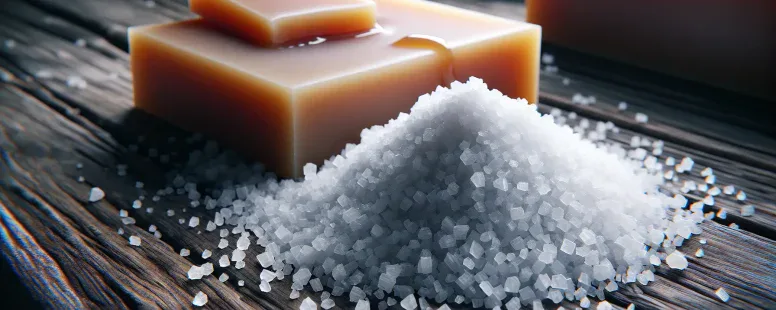
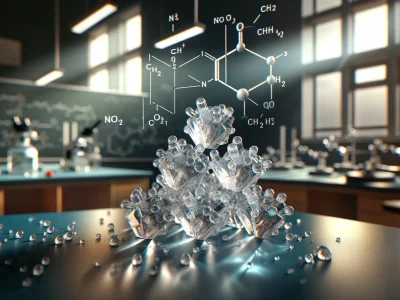
Picture holding a crystal of salt in your hand—its edges sharp, its surface cool and gleaming. Now picture the soft shimmer of a wax candle melting in your palm. What if the secret behind these everyday sensations lies deep within the invisible dance of atoms? You might not realize it, but the way these particles connect shapes everything from the crunch of your favorite snack to the warmth of your morning shower.
Curious about what makes some materials shatter like glass while others stretch and bend? The answer hides in the mysterious world of chemical bonds. Ionic and covalent bonds may sound like textbook jargon, but understanding their differences unlocks a hidden layer of the world around you—revealing why substances behave the way they do and how you can harness their unique properties in surprising ways.
Overview of Chemical Bonds
Chemical bonds connect atoms, create molecules, and shape all physical materials you interact with—whether that’s the grains of salt on your fries or the wax of a candle melting in your hand. These connections arise from the forces that attract or share electrons between atoms, but different types of bonds give rise to different properties. Ionic bonds and covalent bonds, for example—they sits at the center of this process, each with its own role in chemistry’s story.
Two atoms walk into a bar. One says to the other, “Take my electron—seriously, you need it more than I do.” It’s not a joke, it’s the basis of ionic bonding. Here, an atom like sodium donates an electron to another atom such as chlorine, creating charged entities called ions (Na⁺ and Cl⁻). These ions get sticked together by the strong pull between opposite charges (Crabtree, 2019).
Other atoms, not content with simply giving or taking, decides to share electrons. That’s covalent bonding—think of it like two friends holding hands across a narrow bridge, each keeping a firm grip. Molecules like H₂O and CH₄ form through this kind of electron-sharing pact (Atkins & de Paula, 2018). Why do some atoms share while others give or take? It depends on their electronegativity values and their hunger for electrons.
If you ever wondered why salt dissolves so easily in water, yet wax floats without a care, the answer lies in the type of bond. Ionic crystals fall apart in polar solvents, because water molecules surround the ions and tug them away. Covalent compounds—chalk, sugar, wax—often stay stubborn, not breaking into charged pieces easily.
Labeled diagrams of sodium chloride and methane molecule, if you seen them, shows you these patterns vividly. Here’s a question to ponder: Would your smartphone’s battery work if the chemical bonds inside were all of just one type? Energy storage, transmission, and release often rely on the precise arrangement of different bonds.
Chemical bonds aren’t just a classroom formula—they’re the architects of taste, texture, color, and power in your daily life.
What Are Ionic Bonds?
You encounter ionic bonds whenever you sprinkle salt on your fries or see crystals glimmer in the sunlight. These connections act like invisible magnetic bridges between positive and negative ions—a bit like pairs of socks sticking together after a tumble in a dryer. Can you picture what might happen if sodium and chlorine swapped their identities in your favorite snacks?
Formation of Ionic Bonds
Atoms form ionic bonds when one atom, usually a metal like sodium (Na), donates electrons to another, often a nonmetal such as chlorine (Cl). Sodium loses one electron, transforming into a positively charged ion (Na⁺), while chlorine gains this electron, becoming a negatively charged ion (Cl⁻). This exchange create two oppositely charged ions, which attract each other due to electrostatic forces (Petrucci et al., 2017).
For example, table salt (sodium chloride) forms as billions of sodium and chlorine atoms undergo this transfer, locking together into a repeating crystal lattice. If these ions didn’t interact so strongly, salt would’t stay solid or keep its distinctive crunch. Reflect for a moment—how might kitchen chemistry change if these ions simply ignored each other?
Properties of Ionic Compounds
Ionic compounds display some striking feature: high melting and boiling points, brittle structure, and strong electrical conductivity in water. When you toss salt into water, those individual Na⁺ and Cl⁻ ions break free, conducting electricity. If you’ve ever noticed salt melting snow, that’s ionic action at work—dissolved ions disrupt water’s freezing pattern.
Here’s a comparison table for ionic compound properties:
Property
Example (Table Salt)
Molecular Explanation
Melting Point
801°C
Strong attraction among Na⁺/Cl⁻ ions
Electrical Conductivity
Conducts in solution
Free-moving ions transport electrons
Physical State (Room Temp.)
Solid (crystalline)
Rigid, ordered lattice built by attractions
Solubility in Water
Highly soluble
Ions separate and disperse in water
Most ionic compounds, like calcium chloride (CaCl₂) in road de-icing, share these properties. Have you wondered why plastic or wax don’t dissolve in water the way salt does? Ionic bonds and their resulting charged entities explain these everyday mysteries, shaping so much of what you see, touch, and taste.
What Are Covalent Bonds?
Covalent bonds connect atoms in most things you touch—your plastic water bottle, a drop of oil, the DNA in your cells. The secret? They form from sharing electrons, not swapping them like trading cards.
Formation of Covalent Bonds
Covalent bonds form when two nonmetal atoms, such as hydrogen and oxygen, share electron pairs to reach a stable electronic configuration, which makes them behave like noble gases. For example, every water (H₂O) molecule forms with each hydrogen atom sharing an electron with oxygen, so everyone gets what they want, at least on the atomic scale. If you ever wondered why both diamonds and pencil “lead” (graphite) feel so different, even though they’re both pure carbon, it’s because covalent bonds shape how atoms connect—diamonds get a rigid, three-dimensional structure while graphite forms sheets that slide easily. Oxygen, nitrogen, chlorine: these elements often form multiple covalent bonds, doubling or tripling up on shared electrons, which creates a variety of molecules in nature (Brown et al., 2018). Think about the power within a sugar cube—those bonds store energy that later fuels your sprints and study sessions.
Properties of Covalent Compounds
Covalent compounds typically show low melting points, don’t conducts electricity, and often exist as gases, liquids, or brittle solids at room temperature. Sugar dissolves sweetly in water but you can’t fix a circuit with a spoonful—unlike ionic salt, because covalent molecules don’t split into ions (Zumdahl & Zumdahl, 2020). You get wax that seals your crayons from melting on a cool day or fuels that burn bright, teams of carbon and hydrogen releasing energy because of their shared electrons. Inspect a plastic bottle, and you’ll see polymer chains holding together tightly thanks to robust covalent links—perhaps you notice that heat makes them soft instead of shattering them. Picture: why does carbon dioxide float into the air while rocks remain firm? The difference is once again in covalent versus ionic bonds.
Key Differences Between Ionic and Covalent Bonds
Every time you sprinkle salt on your fries or watch wax melt on a birthday candle, you’re witnessing the subtle choreography orchestrated by ionic and covalent bonds. These chemical connections script each material’s character, dictating behaviors as distinctive as the snap of rock candy versus the smooth rip of a plastic bag.
Structural Differences
Ionic and covalent bonds organize atoms in ways that echo different architectural blueprints. In ionic bonds, metals like sodium give away electrons to nonmetals such as chlorine which creates charged particles called ions. These ions stack tightly together in rigid, repeating patterns—a crystal lattice. If you picture a chessboard packed with alternating black and white queens, you’ll see how the charges line up, each piece locked in place by rivalry and attraction.
On the other side, covalent bonds pair atoms through the sharing of electron pairs, threading them together as if two hands gripped the same rope. Water molecules (H₂O) share their electrons between hydrogen and oxygen, weaving clusters that are small and discrete. Rather than vast lattices, most covalent compounds float as independent molecules, like sugar crystals dissolving into tea or oxygen making every breath possible.
Ever wondered why salt shatters while diamond endures? Ionic bonds (like those found in salt) break under pressure due to repulsion between same-charged ions when shifted; while the pure network of covalent bonds in diamonds gives them the bragging rights for being one of the hardest materials known (source: Royal Society of Chemistry).
Physical and Chemical Properties
Your senses can often distinguish between materials built on ionic versus covalent bonds. Ionic compounds—think table salt or classic sidewalk chalk—generally look like brittle, crystalline solids. They snap, crackle, and dissolve with pretty remarkable speed in water, freeing their ions to conduct electricity in solutions (National Institute of Standards and Technology).
Contrast that to things like wax, sugar, or carbon dioxide—all boasting covalent bonds—which may appear as gases, soft solids, or liquids at room temperature. Drop sugar in coffee and watch it blend smoothly; even as it vanishes, the molecules remain discrete and neutral, not splitting into charged fragments. You could never get wax—or most covalent compounds—to conduct electricity, no matter how much you pleaded or prodded.
Physical traits diverge even more: Ionic compounds brag of high melting and boiling points (NaCl melts at 801°C), while most covalent compounds yield or vaporize at far lower temperatures. Diamonds, built from carbon in a web of covalent bonds, break this trend as an outlier among covalent structures.
Does this binary always hold? Covalent molecules such as graphite (used in pencils) defy expectations, sliding across paper with ease due to their layered structure—an exception born from the creative quirks of carbon. So, as you grip a pencil or taste popcorn salt, you’re really holding the consequences of different atomic alliances. Which properties do you value more: the strength of diamonds, or the flexibility of wax? Each bond type offers a unique set of possibilities—waiting to be leveraged in the next material innovation.
Real-World Examples
Everyday scenes showcase the difference between ionic and covalent bonds, connecting invisible atoms to memorable experiences. When you grip a handful of table salt or notice the shimmer of a paraffin candle, you interact directly with how these bonds shape physical reality.
Everyday Applications of Ionic Bonds
Sprinkle salt on your eggs and you engage with a classic ionic compound—sodium chloride (NaCl). Here, sodium gives up one electron, chlorine takes it, and they lock together with a force strong enough to build cubic crystals. That crunch in your mouth, that’s the crystal lattice at work (Atkins & de Paula, 2017). Ionic bonds formed by metals and nonmetals, like magnesium oxide (used in antacids) or potassium iodide (found in iodized salt), favor hardness and stability.
Touching the sidewalk after winter you might notice the coarse grains spread to melt ice. Road salt, mainly calcium chloride, releases ions when dampened, breaking up ice’s rigid hydrogen-bonded structure. Ionic compounds’ ability to dissolve and conduct electricity in solution underlies water treatment processes and keeps city roads safer.
If you pour sports drinks with electrolytes, you hydrate with dissolved ionic salts that transmit electrical impulses, crucial for your muscles and nerves (MedlinePlus, 2023). why pure table salt doesn’t light a bulb but saltwater does? Only when ions move freely does electrical conduction happen.
Everyday Applications of Covalent Bonds
Grasp a plastic bottle or chew a stick of gum, and your hands encounter molecules held not by charged attraction but by partnerships—electron sharing between atoms. Squeeze a wax candle: paraffin’s softness comes from covalently bonded carbon and hydrogen in long, flexible chains.
Taste honey or bite into fruit—sucrose and fructose are both sugar molecules, each stitched together by covalent bonds between carbon, hydrogen, and oxygen. These compounds won’t break into ions, so they stay neutral in water, explaining why sugar won’t light up a bulb in your science experiment.
Examine the shimmer in a diamond ring and see networks of carbon atoms, each strongly bonded to four others. This covalent structure makes diamonds incredibly hard yet still lets graphite—another carbon form with weakly layered covalent bonds—feel slick in a pencil. Compare those two and you see covalent bonds’ versatility.
The DNA in your cells, the silk in a spider’s web, even the soap bubbles in your kitchen sink all rely on covalent chemistry, tuning flexibility, color, and reactivity to life’s needs. When you marvel at materials’ diversity, you reveal the story written by millions of covalent connections, silent and essential.
Conclusion
When you start noticing the materials around you, you’ll see just how much the type of chemical bond shapes their behavior and usefulness. Whether you’re reaching for table salt or using a plastic bottle, the atomic connections inside make all the difference.
By understanding ionic and covalent bonds, you’re better equipped to appreciate the science behind everyday objects and even the technology you rely on. The next time you encounter something new, consider what kind of bond might be at work and picture the possibilities for future innovations.
Published: July 31, 2025 at 4:30 am by Ellie B, Site owner & Publisher
To provide the best experiences, we use technologies like cookies to store and/or access device information. Consenting to these technologies will allow us to process data such as browsing behaviour or unique IDs on this site. Not consenting or withdrawing consent, may adversely affect certain features and functions.
Functional
Always active
The technical storage or access is strictly necessary for the legitimate purpose of enabling the use of a specific service explicitly requested by the subscriber or user, or for the sole purpose of carrying out the transmission of a communication over an electronic communications network.
Preferences
The technical storage or access is necessary for the legitimate purpose of storing preferences that are not requested by the subscriber or user.
Statistics
The technical storage or access that is used exclusively for statistical purposes.The technical storage or access that is used exclusively for anonymous statistical purposes. Without a subpoena, voluntary compliance on the part of your Internet Service Provider, or additional records from a third party, information stored or retrieved for this purpose alone cannot usually be used to identify you.
Marketing
The technical storage or access is required to create user profiles to send advertising, or to track the user on a website or across several websites for similar marketing purposes.