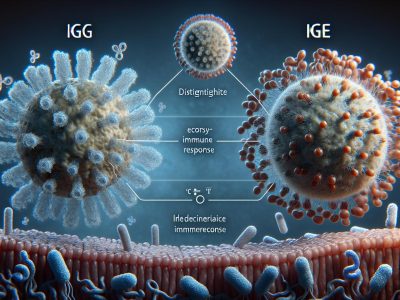
Imagine your immune system as a bustling city, with antibodies acting as vigilant security forces. Among these defenders, Immunoglobulin G (IgG) and Immunoglobulin M (IgM) play crucial roles, each with its unique responsibilities. But what sets them apart in the grand scheme of your body’s defense mechanism?
Picture IgM as the first responder, the swift and robust force that launches an immediate attack when a new pathogen invades. It’s large, powerful, and ready to tackle threats head-on. In contrast, IgG is the seasoned detective, meticulously analyzing and remembering past invaders to prevent future attacks. Its finesse lies in its ability to provide long-term immunity and protection.
Understanding the differences between IgG and IgM can empower you with insights into how your body fights infections. Investigate into this intriguing area and discover the secrets behind your immune system’s relentless protection.
Understanding Immunoglobulins
Immunoglobulins, proteins generated by your immune system, play a crucial role in pathogen defense. Found primarily in blood and body fluids, they help identify and neutralize bacteria and viruses. With five distinct classes, immunoglobulins contribute unique roles to your immune response.
IgA protects mucous membranes in areas like your respiratory and gastrointestinal tracts.
IgD is mainly found on B-cell surfaces, essential for initiating immune responses.
IgE triggers allergic reactions by responding to allergens and combating parasitic infections.
IgG provides long-term protection by remembering invaders, allowing swift action during re-exposure.
IgM attacks new pathogens first, acting as a primary responder in infections.
Differing in size, abundance, and function, each immunoglobulin class targets specifics of an immune response. IgG, for example, is the most prevalent one in blood, while IgM is the largest, essential during initial exposure to threats. Understanding these differences highlights how your immune system tailors responses, optimizing pathogen defense and preventing infections. The dynamic nature of immunoglobulins showcases versatility in immunity, ensuring a robust defense against a vast array of pathogens.
What is IgG?
IgG, or Immunoglobulin G, is the most abundant antibody in your body, constituting approximately 75% of the immunoglobulins in blood. It provides long-term immunity by identifying and neutralizing pathogens.
Structure and Function
IgG has a Y-shaped structure with two antigen-binding sites which allows it to effectively bind to and neutralize specific antigens. This structural efficiency, coupled with its ability to cross the placental barrier, enables IgG to offer passive immunity to the fetus. Its smaller molecular size, compared to IgM, contributes to its versatility and distribution throughout bodily tissues and fluids.
Role in the Immune System
IgG plays a critical role in the immune system by remembering past infections and responding quicker to subsequent exposures. It acts as the body’s seasoned detective, mastering the art of identifying repeat offenders. During a secondary immune response, IgG levels can rise significantly, forming a more robust and targeted defense. According to studies, IgG is crucial in neutralizing toxins and opsonizing pathogens for phagocytosis. In cases of vaccinations, IgG’s ability to provide lasting immunity through memory cells showcases its pivotal role in preventive health measures.
What is IgM?
IgM, short for Immunoglobulin M, serves as the body’s primary defense against new infections. Representing about 10% of the antibody pool, it’s the largest immunoglobulin in size.
Structure and Function
IgM exhibits a pentamer structure. This means it comprises five Y-shaped units linked together, creating a complex with 10 antigen-binding sites. This extensive structure allows IgM to effectively bind to pathogens, clumping them together for efficient elimination by the immune system. Researchers have noted IgM’s role in agglutination and complement activation, which are crucial for the initial immune response (Janeway et al., 2001).
Role in the Immune System
IgM acts first when a pathogen enters the body. As the initial responder, its large size aids in quickly neutralizing antigens before other antibodies, like IgG, take over. Serology testing often detects IgM to diagnose recent infections, given its rapid production after exposure. In cases of an acute infection, IgM levels rise swiftly, serving as an indicator of primary immune response and active infection, though they also decline rapidly as IgG rises. This dynamic highlights IgM’s critical role in launching immediate defense mechanisms and signals ongoing immune activity in response to new invaders.
Key Differences Between IgG and IgM
Understanding key differences between IgG and IgM enhances comprehension of adaptive immunity. Each antibody plays a distinct role, focusing on different aspects of immune defense.
Antibody Response Time
IgM responds rapidly to new infections. It’s the first antibody produced when a pathogen invades, with levels peaking quickly to initiate defense. In contrast, IgG appears later, its production increases during the secondary immune response for ongoing protection. IgM often indicates an early phase of infection, while IgG suggests longer-term immunity.
Half-Life and Longevity
IgG has a longer half-life, averaging about 23 days, which supports its role in long-term immunity. IgM’s half-life is shorter, around five days, reflecting its role as a fast-reacting, yet temporary, defender. The longevity of IgG contributes to its ability to provide sustained protection against previously encountered pathogens.
Clinical Significance and Testing
Testing for IgM and IgG levels helps diagnose infections and monitor immune response. High IgM levels could point to an acute or recent infection, while elevated IgG levels often indicate past exposure or vaccination response. Clinics leverage these tests to distinguish between active and past infections, guiding treatment decisions efficiently.
Applications in Medical Diagnosis
Understanding the roles of IgG and IgM in medical diagnosis helps with accurate disease detection and monitoring. These antibodies provide insights into a patient’s immune status.
Use in Infectious Disease Detection
IgM antibodies play a vital role in identifying acute infections. When a new pathogen enters the body, IgM levels rise rapidly, indicating an ongoing infection. For example, elevated IgM titers can signal a recent viral infection such as dengue or Zika. IgG antibodies, in contrast, reveal past infection or exposure. They persist longer in the bloodstream, suggesting immunity development over time. In the context of infectious diseases like hepatitis or rubella, detecting IgG suggests the body has encountered the virus before, providing clues about immunity status and vaccination efficacy.
Implications in Autoimmune Disorders
IgG and IgM contribute to diagnosing autoimmune disorders by indicating abnormal immune responses. Elevated IgM levels in conditions like rheumatoid arthritis suggest active inflammation, while IgG can mark disease progression. Autoimmune diseases such as lupus often feature specific IgG autoantibodies targeting the body’s tissues. By monitoring these antibodies, healthcare professionals gain insights into disease activity and response to treatment. An understanding of IgG and IgM profiles aids in managing autoimmune conditions more effectively, tailoring interventions to each patient’s unique immune dynamics.
Conclusion
Understanding the distinct roles of IgG and IgM enhances your grasp of the immune system’s complexity. IgM acts as a rapid responder, crucial during initial pathogen exposure, while IgG provides long-term immunity and remembers past infections. Recognizing these differences aids in interpreting immune responses and the significance of antibody testing in diagnosing infections and autoimmune conditions. By appreciating how these antibodies function, you gain valuable insights into your body’s defense mechanisms, empowering you to make informed decisions about your health and well-being.
To provide the best experiences, we use technologies like cookies to store and/or access device information. Consenting to these technologies will allow us to process data such as browsing behaviour or unique IDs on this site. Not consenting or withdrawing consent, may adversely affect certain features and functions.
Functional
Always active
The technical storage or access is strictly necessary for the legitimate purpose of enabling the use of a specific service explicitly requested by the subscriber or user, or for the sole purpose of carrying out the transmission of a communication over an electronic communications network.
Preferences
The technical storage or access is necessary for the legitimate purpose of storing preferences that are not requested by the subscriber or user.
Statistics
The technical storage or access that is used exclusively for statistical purposes.The technical storage or access that is used exclusively for anonymous statistical purposes. Without a subpoena, voluntary compliance on the part of your Internet Service Provider, or additional records from a third party, information stored or retrieved for this purpose alone cannot usually be used to identify you.
Marketing
The technical storage or access is required to create user profiles to send advertising, or to track the user on a website or across several websites for similar marketing purposes.