Ever found yourself caught in the crossfire of a heated debate between HVLP and airless paint sprayers? You’re not alone. It’s a common conundrum for DIY enthusiasts, hobbyists, and professionals alike who are looking to achieve that flawless finish on their projects.
Understanding HVLP and Airless Paint Sprayers
What Is an HVLP Paint Sprayer?
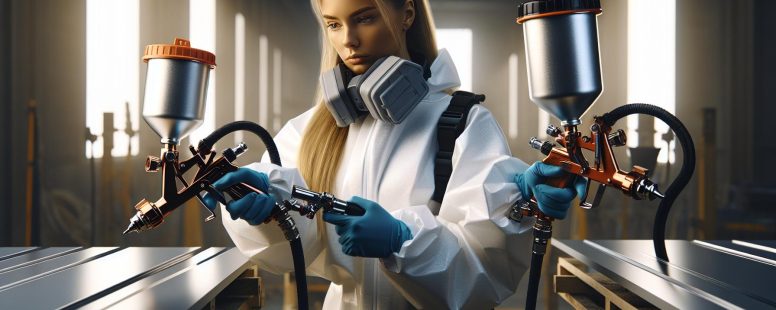
An HVLP (High Volume Low Pressure) paint sprayer is a type of spray system that operates by using a high volume of air at low pressure to atomize, or break up the paint into tiny droplets. This process helps in achieving superior precision and control while spraying.
In this method, more than 65% of your material ends up on your project’s surface rather than being lost as overspray. Examples include painting furniture or kitchen cabinets where you’d want minimal wastage and maximum finish quality.
HVLP systems are typically best for smaller projects due to their slower application speed compared with other types. They’re also ideal when working indoors because they produce less mess and require fewer protective measures like masking off areas not intended for painting.
What Is an Airless Paint Sprayer?
Airless paint sprayers work differently from HVLP ones; instead of relying on air to atomize the material, they use high hydraulic pressure which creates a forceful stream causing it to separate into small particles before hitting the surface.
This mechanism allows them efficiently cover large surfaces quickly — imagine coating exterior walls, fences, decks – places requiring broad coverage over precise detailing!
Key Differences Between HVLP and Airless Sprayers
After gaining an understanding of how both HVLP (High Volume Low Pressure) and airless paint sprayers operate, it’s time to dive deeper into their key differences. These distinctions can guide you in choosing the appropriate tool for your painting tasks.
Finish Quality and Precision
HVLP sprayers provide a high-quality finish, given their precision. The low pressure at which they release paint allows for greater control during application—ideal if you’re working on projects that require detailed work such as furniture or kitchen cabinets. For instance, refurbishing an antique cabinet with intricate designs would call for this level of accuracy.
On contrast, airless sprayers might not offer the same degree of precision due to their design principle – using high hydraulic pressure instead of airflow like HVLPs do. This leads to more overspray compared to its counterpart but ensures even coating across large surfaces.
Speed and Efficiency
Airless systems excel when speed is crucial in your project timeline; they’re designed specifically for covering extensive areas swiftly due to the absence of compressed air usage — imagine trying to recoat exterior walls or vast fences within limited timespans!
But, don’t assume that speedy means wasteful! Yes, there may be increased overspray yet these devices are engineered cleverly: excess paint particles get sucked back through a return line into the reservoir ensuring minimal waste while maximizing productivity rates—a feature absent in traditional HVLP units.
Pros and Cons of HVLP Paint Sprayers
Let’s investigate deeper into the specifics of High Volume Low Pressure (HVLP) paint sprayers. You’ll find they offer unique advantages, but also come with some challenges.
Advantages of HVLP Paint Sprayers
Superior Finish Quality: With an HVLP spray gun, you achieve a smooth and even finish on surfaces.
Precision Control: It allows for accurate spraying in small areas or intricate projects thanks to its low-pressure output.
Less Overspray: Compared to airless sprayer models, these units produce less overspray which results in minimal waste of materials.
User-Friendly Operation: Even if you’re not seasoned in painting tasks yet, operating an HVLP unit is generally easier than handling other types.
But, like any tool out there that does wonders when used correctly can pose drawbacks when applied under unsuitable circumstances.
Limited Speed – If speed matters more than precision for your project such as large-scale exterior walls or fences then this type isn’t optimal because it works slower compared to airless ones due to lower pressure.
2 .Reduced Coverage Area: Because of their nature design favoring detail over area coverage capacity may require multiple passes resulting longer completion time especially for extensive spaces .
3 .Higher Initial Cost: While saving material cost by reducing overspray they are typically pricier upfront so could be considered investment rather simple purchase .
Pros and Cons of Airless Paint Sprayers
Transitioning from the specifics of HVLP sprayers, let’s shift our focus to airless paint sprayers. While these are ideal for larger tasks due to their rapid coverage capacity, they come with a unique set of advantages and disadvantages.
Advantages
Rapid Coverage: Airless paint sprayers offer an impressive speed that trumps most other types in the market. For instance, painting a fence or wall becomes significantly quicker when using this type.
Uniform Application: These devices distribute paint evenly across surfaces including textured ones like brickwork or stucco; you’ll appreciate how it easily covers imperfections resulting in a uniform finish.
High Pressure System: The high-pressure system allows thicker paints application without thinning them first – meaning fewer coats required on your project.
But, along with these benefits comes some drawbacks worth considering before deciding if it’s right for your needs.
Over-Spray Issues: One downside is over-spraying—airless systems can be hard to control leading potentially wasteful overspray incidents especially around windows or doors where precision is key.
Requires Regular Cleaning: Frequent use requires regular cleaning which could become time-consuming depending on usage frequency
3.Energy Consumption: Being powerful tools also means higher energy consumption making them less efficient than other options such as HVLPs.
Conclusion
When it’s time to pick your perfect paint sprayer, the choice between HVLP and airless largely depends on your specific needs. If a high-quality finish with detailed control tops your list, an HVLP sprayer has got you covered even though its slower speed for large projects. On the flip side, if rapid coverage is what you’re after or dealing with textured surfaces and thicker paints sounds familiar – an airless sprayer may be right up your alley but remember overspray issues can creep in along with regular maintenance demands and higher energy consumption. Eventually it all boils down to aligning each tool’s strengths against what matters most in every unique painting project of yours.
To provide the best experiences, we use technologies like cookies to store and/or access device information. Consenting to these technologies will allow us to process data such as browsing behaviour or unique IDs on this site. Not consenting or withdrawing consent, may adversely affect certain features and functions.
Functional
Always active
The technical storage or access is strictly necessary for the legitimate purpose of enabling the use of a specific service explicitly requested by the subscriber or user, or for the sole purpose of carrying out the transmission of a communication over an electronic communications network.
Preferences
The technical storage or access is necessary for the legitimate purpose of storing preferences that are not requested by the subscriber or user.
Statistics
The technical storage or access that is used exclusively for statistical purposes.The technical storage or access that is used exclusively for anonymous statistical purposes. Without a subpoena, voluntary compliance on the part of your Internet Service Provider, or additional records from a third party, information stored or retrieved for this purpose alone cannot usually be used to identify you.
Marketing
The technical storage or access is required to create user profiles to send advertising, or to track the user on a website or across several websites for similar marketing purposes.