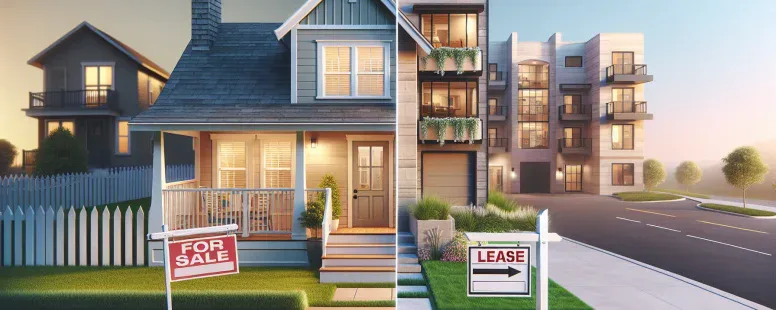
Picture yourself standing in front of two dazzling homes—one whispers promises of ownership while the other tempts you with freedom and flexibility. The scent of fresh paint lingers in the air and the sunlight dances across polished floors. Which path do you choose?
Maybe you crave the thrill of planting roots or perhaps you long for the ease of packing up and chasing new horizons. The choice between “for lease” and “for sale” isn’t just about money—it’s about lifestyle, opportunity, and the hidden perks most people overlook. Unraveling these differences could open doors you never knew existed and help you find a perfect fit for your next adventure.
Understanding the Difference Between For Lease and For Sale
See the words “for lease” and “for sale” on two signs in front of nearly identical brick houses. Did you ever wondered what truly separates these simple phrases? Both pertain to securing a place to live, yet the paths diverge completely at the crossroads of ownership, responsibilities, and commitment.
With “for lease”, you’re stepping into a world defined mostly by flexibility. Picture you enter a modern apartment tower with a twelve-month lease—your only long-term anchor is the calendar date when the keys go back. In this case, you preserve your savings for other pursuits, maybe travel or launching a business. Leases often attract individuals seeking short-term stability or professionals relocating for work (source: National Multifamily Housing Council, 2023). When plumbing breaks or paint peels, you text your landlord; the structural worries don’t belong to you.
Contrast that, with “for sale”, you see a foundation for permanence. Purchasing a home transfers the deed—and the burdens—squarely onto your lap. You’re now responsible for taxes, repairs, and even the squeaky fence gate. Ownership grants freedom to remodel that galley kitchen, yet every choice—down to the mailbox—reflects both your tastes and your wallet. And your equity builds over time, sometimes turning into generational wealth (Federal Reserve, 2022). What if you want to pack up and move across the country on a whim? Selling a house can take months, maybe years if the market tanks.
Renters might ask, “Why invest when I could enjoy mobility?” Buyers counter, “Why rent when my money could grow with each mortgage payment?” In some cities, leasing is affordable—think Houston or Phoenix. In others, surging rent means buying makes more sense, as in Charlotte or Nashville (Apartment List, 2024).
By the way: for lease gives you rights, not roots. For sale gives you stakes, not just space. You shape your future at this intersection—will you chase the open road or lay down bricks for the long haul? Each choice carries its own rhythm, and maybe there’s no wrong answer.
Key Features of For Lease Properties
Properties marked “for lease” create a flexible bridge between places and lives, letting you adapt without getting tangled in the longer commitment of ownership. Unlike buying, leasing puts you in spaces where the walls don’t define your future—your choices do. Do you ever wonder if the best chapters of your story happen in homes that don’t belong to you?
Common Lease Terms and Agreements
Lease terms anchor your stay. Most rental contracts run 12 months or occasionally just 6 or as long as 36, depending on landlord strategies and local markets (Zillow, 2023). Security deposits, usually equal to one to two months’ rent, protect landlords if damages or missed payments sneak in. Some agreements permit pets—many charge a pet deposit, while others strictly prohibit fur and claws inside units. Maintenance clauses usually say what repairs fall on you or on the landlord. For example, you might swap out lightbulbs, but landlords usually replace faulty appliances. Subletting, breaking leases early, or renewing depends on explicit contract language, sometimes leading to hefty fees if you misstep. When leases don’t renew, landlords may change rental rates, shuffle tenants, or adjust conditions.
Pros and Cons of Leasing
Leasing lets you prioritize mobility and savings first. Renters dodge big upfront investments like down payments or closing costs; instead, you’re free to redirect funds toward travel, business, or education—areas that need quick capital and flexibility (National Apartment Association, 2022). If a job calls you across the country, you pack up as soon as the lease ends—no need to wrangle with selling or mortgages. Property managers often solve emergencies, sparing you midnight plumbing DIY—or waiting endlessly for contractors.
But leasing cages some freedoms that ownership unlocks. Landlords, not renters, set decoration limits: maybe you can’t paint a wall or install shelves in your new city apartment. Rent hikes could knock your plans sideways, while renewal uncertainty sometimes ruins the calm of a favorite neighborhood. Equity never grows—when leases end, every rent check is gone, leaving memories but no assets behind.
Would your life grow more vibrant in a place where moving is as simple as turning a key? Or do you crave spaces you can truly shape and eventually own? The choice, but temporary, defines your next chapter—sometimes the places you only borrow impact your story most.
Key Features of For Sale Properties
For sale properties offer a direct path to ownership, weaving together financial investment and the freedom of customization. If you’re weighing your next move, understanding these unique property attributes changes how you view the real estate market.
Types of Sale Transactions
Property sales branch into several distinct transaction styles, each with its own implications for buyers.
Traditional sales dominate suburban neighborhood scenes, with private homeowners listing their houses on MLS platforms. You might walk through open houses on a sunny afternoon, picturing your life unfolding in each living room, and submit offers in competitive environments.
Short sales introduce complexity, since sellers owe more than the home’s worth, and lenders become actors in the deal. These often move slower, but buyers could secure below-market prices—picture unwrapping a surprise package, not quite sure if what’s inside matches the label.
Foreclosure auctions present homes reclaimed by lenders, with transactions less personal and more immediate. These properties may seem like sunken ships, valuable but often needing recovery work. Bidders purchase “as is,” sometimes seeing only faded listing photos before diving in.
New construction sales put you in dialogue with builders, empowering custom choices from granite counters to energy-efficient windows. With blueprints in hand, buyers become co-authors of their future space.
For-sale-by-owner (FSBO) listings remove agents from conversations. Your negotiation becomes direct, reminiscent of haggling in open-air markets, which can benefit both sides—if everyone keeps up with the process details.
Pros and Cons of Buying
Homeownership brings both tangible benefits and commitments, shaping lives for years to come.
Equity building is a primary attraction. Monthly payments accumulate in your corner rather than someone else’s. Over 65% of American households owned their homes as of 2023 (U.S. Census Bureau), exemplifying how real estate remains a cornerstone of wealth generation.
Personalization unlocks true creative control. Paint a mural across your living room wall or build a rooftop garden. No landlord’s approval needed, just your own vision and budget.
Stability anchors families, with fixed mortgage rates sheltering you from the volatility of yearly rent increases. Children grow up with lasting roots—think of a tree that stands tall season after season while annuals come and go.
Long-term wealth stands within reach as property values appreciate. According to NAR, U.S. home prices rose over 40% from 2020 to 2023 in many metro areas, though local anomalies like Detroit saw slower gains.
Risks and constraints still color the ownership story. Maintenance expenses lurk—roofs leak, furnaces fail—while taxes fluctuate yearly like unpredictable weather. Unexpected job changes or life events may turn the freedom of ownership into a weight, since there isn’t always a quick exit.
Would you rather invest in something tangible—solid bricks, blooming gardens—or prefer the agility of a lease? If your dreams echo permanence and creative control, buying aligns with your path. If not, leasing still beckons with its lightness. But no single choice suits all journeys; every homeowner’s story reflects a balance of aspiration, reality, and adaptability.
Financial Implications: Lease vs. Sale
Your wallet feels the difference the moment you interact with “for lease” and “for sale” signs. Behind each sign lies a whole world of costs, opportunities, and stakes that shapes your journey—do you invest in roots, or trade stability for freedom?
Upfront Costs and Long-Term Expenses
Lease situations usually need less upfront cash. You might pay a security deposit and first month’s rent—$3,000 upfront, for example, for a $1,500 per month apartment in Chicago (Zillow, 2024). Sale scenarios often require much more. Homebuyers usually put down between 3%–20% of the home’s price: $9,000–$60,000 on a $300,000 property, plus closing costs and fees (NAR, 2023).
Long-term expenses swing the pendulum as well. Lease agreements pin you to predictable monthly rent, making budgeting easier, though landlords might raise rent yearly. Sale contracts hand you property taxes, insurance, unexpected repairs, and interest—often doubling or tripling your monthly housing cost over time.
Ever get surprised by a sudden rent hike, or has a friend shared their woes about runaway maintenance costs after an HVAC catastrophe? Stories like these pepper conversations because the financial terrain changes based on your choice. In New York, annual rent growth averaged 3.2% from 2010–2020, but single-family home ownership saw 12% increases in maintenance cost annually during the same period (NYC Housing Survey, 2022).
Investment and Equity Considerations
Leasing rarely builds assets, unless you’re investing freed-up capital elsewhere. Think of it like renting a car—you enjoy the ride but hand back the keys without owning equity. For example, the 2022 Pew Research survey found that 66% of renters had no home equity, compared with nearly all buyers.
Home sales open doors to long-term wealth. Each mortgage payment chips away at the principal—your ownership grows. Buyers hold upside as values appreciate. In Los Angeles, home values soared 38% between 2018–2023, rewarding many with significant equity windfalls (Redfin, 2024).
Which feels riskier, sinking money into rent you’ll never see again, or betting on a volatile housing market? Your answer depends on both your tolerance and your game plan. Some lease the same space for a decade, their savings earning interest; others buy, then tap built equity for kid’s college, a renovation, or early retirement.
Net worth, risk, liquidity—they get shaped by how you choose to interact with “for lease” and “for sale” properties. Each path carries unique challenges and rewards, echoing through budgets, life events, and generational planning.
How to Decide: Leasing vs. Buying
Selecting between leasing and buying shapes your future, blending money, emotion, and practical needs in surprising ways. Sometimes, what seems right on paper might stir doubts in real life. Have you ever felt pulled in two directions—craving certainty, but wanting space to grow or change?
Factors to Consider for Individuals
Choosing between leasing and buying for individuals hinges on your goals, habits, and risk tolerance. University graduates, for example, might lease to stay mobile for career moves. If you dream of customizing a kitchen or starting a garden, owning a home unlocks those possibilities—while leasing keeps you tied to a landlord’s rules (NAR, 2023). Leases often favor those who value low initial costs, but they bring less control over your space. On the other hand, ownership supports long-term planning, as you’re building equity, but beware of unexpected repairs like water leaks in old pipes.
Consider different finances: renting typically starts with first and last month’s rent, while buying could need up to 20% down, closing costs, and ongoing tax. Picture facing a rent hike with little warning, versus steady mortgages that sometimes feel like anchors or lifebuoys, depending on your job’s stability. Don’t forget emotional undertones—rooting yourself somewhere can inspire pride, yet scare those who love change. Would your current lifestyle thrive with adaptability or stability?
Factors to Consider for Businesses
Deciding between leasing and buying for businesses connects to cash flow, expansion plans, and market risk tolerance. Tech startups might lease city-center offices to scale fast and pivot if strategy shifts—Amazon leased spaces before investing in campuses, prioritizing agility (Forbes, 2022). Manufacturers aiming to lock in location or install custom facilities sometimes buy real estate; this changes balance sheets and can mean long-term tax advantages.
Think ahead: will growth demand you move or expand? Leases let retailers test markets without long-term ties, while ownership means betting on the property’s future (BLS, 2022). Assess economic climates—if commercial rates surge, a fixed mortgage offers safety, but in downturns, owning could tie up crucial capital. Picture unexpected growth: a lease lets you outgrow old walls, while purchased properties might anchor you to a former vision.
Did you ever think about how a building’s story becomes part of your brand identity? Sometimes, that’s worth more than fluctuating square footage or monthly savings. Considering leasing vs. buying means balancing freedom, financial advantage, and the values your company wants to project.
Conclusion
Choosing between leasing and buying isn’t just about numbers—it’s about what matters most to you. Your career plans, lifestyle goals, and financial comfort all play a part in finding the right fit.
Take time to weigh your priorities and think about how each path could shape your future. With the right approach, you’ll feel confident in your decision and ready for whatever comes next.
To provide the best experiences, we use technologies like cookies to store and/or access device information. Consenting to these technologies will allow us to process data such as browsing behaviour or unique IDs on this site. Not consenting or withdrawing consent, may adversely affect certain features and functions.
Functional
Always active
The technical storage or access is strictly necessary for the legitimate purpose of enabling the use of a specific service explicitly requested by the subscriber or user, or for the sole purpose of carrying out the transmission of a communication over an electronic communications network.
Preferences
The technical storage or access is necessary for the legitimate purpose of storing preferences that are not requested by the subscriber or user.
Statistics
The technical storage or access that is used exclusively for statistical purposes.The technical storage or access that is used exclusively for anonymous statistical purposes. Without a subpoena, voluntary compliance on the part of your Internet Service Provider, or additional records from a third party, information stored or retrieved for this purpose alone cannot usually be used to identify you.
Marketing
The technical storage or access is required to create user profiles to send advertising, or to track the user on a website or across several websites for similar marketing purposes.