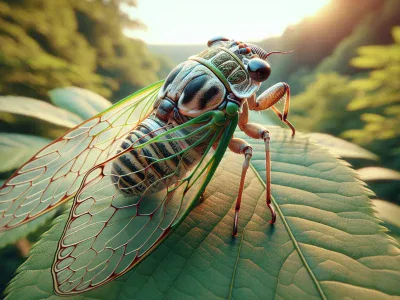
Picture a warm summer night—the air hums with a chorus of chirps and clicks, shadows darting beneath the porch light. You spot a slender green insect leaping into the grass, while another, darker and rounder, serenades the darkness from a hidden nook. Are they the same creature, or is there more to this backyard performance than meets the eye?
It’s easy to mistake crickets and grasshoppers for each other, yet these tiny musicians live entirely different lives. Unraveling their secrets opens a window into the intriguing realm of insects, where every detail—from the way they sing to the food they crave—reveals a story of survival and adaptation. Discovering the subtle differences between them might just change the way you experience those magical summer nights.
Overview of Crickets and Grasshoppers
Crickets and grasshoppers occupy similar habitats like gardens, fields, and forests, but their lifestyles diverge in remarkable ways. These Orthoptera insects both sing on summer nights—yet the cricket’s song, sharp and continuous, signals territory or attracts mates after sunset, while grasshoppers create shorter, chirping tunes mostly in daylight, rubbing their hind legs against wings. Ask yourself: when’s the last time you paused to notice which melody filled the dusk air?
Physical distinctions appear at first glance. Crickets, usually dark brown or black, sport flattened bodies and long antennae, some stretching twice their body length. Grasshoppers, often green or brown, present stouter frames with shorter antennae, barely half as long as their bodies. If you peeked into the grass after a storm, crickets might hide under debris, but grasshoppers leap strong with enlarged back legs, clearing up to 20 times their body length (Smithsonian Institution).
Dietary choices shape their roles in ecosystems. Crickets, being omnivores, nibble on decaying plant materials, fungi, insects, or even fabric, while grasshoppers, mostly herbivores, feast on fresh leaves, stems, and crops—sometimes causing significant agricultural damage (National Geographic). Try examining your garden at dawn; you might spot grasshopper damage on tender leaves, but find crickets near leftover mulch or fallen fruits instead.
Their lifecycle timings differ, too. Crickets develop through incomplete metamorphosis, hatching into nymphs that resemble miniature adults, while grasshoppers pass through similar stages yet usually mature faster in hotter climates. Both insects attract predators, such as birds, spiders, and frogs, but their strategies for survival vary—with crickets relying on their cryptic colors and grasshoppers on their powerful leaps.
Could you picture how summer nights might change without the interplay of cricket and grasshopper choruses? Your perspective on these insects shifts when you recognize each role and the tiny choices that amplify their survival strategies.
Physical Differences Between Cricket and Grasshopper
You’ll notice clear distinctions when you compare the physical traits of crickets and grasshoppers. These insect cousins share a habitat but their appearances, structures, and adaptations reveal unique evolutionary paths.
Size and Body Shape
Crickets show off flattened bodies that help them hide under rocks or debris, while grasshoppers display cylindrical, robust forms built for explosive jumps. An adult cricket often measures 13 to 25 millimeters, like the field cricket Gryllus pennsylvanicus, and carries a more compressed frame. Grasshoppers such as Melanoplus differentialis reach up to 50 millimeters. When you see them in late summer, grasshoppers seem stockier and more upright, helping you single them out with ease.
Coloration and Markings
Crickets commonly present dark brown or black hues, blending easily into cool soil or leaf litter; exceptions exist, but their color palette stays muted. Some develop faint stripes or speckles, yet these marks rarely stand out. Grasshoppers, in contrast, often boast bright greens or browns patterned with bold stripes, like the two-striped grasshopper’s bright dorsal band. Spotting one among sunlit blades of grass becomes—and you’ll notice—a vibrant splash in the field. Entomologists frequently cite melanism in crickets as camouflage, while aposematic warning patterns seen in grasshoppers ward off predators.
Wing and Leg Structure
Crickets possess wings that lay flat against their backs and extend slightly past the abdomen, with forewings acting as musical instruments scraping together to create night sounds. Antennae extend beyond body length, giving crickets a “feel” for their surroundings. Grasshoppers exhibit shorter antennae, seldom longer than the head, but their legs steal the show—large hind femora work as catapults for extraordinary leaps you might witness during warm afternoons. Their wings, broad and veined, serve as sails in flight. Scientific analysis from National Geographic (2021) notes how grasshoppers’ powerful legs give them an edge over crickets in escaping threats, while crickets’ subtler frame favors stealth.
Behavioral Distinctions
You’ll quickly spot the contrast in cricket and grasshopper behavior once you stop to listen and watch. These group have evolved unique strategies for communicating and surviving, shaping their distinct signatures in nature.
Chirping and Communication Styles
Crickets, genera like Gryllus, engage in nocturnal serenades. You’ll hear males rub their wings together—stridulation—to produce steady trills after dark. This chorus fills summer nights with a constant, rhythmic song, marking territory and attracting mates. People in rural Pennsylvania recall lying awake counting cricket chirps, mistaking them for nature’s own clock. Grasshoppers, species such as Caelifera, announce their presence with brief, sharp chirps during daylight, created when their leg scrapes wings. Farmers often sense an imminent heatwave when the daytime fields burst into grasshopper song, using these signals as informal weather predictors. Crickets respond to rivals by altering song pace and volume, while grasshoppers maintain short, repetitive bursts, never singing at night (Encyclopedia of Insects, Elsevier 2009).
Movement and Activity Patterns
Crickets move slow and cautious, emerging mostly at dusk to avoid predators like shrews. You’ll observe them scuttling beneath leaf litter or hopping short distances, rarely venturing far during the day. Grasshoppers, in contrast, leap as if loaded with springs, clearing up to twenty times their body length—a spectacle you’ll spot in sunlit meadows. They roam widely each day, devouring foliage and evading birds using rapid jumps. Naturalists in Nebraska recount seeing swarms of grasshoppers, all launching into coordinated leaps at the slightest disturbance, blanketing entire fields in motion. Crickets rely more on stillness and shadow for protection, while grasshoppers favor speed and surprise. You might think: why doesn’t crickets jump more like grasshoppers do? Evolutionary pressure—fewer predators at night and the benefit of moving quietly—shapes these contrasting rhythms.
Why doesn’t grasshoppers sing at night? That question lingers as you watch the fields, revealing how survival tactics, predator relationships, and environmental signals define the vibrant boundary between these two classic insects.
Habitat and Diet Differences
You notice crickets and grasshoppers filling summer nights with their music, but have you wondered why these two insects seem to live parallel lives yet rarely cross paths? Their habitats and diets don’t just define their daily routines—they also shapes the complex web of their relationships with other organisms. When you look closer, they paint a vivid ecological picture of balance and rivalry, each playing their own role like actors on nature’s grand stage.
Preferred Environments
Crickets usually hide in dark, humid refuges—under logs, inside garden mulch, or behind stones at the edge of yards. These places offers a cloak of secrecy, helping crickets evade predators like birds and spiders (Gogala, 2015). Some house crickets (Acheta domesticus) even thrives indoors, sneaking into kitchens or basements if they find the right access. If you listen after dusk, you might hear their night song by a woodpile, a constant reminder of their preference for hidden, protected corners.
Grasshoppers, in contrast, claim the sun-dappled frontiers of open fields, prairies, and grassy meadows. You’ll find them clinging to upright blades of wild grass or hopping through crops—unabashed, restless, and ever bold. , some Great Plains grasshoppers (Melanoplus spp.) once swarmed so boldly they turned the sky dark, ravaging millions of acres in the 19th century (Smithsonian Institution, 2022). While crickets choose concealment, grasshoppers braves exposure, betting on their powerful leaps and earth-toned camouflage to stay safe.
Feeding Habits
Crickets operate as omnivorous recyclers, devouring decaying leaves, fungi, dead insects, and sometimes garden plants. If you spot a cricket gnawing on wilted petals or scavenging a fallen beetle, you’re watching nature’s cleanup crew in action. In urban settings, house crickets show resourcefulness, nibbling on leftover crumbs or fabric (Kumar & O’Neill, 2020).
Grasshoppers act as voracious herbivores, with most species feeding strictly on live plants—tender grasses, fresh leaves, and sometimes crops like corn or wheat. A locust swarm can devour their own body weight in plants, transforming a lush field into stark stubble overnight (FAO Locust Watch, 2021). Famously, grasshoppers’ plant-heavy diets and insatiable appetites make them both ecological regulators and agricultural pests.
Have you ever watched a cricket and grasshopper up close and wondered why one picks over old debris while the other munches green stems? Their dietary choices aren’t just small quirks—they’re scripts in an ongoing story of survival, competition, and adaptation. If you peer beneath the surface, you’ll see hidden patterns in every bite, each habitat, and each echoed melody after sunset.
Life Cycle and Reproduction
Cricket and grasshopper life cycles share incomplete metamorphosis, yet you’ll notice distinct patterns in timing and behavior. Crickets begin as soft, pale eggs hidden in moist soil or under leaf litter—picture uncovering tiny pearls after a summer storm. After about 14 days, depending on temperature, these eggs hatch into nymphs that mimic their adult forms except for smaller bodies and wingless backs. Over six to twelve weeks, cricket nymphs shed their exoskeletons seven to ten times, growing each molt like a ladder rung climbed by night. If you’ve ever wondered why cricket numbers seem to swell as summer progresses, their fast nymphal growth and urban adaptation give them an edge in your garden ecosystem (National Geographic, 2022).
Grasshoppers, on the other hand, lay clusters of about 10-50 eggs deep in dry soil—think of miniscule time capsules buried beneath sunbaked fields. These eggs overwinter, braving frosts and droughts, sometimes taking up to nine months to hatch. When the nymphs emerge, they appear nearly identical to adults, save for their stunted wings. You might spot them early in spring, leapfrogging through new grass, devouring shoots at a rapid pace. While grasshopper development from egg to adult completes in 40 to 60 days in warm climates, drought or cold slows their transformation, extending survival and population cycles (USDA, 2021).
Courtship rituals differ sharply between the two insects. Male crickets serenade females with long, rhythmic songs, each tune a language of intent. Sometimes, crickets engage in fierce battles for territory or mates—a nighttime duel amplified across garden beds. Grasshoppers, in contrast, prefer visual displays and short, percussive chirps, hopping after females and flashing vibrant hindwings as living billboards. These contrasting approaches impact survival: nocturnal crickets rely on camouflage and acoustic signals, while sunlit grasshoppers favor speed and spectacle.
Both insects face countless predators—spiders, birds, frogs, and even humans in parts of Asia eat them as crunchy snacks. Ever thought about the resilience encoded in their short life cycles? Adaptation drives quick generation turnover, allowing entire local populations to renew several times within a year when conditions are right. Which life strategy would you bet on for survival—stealthy nocturnal signaling or bold, sunlit leaps?
Importance in Ecosystems
Crickets and grasshoppers perform essential functions in natural ecosystems, yet their impacts diverge like sunrise over a meadow and dusk in a dense forest. Crickets act as processors of decaying organic matter, breaking down fallen leaves, dead insects, and plant debris. When you walk through a garden at night, picture countless crickets beneath the mulch, turning waste into soil nutrients. This recycling supports soil health, providing fertile ground for everything from dandelion to oak tree seedlings (source: Smithsonian Institution).
Grasshoppers, in contrast, eat up to 50% of their body weight daily in fresh vegetation. You might spot a grasshopper with its green jaws busy nibbling on a blade of grass, fueling not just itself but entire food webs. Their frenzied appetites sometimes tip the scales, causing outbreaks that can devastate crops (as seen in the U.S. Great Plains in 1985, where grasshopper swarms destroyed millions of dollars worth of wheat—USDA). These dramatic episodes raise this question: Are grasshoppers ecosystem villains, or unsung regulators? While farmers may curse them, grasshoppers prune dominant plants, creating space for rare wildflowers and maintaining prairie diversity.
Consider this: both insects serve as prey for birds, spiders, and small mammals. One summer evening, you might watch a robin tugging a cricket from beneath the leaves, while a kestrel swoops down on a sunlit grasshopper. Populations of these insects can dictate the abundance of their predators. If grasshopper numbers surge, birds of prey flourish; if crickets dwindle, shrews scurry hungrily through the undergrowth.
But what happens when pesticides sweep through a field? Both crickets and grasshoppers vanish, and with them, the very melody that defines summer nights. Have you noticed how the absence of buzzing and chirping makes a field feel almost hollow?
Beneath their miniature armor, these insects are silent engineers of balance and change. Their lives raise a vital ecological riddle: is the value of a species measured by the good it does, or the problems it cause? Maybe, as you listen to their songs or marvel at a grasshopper’s leap, you’re witnessing ecosystem work in progress—reminding us that every chirp and every bite connects to something far bigger than itself.
Conclusion
By taking a closer look at crickets and grasshoppers you’ll start to notice just how unique each insect truly is. Paying attention to their songs movements and habitats can deepen your understanding of the natural world right outside your door.
Next time you hear a nighttime trill or spot a leaping green visitor in your yard you’ll know exactly who’s making their presence known. Appreciating these differences not only enriches your outdoor experience but also highlights the incredible diversity found in even the smallest corners of nature.
Published: July 25, 2025 at 8:57 am by Ellie B, Site owner & Publisher
To provide the best experiences, we use technologies like cookies to store and/or access device information. Consenting to these technologies will allow us to process data such as browsing behaviour or unique IDs on this site. Not consenting or withdrawing consent, may adversely affect certain features and functions.
Functional
Always active
The technical storage or access is strictly necessary for the legitimate purpose of enabling the use of a specific service explicitly requested by the subscriber or user, or for the sole purpose of carrying out the transmission of a communication over an electronic communications network.
Preferences
The technical storage or access is necessary for the legitimate purpose of storing preferences that are not requested by the subscriber or user.
Statistics
The technical storage or access that is used exclusively for statistical purposes.The technical storage or access that is used exclusively for anonymous statistical purposes. Without a subpoena, voluntary compliance on the part of your Internet Service Provider, or additional records from a third party, information stored or retrieved for this purpose alone cannot usually be used to identify you.
Marketing
The technical storage or access is required to create user profiles to send advertising, or to track the user on a website or across several websites for similar marketing purposes.