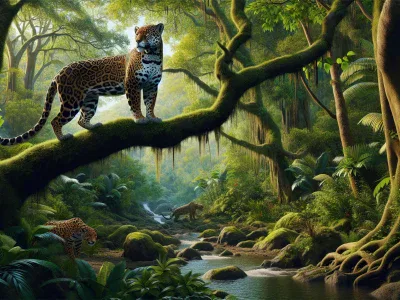
Picture yourself walking through a bustling market where bold patterns leap from every corner—some spots sharp and scattered like sun-dappled shadows, others rosette-shaped and mysterious. You pause, drawn to the wild elegance of animal prints, but a question lingers—are those spots cheetah or leopard? The difference isn’t just a matter of style; it’s a detail that can transform your outfit from ordinary to unforgettable.
Unlocking the secrets behind these iconic prints lets you express your personality with confidence. Whether you’re curating your wardrobe or choosing statement décor, knowing what sets cheetah and leopard prints apart gives you an edge. Ready to decode the allure and subtle power hidden in every spot? Let’s step into a world where fashion meets the untamed beauty of the wild.
Overview Of Animal Prints In Fashion
Trace animal prints in fashion through decades and you’ll see cultures around the globe gravitated toward their striking symbolism and visual power. From the roaring twenties’ flapper gowns with leopard spots to the 1980s punk scenes where cheetah patterns blazed across jackets and boots, animal prints always re-emerges as statement motifs. Can you picture walking past a display window in Manhattan’s Fifth Avenue and not noticing a zebra-striped skirt or a snakeskin clutch? There’s something in those organic patterns that just catches your eye.
Designers, like Roberto Cavalli and Dolce & Gabbana, often loads their catwalks with plush furs, faux or real, and vivid animal replicas. These brands don’t use animal prints by coincidence; animal patterns connects luxury to adventure, channeling both elegance and a sense of wilderness. Fashion historian Valerie Steele remarked how, for socialites and rebels alike, donning animal prints announces confidence—much like a peacock’s plumage, only for people.
But look at the prints more closely. Cheetah and leopard motifs, while often used interchangeably, offer distinct sartorial messages. Leopard spots, larger and rosette-shaped, signify opulence, while cheetah’s smaller, solid dots bring in hints of athleticism and agility. Vogue’s coverage in 2022 highlighted how even sportswear brands, like Adidas and Nike, tap cheetah prints to echo speed and energy in their collections. In contrast, luxury labels lean on leopard’s mystique for more drama and allure. Did you ever stop and think if those two prints truly speak the same fashion language?
Not all animal print journeys led to glamour. There were years, as the New York Times reported in 2010, where animal patterns were considered too bold or out-of-touch—sometimes, even a fashion risk. But, streetwear icons from Harlem to Harajuku flipped that notion, pairing leopard jeans with graphic tees and merging urban edge with classic wild motifs. That’s fashion’s wild syntax: playful, fluid, and never predictable.
Take a cue from these fashion trailblazers. Try wearing animal prints as accents—a silk cheetah print scarf, a leopard-patterned belt—or blend different animal motifs for layered visual interest. Understand the grammar of these prints, and you transforms your look from mere trend-follower to style narrator.
Designer
Famous Animal Prints Used
Signature Example
Roberto Cavalli
Leopard, zebra, snake
SS19 Animalia Collection
Dolce & Gabbana
Leopard, tiger
2023 Fall/Winter Runway
Adidas
Cheetah
Adidas x Ivy Park “Halls of Ivy” Capsule
Nike
Cheetah, zebra
Air Max “Safari” Series
Questions linger: which print expresses your mood today, and which one will carries you into tomorrow? Fashion, after all, speaks—what words do your animal prints want to say?
Understanding Cheetah Print
Cheetah print dances across the fashion landscape, marked by its energetic, spot-driven charm. When you stare at a cheetah motif, you’re not just seeing a pattern—you’re glimpsing the soul of speed itself, nature’s bold exclamation on a canvas of fur.
Key Characteristics Of Cheetah Print
Cheetah print holds a singular identity in the family of animal patterns. You find solid, round or oval black spots, scattered widely over a tan or gold base. Unlike leopard spots, cheetah spots never have two-tone centers; they’re marked by crisp contrast. Visually, each spot looks isolated, resembling ink droplets flicked energetically across sunlight, with spaces creating an airy, almost athletic effect.
Fashion editors at Vogue and stylists like Rachel Zoe have likened cheetah print to “the punctuation of any wild-inspired wardrobe.” One distinct feature—it echoes the animal’s need for camouflage on African savannas, blending urgency with elegance. If you thrown a cheetah-print scarf around your neck, you channel an aura of purposeful motion, inviting curiosity. How would someone interpret your choice—a nod to adventure or a sprint toward bold self-expression?
Model Naomi Campbell recalled how her first cheetah-print dress, in a 2003 interview, gave her a sense of invincibility. “Putting it on, I felt like nothing could stop me, like I was running with the animal.” Her anecdote capture how the print’s pattern communicates tenacity.
Popular Uses Of Cheetah Print
Cheetah print erupts in varied ways across contemporary style and interior design. On runways, designers like Diane von Fürstenberg and Alexander McQueen send cheetah print in everything from body-hugging dresses to tailored blazers. It’s more than a motif—it’s a statement about daring and individuality.
Interiors harness the print on throw pillows, rugs, and blankets, injecting rooms with a flash of energy—think a minimalist loft revived by a single wild accent. Street style photographers often spot cheetah-print sneakers, backpacks, or fanny packs, blended with denim or all-black, for a splash of unpredictability.
Advertising agencies sometimes leverage cheetah print in sportswear campaigns, associating brands like Nike and Puma with speed and power. Creative directors pose the question: “What’s faster than a cheetah?” urging you to equate product choice with a burst of untamed agility.
Could you picture how a cheetah-print accessory might shift the mood of your outfit? Some might say it’s too bold, but others see only a canvas for confidence. Data from Pinterest Trends (2023 Q4) notes a 22% surge in cheetah-print searches for “work outfits”—proving, perhaps, that traditional officewear ain’t immune to wild reinvention.
So, when you reach for that cheetah motif, you’re not just participating in a trend. You tap into a lineage of trailblazers who wore the print as their personal signature: part shield, part spotlight, all attitude.
Understanding Leopard Print
Leopard print brings an unmistakable blend of elegance and audacity to any style palette. You instantly notice its rich pattern and, whether on a runway or a living room cushion, it always provokes a sense of wild sophistication.
Key Characteristics Of Leopard Print
Leopard print features complex, densely-packed rosette shapes—black irregular circles that surround a tawny-gold base. Each spot clusters with nuanced, inky edges, mimicking the Panthera pardus signature coat. Fashion houses, like Dolce & Gabbana, repeatedly select leopard motifs for their unmistakable glamour (Vogue, 2022). Unlike cheetah print, whose spots remain singular and simple, leopard’s pattern forms layered, organic groupings, providing depth and intrigue.
New York stylists will often describe a true leopard motif as “untamed, yet poised.” Urban fashionistas, for example, sometimes blend small accessories—a scarf or pump—into an otherwise neutral outfit, letting the unpredictable pattern pop. Picture the difference: a cheetah print’s direct dots evoke agility, while leopard rosettes conjure luxury and mystery. Do you spot the subtle shadowing in most high-quality leopard prints? That’s intentional; designers mimic the animal’s camouflage, using warm browns and faded golds for a multidimensional look.
Popular Uses Of Leopard Print
Leopard print dominates runways, but it’s real power shines in everyday staples. You spotting it in silk blouses, faux-fur coats, phone cases, and even car interiors. Beyoncé wore a head-to-toe leopard suit at a Paris show—sparking a social media wildfire and re-anchoring leopard print’s “power move” reputation. Retailers like Zara and H&M release entire micro-collections featuring leopard every few seasons, responding to surges in consumer demand (Business of Fashion, 2023).
Home designers choose leopard print rugs and velvet accent chairs to inject a sense of opulence. Meanwhile, sneaker collaborations—like Puma x Karl Lagerfeld—tap leopard motifs to fuse heritage with trend. Some critics argue the print risks becoming cliché, but fresh applications always reframe its potential. Next time you’re shopping, ask yourself: does this print elevate your look, or just blend to the background?
Culturally, leopard print’s narrative shifts with its wearers. On one hand, it’s a powerful reclamation of confidence—think Eartha Kitt draped in plush spots. On another, it’s playful, morphing into whimsical children’s accessories or ironic streetwear. Leopard print sits at the intersection of classic and rebellious, never really fading into obscurity, just changing tone. Would you dare to make it a signature, or use it as an accent to challenge expectations?
Main Differences Between Cheetah And Leopard Print
Understanding cheetah and leopard prints means looking past the surface. Each tells a story—one of swift energy, the other of velvet luxury.
Visual Comparison
Cheetah print stands out with its simplicity and clarity. Each spot looks like a solid black coin—round or slightly oval, scattered evenly on a golden or tan background. When you run your finger over a cheetah-print scarf, you almost feel the speed of the animal itself. Think about sprinters painted in spots—nothing interrupts their momentum, spots dotting them like dashes on a racetrack.
Leopard’s print, by contrast, speaks in rosettes—groups of irregular black circles or half-moons filled with a lighter gold or brown center. Fashion brands like Dolce & Gabbana layered these rosettes onto silky dresses, making each model seem as if she wore a living mosaic. Leopards in paintings often appear as shadows wrapped in moonlit patterns—their print more mysterious and ambiguous, less predictable than cheetah’s candor.
When you hold two fabric swatches side by side, cheetah’s print radiates clarity, while leopard’s seems to invite questions: “What story is hiding in this cluster? Where does one spot end and another begin?”
Texture And Pattern Placement
Cheetah patterns rarely cross or overlap; each dot seems to demand its own space, mirroring the animal’s solitary nature (National Geographic, 2023). Even in synthetic blends found in Adidas streetwear, the spots maintain breathing room, never crowding, radiating effortless dynamism.
Leopard prints—on the other hand—veil garments in complexity. Rosettes mass together or break away, almost as if they’re tracing invisible vines across a field. Placement is less uniform: edges blur, shapes mingle, allowing for a natural randomness. In an Alexander McQueen jacket, you’d notice the rosettes flowing organically over curves, echoing the chaos of rainforest undergrowth.
Why does it matter? Fashion stylists say cheetah print gives crisp, sporty vibes even in soft knits, whereas leopard instantly elevates with its sculptural ambiguity. Maybe, as you choose between the two, you’re not just picking a pattern—you’re channeling either kinetic freedom or subdued confidence. Which voice do you want your outfit to speak with today?
Styling Tips: When To Choose Cheetah Or Leopard Print
Cheetah and leopard print—they’re not just patterns, they’re punctuation marks in your wardrobe story. Picture stepping out with a cheetah print scarf, like singer Rihanna does for those quick city strolls. It’s a bold move that signals agility and energy. When your day feels like a sprint and you wanna channel speed or athletic vibes, cheetah print fits. Its solid, round spots on gold backgrounds stand out in daylight—try pairing it with crisp white sneakers or a denim jacket for a kinetic street look.
Pause a moment. why leopard print shows up so often in luxury campaigns by Dolce & Gabbana and Givenchy? That’s because leopard’s complex rosettes suggest depth and mystery. When evening falls or you crave drama—maybe for an art opening or a rooftop dinner—leopard print gives you that velvet punch. The pattern works with rich fabrics like silk or velvet, taking your style from casual to regal in seconds. Are you drawn to intrigue and sophistication? Leopard’s your answer.
Here’s a tip from stylist Rachel Zoe: “Cheetah prints for movement, leopard for impact.” For small, crisp accents—a cheetah-print clutch, perhaps—think days when you need sharpness. When you wanna make a statement, add leopard print—picture a full-length coat or dramatic boots that echo vintage glamour but stay modern.
Unexpected detail? Mixing both prints can tell a story of contrast—just limit the color palette. French fashion editors often pair a muted cheetah scarf with a punchy leopard handbag, letting one dominate while the other adds intrigue. Vogue notes that “leopard blends with jewel tones and metallics, cheetah with neutrals and sporty hues,” letting you shape the mood.
Fashion psychologist Dr. Carolyn Mair says animal prints communicate “a fearless approach to individuality”. If you ever feel uncertain, start with subtle touches—like leopard on loafers or cheetah on phone cases. Which mood do you wanna broadcast—swift confidence or lush allure? That question guides your choices every time you open your closet.
Don’t forget—rules change. Trends evolve. The standout statement comes when you write your own style grammar, mixing these prints with the kind of confidence that prints a mark memorable as a cheetah’s stride or a leopard’s silent prowl.
Conclusion
Choosing between cheetah and leopard print lets you showcase your personality and style without saying a word. Whether you lean toward the crisp energy of cheetah spots or the layered luxury of leopard rosettes, each pattern brings its own flair to your wardrobe or home.
Don’t be afraid to experiment and let your instincts guide you. With a thoughtful approach, you’ll find that animal prints aren’t just trends—they’re timeless tools for expressing your boldest self.
Published: July 25, 2025 at 8:57 am by Ellie B, Site owner & Publisher
To provide the best experiences, we use technologies like cookies to store and/or access device information. Consenting to these technologies will allow us to process data such as browsing behaviour or unique IDs on this site. Not consenting or withdrawing consent, may adversely affect certain features and functions.
Functional
Always active
The technical storage or access is strictly necessary for the legitimate purpose of enabling the use of a specific service explicitly requested by the subscriber or user, or for the sole purpose of carrying out the transmission of a communication over an electronic communications network.
Preferences
The technical storage or access is necessary for the legitimate purpose of storing preferences that are not requested by the subscriber or user.
Statistics
The technical storage or access that is used exclusively for statistical purposes.The technical storage or access that is used exclusively for anonymous statistical purposes. Without a subpoena, voluntary compliance on the part of your Internet Service Provider, or additional records from a third party, information stored or retrieved for this purpose alone cannot usually be used to identify you.
Marketing
The technical storage or access is required to create user profiles to send advertising, or to track the user on a website or across several websites for similar marketing purposes.