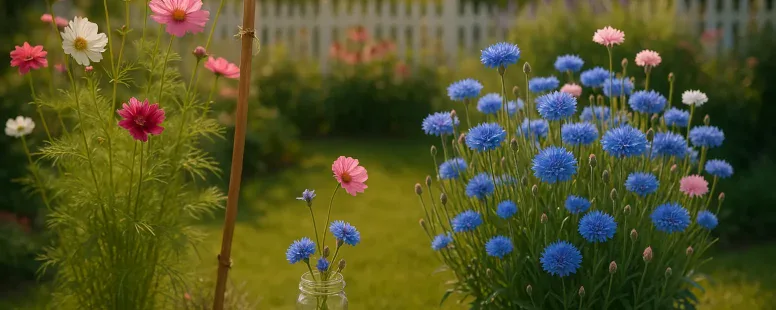
Cosmos Vs. Cornflowers: Choosing The Right Annual For Your Garden
You can create a garden that feels like a sunlit meadow or a cottage postcard: the choice between cosmos and cornflowers shapes that mood. Cosmos vs. Cornflowers is more than a debate about color, it’s about growth habit, soil appetite, and the role each plant will play in your outdoor rooms. Picture tall, airy stems brushing your fingertips, or compact, bright heads arranged in a vase: both give charm, but they deliver different experiences. Below you’ll find clear, practical comparisons that reveal surprising advantages, like how cosmos often attract more pollinators while cornflowers offer longer-lasting vase life, and help you pick with confidence.
Quick Visual Comparison
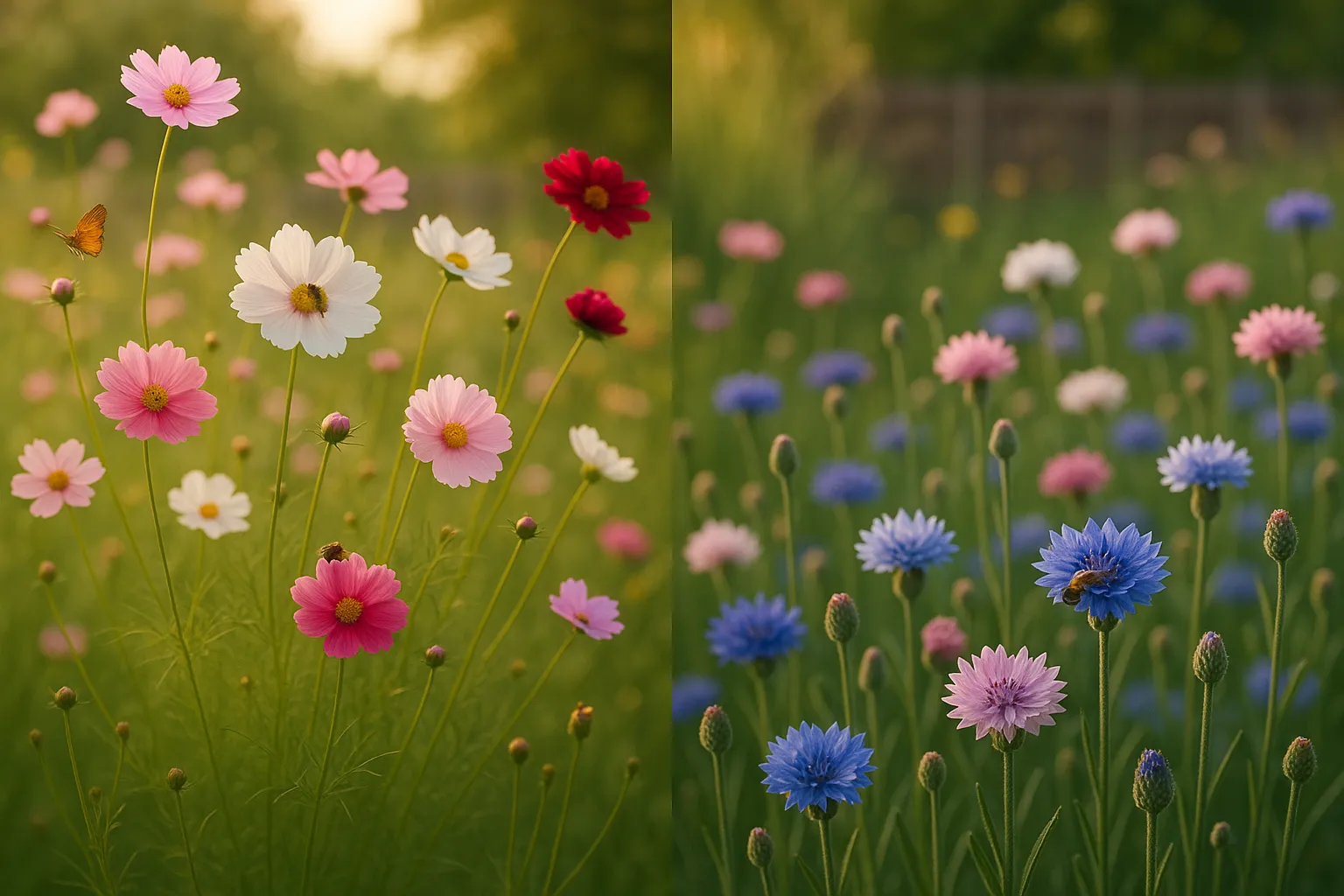
Fact: Cosmos show open, daisy-like blooms on fine, feathery foliage while cornflowers (Centaurea cyanus) produce denser, thistle-like flowers on sturdier stems.
Cosmos: Key Characteristics
Cosmos plants grow tall and airy. You get long stems topped with single or double daisy-shaped flowers in shades of pink, white, and crimson. Leaves are lacy and soft to the touch: they give a meadow feel and diffuse light beneath the blooms. Cosmos often reach 3 to 6 feet (Cosmos bipinnatus varieties), so they form loose towers that move in wind. They draw bees, butterflies, and sometimes hummingbirds. Cosmos seeds are thin and elongated: they germinate quickly when soil warms.
Cornflower (Centaurea Cyanus): Key Characteristics
Fact: Cornflowers have compact, papery heads and classic blue tones, though modern cultivars expand the palette.
Cornflowers are shorter and stiffer compared with cosmos. Native to Europe, Centaurea cyanus historically grew in grain fields, hence the name “cornflower.” Typical height ranges from 12 to 36 inches depending on cultivar. Flowers are round, with ragged petals and a central disk that bees find irresistible. Modern varieties come in blue, pink, white, and maroon. Stems are firm, which helps cornflowers stand in bouquets. Seeds are small and round and they tolerate cool springs better than cosmos do.
Growing Conditions And Climate Tolerance
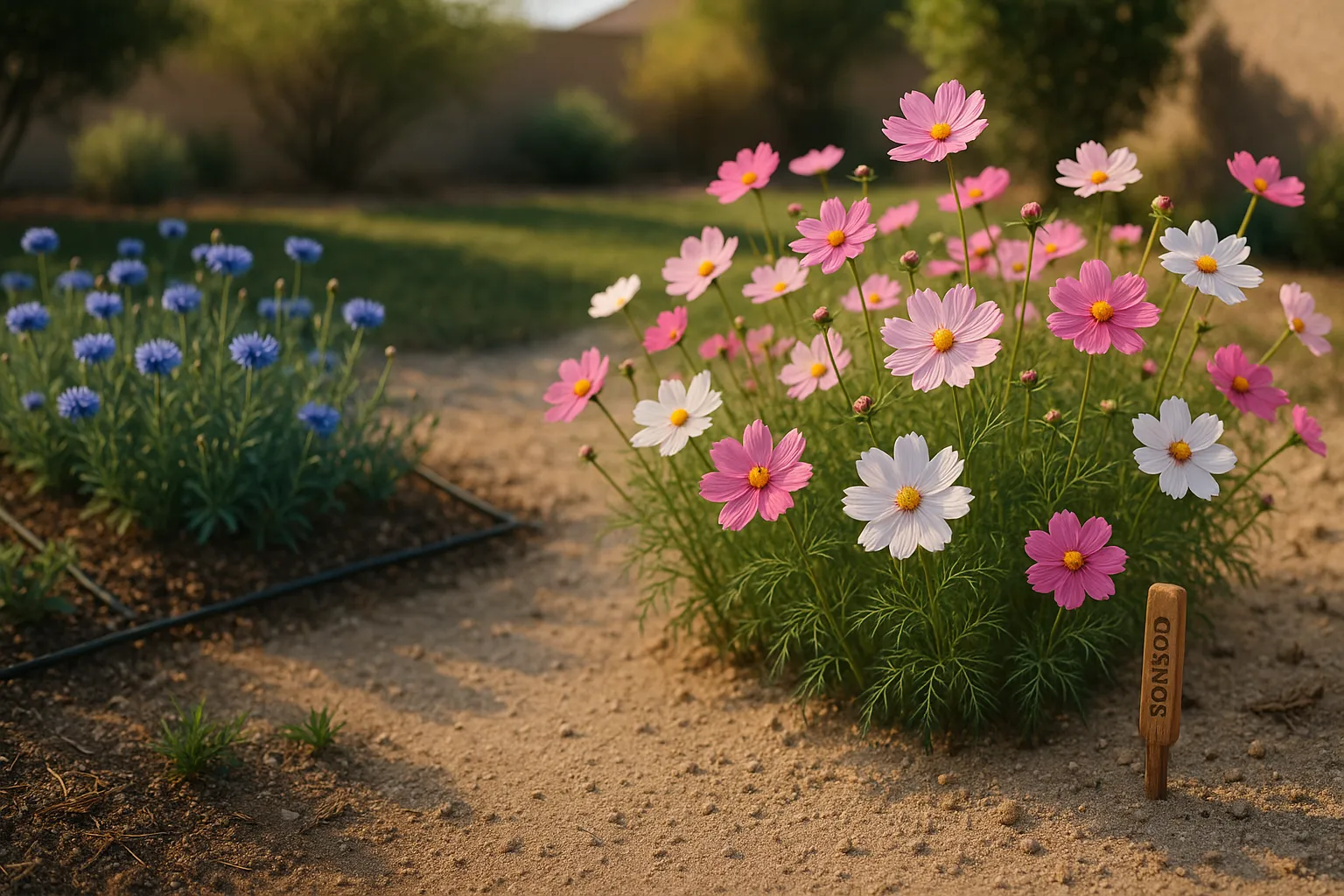
Fact: Cosmos tolerate heat and drought better than cornflowers, while cornflowers prefer cooler, well-drained sites.
Soil, Sunlight, And Water Needs, Cosmos
Cosmos prefer full sun and poor to average soil. They do well in sandy loam and they don’t need rich fertilizer: excess nitrogen creates lush foliage at the expense of flowers. Water moderately during establishment, then let the soil dry between waterings, cosmos survive dry spells once established. They thrive in USDA zones 2–11 as annuals in most gardens. If you live in a hot, dry region like parts of Arizona or Southern California, cosmos will keep producing when other annuals sulk.
Soil, Sunlight, And Water Needs, Cornflowers
Fact: Cornflowers prefer cool roots and consistent moisture but still need good drainage.
Cornflowers want full sun but they also appreciate some afternoon shade in very hot climates. They prefer loamy soil with steady moisture: they don’t tolerate heavy clay or soggy beds. Cornflowers handle cooler springs and can be sown early, often 2–4 weeks before last frost in temperate regions. They perform reliably in USDA zones 3–8 as annuals or short-lived perennials in milder areas. If your site gets heavy summer heat and drought, expect shorter bloom periods unless you irrigate regularly.
Planting, Propagation, And Timing
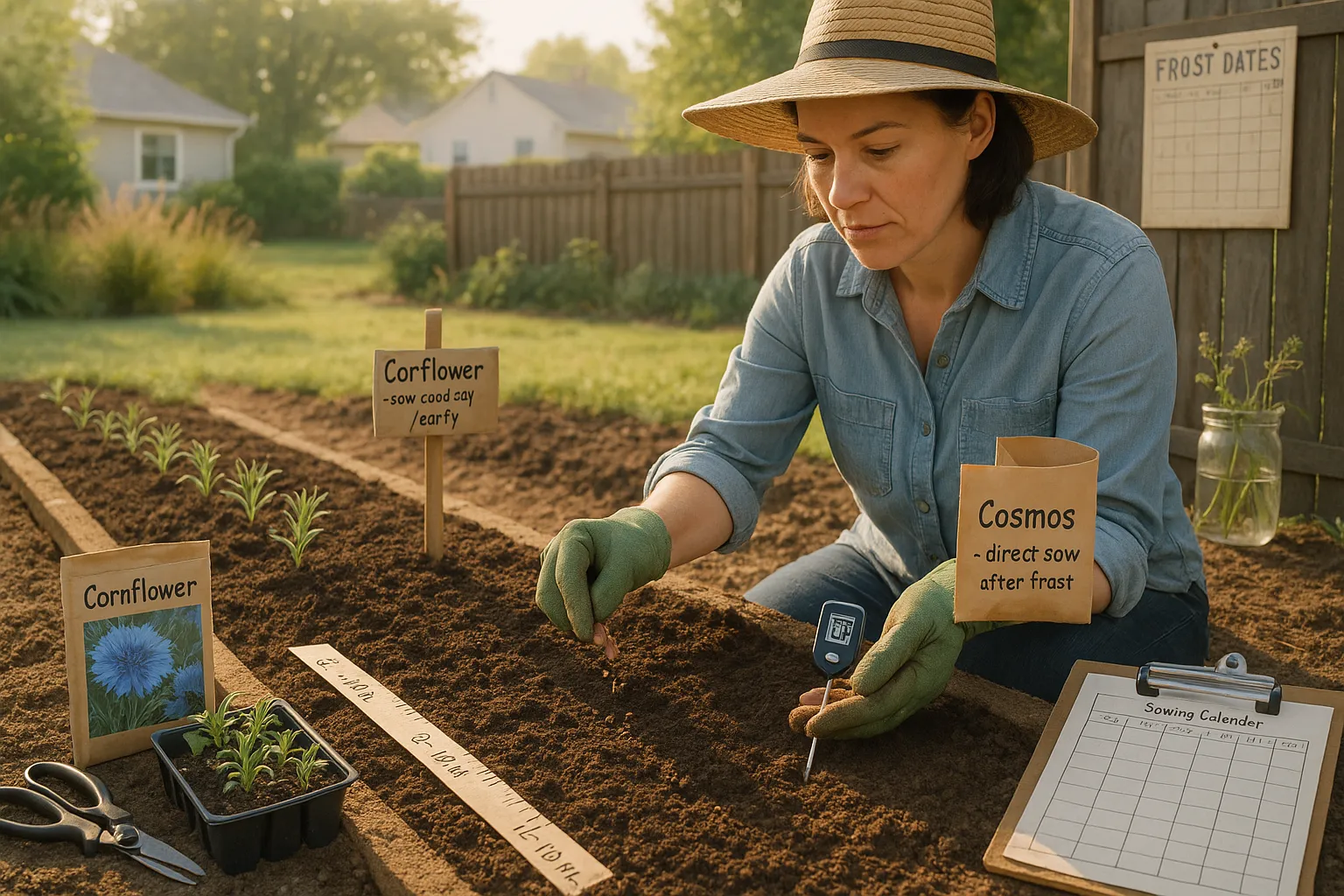
Fact: Both species grow easily from seed, but timing and spacing differ to match their habits.
Sowing Seeds, Spacing, And Germination, Cosmos
Sow cosmos seed after the last frost when soil warms. Seeds germinate in 7–21 days at 65–75°F. Space plants 12–18 inches apart for single-stem varieties: give 18–24 inches for branching types. If you want a dense hedge of color, sow thinly and pinch back young plants to encourage branching. Cosmos don’t transplant well if root systems are disturbed: direct sowing is usually best. For a continuous display, sow successively every 3–4 weeks until midsummer.
Sowing Seeds, Spacing, And Germination, Cornflowers
Fact: Cornflower seeds germinate in cool soil and can be sown earlier than cosmos.
Sow cornflower seed 2–4 weeks before last frost or directly in fall in mild climates. Germination occurs in 7–14 days at 50–68°F. Thin seedlings to 8–12 inches apart for upright varieties, or 6–8 inches for dwarf mixes. Cornflowers tolerate transplanting if handled gently. For cut-flower production, sow more densely and thin to allow straight stems. You can also overseed meadows or lawns for a naturalized patch, they self-seed readily if spent blooms are left.
Care, Maintenance, And Deadheading Strategies

Fact: Deadheading prolongs bloom in both plants, but cornflowers often benefit from light pruning while cosmos may need staking.
Fertilizing, Staking, And Support, Cosmos
Cosmos need little fertilizer: a light feed of balanced 10-10-10 at planting is enough. Too much fertilizer creates floppy growth. Tall varieties like ‘Sensation’ and ‘Daydream’ may need staking: use bamboo canes or string supports early to avoid root disturbance. Deadhead spent blooms to prolong flowering, you’ll get more blossoms and neater patches. If you want seed for next year, leave some flowers to go to seed. Watch for lodging in heavy rains: thin plants to improve air flow.
Fertilizing, Pruning, And Overwintering, Cornflowers
Cornflowers respond to a moderate feed of phosphorus-rich fertilizer at planting to encourage strong stems. Prune or shear back after the first flush to encourage a second wave of blooms. Deadhead regularly for continuous flowers: if you leave seed heads, birds like finches will visit. In zones 8–9, cornflowers sometimes reseed and return: in colder zones they die with frost. You can over-winter trays in an unheated garage for early spring starts, but most gardeners treat them as true annuals.
Pests, Diseases, And Troubleshooting
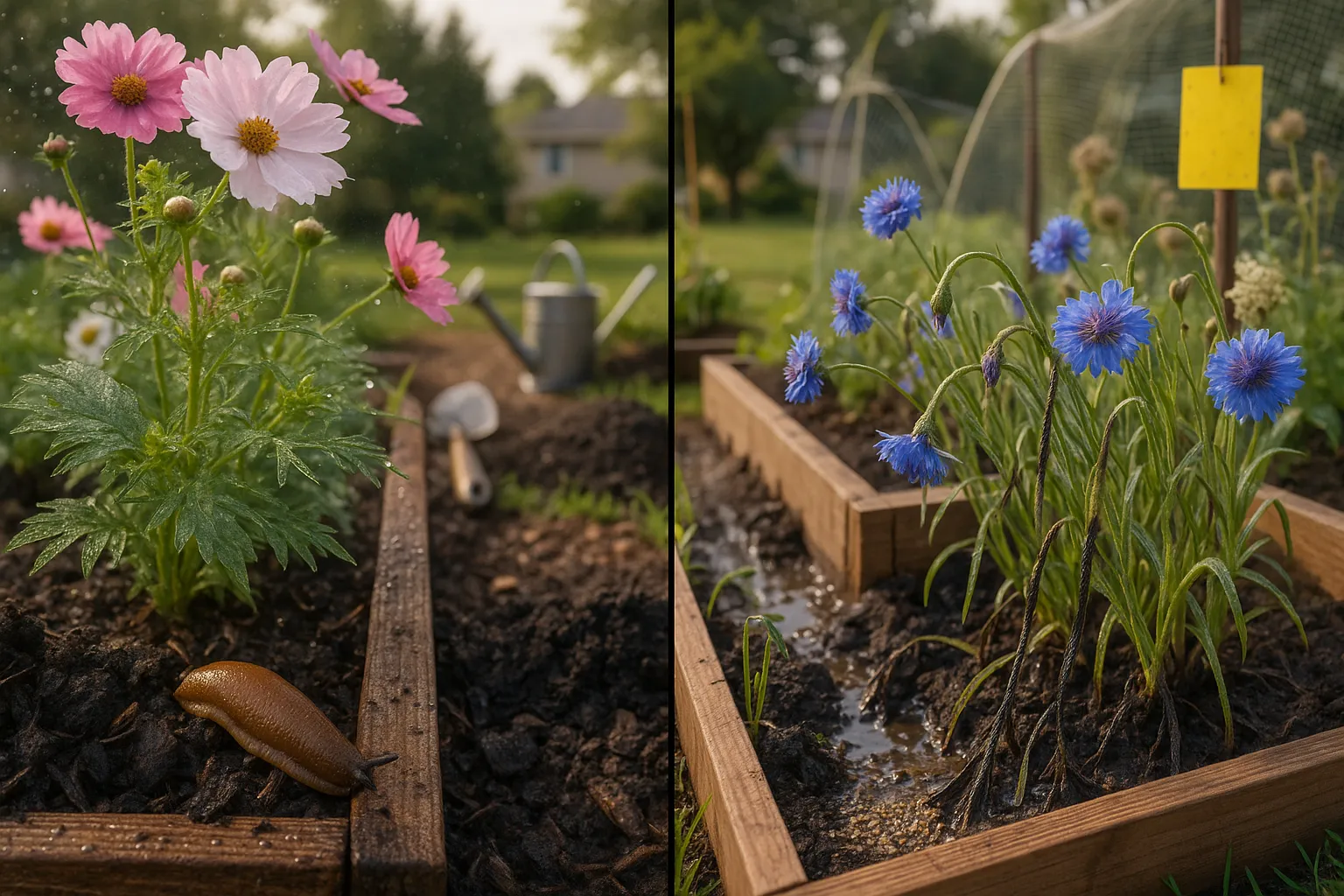
Fact: Both plants are relatively pest-resistant, but they face distinct threats: cosmos get aphids and mildew: cornflowers face root rot and stem borers.
Common Problems With Cosmos And How To Fix Them
If cosmos sit in wet soil they develop root rot: fix by improving drainage and avoiding overwatering. Aphids commonly cluster on new growth, blast them with water or use insecticidal soap. Powdery mildew can appear in humid summers: increase air circulation and remove infected foliage. If plants become leggy, pinch them back early to encourage bushier growth. A gardener I know lost an entire cosmos bed to slugs because mulch was piled against stems: keep mulch clear of crowns.
Common Problems With Cornflowers And How To Fix Them
Cornflowers can suffer from stem rot in poorly drained soils, raise beds or add grit to soil. Thrips may scar petals: use sticky traps and avoid overhead watering. If plants flop, increase spacing and give a phosphorus boost to strengthen stems. Birds and rodents sometimes eat seed heads, cover with netting if you’re saving seed. Be honest: I once overwatered a promising cornflower patch until it collapsed: now I stick to a simple moisture schedule.
Landscape Uses, Design Ideas, And Cut-Flower Value
Fact: Cosmos excel in airy borders and pollinator meadows: cornflowers shine in cottage gardens, containers, and as durable cut flowers.
Using Cosmos In Borders, Meadows, And Pollinator Gardens
Use cosmos at the back of a mixed border where their height provides movement. They pair well with Echinacea, Rudbeckia, and Salvia. Cosmos are dreamy in mass plantings for pollinators, bees and butterflies find them easily. For naturalized meadows, intermix cosmos seed with native grasses in spring. Cosmos stems are long and flexible, so they make dramatic, casual bouquets: one or two stems add height without heavy foliage.
Using Cornflowers In Cottage Gardens, Containers, And Bouquets
Cornflowers work well in cottage-style beds with lavender, snapdragons, and roses like ‘Gertrude Jekyll’. They also thrive in containers where soil can be kept well-drained. Cornflowers have excellent vase life, bunches of Centaurea cyanus hold for days and keep shape. For wedding florals, blue cornflower adds a vintage note: pair with Gypsophila and lisianthus for texture. If you want flowers that transport well, choose cornflowers for their sturdiness.
Selecting Varieties And Cultivars For Your Goals
Fact: Variety choice determines final height, bloom color, and how you’ll use the plant: pick with purpose.
Top Cosmos Varieties By Height, Color, And Use
Cosmos bipinnatus ‘Sensation’, Tall, mixed colors, classic meadow look. Good for borders and cut flowers.
Cosmos bipinnatus ‘Purity’, White, tall, excellent for massing behind lower perennials.
Cosmos sulphureus ‘Bright Lights’, Shorter, vivid orange and yellow: good for containers and summer color.
Cosmos bipinnatus ‘Daydream’, Rose-pink tones, reliable producer, great for pollinator patches.
Choose tall varieties if you want drama or screen a tired fence. Choose dwarf or sulphureus types for containers and edging. Remember: variety names like ‘Sensation’ and ‘Bright Lights’ indicate growth habit and intended use.
Top Cornflower Varieties And Color Variations
Centaurea cyanus ‘Blue Boy’, Classic deep blue, compact habit, excellent for cutting.
Centaurea cyanus ‘Black Ball’, Deep maroon, dramatic contrast in mixed borders.
Centaurea cyanus ‘Porcelain Mix’, Multiple colors including pink and white, good for containers.
Centaurea cyanus ‘Swan’, White, elegant and sturdy, lovely in cottage beds.
Select cornflower varieties for stem strength if you plan to cut them. For naturalizing, pick single-flower mixes that set seed easily. If you want an unusual palette, explore modern hybrids that expand beyond traditional blue.

- The Best Cyberflix Alternative for Streaming Movies - October 4, 2026
- 7 Free Alternatives to Mobbin for UI/UX Design - October 4, 2026
- Mt 03 Competitors - October 4, 2026
by Ellie B, Site Owner / Publisher