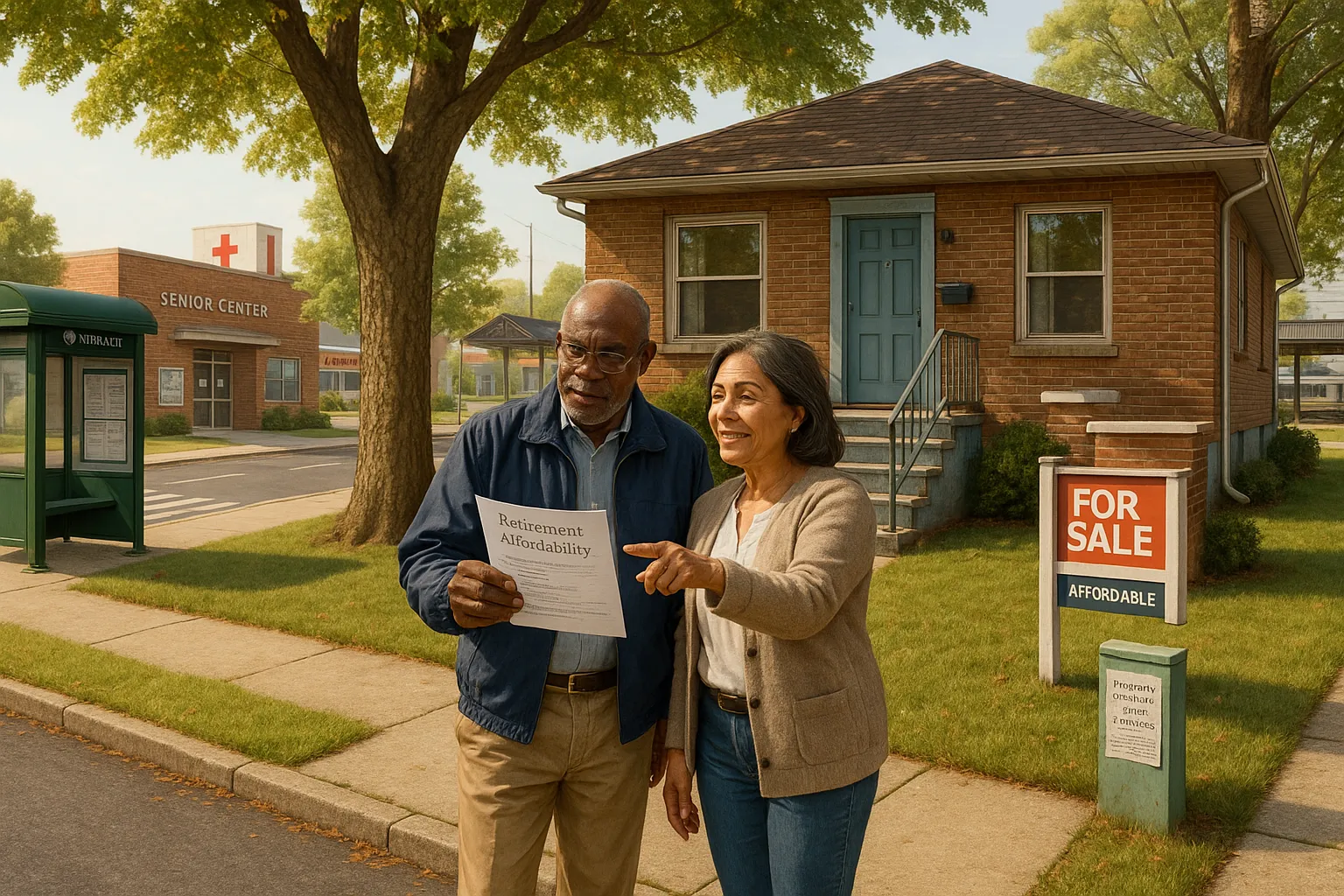
You can find retirement options in New Jersey that keep your monthly costs low while still offering access to hospitals, cultural life, and transit. Picture morning coffee on a quiet porch, a short drive to a regional hospital, and lower-than-expected housing expenses that free up money for hobbies or grandkids. This guide shows where those affordable pockets are, what you’ll spend, and how to pick a town that fits your health needs, social life, and bank account. Read on to find practical towns and clear steps you can use to plan a comfortable, budget-friendly retirement in NJ.
What Makes A New Jersey Town Budget-Friendly For Retirees
Fact: A budget-friendly New Jersey town combines lower housing costs, reasonable taxes, and access to healthcare. Start with housing: towns with older housing stock or suburban-rural edges often have lower median home prices than coastal or wealthy suburban areas. Next, taxes matter: New Jersey has high property taxes in many municipalities, but some towns offer senior tax relief programs or simply have lower assessed values.
Consider transit and access. You want good access to a hospital or specialist without long drives. Towns near Amtrak, NJ Transit, or PATCO lines can cut transportation spending and help you avoid car-dependence. Add community services: a local senior center, meal programs, and volunteer networks reduce both loneliness and out-of-pocket costs.
Semantic entities: New Jersey Department of Health, NJ Transit, local county boards of taxation, Medicare, Social Security.
A quick checklist you can use now:
Housing cost vs. state median price
Effective property tax rate and senior exemptions
Distance to nearest hospital or specialist
Public transit options and local senior services
These items shape affordability more than a town’s zip code prestige. They tell you whether your retirement dollars will buy peace, convenience, or both.
Top Affordable Retirement Towns In New Jersey (With Quick Stats)
Fact: Several New Jersey towns offer affordable living with distinct advantages. Below are towns that balance cost and access, with practical notes to help you compare.
Trenton, Low Cost Of Living And Transit Access
Trenton has lower housing prices than much of the state and direct transit links to Philadelphia via NJ Transit and SEPTA connections. The city hosts Capital Health and it’s a short drive to Princeton Healthcare. You may see older housing requiring repairs, but property taxes can still be lower than wealthy suburbs, and community programs are active. If you want short commutes to cultural events and healthcare, Trenton delivers value.
Camden Suburbs, Value Near Philadelphia With Senior Services
Fact: Camden suburbs like Cherry Hill and Pennsauken offer lower-cost options near Philadelphia hospitals (Cooper University Health Care, Jefferson). These suburbs provide senior centers, county meal programs, and PATCO or NJ Transit access. You trade some quiet for convenience, and you get better hospital access than many rural towns.
Vineland, Lower Housing Costs And Slower Pace
Vineland in Cumberland County has some of the lowest median home prices in South Jersey. The pace is slower and local health clinics and Inspira Health Network facilities are within reach. If you prefer a calmer daily life and affordable housing, Vineland is a strong candidate. Public transit is limited, so plan for car costs.
Atlantic County Communities, Coastal Options With Reasonable Prices
Fact: Not all coastal towns cost a fortune. Parts of Atlantic County, including Egg Harbor Township and Pleasantville, can be surprisingly affordable compared with shore towns in Monmouth County. You get beach access, Atlantic Health Network and shore-area medical facilities, and seasonal community events. Expect higher summer traffic but often lower year-round housing costs.
Middlesex County Pockets, Central Location And Affordability
Middlesex County cities like Perth Amboy and Edison pockets have reasonable housing compared to Bergen or Morris counties. You get proximity to New Brunswick’s RWJBarnabas Health and Rutgers medical resources, transit to NYC, and diverse senior services. Middlesex gives a balance: central location with areas that don’t charge premium prices.
Cost Breakdown: What You’ll Actually Spend Living In NJ
Fact: Your largest expenses will be housing, taxes, and healthcare. Below I break them down so you can budget realistically.
Housing: Buying, Renting, And Senior-Specific Options
Buying: Median home prices vary widely. Expect lower prices in Trenton, Vineland, and some Atlantic County towns. Factor in maintenance and property tax. Renting: Rents are lower in inland towns: a one-bedroom in an affordable NJ city often costs less than in Jersey City or Hoboken. Senior-specific options: look for age-restricted communities, HUD Section 202 units, and local housing authorities that offer subsidies. These options reduce monthly housing costs but sometimes have waitlists.
Taxes: Property, Income, And Local Tax Relief For Seniors
Property taxes: New Jersey has high average property taxes, but rates vary by municipality. Check each town’s effective tax rate and assessed values. Income taxes: Social Security is generally protected in NJ: pension and retirement income may have state exemptions depending on your birth year and income sources. Senior tax relief: many counties and towns offer deductions or exemptions for seniors: apply early.
Healthcare And Long-Term Care Costs
Healthcare: Medicare covers many services, but Medigap or Medicare Advantage premiums add cost. Specialist visits, prescriptions, and outpatient therapy increase spending. Long-term care: nursing home and assisted living costs are high nationwide: New Jersey averages are above the national mean. Use long-term care insurance or plan savings accordingly. Identify nearby hospitals, RWJBarnabas Health, Cooper University Hospital, AtlantiCare, to estimate travel and emergency costs.
Utilities, Groceries, Transportation, And Miscellaneous Expenses
Utilities: expect seasonality, hot summers and cold winters influence electric and heating bills. Groceries: costs align with proximity to major supermarkets: local farmers markets often save money and provide fresh options. Transportation: owning a car adds insurance, gas, maintenance: towns with NJ Transit or PATCO lower that cost. Miscellaneous: memberships, entertainment, and volunteer fees round out budgets. Aim for a buffer of 10-15% for unexpected expenses.
Practical Considerations Beyond Price
Fact: Price is necessary but not sufficient. You must account for health access, mobility, and community.
Access To Healthcare And Specialists
Start with distance to hospitals and specialist clinics. Towns near New Brunswick, Camden, and Atlantic City usually give faster specialist access. Check whether major systems like RWJBarnabas Health or Cooper accept your Medicare Advantage plan. Also look for rehabilitation centers and durable medical equipment suppliers nearby.
Public Transit, Walkability, And Driving Convenience
Fact: Transit reduces reliance on a car and saves money. Towns on NJ Transit lines, PATCO, or near major bus routes let you skip a second car. Walkability: neighborhoods with grocery stores, pharmacies, and clinics within walking distance reduce daily travel and encourage activity. Driving convenience: consider parking, winter clearing, and traffic patterns that might impact trips to medical appointments.
Safety, Community Services, And Social Opportunities
Safety: review local crime data and recent community policing initiatives. Community services: strong senior centers, volunteer programs, and faith-based groups provide social ties and low-cost activities. Social opportunities: libraries, continuing-education classes at county colleges, and local arts programs keep you engaged without high cost. Those programs often make modest towns feel rich in life.
How To Choose The Right Budget-Friendly Spot For You
Fact: Match town features to your priorities using a clear process. Use the checklist below and then test choices with local visits.
Personal Priorities Checklist (Health, Social Life, Commute)
List your non-negotiables in order. For example:
Health: distance to primary care and preferred specialists
Social life: proximity to friends, clubs, or faith communities
Commute: for part-time work or family visits
Rank those and eliminate towns that fail on top items. This keeps choices practical.
How To Research: Data Sources, Local Visits, And Questions To Ask
Use data sources: U.S. Census American Community Survey for housing and demographic data, county assessor sites for property taxes, and Medicare’s hospital compare tool for healthcare quality. Visit: spend time in mornings and evenings, talk to neighbors, and test transit by taking local buses or trains. Ask: Where do seniors get primary care? Are there meal-delivery or home-help services? How often do police and fire respond to emergencies?
Financial Steps: Budgeting, Tax Planning, And Available Senior Benefits
Create a monthly budget with conservative estimates for housing, healthcare, and transport. Meet a local CPA to discuss New Jersey tax rules for pensions and property tax exemptions. Check benefits: Medicare, Medicaid eligibility, Supplemental Security Income (SSI), and local county programs often reduce costs for low- to moderate-income retirees.
Moving, Settling In, And Local Resources For Seniors
Fact: You will save money and stress by using local senior resources and planning moves carefully.
Housing Assistance, Senior Programs, And Nonprofit Resources
Contact county offices on aging and local United Way chapters to locate HUD Section 202 units, reverse-mortgage counseling, and home-repair grants. Organizations like AARP New Jersey and Catholic Charities run programs that help with housing referrals and small home modifications.
Transportation, Healthcare, And Social Service Contacts To Know
List and save contacts: county transportation services (many counties offer reduced-fare shuttles), local hospital patient liaisons, and senior center coordinators. Keep your Medicare ID and prescription plan info handy. Join mailing lists for local events and volunteer driver programs.
Practical Tips For Stretching Your Retirement Dollars In NJ
Start with property tax appeals if you think your home is over-assessed. Shop prescription plans yearly during Medicare Open Enrollment to find savings. Use farmers markets for cheaper produce in season and combine errands to save gas. Finally, volunteer: it builds community ties and often gives early access to local programs and discounts.
A final practical nudge: visit your short list in different seasons before you sign any lease or mortgage. Weather, traffic, and community rhythms change how a town feels. Do that, and your retirement dollars will buy more comfort and fewer surprises.
To provide the best experiences, we use technologies like cookies to store and/or access device information. Consenting to these technologies will allow us to process data such as browsing behaviour or unique IDs on this site. Not consenting or withdrawing consent, may adversely affect certain features and functions.
Functional
Always active
The technical storage or access is strictly necessary for the legitimate purpose of enabling the use of a specific service explicitly requested by the subscriber or user, or for the sole purpose of carrying out the transmission of a communication over an electronic communications network.
Preferences
The technical storage or access is necessary for the legitimate purpose of storing preferences that are not requested by the subscriber or user.
Statistics
The technical storage or access that is used exclusively for statistical purposes.The technical storage or access that is used exclusively for anonymous statistical purposes. Without a subpoena, voluntary compliance on the part of your Internet Service Provider, or additional records from a third party, information stored or retrieved for this purpose alone cannot usually be used to identify you.
Marketing
The technical storage or access is required to create user profiles to send advertising, or to track the user on a website or across several websites for similar marketing purposes.