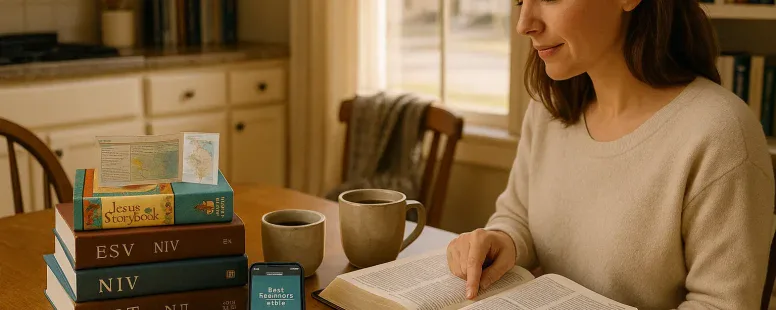
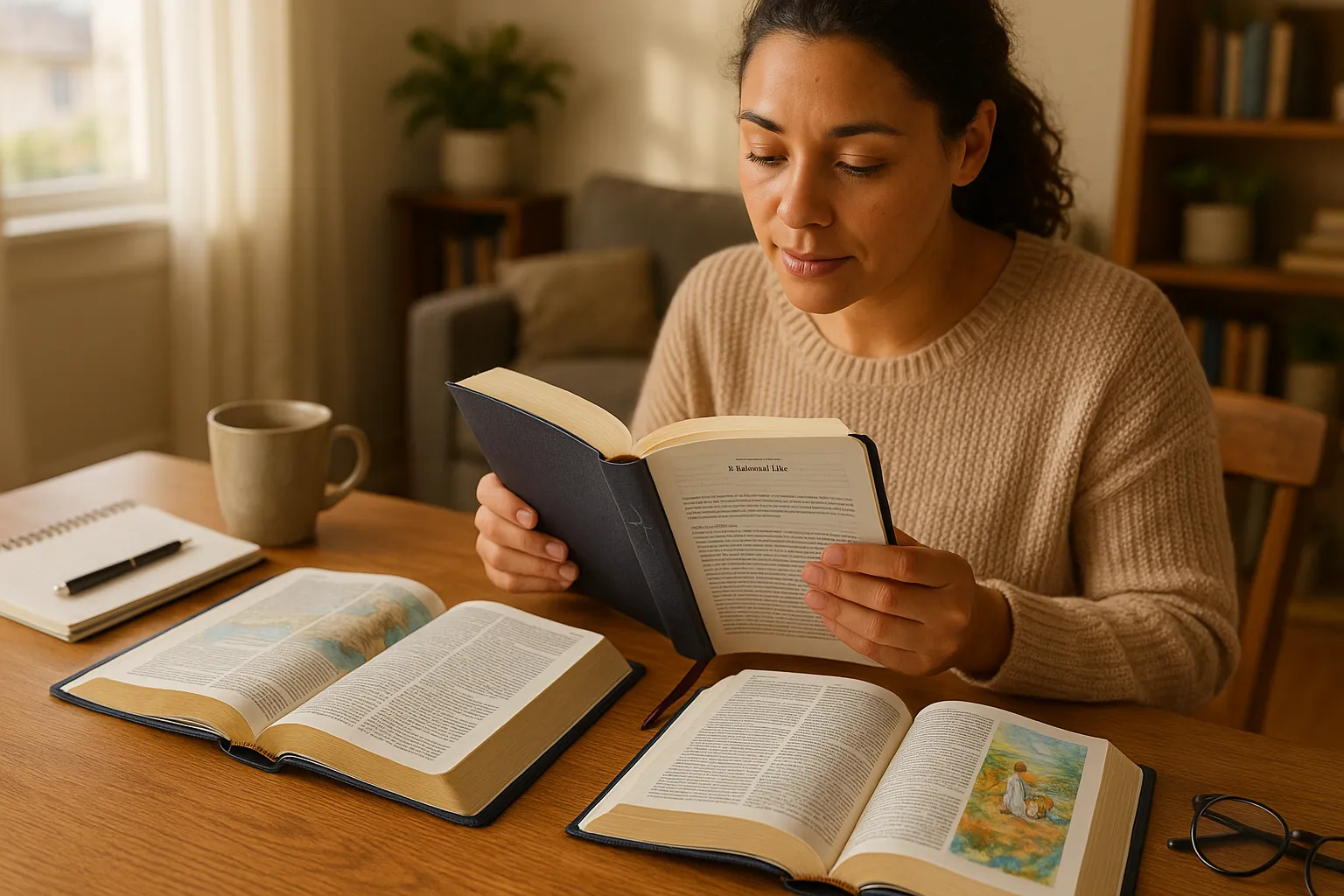
Choosing the right Bible sets the tone for your reading life. A clear, approachable edition will keep you reading: a dense, overly technical copy will collect dust. Picture holding a book that speaks plainly, shows you the map of the journey, and helps you ask better questions, without drowning you in footnotes. That’s the payoff. This guide shows you which features matter, which translations to consider, and practical ways to start reading and studying. You’ll find options for kids, for adults coming back to church, for people who want devotionals, and for those who prefer study help. Read on to find the best beginners bible for your needs and how to use it so it helps you grow.
Why Choosing The Right Bible Matters For Beginners
Fact: the wrong Bible can discourage you from reading. Choose an edition that matches your goal, reading, learning, devotion, or study, so you stay engaged.
A Bible is both a book and a learning system. If you want to build a habit, you need clear text, helpful cues, and a format that fits your life. For example, if you prefer short daily readings, a devotional-format Bible with daily reflections will help. If you want to understand context, a study Bible with maps and notes will make stories click.
Think of your first Bible like a good pair of shoes. It should fit, support, and not cause blisters. That might mean a large-print easy-to-read edition, a durable binding for travel, or a child-friendly illustrated book for family time. When you match the Bible to your needs, you remove friction. And with that friction gone, reading becomes a habit, questions come easier, and spiritual growth follows.
Common beginner mistakes: buying the most expensive or the most popular edition without testing readability: picking an academic study Bible when you just want clear stories: ignoring translation differences. Avoid those and you’ll keep reading longer.
Key Features To Look For In A Beginner Bible
Fact: readability, translation, and supportive tools matter most for beginners.
Readability: Look for clear type, comfortable font size (10–12 pt minimum for pocket Bibles: 12–14 pt for standard reading), and wide margins. A simple layout reduces eye strain and helps you focus on the sentences.
Translation clarity: Choose a translation that uses modern language while staying faithful to the original texts. We’ll discuss choices later, but right now, prioritize plain language.
Support tools: Good beginner Bibles include short introductions to each book, maps, timelines, and brief study notes. Those features provide context quickly without overwhelming.
Navigation aids: A usable table of contents, running headers with book names, and section headings help you find passages fast. Cross-references are useful, but don’t let them distract you on first reads.
Durability and format: If you plan to take the Bible to a group or travel, pick a sewn binding and a cover that survives wear. If you prefer convenience, a digital edition with audio can be the right fit.
Extras to consider: reading plans, devotional inserts, and simple commentaries aimed at beginners. These additions guide you through common stumbling points like Old Testament chronology or New Testament letters.
Recommended Bibles For Different Beginner Profiles
Fact: different goals require different Bibles. Below are clear suggestions for common beginner profiles.
New To Reading Scripture (Simple, Readable Options)
Fact: you want plain language and smooth flow.
New Living Translation (NLT), clear contemporary phrasing, easy to follow narratives. Great for first-time readers. Published by Tyndale House.
Contemporary English Version (CEV), very simple wording, often used in outreach and early readers.
Real example: A friend who hadn’t read the Bible since childhood started with NLT and finished the Gospels within a month. The simple verbs and direct sentences helped her stay engaged.
Young Readers And Families
Fact: kids need visuals and short stories.
The Jesus Storybook Bible (Sally Lloyd-Jones), tells Bible stories with child-friendly language and a big-picture theme centered on Jesus.
Illustrated children’s Bibles from Zonderkidz or Crossway, include maps and timelines for families.
Practical note: Use a kids’ Bible alongside a simple adult translation so kids hear the story and parents can reference the original text.
Adults New To Faith Or Returning To Church
Fact: you need approachable translations plus pastoral notes.
New International Version (NIV) Student/Beginner editions (Zondervan), balances readability and accuracy with study helps.
New Living Translation (NLT) Devotional Bibles, offer reflections aimed at daily life.
Vulnerable moment: Many people return with doubts. A Bible that pairs text with short reflection will let you wrestle honestly without feeling lost.
Study-Oriented Beginners Who Want Guidance
Fact: you want context, not academic overload.
ESV Study Bible (Crossway), comprehensive notes, maps, timelines: solid for careful readers who want reliable scholarship.
CSB Study Bible (Holman), readable translation plus practical study notes and application sections.
Warning: Don’t try to read every note at first. Focus on key passages and use notes to clarify background.
Devotional-Focused Beginners Who Want Daily Practice
Fact: daily readings stick when they’re short and practical.
NLT Daily Devotional Bible, short readings with reflection questions.
The One Year Bible editions (various translations), split readings into daily portions covering the whole Bible in a year.
Tip: Pair a devotional Bible with a journal and one monthly review session to track spiritual growth.
How To Choose The Best Translation For You
Fact: translation type affects your understanding and reading speed.
Comparing Translation Types: Dynamic, Formal, And Paraphrase
Fact: translations fall into three practical categories.
Formal equivalence (word-for-word): examples include the ESV and NASB. These stick close to original wording and work well for study, but they can read stiffly.
Dynamic equivalence (thought-for-thought): examples include the NIV and NLT. These aim for clear English that conveys original meaning.
Paraphrase: examples include The Message. These use contemporary language to rephrase ideas and make them accessible, but they can drift from literal meanings.
Choose based on purpose: pick formal if you plan deep study, dynamic if you want readable daily reading, paraphrase if you need a bridge to understand tone and flow.
Recommended Translations For Beginners And Why
Fact: NIV, NLT, and ESV cover most beginner needs.
NIV, readable and widely used in churches: several beginner editions exist.
NLT, very accessible for narrative reading and devotion.
ESV, good when you want a more literal text with study options.
Personal note: If you like hearing scripture, try the YouVersion app where you can listen to audio Bibles in multiple translations.
Choosing Based On Denominational Preferences And Study Needs
Fact: some denominations prefer specific translations.
Evangelical Protestant churches often use NIV, ESV, or NASB.
Mainline Protestant churches sometimes use NRSV.
Catholic readers may prefer the New American Bible (NABRE) or the Revised Standard Version Catholic Edition.
If your church uses a particular translation, it helps to match that for easy follow-along during services. But you can still read another translation at home to compare perspectives.
Practical Tips For Starting To Read And Study Your Bible
Fact: simple routines beat grand plans. Start small and consistent.
Simple Reading Plans And First Passages To Try
Fact: start with the Gospels and Psalms for story and comfort.
First 30 days: read one chapter from Mark or Luke each day to learn Jesus’ life.
Alternate with Psalms or Proverbs for daily wisdom and prayer language.
Use a 5–10 minute plan rather than a long schedule to make it sustainable.
Try the One Month Gospel plan: Day 1–15 Mark, Day 16–30 Luke. Keep notes on one verse that sticks out each day.
How To Use Study Notes, Cross-References, And Maps Without Getting Overwhelmed
Fact: use notes as clarifiers, not as the main text.
Read the passage first. Ask: what does this sentence say? Then read the study note if you need context.
Use cross-references to see how a theme repeats. Don’t follow every cross-reference on your first pass.
Consult maps when geography matters (Paul’s missionary routes, Exodus travel).
Rule of thumb: read the text twice, then use notes. That keeps the Bible’s voice primary.
Daily Habits, Journaling, And Group Study Suggestions
Fact: habits form with accountability.
Habit: read 10 minutes at the same time daily. Anchor it to a routine (after coffee, before bed).
Journal the verse that surprised you and one action step.
Join a small group or Bible study where questions are welcome. Ask honest questions: seekers are often the most helpful group members.
Honest warning: you will hit confusing or uncomfortable passages. That’s normal. Pause, ask a leader, or note it for future study rather than abandoning reading.
Buying, Format, And Budget Considerations
Fact: format and price affect your long-term use. Match format to how you’ll read.
Print Versus Digital: Pros, Cons, And Accessibility Features
Fact: print helps focus: digital helps portability and search.
Print: tactile experience, easier on the eyes for long reading, better for note-taking. Choose sewn binding and calfskin or imitation leather for durability.
Digital: searchable, includes audio, often free (YouVersion, Bible Gateway). Great for commuting and quick lookup. Use text highlighting and note-sync features.
Accessibility: Many apps offer adjustable font, dyslexic fonts, and audio read-aloud. Print publishers now include large-print editions for low-vision readers.
Binding, Font Size, And Additional Tools To Consider
Fact: choose a Bible you can use daily without strain.
Binding: sewn > glued for longevity. Spiral for study Bibles used at a desk.
Font size: 10–14 pt depending on eyesight. Consider single-column layout for easier reading.
Tools: include a ribbon marker, wide margins for notes, and maps. Some Bibles include a concordance and topical indexes which help beginners.
Where To Compare Options And Find Reliable Reviews
Fact: trusted reviews save money and regret.
Compare on retailer pages with user photos (Amazon, Christianbook) and read verified buyer reviews.
Use publisher pages (Crossway, Zondervan, Tyndale) for specs and sample pages.
Look for independent reviews on blogs and YouTube from pastors, seminary students, and lay readers. They often show real-world handling and font examples.
Practical tip: if possible, handle a physical copy in a bookstore before buying. If you buy online, confirm the return policy. You want a Bible you’ll keep returning to, not one that sits on a shelf.
To provide the best experiences, we use technologies like cookies to store and/or access device information. Consenting to these technologies will allow us to process data such as browsing behaviour or unique IDs on this site. Not consenting or withdrawing consent, may adversely affect certain features and functions.
Functional
Always active
The technical storage or access is strictly necessary for the legitimate purpose of enabling the use of a specific service explicitly requested by the subscriber or user, or for the sole purpose of carrying out the transmission of a communication over an electronic communications network.
Preferences
The technical storage or access is necessary for the legitimate purpose of storing preferences that are not requested by the subscriber or user.
Statistics
The technical storage or access that is used exclusively for statistical purposes.The technical storage or access that is used exclusively for anonymous statistical purposes. Without a subpoena, voluntary compliance on the part of your Internet Service Provider, or additional records from a third party, information stored or retrieved for this purpose alone cannot usually be used to identify you.
Marketing
The technical storage or access is required to create user profiles to send advertising, or to track the user on a website or across several websites for similar marketing purposes.