Butter adds flavor, texture, and nostalgia to many dishes, but it isn’t the only path to richness. Whether you want to lower saturated fat, avoid dairy, tweak smoke point for high-heat cooking, or simply try something new, viable alternatives exist that preserve taste and purpose. This guide shows practical swaps for toast, sautéing, baking, and special diets, complete with flavor notes, measurements, and honest tradeoffs you’ll use.
Why Replace Butter? Common Reasons And Considerations
Fact: People replace butter for health, dietary, and culinary reasons. You may want to cut saturated fat, avoid dairy proteins, raise the smoke point for frying, or change flavor. Start by asking two clear questions: what does the butter do in this recipe, and which property matters most to you?
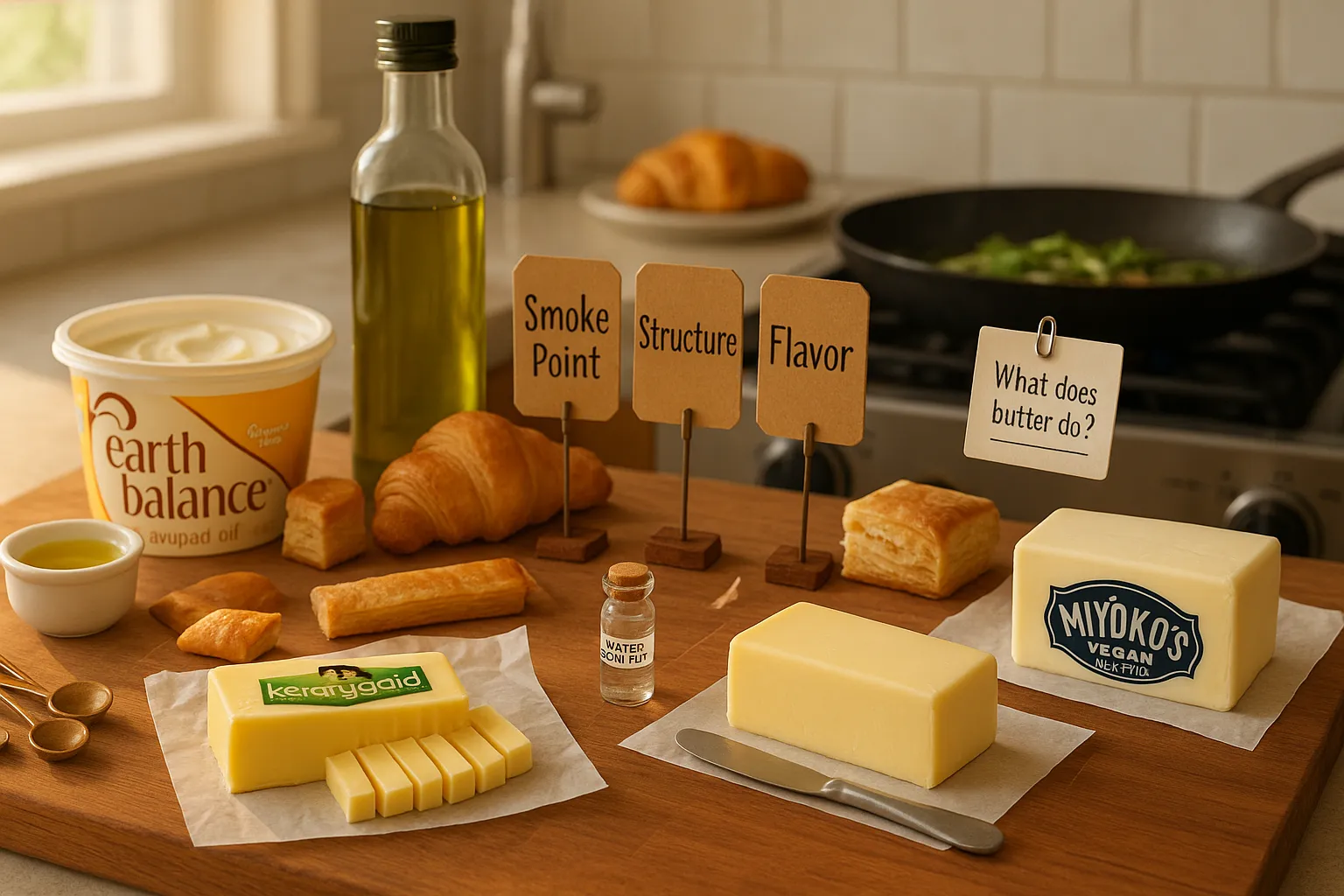
Butter adds flavor, moisture, and a solid-to-liquid mouthfeel. In a recipe butter acts as fat, leavening partner (when creamed with sugar), and flavor carrier. If you only need fat for cooking, oils often work better. If you need structure in a pastry, solid plant fats or cold vegan butters can mimic butter’s role.
Consider these practical points before you swap: smoke point (for high-heat frying), water content (for steam and texture in baking), and flavor intensity (butter is slightly sweet and dairy-rich). Brands like Kerrygold or Plugrá have richer butter flavor: plant-based brands such as Earth Balance and Miyoko’s aim to emulate that. Knowing the role butter plays lets you pick the right alternative and avoid ruinous swaps.
Best Spreads And Toppings For Toast And Sandwiches
Fact: For spreads and toppings, texture and flavor matter more than melting point. Choose spreads that match your mood, savory, sweet, or creamy.
Plant-Based Margarines And Buttery Spreads
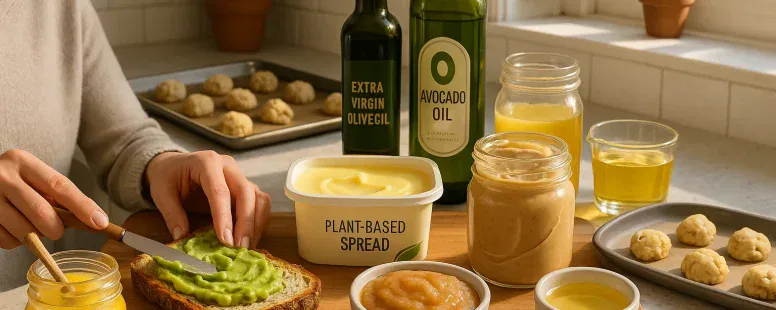
Plant-based margarines like Earth Balance and I Can’t Believe It’s Not Butter melt and spread like dairy butter. They often work 1:1 on toast and in sandwich spreads. Watch labels: some use hydrogenated oils: choose non-hydrogenated formulations to avoid trans fats. These spreads give the familiar buttery mouthfeel without dairy.
Nut Butters (Almond, Peanut, Cashew)
Nut butters add protein, flavor, and healthy fats. They pair well with toast and fruit. Use almond butter for a mild, slightly sweet note: peanut butter for boldness: cashew butter when you want creamy luxury. Salt and honey shift the profile.
Avocado And Mashed Fruit Spreads
Avocado gives creamy, savory richness and supplies monounsaturated fat. Mash it with lemon, salt, and chili flakes to make a spread that sits well under eggs. Mashed banana or berry compotes create sweet toast options and reduce the need for added sugar.
Cottage Cheese, Yogurt, And Savory Pastes
Cottage cheese and strained Greek yogurt add protein and a tangy lift. Spread ricotta with herbs or top toast with labneh and olive oil for Mediterranean notes. These dairy options may still contain lactose or milk proteins, so avoid them if you are allergic or vegan.
Best Substitutes For Cooking And Sautéing
Fact: Oils usually beat butter for sautéing because they have higher smoke points and less water. Pick an oil or clarified fat based on heat level, flavor, and nutrition.
Olive Oil, Avocado Oil, And Other Cooking Oils
Olive oil is versatile and gives fruity, peppery notes: use extra-virgin olive oil for low-to-medium heat and a robust flavor. Avocado oil has a high smoke point (around 500°F) and neutral taste, great for stir-fries and searing. Grapeseed oil, sunflower oil, and canola oil also handle medium-high heat and keep a neutral profile.
Ghee And Clarified Butter (Flavor Notes And Smoke Points)
Ghee is clarified butter that has had milk solids removed: it offers a nutty aroma and a higher smoke point (about 450°F) than regular butter. Chefs often choose ghee when they want butter-like flavor without the low smoke point. Ghee contains trace dairy proteins, so it isn’t strictly vegan, but it can suit lactose-intolerant cooks who tolerate trace amounts.
Coconut Oil And High-Heat Alternatives
Coconut oil adds a mild coconut aroma: refined coconut oil has a higher smoke point and less scent. For very high-heat applications, use oils with high smoke points (avocado, refined safflower) or ghee. Keep in mind coconut oil is high in saturated fat: use it sparingly if you monitor heart health.
Butter Alternatives For Baking And Pastries
Fact: Baking swaps must consider water content, solidity at room temperature, and flavor. Some swaps are direct: others need tweaks.
Direct 1:1 Swaps And When They Work (Margarine, Plant Fats)
You can often swap stick margarine or solid vegan butter 1:1 for butter in cookies, quick breads, and many cakes. Choose a product with similar fat and water content: this preserves creaming behavior and texture. Brands like Earth Balance stick-style and Miyoko’s cultured vegan butter work well in many recipes.
Using Oils In Baked Goods: Texture And Moisture Adjustments
Liquid oils (canola, olive, avocado) work best in muffins, brownies, and cakes where creaming is not required. Oils create moister crumb but lose the aeration you get from creaming butter and sugar. Convert 1 cup butter to 3/4 cup oil for most recipes, but reduce added liquid slightly. Expect a denser, tender crumb.
Mashed Fruit, Applesauce, And Yogurt For Healthier Bakes
Mashed banana, applesauce, and plain yogurt reduce fat and add moisture. Use them for muffins, quick breads, and some cakes. Swap 1:1 for butter in many recipes but lower sugar slightly because fruit adds sweetness. These swaps change flavor and texture, your bake will be denser and less flaky. They’re great when you want fewer calories and added fiber.
Alternatives Tailored To Dietary Needs
Fact: Your dietary need, vegan, heart-healthy, lactose-free, determines the best substitute. Match the substitute to both health goals and recipe role.
Vegan And Dairy-Free Options (What To Choose And Why)
Vegan diets work well with plant-based margarines, coconut oil, nut butters, mashed avocado, and commercial vegan butters. Miyoko’s, Earth Balance, and Melt Organics are named brands that mimic butter flavor and perform in baking. Use fortified plant milks and nutritional yeast to replace dairy notes in savory dishes.
Low-Fat And Heart-Healthy Choices (Pros And Tradeoffs)
For lower saturated fat, choose liquid oils high in monounsaturated or polyunsaturated fats (olive, canola, safflower) and nut butters in moderation. These choices lower saturated fat but may lack butter’s texture for pastries. Expect changes in mouthfeel and flakiness.
Lactose-Intolerant And Allergy-Friendly Substitutes
If you are lactose-intolerant, ghee may work if you tolerate trace lactose, but plant-based spreads are safest. For nut allergies, avoid nut butters and use sunflower seed butter or soy-based spreads. Read labels for cross-contamination and milk protein residues, especially in processed vegan butters.
Practical Tips For Swapping Butter In Recipes
Fact: Successful swaps follow simple rules: match function, adjust moisture, and tweak flavor. Here are practical, kitchen-tested tips.
Measurement Conversions And Texture Tricks
Solid butter to oil: use 3/4 cup oil per 1 cup butter. Stick margarine or vegan butter usually swaps 1:1. When a recipe depends on creaming for air, use solid plant butter and chill it until firm: then cream as usual. Chill doughs when using softer fats to prevent spreading.
Flavor Balancing, Salt, And Sweetness Adjustments
Butter adds sweetness and a dairy tang. If you swap to neutral oil or avocado, add a pinch of salt or a teaspoon of milk powder (or soy milk powder) to mimic flavor. When using sweet substitutes like applesauce or mashed banana, reduce added sugar by 10–25% to keep balance.
Storage, Shelf Life, And When To Use Each Substitute
Butter lasts months in the fridge and longer in the freezer. Oils have varied shelf lives, olive oil can go rancid in months: refined oils last longer. Plant-based spreads often include preservatives and can sit in the fridge for weeks. Store nut butters in the fridge to slow oil separation. Ghee stores well at room temperature in a sealed jar for months, but keep it out of direct heat.
Bonus practical note: taste as you go. If a swap tastes flat, a small amount of acid (lemon juice or vinegar) brightens flavor. If you want buttery aroma, a dab of cultured butter-flavored spread or a few drops of butter extract can help, though it may reintroduce dairy flavor.
Call to action: try one swap this week, use avocado on your toast, or replace half the butter with applesauce in a muffin recipe, and watch how small changes reshape familiar dishes. You might like the result more than you expect.
To provide the best experiences, we use technologies like cookies to store and/or access device information. Consenting to these technologies will allow us to process data such as browsing behaviour or unique IDs on this site. Not consenting or withdrawing consent, may adversely affect certain features and functions.
Functional
Always active
The technical storage or access is strictly necessary for the legitimate purpose of enabling the use of a specific service explicitly requested by the subscriber or user, or for the sole purpose of carrying out the transmission of a communication over an electronic communications network.
Preferences
The technical storage or access is necessary for the legitimate purpose of storing preferences that are not requested by the subscriber or user.
Statistics
The technical storage or access that is used exclusively for statistical purposes.The technical storage or access that is used exclusively for anonymous statistical purposes. Without a subpoena, voluntary compliance on the part of your Internet Service Provider, or additional records from a third party, information stored or retrieved for this purpose alone cannot usually be used to identify you.
Marketing
The technical storage or access is required to create user profiles to send advertising, or to track the user on a website or across several websites for similar marketing purposes.