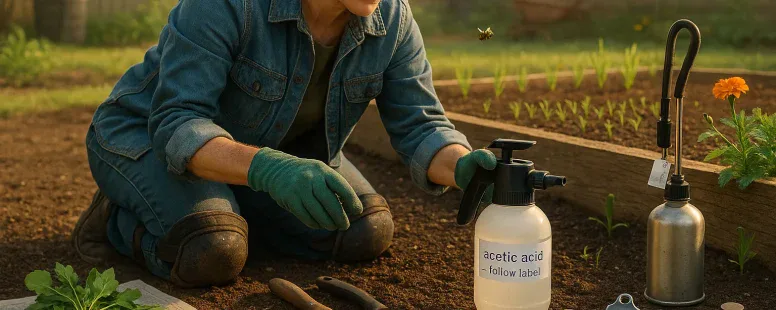
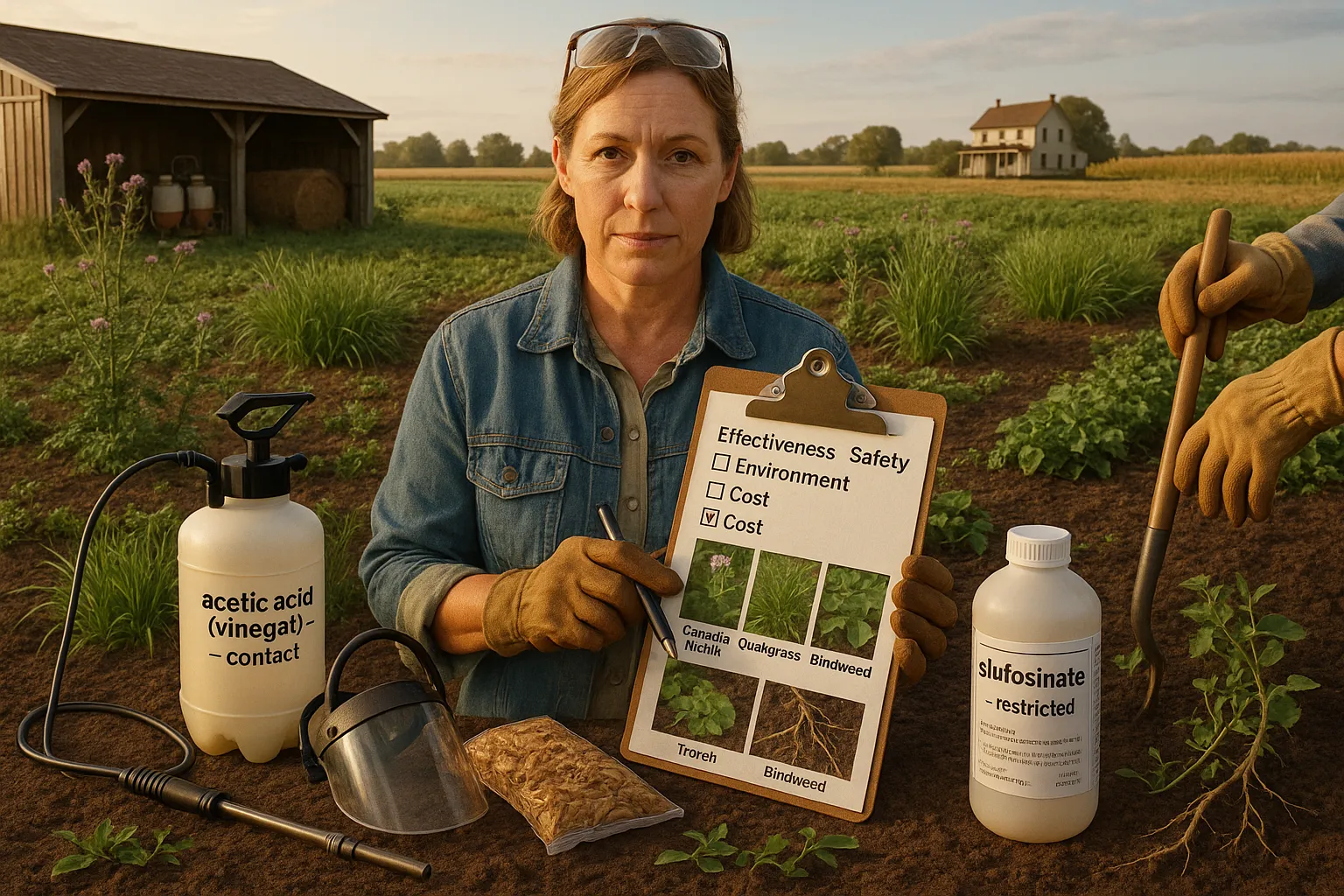
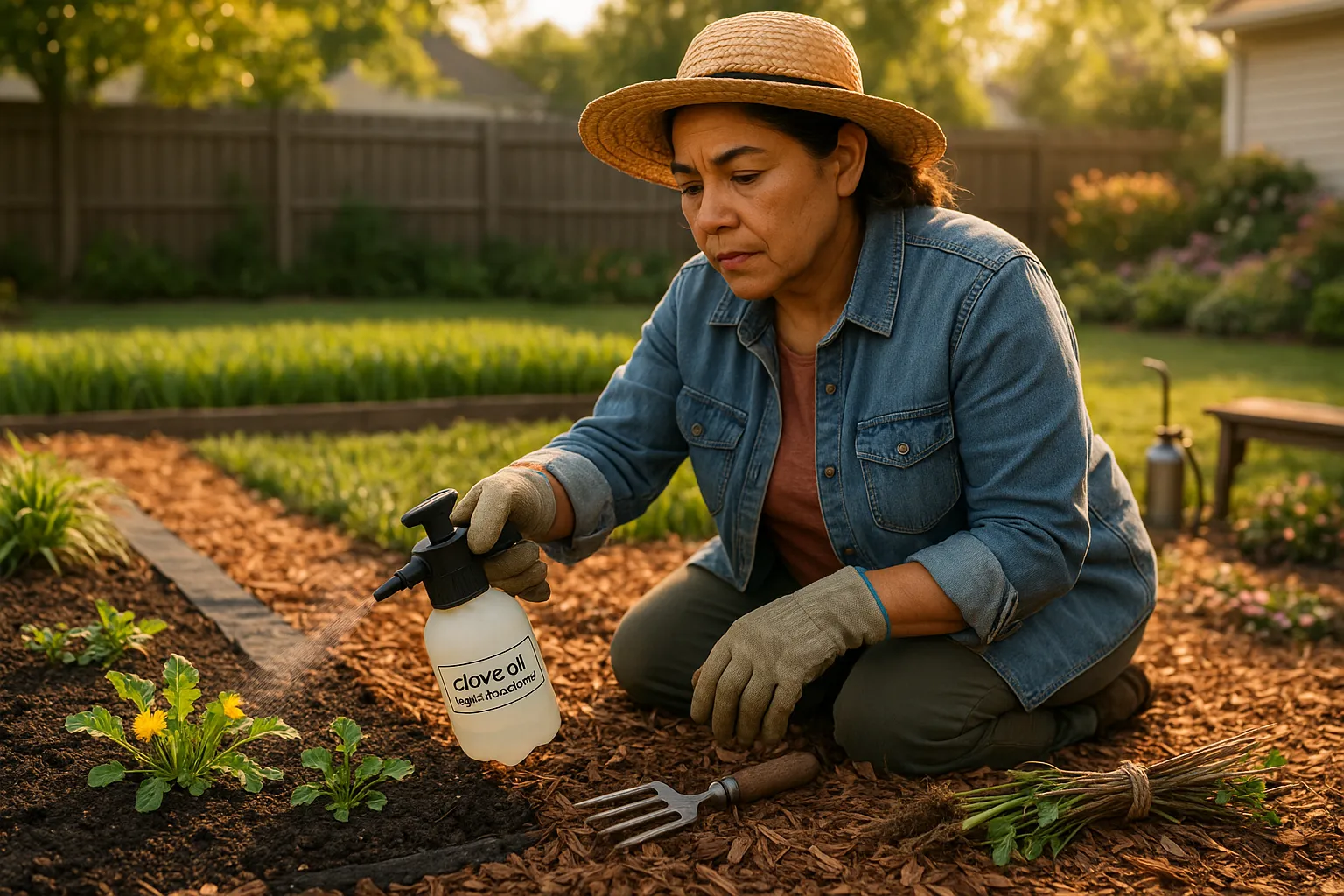
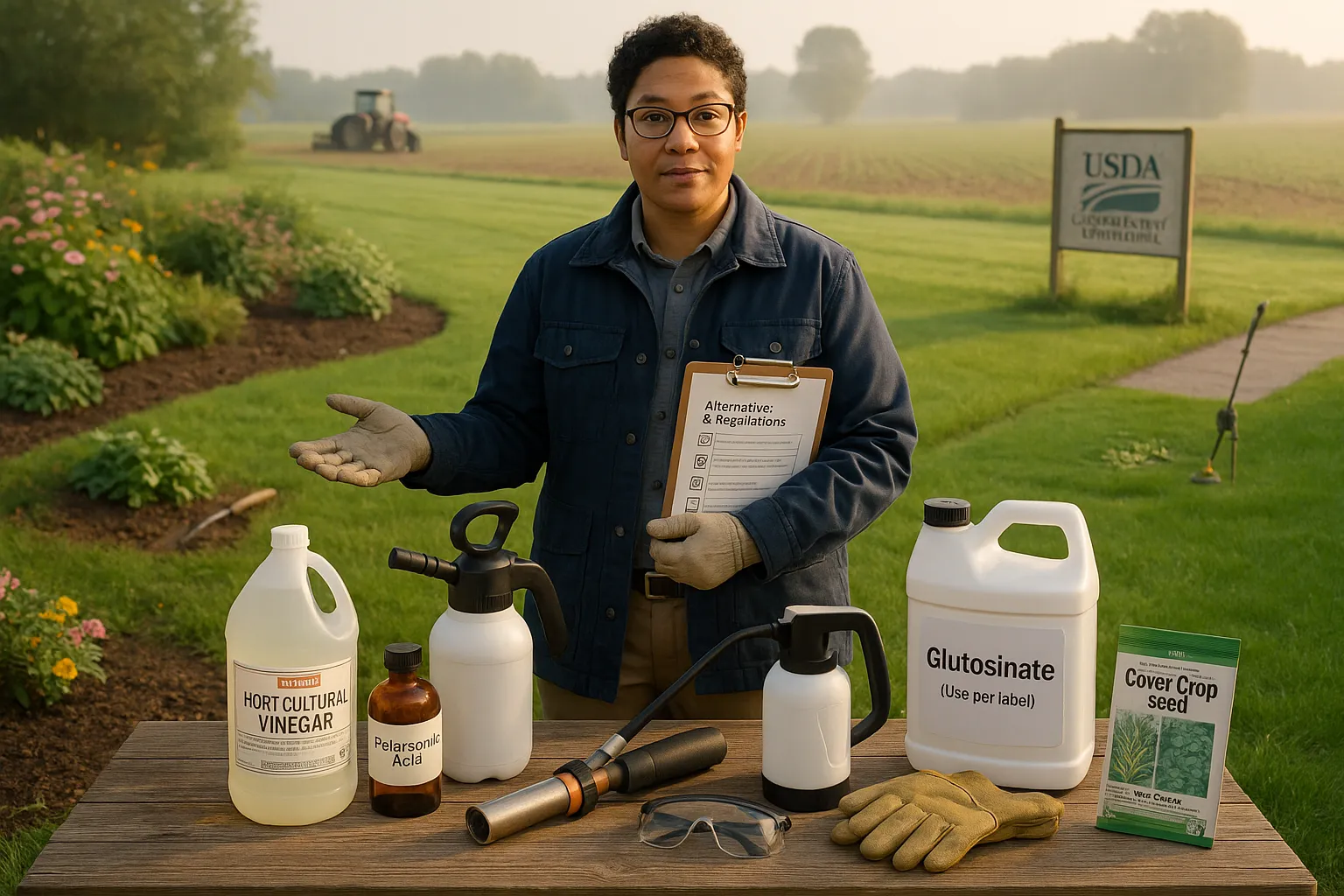
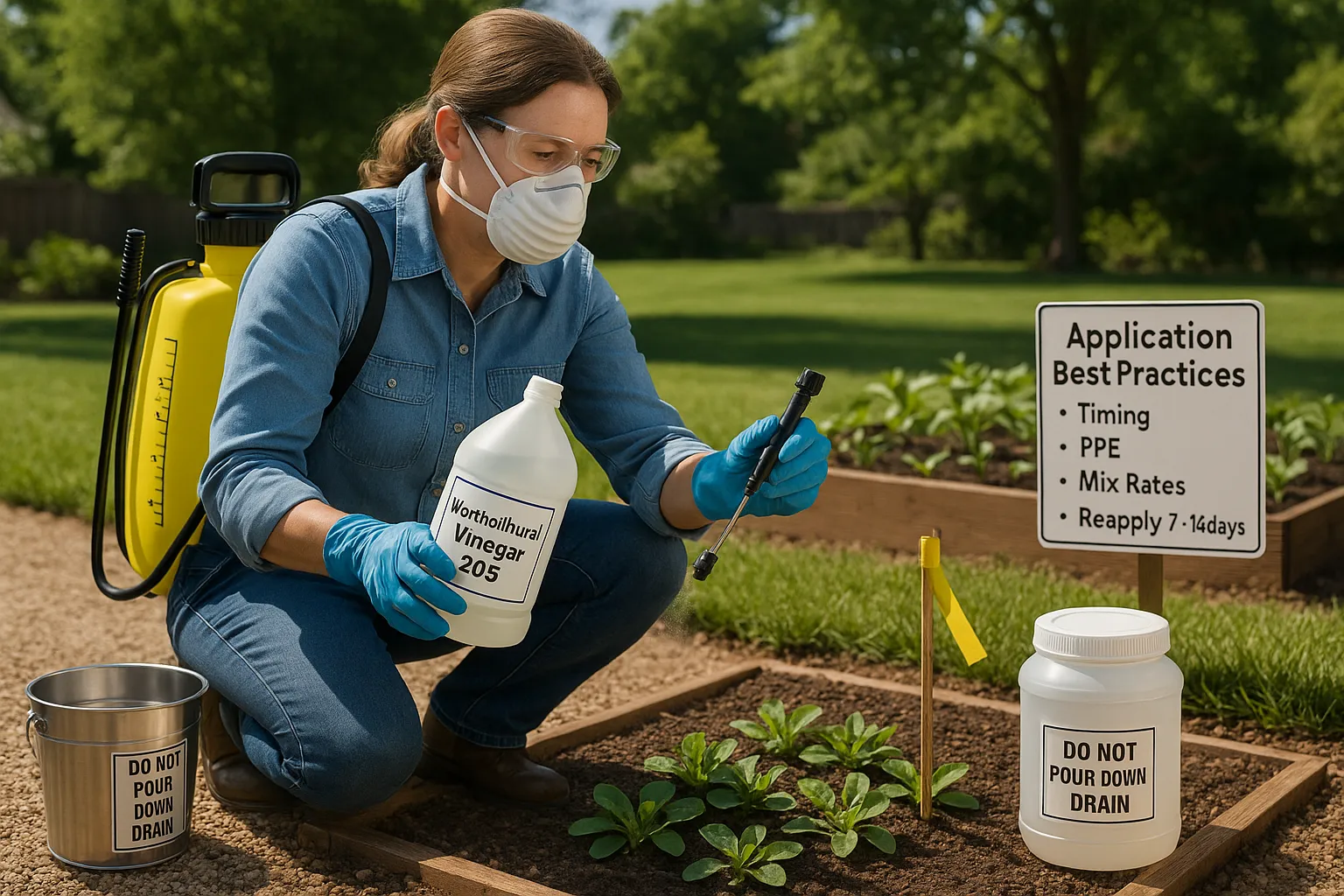
Glyphosate is a powerful, widely used herbicide, but rising concerns about health, regulation, and resistance mean many people look for other options. Picture kneeling in a garden where soil smells like wet earth and vinegar, you reach for a solution that controls weeds without risking pollinators or court headlines. This guide helps you find alternatives that match your goals: safety, efficacy, cost, and environmental impact. You’ll get clear criteria, practical comparisons, and real-world application tips so you can pick the best path for your yard, farm, or landscape.
Criteria For Choosing An Alternative
Fact: You must weigh effectiveness, safety, environment, and cost when choosing a glyphosate alternative.
Effectiveness Against Target Weeds
Start with the target. If you face perennial deep-rooted weeds like Canada thistle or quackgrass, you need an option that kills roots. For annuals, surface contact methods often suffice. Evaluate control by species: for example, hand pulling works well on bindweed seedlings but fails on mature roots. Record what species you battle before picking a method.
Spectrum: Broadleaf Versus Grasses
Fact: Different tools favor different weed types. Some herbicides and cultural methods selectively control broadleaves or grasses. Pelargonic acid and flame weeding control aboveground tissue and work similarly on many broadleaves and grasses but may not prevent regrowth from rhizomes. Choose based on whether grasses or broadleaves dominate your infestation.
Human And Animal Safety Profiles
Fact: Safety varies widely between options. Organic contact herbicides (acetic acid, clove oil) present lower chronic risk than some synthetics, but high concentrations can cause burns. Glufosinate has acute toxicity considerations and strict label PPE: check EPA and local regulations. You need to think about children, pets, and farmworkers when selecting an approach.
Environmental Impact And Persistence
Fact: Persistence matters. Glyphosate binds to soil and can move off-target: alternatives differ. Acetic acid breaks down quickly, so it has low persistence but requires repeat treatments. Glufosinate degrades slower and has broader ecological effects. Consider impacts on soil microbes, groundwater, and pollinators.
Cost, Availability, And Ease Of Use
Fact: Costs span a wide range and include labor. Hand-pulling and mulching cost labor but little material. Commercial herbicides cost money but save time. Availability depends on local regulation: glufosinate availability may be limited in some regions. Factor in equipment needs: sprayers, flame weeders, or tillers all add to the true cost.
Top Alternatives Compared
Fact: No single alternative perfectly replaces glyphosate: combine methods for best results.
Mechanical And Cultural Controls (Hand Pulling, Tillage, Mulch)
Mechanical control kills or removes plants. Hand pulling removes entire plants when done well: it’s excellent for small beds and organic gardens. Tillage buries or severs roots in row crops but increases erosion risk and disturbs soil structure. Mulch smothers seedlings and reduces light, working well under ornamentals. Use these where you can invest labor or protect soil with cover crops.
Fact: Organic contact herbicides burn foliage quickly but rarely kill deep roots. Household vinegar (5% acetic acid) will nudge back seedlings: horticultural vinegar (20% or higher) causes rapid desiccation. Clove oil and pelargonic acid disrupt plant cell membranes. These options break down fast and are low-residue, but you’ll likely reapply. They suit gardeners who prioritize safety and low persistence.
Nonselective Synthetic Options And Their Tradeoffs (e.g., Glufosinate Where Allowed)
Fact: Nonselective synthetics can mimic glyphosate’s broad control but bring regulatory and resistance issues. Glufosinate (e.g., Liberty) controls many weeds and can be effective for perennial suppression, but it requires careful label compliance and often specialized sprayers. These chemicals may affect non-target plants and have worker-safety requirements.
Flame Weeding And Thermal Treatments
Fact: Flame weeding kills plant tissue by intense heat and leaves no chemical residue. Propane flame weeders are effective on seedlings and reduce seedling emergence by destroying shallow seeds and tissue. Thermal methods are fast and leave soil microbes mostly intact, but they pose fire risk, require dry conditions, and need repeat passes for perennials.
Fact: Integrated management gives the best long-term control. Combine spot applications of organic herbicide with mulching, targeted hand removal, and cover crops. For instance, use clove oil on visible weeds, lay landscape fabric in problem patches, and plant a rye cover crop in fall to suppress spring germination. Integration reduces reliance on any single tool and slows resistance.
How To Choose The Best Option For Your Situation
Fact: Your site type, scale, and risk tolerance determine the best choice.
Home Gardens And Small Landscapes: Safety-First Choices
Start with safety. For homes, pick low-residue options like vinegar or pelargonic acid and prioritize hand removal and mulch. You’ll often prefer short-lived products that let pollinators and pets return quickly. Combine with frequent monitoring. Remember: stronger concentrations of acetic acid require gloves and eye protection.
Lawns And Ornamental Beds: Selective Strategies
Start with species ID. Use selective turf herbicides for grassy lawns invaded by broadleaves: spot-treat invasive grasses with appropriate tools. For beds, use targeted flame weeding between pavers or post-emergent selective herbicides labeled for ornamentals. Integrate overseeding and proper mowing to favor desirable plants.
Commercial Agriculture And Large-Scale Use: Yield, Regulation, And Resistance Management
Start with yield protection. For farms, calculate cost-per-acre including reapplication and labor. Use crop-appropriate options: glufosinate in permitted systems, mechanical cultivation in row crops, and cover crops to suppress weeds. Build a resistance management plan: rotate modes of action and use cultural tactics to reduce selection pressure. Consult extension agents (e.g., USDA Cooperative Extension) for region-specific advice.
Regulatory And Local-Use Considerations
Start with the label. Always follow product labels and local restrictions. Some municipalities restrict high-concentration acetic acid or synthetic herbicides. Check EPA, state pesticide regulators, and local ordinances before buying or applying.
Application Best Practices And Safety
Fact: Correct timing, mix rates, and PPE determine both safety and success.
Timing, Weather, And Target Growth Stage
Apply when weeds are small and actively growing. Most contact herbicides work best on young foliage. Avoid spraying before rain. For flame weeding, choose dry days with low wind. Warm, sunny weather improves absorption for liquid treatments.
Proper Concentrations, Coverage, And Equipment Tips
Start with label concentrations. For acetic acid, don’t improvise concentration: horticultural vinegar requires calibrated sprayers. Use flat-fan nozzles for uniform coverage: for spot sprays, cone nozzles help. Do test patches to confirm efficacy and minimize non-target damage.
Personal Protective Equipment And Disposal Guidelines
Wear gloves, eye protection, and long sleeves when applying stronger acids or synthetics. Glufosinate labels often require respirators and chemical-resistant gloves. Dispose of rinse water responsibly: never pour concentrated mixes down storm drains. Follow local hazardous waste rules for leftover chemicals.
Monitoring, Follow-Up, And When To Reapply
Monitor treated areas weekly. Reapply contact herbicides every 7–14 days as needed: mechanical controls may need repeated passes. If regrowth appears from roots, plan for multiple seasons of management, persistence beats a single heavy treatment.
Costs, Efficacy, And Environmental Tradeoffs
Fact: You trade off labor for lower persistence or save time with synthetics that carry other risks.
Short-Term Effectiveness Versus Long-Term Weed Control
Short-term: Contact herbicides and flame weeding give fast visible effects. Long-term: tillage, proper crop rotation, and integrated strategies reduce seed banks and perennial regrowth. Expect higher upfront labor with long-term gains.
Impact On Soil Health, Beneficial Plants, And Pollinators
Fact: Many organic options spare soil microbes more than broad-spectrum synthetics. Flame weeding and acetic acid have low residual impact, protecting pollinators if applied outside bloom periods. Synthetic options may harm non-target flora and reduce beneficial insect habitat: weigh those costs against yield needs.
Budgeting: Upfront Costs, Labor, And Reapplication Frequency
Fact: Low-cost materials (vinegar, mulch) often require more labor and more frequent applications. Commercial herbicides cost more per gallon but reduce labor. For budgeting, calculate cost-per-acre including labor hours and expected reapplications. For example, manual removal might cost you more in labor but less in environmental liability: commercial operators often prefer chemical options for labor savings and predictability.
Use this information to choose an alternative that fits your priorities. Mix techniques, track results, and adapt, this reduces risk and gives you control without relying solely on glyphosate.
To provide the best experiences, we use technologies like cookies to store and/or access device information. Consenting to these technologies will allow us to process data such as browsing behaviour or unique IDs on this site. Not consenting or withdrawing consent, may adversely affect certain features and functions.
Functional
Always active
The technical storage or access is strictly necessary for the legitimate purpose of enabling the use of a specific service explicitly requested by the subscriber or user, or for the sole purpose of carrying out the transmission of a communication over an electronic communications network.
Preferences
The technical storage or access is necessary for the legitimate purpose of storing preferences that are not requested by the subscriber or user.
Statistics
The technical storage or access that is used exclusively for statistical purposes.The technical storage or access that is used exclusively for anonymous statistical purposes. Without a subpoena, voluntary compliance on the part of your Internet Service Provider, or additional records from a third party, information stored or retrieved for this purpose alone cannot usually be used to identify you.
Marketing
The technical storage or access is required to create user profiles to send advertising, or to track the user on a website or across several websites for similar marketing purposes.