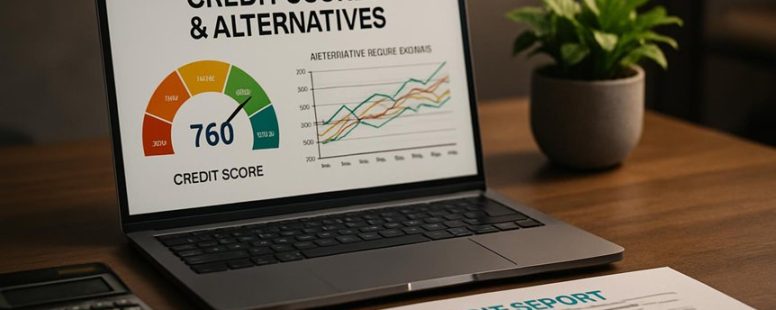
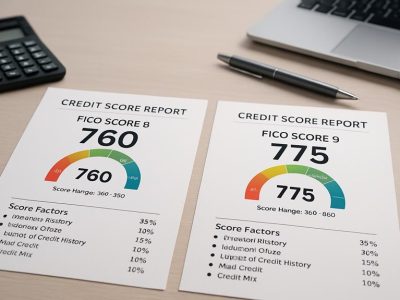
Feeling boxed in by your FICO score can leave you in the dark about your true financial potential.
But what if there are other tools that paint a clearer, more vibrant picture—especially if your credit story is unconventional or sparse?
These lesser-known alternatives are like hidden gems waiting to be discovered, offering insights that can boost your confidence and open new doors.
Surprisingly, some of these scores can even give you a leg up in the race for better loan terms.
Understanding which one aligns with your unique situation might just be the key to unlocking your financial future.
Understanding the FICO Score and Its Limitations
A FICO score is a number that shows how likely you are to pay back money you borrow. It’s used by lenders to decide if they should give you a loan or credit card. But the FICO score has weak spots. It doesn’t always show your true financial health because it mainly looks at things like credit cards, loans, and payment history. It ignores other important payments like rent or utilities. If you have little credit history, your score might not reflect your real risk. For example, someone who pays rent on time every month might not have a good score because rent payments don’t count in the FICO system.
Some people think FICO is the only way to measure credit health, but others say it’s not enough. Alternative ways to check credit look at rent, utilities, and other bills paid on time. These can give a clearer picture of how responsible someone really is with money. For example, a person who always pays rent and electric bills on time might be more reliable than what their FICO score shows.
However, there’s a catch. These new methods are not always accepted by lenders yet. They might give a better view, but they are not as widely used. Plus, some people worry these systems could be unfair or inaccurate if they are not careful. So, while FICO is simple and familiar, it isn’t perfect. To get a full idea of someone’s financial health, we need to understand both the limits of FICO and the value of alternative scores. Knowing this can help more people access fairer credit options and make smarter money choices.
Key Criteria to Evaluate FICO Score Alternatives
When looking at alternatives to the FICO score, it’s best to focus on clear comparison points. First, compare different scoring models. Some may rate your credit differently, so understanding how each one works helps you see which is better for you. For example, if a new score uses rent and utility payments, it might give a different picture than traditional scores.
Next, check data accuracy. If the information used to create a score is wrong, the score could be misleading. Make sure your data is correct before trusting any score. Also, think about how consumers feel about the scores. If people don’t trust the system, they won’t want to use it. So, scores that are easy to understand and trusted matter a lot.
Lenders also have preferences. Not all lenders accept every scoring model. If you want to get a loan, pick a score that lenders recognize. Accessibility is another key point. Look for scoring tools that are simple to use and explain. If it’s confusing or hard to understand, it won’t help you.
Finally, think about financial literacy. A good score only helps if you understand what it means and how to improve it. Some scores might look good but don’t tell you how to get better. Knowing what actions can raise your score will help you reach your financial goals faster.
Top Alternative Credit Scores: VantageScore and Beyond
What are top alternative credit scores to FICO?
VantageScore is a popular choice. It looks at your credit report differently than FICO and can often give a different score. Some lenders also consider VantageScore when deciding on loans.
How can you improve your credit score besides FICO?
Experian Boost is a tool that can help. It adds your utility bills, phone payments, and streaming services to your credit report. If you pay your bills on time, this can raise your score. But keep in mind, it only works if your payments are reported and on time.
What is the UltraFICO Score?
The UltraFICO Score uses your banking habits to show how responsible you are with money. It looks at how long your accounts have been open, your checking account balance, and if you avoid overdrafts. If you manage your bank accounts well, this score might help you get better loan terms.
Are these options better than FICO?
Some people find these scores helpful because they consider different factors. But they also have limits. For example, not all lenders use them. Also, if your utility bills or bank info is not reported regularly, these scores might not improve much.
Should you choose one over the other?
It depends. If you want a broader look at your credit and your lender accepts VantageScore or UltraFICO, trying these might help. But if you need a quick approval, FICO is still the most common. Remember, each score has its strengths and weaknesses.
Would you like to learn how to check these scores or how to improve them?
VantageScore Key Features
VantageScore is a type of credit score that gives you a quick look at your credit health. It is designed to work well even if you don’t have a long credit history. This is helpful for people just starting out or those with fewer credit accounts. Unlike some other scores, VantageScore updates more often, so you see changes in your credit report sooner. This means you can get a current picture of how you are doing financially.
One big plus of VantageScore is that it uses the same rules across all three major credit bureaus—Experian, Equifax, and TransUnion. This can lead to more consistent scores and fewer surprises. It also focuses more on your recent credit activity, so your current habits matter more than old history. If you want an easy-to-understand alternative to FICO scores, VantageScore is a good choice because it is transparent and includes more people.
However, keep in mind that it might not be perfect. Some lenders still prefer FICO scores, and VantageScore may not be available everywhere. Also, updating more often is good, but it can sometimes show small changes that don’t really matter. Still, if you want a simple way to see how your credit is doing and compare with others, VantageScore can help.
Experian Boost Benefits
Experian Boost is a way to improve your credit score by adding positive payment history from utility, phone, and streaming accounts. Unlike many credit scores that only look at traditional loans and credit cards, Experian Boost lets you include bills you pay regularly, like electricity, internet, or phone bills. This can help you build a better credit report faster.
Here’s what makes Experian Boost different and useful:
It adds bills you already pay every month, so your score can go up quickly.
There’s no cost to use it, so anyone can try it out.
Your credit score might increase by as much as 15 points.
You can set it up easily through Experian’s secure website or app.
But keep in mind, Experian Boost only works if your utility, phone, or streaming payments are reported to Experian. Some companies don’t report payments, so it might not help everyone. Also, boosting your score by a few points is helpful, but it doesn’t fix all credit problems.
If you’re trying to get a better credit score fast and want a simple way to add positive payment history, Experian Boost could be a good option. Just remember, it’s not magic — it’s a tool that can help some people but not everyone.
UltraFICO Score Insights
The UltraFICO Score is a way to see how trustworthy you are with money, based on your banking habits. Unlike traditional credit scores, which mainly look at loans and credit cards, the UltraFICO score looks at how you manage your checking, savings, and money market accounts.
For example, if you keep steady balances and regularly make good transactions, your score might go up. This can help people who don’t have much credit history or have had money problems before. It’s like a report card for your bank accounts, showing responsible behavior.
Some people might worry that linking bank accounts could expose private info or not really reflect credit skills. Others say it’s good because it adds more data for a fairer score. But remember, it’s not perfect. If you often bounce checks or have low balances, your score could go down.
Two views to think about:
Pro: It gives a second chance for people with limited credit.
Con: It might not work well if your banking habits are poor or if you don’t trust sharing account info.
If you want a different way to check your credit, or if traditional scores seem unfair, UltraFICO might be worth a look. Just be sure to understand its limits before relying on it.
Using Credit Reports to Supplement Alternative Scores
Using credit reports to improve alternative scores is a smart move. Here is what you should know:
A credit report gives detailed information about a person’s credit history. It shows things like how much debt they have used, if they pay on time, how many different kinds of credit they have, and how long they’ve had their accounts. Checking these details helps you understand their real financial situation better than just numbers.
For example, if someone has a high credit utilization ratio, meaning they use most of their available credit, it might show they are overextending themselves. Or if they have a long history of paying on time, that’s a good sign they are responsible with money. Looking at how many types of credit they have—like credit cards, loans, or mortgages—can tell you if they manage different debts well. Also, watching how often they apply for new credit helps spot risky behavior.
Here are the main things I focus on:
Making sure their income reports match their debts. If they say they make $3,000 a month but have huge debts, that could be a warning sign.
Checking their credit utilization. Experts suggest keeping it below 30 percent for responsible use.
Looking at their payment history. Timely payments over time show good debt management.
Seeing how many types of credit they have and how long they’ve had accounts. Longer, diverse credit histories are usually better.
Watching for many credit inquiries, which might show they’re trying to get lots of new credit quickly.
Some people might say, “Why bother with reports? Alternative scores should be enough.” But reports can show issues that scores might miss. Others warn that reports aren’t perfect—they can have errors or outdated info. So, use them as a supplement, not the only tool.
Keep in mind, these reports give a clearer picture but aren’t foolproof. They help make smarter, fairer decisions, but always check for mistakes or missing info. Do you think this approach makes sense? Or are there better ways to see someone’s true financial health?
Alternative Data That Boosts Your Credit Profile
Showing your utility payments and rent history can improve your credit score. These types of data are called alternative data. Many lenders are now looking at this information because it shows how you handle bills that traditional credit scores might ignore. For example, paying rent on time every month shows responsibility, even if you don’t have a lot of credit cards or loans.
Some companies, like Experian Boost, allow you to add utility and phone bill payments to your credit report. This can help you get better loan offers or lower interest rates. Think of it as adding extra proof of your good habits.
But there are some limits. Not all lenders use this alternative data, so it might not help in every case. Also, showing your utility bills doesn’t automatically mean your score will go up. It depends on your payment history.
On the other hand, some people worry these methods might give a false sense of security. Just because you pay your utility bills doesn’t mean you’re financially responsible overall.
In short, using utility and rent payments can help boost your credit score, but it’s not a magic fix. It’s one part of a bigger plan to show lenders you’re a good borrower.
Utility Payments Reporting
Utility payments are often ignored in traditional credit scores, but they can help improve your credit when reported. Paying utility bills on time shows lenders you are responsible with money, even if you don’t have many loans or credit cards. However, many utility companies do not send payment data to credit bureaus regularly. Some services now exist that can report your utility payments to credit bureaus, giving you a chance to boost your credit score.
Here’s what you need to know about utility payments:
They show your regular, steady financial habits.
They can help people with little or no credit history.
Lenders see utility payments as proof you are reliable.
If reported correctly, they can raise your credit score.
To benefit from utility payment reporting, you can use services like LevelCredit or Experian Boost. These help report your payments even if your utility company does not do it automatically. But remember, not all utility companies participate, and reporting may cost extra. Also, some reports may take time to show results.
Some people see utility bill reporting as a quick way to improve credit, but others worry about the extra costs and limited access. If your utility company does not report payments, you might not see much change. Still, it can be worth trying if you want to build credit without taking out loans or credit cards.
In the end, utility payment reporting is a helpful tool, but it’s not a magic fix. It works best when combined with other good financial habits. Just be aware of the limitations and consider whether it’s right for you before paying extra for reporting services.
Rental History Impact
Building credit might seem hard, but your rent payments can help. Paying rent on time is an important part of showing lenders that you are responsible with money. Many rental companies and credit bureaus now include rent payment data in your credit report. This means that paying your rent regularly and on time can improve your credit score. It’s like adding extra points to your credit profile.
However, if you pay late or miss a rent payment, it can hurt your score just as much as a missed credit card payment. So, keeping track of your rent payments and reporting them to credit bureaus is a smart move. Some services, like RentTrack or Cozy, can help you report your rent payments easily.
Remember, rental history is just one part of your credit picture. It can help if you don’t have much traditional credit, but it’s not a magic fix. Also, not all landlords or lenders report rent payments. Before you start, check if your landlord accepts reporting, or ask about services that can help.
In short, paying rent on time and reporting it can boost your credit. But be careful — late payments can hurt your score. Use rent reporting as a tool, but keep up with all your bills. It’s a good way to show you’re trustworthy with money, especially if you’re trying to build or rebuild your credit.
Alternative Financial Behaviors
Here are some key behaviors lenders consider:
Paying your utility and phone bills on time
Saving regularly and making consistent deposits
Paying subscriptions and memberships on time
Using peer-to-peer lending platforms responsibly
These data points give lenders a clearer picture of your financial habits. If your credit score is low or you don’t have much credit history, showing these behaviors can help you qualify for loans or better rates. It’s about proving you handle money responsibly in real life, not just what your credit report says.
Some people worry that relying on alternative data might not always be enough. While it can help, it isn’t a guarantee of approval. Also, not all lenders use this kind of info yet, so it’s good to keep working on traditional credit habits too.
In short, tracking positive financial behaviors beyond rent payments can help you build a stronger credit profile. It’s a useful tool in addition to traditional credit, but always remember it’s not a magic fix. Be honest about your habits and keep improving your overall financial health.
How Rental and Utility Payments Affect Your Credit
Rental and utility payments can actually impact your credit score, even if you never thought about it before. Unlike traditional credit cards or loans, these payments are not always included in your credit report. But some lenders and scoring models now consider them to give a better picture of your financial habits.
For example, paying your rent on time each month shows responsibility. Utility bills like electricity and water also reflect your ability to handle regular payments. When these are reported correctly, they can help improve your credit score. However, if your payments are not reported properly, they won’t help at all. It’s like having a good report card but the teacher never writes it down.
Some companies like Experian Boost and Rental Kharma can help report your rent and utility payments to credit bureaus. But not all landlords or utility companies report these payments automatically. So, you need to check if your payments are included.
There are two sides to this. On one hand, including rent and utility payments can help build credit for people with little or no traditional credit history. On the other hand, if you miss payments or if they aren’t reported correctly, it could hurt your score instead of helping.
In the end, paying on time is key. Also, ask your landlord or utility provider if they report your payments to credit bureaus. Doing this can be a simple way to boost your credit, but only if it’s done right. Remember, not all scoring models weigh rent and utility payments the same way, so their effect varies. It’s worth checking your credit reports regularly to see if these payments are being included and reported accurately.
Why Lenders Use Custom Credit Scores
Lenders use custom credit scores to better decide who to lend money to. These scores are special because they focus on what each lender thinks is most important. For example, some lenders care a lot about recent payments, while others might look at how much debt a person has or how steady their job is. Custom scores help lenders find the right borrowers faster and more accurately.
These scores are useful because they match a lender’s specific needs. They can also include information outside of traditional credit reports, like rent payments or utility bills. This helps lenders see a clearer picture of someone’s ability to pay back a loan. Plus, they can adjust quickly if the economy changes or if they want to change their lending rules.
However, custom scores also have limits. They might not work well for everyone or could miss some risks. And because they are made for each lender, they are not as easy to compare as standard scores like FICO. Some critics worry that this could lead to unfair lending because scores are different from one lender to another.
In the end, custom credit scores are a way for lenders to be more precise about who they lend to. But they also come with risks and limitations, so borrowers should still be careful and understand what factors are most important to each lender.
Benefits of Credit Monitoring Beyond Traditional Scores
Credit monitoring is a way to watch your credit report and score regularly. Unlike just checking your score once a year, monitoring lets you see changes as they happen. For example, if someone opens a new account in your name or if there’s a mistake, you’ll find out quickly. This helps you fix problems before they hurt your chances to get loans or credit cards.
Some people think credit scores are all that matter. But monitoring gives you more. It shows if your score drops suddenly or if there are unfamiliar inquiries. This can be a sign of identity theft or errors. For example, if you see a new loan you didn’t apply for, you can act fast and report it.
However, there are some downsides too. Credit monitoring services cost money, and not all alerts mean something bad. Sometimes you get notifications about small changes that don’t matter. Also, if you use free credit reports from sites like AnnualCreditReport.com, you may not get real-time updates. So, you have to decide if paying for monitoring is worth it for your peace of mind.
Some people prefer checking their credit report once a year from the three main bureaus—Experian, TransUnion, and Equifax. Others believe regular monitoring helps catch problems early. It’s a good idea to compare services to see if they offer daily updates or only monthly. Remember, no tool is perfect, and monitoring isn’t a guarantee against fraud. Still, it’s a useful step to stay aware of your credit health and avoid surprises.
Sources: Consumer Financial Protection Bureau, Federal Trade Commission
Choosing the Best Credit Assessment Tool for You
Choosing the right credit assessment tool can seem confusing because there are many options out there. To pick the best one for your needs, focus on what really matters for improving your credit knowledge. A good tool should be easy to understand and helpful. Here are some key points to look for:
Clear explanation of how your credit score is calculated. For example, does it show what factors affect your score?
Updates in real time, so you see changes right away when you pay bills or correct errors.
Educational resources that teach you about credit, like tips or articles.
Customization options that fit your personal credit situation, such as different credit types or goals.
Some tools might seem fancy but don’t actually help you learn or improve. Think of a credit assessment tool like a map — it should guide you, not just give you a number. The right tool gives you actionable advice so you can make smarter choices. Be careful of hype and claims that promise quick fixes. Look for a tool that genuinely supports your financial journey and helps you understand your credit better.
Counterpoints from the adversaries:
The Ruthless Competitor would say many tools promise the world but hide their real limitations, like outdated data or vague explanations. They’d push their own product, claiming it’s better without proof.
The Cynical Consumer would think, “Another tool? Yeah, right. They all say the same thing, and none actually help.” To convince them, you’d need clear proof of real benefits and honesty.
The Distracted Scroller might only remember a quick tip — like “Check if it updates fast” — so the message must be simple and memorable, not full of jargon.
To provide the best experiences, we use technologies like cookies to store and/or access device information. Consenting to these technologies will allow us to process data such as browsing behaviour or unique IDs on this site. Not consenting or withdrawing consent, may adversely affect certain features and functions.
Functional
Always active
The technical storage or access is strictly necessary for the legitimate purpose of enabling the use of a specific service explicitly requested by the subscriber or user, or for the sole purpose of carrying out the transmission of a communication over an electronic communications network.
Preferences
The technical storage or access is necessary for the legitimate purpose of storing preferences that are not requested by the subscriber or user.
Statistics
The technical storage or access that is used exclusively for statistical purposes.The technical storage or access that is used exclusively for anonymous statistical purposes. Without a subpoena, voluntary compliance on the part of your Internet Service Provider, or additional records from a third party, information stored or retrieved for this purpose alone cannot usually be used to identify you.
Marketing
The technical storage or access is required to create user profiles to send advertising, or to track the user on a website or across several websites for similar marketing purposes.