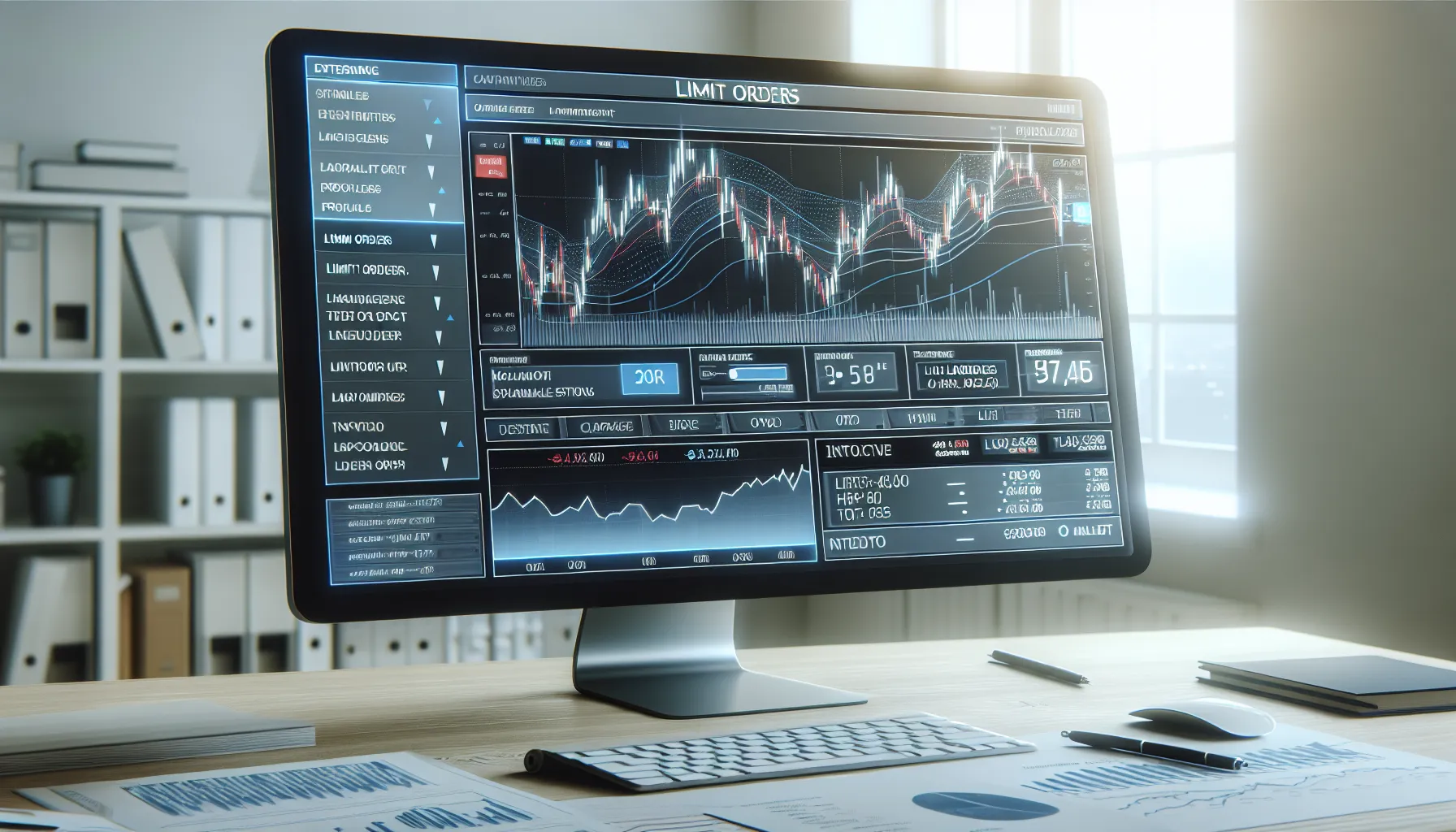
When engaging in the financial markets, the strategy behind your trades is just as significant as the assets you choose to invest in. Among the fundamental tools at your disposal as an investor are the order types you employ to execute trades. Two of the most commonly used order types, market orders and limit orders, each serve unique purposes depending on your trading objectives and market conditions. By understanding their distinctions, you can make more informed decisions, optimize your profits, and mitigate potential risks.
Understanding Market Orders
Definition and Key Features
A market order is a directive to execute a trade immediately at the best available current price. This order type prioritizes speed of execution and guarantees the trade’s placement over obtaining a specific price.
Advantages of Using Market Orders
Using market orders provides you with the advantage of swift execution. In highly liquid markets, this guarantees that your trade completes almost instantaneously.
Situations Ideal for Market Orders
Market orders are best utilized in scenarios where trade execution certainty is critical, such as rapidly moving markets or when entering or exiting trades without price precision concerns.
Understanding Limit Orders
Definition and Key Features
A limit order allows you to specify the exact price at which you are willing to buy or sell an asset. This enables control over the price of execution but may result in the trade not being executed if the specified price is not met.
Advantages of Using Limit Orders
The primary benefit of limit orders is their focus on price precision. This is particularly useful to set predetermined entry and exit points.
Situations Ideal for Limit Orders
Limit orders are best suited for markets where price persistence is a concern or when targeting specific pricing levels for execution.
Key Differences Between Market and Limit Orders
Execution Speed vs. Price Control
Market orders prioritize the immediacy of execution, making them suitable for rapid trades, whereas limit orders offer precise price control but at the risk of trading uncertainty.
Cost Implications in Trading
Due to their nature, market orders often incur higher costs in volatile markets due to price slippage, whereas limit orders can help mitigate trading costs by specifying a maximum or minimum acceptable trade price.
Examples of Market and Limit Orders in Practice
Practical Scenarios and Outcomes
Picture anticipating that a stock’s price will rise quickly: in this case, a market order secures your stake immediately at the prevailing rate. Conversely, if you anticipate buying the stock after a price drop, a limit order places your purchase more efficiently.
Strategies Combining Both Order Types
Many traders employ a mix of market and limit orders within their strategies. For example, using a market order for urgency combined with limit orders to set profitable accumulation or exit points is common.
To provide the best experiences, we use technologies like cookies to store and/or access device information. Consenting to these technologies will allow us to process data such as browsing behaviour or unique IDs on this site. Not consenting or withdrawing consent, may adversely affect certain features and functions.
Functional
Always active
The technical storage or access is strictly necessary for the legitimate purpose of enabling the use of a specific service explicitly requested by the subscriber or user, or for the sole purpose of carrying out the transmission of a communication over an electronic communications network.
Preferences
The technical storage or access is necessary for the legitimate purpose of storing preferences that are not requested by the subscriber or user.
Statistics
The technical storage or access that is used exclusively for statistical purposes.The technical storage or access that is used exclusively for anonymous statistical purposes. Without a subpoena, voluntary compliance on the part of your Internet Service Provider, or additional records from a third party, information stored or retrieved for this purpose alone cannot usually be used to identify you.
Marketing
The technical storage or access is required to create user profiles to send advertising, or to track the user on a website or across several websites for similar marketing purposes.