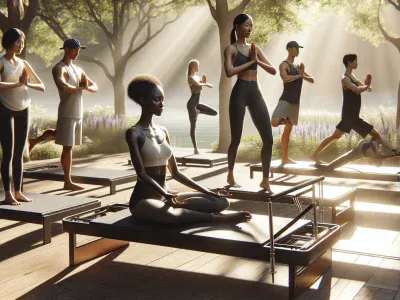
In a world where wellness reigns supreme, the choice between yoga and Pilates often feels like standing at a crossroads. Picture yourself on a serene morning, the sun casting golden hues across your mat. Do you lean towards the ancient, meditative flow of yoga or the core-strengthening precision of Pilates? Both practices promise transformation but in distinct ways that cater to different needs and goals.
Yoga, with its roots deep in spiritual soil, offers a journey through breath, balance, and inner peace. It’s not just about stretching; it’s a symphony of mind, body, and soul. On the other hand, Pilates, born from the mind of Joseph Pilates, focuses on building a powerhouse of strength and control, sculpting your body with meticulous attention to detail.
As you weigh your options, consider the surprising benefits each discipline holds. Whether you seek tranquility or toned muscles, the choice between yoga and Pilates could redefine your path to wellness.
Understanding Yoga and Pilates
Investigate into the world of yoga and Pilates, two practices that offer distinct benefits for body and mind. Each discipline boasts a rich history and core principles that cater to different wellness goals.
Origins and History
Yoga dates back over 5,000 years, originating in ancient India. It evolved through various schools of thought, embedding itself in spiritual and physical well-being. Familiar poses like Downward Dog and Tree Pose reflect this deep heritage. Conversely, Pilates emerged in the early 20th century, developed by Joseph Pilates. Influenced by yoga and martial arts, Pilates gained popularity as a rehabilitation method after World War I. Both practices have endured due to their effectiveness in promoting health.
Core Principles
Yoga emphasizes the harmony of breath, movement, and meditation. Practices often incorporate asanas, pranayama, and dhyana to achieve inner peace and flexibility. Whether in a bustling studio or serene forest, yoga encourages mindful presence. In contrast, Pilates focuses on developing core strength through controlled movements and precise technique. Exercises target the ‘powerhouse’ muscles, including the abdomen and lower back, enhancing posture and balance. Employing resistance and repetition, Pilates invites you to challenge your limits while maintaining control.
Understanding these foundational elements can guide you in choosing the practice that aligns best with your personal wellness journey.
Benefits of Yoga and Pilates
Yoga and Pilates provide numerous benefits that enhance overall well-being. Each practice offers distinct advantages catering to physical and mental health.
Physical Benefits
Both yoga and Pilates improve flexibility and strength. Yoga, with its diverse postures, targets multiple muscle groups, enhancing flexibility throughout the body. Pilates, known for its core-centric exercises, strengthens abdominal and back muscles, improving posture and stability. According to an American Council on Exercise study, practicing Pilates twice a week can increase core strength by up to 21%.
Yoga enhances balance and coordination through poses like the Tree Pose and Warrior series. Regular practice helps improve functional movement, reducing the risk of injuries. In contrast, Pilates uses equipment like reformer machines to intensify workouts, offering tailored resistance for muscle toning.
Mental and Emotional Benefits
Yoga promotes mental clarity and emotional balance. Its focus on breath control, such as through pranayama, calms the mind and reduces anxiety. The meditative aspect of yoga fosters mindfulness, enabling you to manage stress better. A Harvard Health study found that yoga can lower chronic stress markers, enhancing overall mood.
Pilates also contributes to emotional stability by encouraging deep concentration and body awareness. This heightened focus during practice acts as a meditative experience, helping to relieve stress. Joseph Pilates believed the mind-body connection achieved through Pilates enhances mental resilience, aiding in emotional regulation.
Comparing Yoga and Pilates Practices
Yoga and Pilates offer distinct approaches to physical and mental well-being. Yoga focuses on a meditative journey while Pilates emphasizes core strength.
Key Differences
Yoga integrates various elements like breath, balance, and meditation. It’s often practiced on mats, concentrating on flexibility with poses called asanas. In contrast, Pilates centers on precise, controlled movements, aiming to enhance core stability and posture. These aspects make Pilates more structured, with a focus on muscular endurance.
Yoga encourages a spiritual connection, often incorporating chanting or mindfulness techniques. Meanwhile, Pilates targets muscle isolation and endurance, providing a physical workout that concentrates heavily on the body’s core.
Equipment and Environment
You usually require minimal equipment for yoga. A mat and comfortable clothing suffice for most sessions. Many yoga classes occur in studios or serene outdoor settings to promote tranquility and focus.
Pilates, but, often involves specialized equipment like reformers and stability balls. The environment for Pilates may be more controlled, typically set indoors with equipment that supports various exercises. Pilates studios offer a structured setting, enhancing focus on precise movements.
In deciding between yoga and Pilates, consider your personal preference for a spiritual journey or a structured physical workout. Both practices offer transformative experiences tailored to different needs.
Choosing Between Yoga and Pilates
Making a choice between yoga and Pilates hinges on various factors, including your personal fitness goals and lifestyle considerations. Both offer benefits, but their suitability depends on the specific requirements of your wellness journey.
Personal Fitness Goals
Identify your fitness objectives to determine whether yoga or Pilates aligns with your needs. If flexibility and mindfulness are priorities, yoga, with its asanas and deep breathing techniques, could be ideal. Studies (Yoga Journal, 2023) indicate that yoga practitioners often report improved mood and stress reduction.
In contrast, choose Pilates if building core strength and refining posture is essential. Pilates exercises incorporate precise movements and control, making them effective for those aiming to enhance muscular endurance. According to Merrithew (2023), Pilates enthusiasts often note increased core stability and muscle tone after consistent practice.
Lifestyle Considerations
Evaluate your lifestyle when choosing between yoga and Pilates. If relaxation and spiritual connection draw your interest, yoga’s emphasis on inner peace and minimal equipment might fit seamlessly into your routine. Yoga often suits those who appreciate tranquility and a meditative environment.
Opt for Pilates if a structured, equipment-based workout aligns with your daily schedule. Pilates studios offer specialized equipment to intensify workouts, catering to individuals who prefer a high-intensity approach. The Pilates Method Alliance (2023) suggests that this discipline is beneficial for individuals seeking diverse, challenging exercises.
Observe how each practice accommodates your personal and lifestyle needs to make an well-informed choice.
Conclusion
Choosing between yoga and Pilates hinges on your personal wellness goals and lifestyle preferences. Both practices offer unique benefits that can enhance your physical and mental well-being. Whether you’re drawn to yoga’s meditative focus on breath and flexibility or Pilates’ emphasis on core strength and body control, each discipline provides a transformative experience. Consider what aligns best with your fitness objectives and daily routine. Explore both practices if you can, and let your body and mind guide you to the one that resonates most with your journey toward health and balance.
To provide the best experiences, we use technologies like cookies to store and/or access device information. Consenting to these technologies will allow us to process data such as browsing behaviour or unique IDs on this site. Not consenting or withdrawing consent, may adversely affect certain features and functions.
Functional
Always active
The technical storage or access is strictly necessary for the legitimate purpose of enabling the use of a specific service explicitly requested by the subscriber or user, or for the sole purpose of carrying out the transmission of a communication over an electronic communications network.
Preferences
The technical storage or access is necessary for the legitimate purpose of storing preferences that are not requested by the subscriber or user.
Statistics
The technical storage or access that is used exclusively for statistical purposes.The technical storage or access that is used exclusively for anonymous statistical purposes. Without a subpoena, voluntary compliance on the part of your Internet Service Provider, or additional records from a third party, information stored or retrieved for this purpose alone cannot usually be used to identify you.
Marketing
The technical storage or access is required to create user profiles to send advertising, or to track the user on a website or across several websites for similar marketing purposes.