Which Is Better: PS5 or Xbox Series X? Full Comparison of Design, Performance & Games
Picture this: you’re gripping a controller, heart pounding, the glow of your TV painting shadows across the room. The world outside fades as you plunge into a universe where every pixel, every sound, feels almost real. But which console truly pulls you deeper—Sony’s PS5 or Microsoft’s Xbox Series X?
Choosing between these two next-gen giants isn’t just about specs or exclusive games. It’s about how each system transforms your living room into a portal of adventure and connection. Hidden perks and subtle differences could tip the scales in ways you never expected. Are you ready to discover which console will become your ultimate escape?
Design and Build Quality
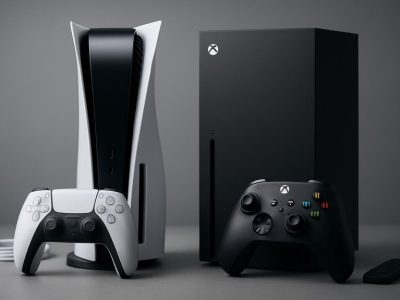
Contrast shapes—PS5 towers with a sharp, futuristic curve, while Xbox Series X stands like a minimalistic skyscraper. When you first lay eyes on the PS5, you maybe get reminded of something out of a sci-fi movie set—the swooping, asymmetrical face plates seem bold compared to the Xbox’s understated cuboid. Does this design fit next to your TV, or does it stick out like a piece of art in a museum? Ask yourself which vibe matches your living room’s style.
Feel textures—Sony used layers of matte and glossy plastic, so touching the PS5 kind of feels like running your fingers over a spaceship’s hull. Xbox Series X covers itself in vented matte black: grip it and it’s all business, calm and cool beneath your hands. Xbox’s tactile grid at the top serves thermal purpose and also gives a subtle, industrial flair that you’ll notice when cleaning the dust, if you ever do.
Compare sizes—the PS5 measures 15.4 x 10.2 x 4.1 inches (height x depth x width), making it the largest mainstream home console to date (IGN, 2023). Xbox Series X, at 11.9 x 5.9 x 5.9 inches, fits easier in most entertainment centers. For anyone with limited shelf real estate, that inch or two can mean the difference between neat harmony and awkward stacking.
Examine build quality—Lifting both, you sense weight and construction. PS5, at 9.9 lbs, uses sturdy plastics that flex a little under pressure. Xbox is denser (9.8 lbs) and gives off a “brick-solid” sensation, thanks to its monolithic design and rigid structure. Have you ever considered that a heavy console might absorb fan vibrations and help keep noise down? These choices weren’t just style—they affect long-term performance and maintenance.
Notice details—PS5’s glowing LED strips illuminate to signal activity, while Series X uses a discreet green underglow through the vent. Ports on both are accessible, but some users report the PS5’s front-facing USBs collect dust easier, a minor thing till you unplug controllers every night.
Real-world stories—Some users recount the PS5 becomes a conversation starter among visitors, drawing eyes and sparking questions (“Is that a router or a console?”). Others, leaning minimalist, appreciate Xbox’s ability to fade into the background, acting as a silent powerhouse instead of the centerpiece.
Durability issues exist; a few early PS5 owners noted cosmetic scuffing with plate removal. Microsoft’s cube sometimes shows fingerprint smudges but rarely suffers from build-related complaints (The Verge, 2022).
Both Sony and Microsoft seem to build their flagship consoles reflecting philosophies—visibility versus subtlety, boldness versus reliability. Your choice might depend on your sense of style and how much you want people to notice your latest tech investment. Would your friends even spot the Series X hiding away, or would the PS5 demand attention the moment guests step in?
Performance and Hardware Specifications
When you look under the hood, the PlayStation 5 and Xbox Series X deliver high-end performance for next-gen gaming. Their internals decide how fluid your adventures feel, how quickly worlds load, and how real the graphics look.
Processing Power
Processing speed unlocks faster loading and more immersive gameplay. The Xbox Series X ships with an 8-core AMD Zen 2 CPU clocked at 3.8 GHz, where the PS5 uses the same Zen 2 base but at a variable frequency up to 3.5 GHz. That slight difference means the Xbox runs a bit cooler and stable in marathon gaming sessions, at least in benchmark lab tests (Digital Foundry, 2023).
Games like Cyberpunk 2077 and Forza Horizon 5 on Xbox showcase stable framerates even in busy city scenes or chaotic races. The PS5, but, leverages its custom controller for speed on games such as Ratchet & Clank: Rift Apart, letting you zip through dimensions in microseconds. Do you crave raw power for open-world titles, or do you prefer quick tactical loadouts for rapid-fire missions? That’s a question you might ask as frame drops in action-heavy sequences are rare on both platforms, but CPU bursts sometimes can introduce minor hiccups, especially after firmware updates.
Storage and Expandability
Storage capacity shapes how many huge games you can juggle before deleting one you love. Your PS5 brings an 825GB custom NVMe SSD, optimized for speed with unique I/O throughput (9 GB/s compressed), resulting in near-instantaneous level transitions and ultra-fast resume features. Xbox Series X provides a 1TB custom NVMe SSD with up to 4.8 GB/s raw speeds, plus proprietary expansion cards you plug in seamlessly; kind of like slotting a memory card into an old camera, but a lot faster.
Have you ever wanted to go back to a suspended game instantaneously after watching Netflix? Xbox’s “Quick Resume” lets you leap between five games almost instantly—though there’s been reports (Reddit gaming forums, 2022–2023) of occasional glitches after system updates. On the PS5, internal SSD upgrades work if you fit a compatible Gen4 NVMe, so you can double or triple your storage with off-the-shelf hardware, as long as you can handle opening the cover and installing it yourself. Ever lost hours deciding which title to delete to make room for the next big update?
Graphics and Resolution
Visual fidelity makes every quest feel alive. Xbox Series X packs a 12-teraflop RDNA 2 GPU, while PS5 offers a similar custom RDNA 2 GPU but at 10.28 teraflops. Xbox’s slight horsepower edge means, in theory, steadier native 4K at up to 120 FPS for games like Halo Infinite and Gears 5. Real-world tests by Eurogamer and IGN, though, suggest many multiplatform games look nearly identical unless you pixel-peep—except when ray-tracing is involved, where Xbox sometimes edges ahead in reflections and shadows.
Still, PS5 exclusives—like Demon’s Souls—use advanced spatial audio and crisp visuals to build atmospheric experiences, rather than pushing every pixel to its max. You might notice, for example, slightly sharper textures in cross-platform shooters on Xbox, but Spider-Man’s web-swinging city vistas on PS5 look nothing short of dazzling. If your 4K TV supports variable refresh rate (VRR), both consoles adapt, but users sometimes report an occasional screen tear—especially during heavy fight scenes in third-party titles.
| Console | CPU (Cores/Clock) | GPU (TFLOPS) | SSD Size/Type | Expandability |
|---|---|---|---|---|
| Xbox Series X | 8-core Zen 2 / 3.8 GHz | 12.0 RDNA 2 | 1TB Custom NVMe | Proprietary cards |
| PlayStation 5 | 8-core Zen 2 / up to 3.5 GHz | 10.28 Custom RDNA 2 | 825GB Custom NVMe | Standard PC NVMe SSD |
Choosing between PS5 and Xbox Series X isn’t just numbers in a chart—each system brings unique shortcuts, signature tricks, and performance quirks. Would you rather squeeze the highest settings from multiplatform blockbusters, or lose yourself in tightly-optimized exclusives that stretch hardware in unexpected ways?
Game Library and Exclusives
Game library and exclusives make your journey through either the PS5 or Xbox Series X uniquely personal, like picking which path to stroll in a branching forest. Think about which worlds beg you to step inside their stories—is it cosmic adventures, heart-tugging narratives, or a landscape of relentless competition? If the value of a console is a tapestry, the games are it’s threads, each exclusive title a brushstroke on a living mural.
PS5 Exclusive Titles
PS5 exclusive titles define the console’s signature, wrapping you in cinematic storytelling and inventive mechanics you just can’t peel away from. Spider-Man: Miles Morales hoists you above snowy Harlem, making you feel the electric buzz of Miles’ bio-electric powers, his heart pounding to the soundtrack of a city alive. Demon’s Souls crackles with tension, letting you probe the haunting catacombs of Boletaria, where every shadow could be your downfall—how many times have you gasped when the screen fades to black?
Consider Ratchet & Clank: Rift Apart, its dimensional rifts tearing open sudden bursts of color and chaos, a rollercoaster that whips you across galaxies in the blink of an eye. These exclusives didn’t just push graphical boundaries, they shaped water-cooler conversations and social feeds alike (Statista, 2023). Astro’s Playroom, preinstalled on every PS5, shows off the console’s DualSense controller like a magician with a new pack of tricks, inviting you to sense every grain of sand and gust of wind.
But, why does exclusivity matter? If sharing epic tales with friends who play elsewhere trumps being “first” to try a new adventure, multiplatform libraries may sway your hand.
Xbox Series X Exclusive Titles
Xbox Series X exclusive titles frame the console as a theater of scale and ambition, each release echoing Microsoft’s strategy; the experience is broad, interconnected, and social by design. Halo Infinite catapults you into Zeta Halo, where Master Chief stares down galactic threats with a resolve that’s legendary—you swap stories about battle victories, sometimes bragging about near-miraculous sniper shots.
Forza Horizon 5, set in a dazzlingly rendered Mexico, slings you through lush jungles, desert sands, and stormy heights, the world morphing as you race. Starfield, Bethesda’s monumental space RPG, invites you to pilot a spaceship fueled by curiosity—what choices will you make with a thousand explorable planets glittering on the horizon? Grounded, smaller in scale but brimming with charm, lets you survive in a backyard wilderness, everything mundane becoming dangerous and wondrous.
Xbox’s Game Pass, a subscription service, threads more colors through the exclusives tapestry, with dozens of new games appearing day one. This approach makes the Xbox sound like a door to a rotating gallery where you’re never quite sure what you’ll find next.
When you stack revelatory moments—rivalries in Halo, the shriek of engines in Forza, or the silence among Starfield’s stars—alongside Sony’s cinematic classics, your choice amplifies what stories you’ll tell next in your gaming life.
Controller Features and User Experience
Controller features form the heartbeat of any gaming experience, dictating not only your comfort during marathon sessions but the emotional texture of every in-game moment. Whether your hands crave futuristic sensations or familiar feedback, the PS5 and Xbox Series X shape your play, right from the very first click.
PlayStation DualSense Innovations
Touch the DualSense controller and you get more than just buttons—Sony made its controller a canvas for tactile storytelling. Each adaptive trigger feels different when pulling a virtual bowstring, firing a shotgun, or flooring a car, turning pressure into gameplay context. Games like “Ratchet & Clank: Rift Apart” let you sense resistance under your index finger, breathing physical life into digital actions.
Haptic feedback in the DualSense brings rain, rubble, or rumbling engines to your palm—it’s almost uncanny. In “Astro’s Playroom”, you can distinguish between the pitter-patter of rain droplets and the crunch of sand, a sensory playground designed to showcase what’s possible. Microphone integration means you can shout into the void—or just chat without a headset—a feature some love for convenience and others disable instantly.
LED light strips add subtle flair, pulsing with health levels or shifting with in-game effects; these small details anchor you more fully in the moment. Ergonomically, DualSense fits a range of hand sizes, but those with smaller hands may find it chunkier than previous PlayStation controllers. If you’ve played PS4, you’ll notice an upgraded, textured grip that keeps your hands steady, even during those sweaty boss fights.
Xbox Wireless Controller Enhancements
Microsoft’s wireless controller—by contrast—focuses on refinement. It’s an evolution, not a revolution, comfort over spectacle. Its familiar silhouette returns, but textured triggers, bumpers and a revised D-pad give an edge in twitch-heavy genres like fighting games or shooters. The share button brings Xbox directly into the social age: a quick tap gets a screenshot or a video clip, no menus, just your moment preserved.
Xbox’s latency optimizations, called Dynamic Latency Input (DLI), reduces the time between your press and on-screen response, invaluable for fast-paced games—try reacting in “Halo Infinite” or “Forza Horizon 5” and see the difference, even if it’s only milliseconds. Cross-compatibility lets you replay favorites from Xbox One or even PC without needing to learn the feel anew.
Anecdotes tell that its AA battery slot, beloved by some for the option to swap and play endlessly, baffles PlayStation converts who expect built-in batteries. Still, Microsoft offers a rechargeable kit and the flexibility can be a boon during marathon sessions or in households with multiple remotes.
Vivid colorways, customizable via Xbox Design Lab, let you imprint your personality on your controller—picture a bright green to reflect your “Minecraft” world, or stealth black for battle royale focus. The body, slightly smaller than its predecessor, fits snugly in most hands and remains lighter than DualSense, a feature marathon gamers often appreciate.
No single controller can claim the throne outright. Every gameplay session, party chat, and late-night victory-lap feels different depending on plastic, triggers, and grip—the sensory choices between PS5 and Xbox Series X might matter more than the specs ever did. Would your next legendary gaming session feel complete only when you can “feel” the thunder, or is familiar comfort and precise input your ultimate endgame?
Backward Compatibility and Services
Backward compatibility shapes the past-present continuum of next-gen gaming. Services like PlayStation Plus and Xbox Game Pass redefine how you access vast game libraries, making digital ecosystems just as important as tech specs.
PlayStation Plus and Game Pass
Subscription services, acting like golden tickets to amusement parks, promise unlimited fun—at least until the rides change. PlayStation Plus offers three tiers: Essential, Extra, and Premium. Essential delivers core online access and some free games monthly. Move up to Extra or Premium and you’ll unlock catalogs, spanning hundreds of PS4 and PS5 titles, plus classics from earlier generations. Picture revisiting “Returnal,” “Demon’s Souls,” or “Uncharted 4” for no extra fee; that’s the promise of these tiers. Sony’s rotating library means not all blockbusters stick around forever—could your favorite vanish just as you want to replay it?
Xbox Game Pass, on the other hand, hammers home a Netflix-style model. Game Pass Ultimate includes day-one access to new first-party releases, like “Starfield” or “Forza,” and a fast-expanding library covering indie gems and major AAA games. Microsoft constantly adds (and removes) titles—over 400 as of June 2024 (source: Xbox.com)—and supports cloud streaming to phones or tablets. That means you could be finishing “Halo Infinite” in your living room, then picking up the fight during lunch at work.
Statistical Overview:
| Service | Library Size (approx. as of June 2024) | Day-One Releases | Legacy Catalog | Cloud Gaming |
|---|---|---|---|---|
| PlayStation Plus | 400+ | No | Yes | Yes (Premium) |
| Xbox Game Pass | 400+ | Yes | Yes | Yes |
Do you prize stability, or do you chase novelty? With these services, you play games without ownership—making the whole world your arcade, provided you keep your subscription active.
Legacy Game Support
Legacy support, the secret doorway behind every sleek console, lets your old memories live on beside next-gen spectacles. PS5 honors nearly every PS4 title, while a few unicorns—games like “P.T.” or “Shadwen”—stay locked away. Sony’s Premium tier in PlayStation Plus resurrects PS1, PS2, and PSP classics, but many iconic favorites (think “Metal Gear Solid 4”) still elude digital shelves.
Xbox Series X, legendary for its backward compatibility, extends a digital bridge to thousands of games across four generations—original Xbox, 360, Xbox One, and Series X. Pop in physical Xbox 360 discs like “Red Dead Redemption” or purchase digital greats. FPS Boost upgrades make elder titles run smoother, giving a second wind to classics like “Fallout 4.” But some licenses expire, so not every classic makes the journey. Remember that magical moment when you revisited “Fable II” with improved graphics? Xbox preserves those memories, making its console a digital time machine.
Would you rather cling to digital nostalgia, or chase only what’s next? Backward compatibility and services, blending new worlds with old legends, place you at the intersection of tradition and innovation on both PS5 and Xbox Series X.
Price and Value for Money
Direct comparisons for price and value for money between PS5 and Xbox Series X challenge you to look past stickers on a box. Retail pricing is identical at $499 for both standard models, with digital-only options like PS5 Digital Edition undercutting by about $100. Yet, the story doesn’t end there; it’s like comparing apples to even shinier apples, but one’s secretly filled with caramel.
Price Context Table
| Model | MSRP (USD) | Storage | Subscription Incentive |
|---|---|---|---|
| PS5 | $499 | 825GB SSD | 3-month PS Plus with select bundles |
| PS5 Digital Edition | $399 | 825GB SSD | 3-month PS Plus with select bundles |
| Xbox Series X | $499 | 1TB SSD | 3-month Game Pass Ultimate on occasion |
| Xbox Series S | $299 | 512GB SSD | 3-month Game Pass Ultimate on occasion |
What does value mean when a child’s birthday party erupts in laughter at your living room because “Spider-Man” swings by, exclusive to PS5? Are you buying a box with specs or a gateway to shared stories? Many gamers debate cost over content. Some examples show Xbox’s Game Pass Ultimate (around $17 per month) offers hundreds of full titles, day-one new releases, and EA Play integration; you could sample blockbusters as casually as streaming movies. PlayStation Plus splits into tiers (Essential, Extra, Premium, ranging $9.99 to $17.99 monthly), with Premium unlocking cloud streaming and classics, though PS5 exclusives rarely launch day one.
Memory expansion costs quickly tangle the equation. Microsoft’s proprietary 1TB expansion card has retailed from $149 to $219, which feels like buying designer luggage for a weekend trip. PS5 uses standard NVMe SSDs—sometimes less expensive but with technical installation hurdles that make some folks nervous. Do you risk opening the sacred console, or lean on official snap-in solutions?
Promotions often tip the scales unexpectedly. In 2023, some retailers bundled PS5s with “God of War: Ragnarok”, while Xbox Series X purchases included three months of Game Pass—two different carrots encouraging commitment. Both camps see periodic discounts, especially around holidays, and limited-edition bundles tap nostalgia or fan loyalty, from Spider-Man Red PS5 skins to Halo Infinite Xbox designs.
Which is truly the better value? The answer shifts if you proritize hardware horsepower, want blockbuster exclusives, or chase price-per-minute entertainment. The math you do in your head looks different if you game solo or with a gaggle of friends. Ask yourself: Will your next console be investment for library expansion, or a ticket to the next big adventure with your squad? Value’s not just in the numbers—it’s in the journeys those numbers will unlock.
Conclusion
Choosing between the PS5 and Xbox Series X comes down to what matters most to you as a gamer. Both consoles deliver outstanding experiences and push the boundaries of what’s possible in your living room.
Think about your gaming habits your favorite exclusives and the features you value most. Whether you’re drawn to cinematic adventures or crave a vast game library with flexible services the right console is the one that fits your lifestyle and sparks your excitement every time you power it on.

- Affirm Competitors - September 23, 2026
- Best Alternative Fabric Softener - September 23, 2026
- Best Tinkercad Alternative - September 22, 2026
by Ellie B, Site Owner / Publisher