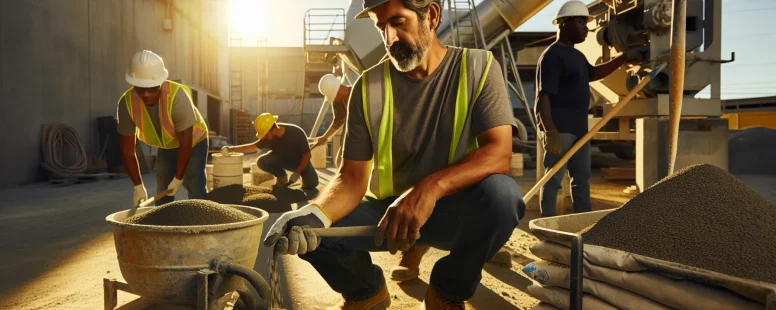
When we think about building and construction, the terms cement and concrete often pop up interchangeably in conversations. But, these two materials are not the same, and understanding their differences can shed light on which one truly holds the upper hand in strength. What if we told you that the strength of these materials isn’t just about their individual properties, but also how they work together? As we navigate this topic, we’ll explore their unique compositions, key characteristics, and even some environmental impacts that might be surprising. Join us on this enlightening journey as we discover the strength dynamics between cement and concrete.
Understanding Cement and Concrete
The Composition of Cement
Cement is primarily a fine powder made from a mixture of limestone, clay, shells, and silica, these are the materials that come together when we heat everything to extreme temperatures in a kiln. The result is a product known as clinker, which we then grind and mix with gypsum to create Portland cement, the most common type used today. This powder acts as a binder when mixed with water, aggregate, and sand, holding everything together.
The Composition of Concrete
Concrete, on the other hand, is a composite material that combines cement, water, aggregates (like sand and gravel), and sometimes additives to enhance its properties. The water interacts with the cement powder to trigger a chemical reaction called hydration, which helps concrete reach its final strength. This single action, mixing cement with water and aggregates, transforms the loose materials into a solid mass that can endure substantial loads once set.
Key Characteristics of Cement vs. Concrete
Strength Characteristics of Cement
While cement itself can boast impressive compressive strength, it is often measured in a raw state. When we look at the strength-in-practice, we often find that cement isn’t utilized alone. Cement’s strength is essential, but it’s not its final role in construction. Cement alone is somewhat brittle: without the aid of aggregates and water, it would not endure very well under load.
Strength Characteristics of Concrete
But, concrete is celebrated for its compressive strength, which makes it an incredibly reliable building material. Once properly set, concrete can withstand immense pressure, often exceeding 20 megapascals (MPa) in standard conditions, and up to 50 MPa or more in high-performance forms. Concrete is also less susceptible to cracking compared to cement alone, making it a favored option for various applications in construction.
Comparison of Durability and Strength
When we look at durability, concrete tends to take the lead. Its capacity to withstand weathering, moisture, and temperature fluctuations gives it a longer lifespan compared to cement. Cement can degrade in harsh environments without the protective shield that concrete provides. Also, when we incorporate various additives into concrete, its durability only improves.
In practical applications, concrete’s layered structure, with aggregates suspended in a hardened cement paste, gives it unique load-bearing qualities. Cement, though vital, acts merely as a component in this combination.
Applications and Uses of Cement and Concrete
Both cement and concrete have specific applications that reflect their strengths. Cement is extensively used in the production of concrete: but, it also finds its way into mortar, which is used for bonding tiles and bricks. In this instance, cement’s binding properties shine.
Conversely, concrete is the backbone of construction, used in everything from foundations and roadways to skyscrapers and bridges. Its versatility and strength have made it a staple in the industry. We often combine various types of concrete, like reinforced concrete containing steel bars, for varied applications, enhancing its structural integrity.
Environmental Considerations
While we often focus on performance, the environmental impact of these materials cannot be overlooked. The production of cement is energy-intensive, accounting for a significant portion of global carbon emissions. In contrast, concrete, once set, is inert and can even contribute to sustainability through techniques like using recycled aggregates.
Innovations in materials, such as eco-friendly cement alternatives or high-performance concrete mixes, are becoming more common in our quest for greener construction practices. As we incorporate sustainable practices, understanding these environmental impacts helps us make informed decisions.
Conclusion
In our exploration of cement and concrete, we’ve discovered that while they’re interdependent, each material has its unique strengths and applications. Concrete emerges as the stronger option when we examine compressive strength and durability, largely due to the synergy created with aggregates and the hydration process. But, cement is equally vital, providing the foundational binder that enables concrete to form and function.
As we think about the potential for building, whether for personal projects or larger-scale developments, understanding these differences will lead us to better choices in materials. In this way, we can all contribute to stronger, more sustainable structures.
Published: February 17, 2026 at 5:50 pm by Ellie B, Site owner & Publisher
To provide the best experiences, we use technologies like cookies to store and/or access device information. Consenting to these technologies will allow us to process data such as browsing behaviour or unique IDs on this site. Not consenting or withdrawing consent, may adversely affect certain features and functions.
Functional
Always active
The technical storage or access is strictly necessary for the legitimate purpose of enabling the use of a specific service explicitly requested by the subscriber or user, or for the sole purpose of carrying out the transmission of a communication over an electronic communications network.
Preferences
The technical storage or access is necessary for the legitimate purpose of storing preferences that are not requested by the subscriber or user.
Statistics
The technical storage or access that is used exclusively for statistical purposes.The technical storage or access that is used exclusively for anonymous statistical purposes. Without a subpoena, voluntary compliance on the part of your Internet Service Provider, or additional records from a third party, information stored or retrieved for this purpose alone cannot usually be used to identify you.
Marketing
The technical storage or access is required to create user profiles to send advertising, or to track the user on a website or across several websites for similar marketing purposes.