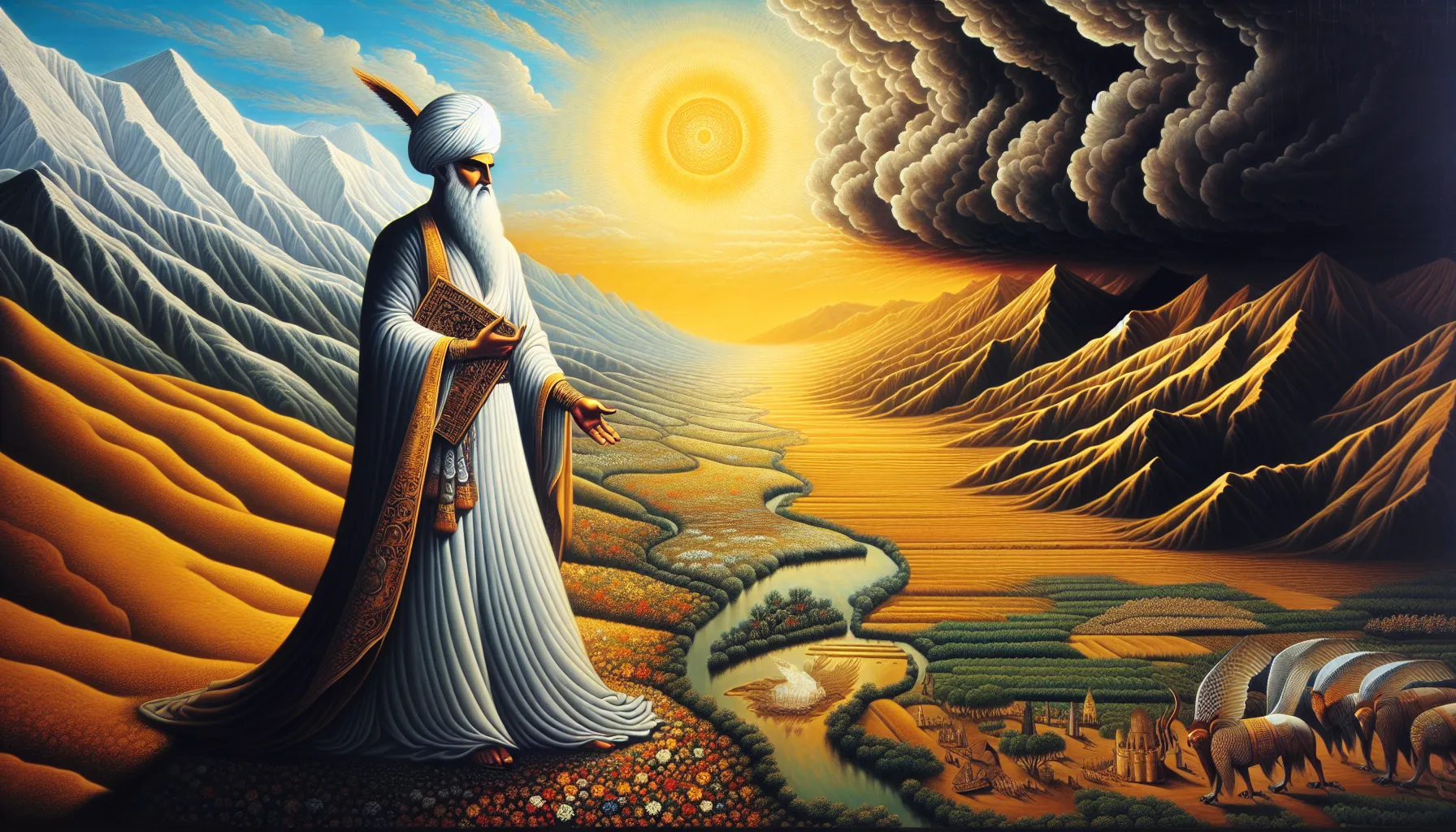
When we think about the ancient roots of spiritual traditions, two names often come to the forefront: Zoroastrianism and Hinduism. Both of these faiths have not only shaped the religious landscapes of their respective regions but also influenced various aspects of culture, morality, and philosophy worldwide. Imagine standing in a vast library of human thought, with the texts and traditions of these two religions occupying significant shelves. As we investigate into their origins, we’ll explore intriguing questions: Which one emerged first? What are their core beliefs? And how have they evolved over millennia? This exploration will not only satisfy our curiosity but also provide insight into their lasting relevance in contemporary society.
Overview of Zoroastrianism
Zoroastrianism, one of the world’s oldest monotheistic religions, finds its roots in ancient Persia, present-day Iran. Named after its prophet, Zoroaster (or Zarathustra), this faith has fascinated scholars and followers alike for its unique perspectives on the divine, morality, and the afterlife.
Historical Context of Zoroastrianism
Historically, Zoroastrianism is thought to have been established sometime around the 6th century BCE, although some scholars suggest it could have originated even earlier. Its sacred texts, the Avesta, encapsulate teachings that reflect the concerns and values of early Persian society. The religion thrived particularly during the Achaemenid Empire, influencing both political structures and cultural integration across diverse regions.
Key Beliefs and Practices
Central to Zoroastrianism is the belief in Ahura Mazda, the supreme god representing truth, light, and goodness. Followers are encouraged to practice three cardinal virtues: good thoughts, good words, and good deeds. Rituals often involve fire, symbolizing purity and the divine presence. Community worship typically occurs in fire temples, where sacred flames are tended continuously.
Influence on Other Religions
Zoroastrianism has paved the way for concepts seen in later religions, particularly monotheistic faiths like Judaism, Christianity, and Islam. Ideas of heaven and hell, the battle between good and evil, and an ultimate savior figure have parallels in these religious traditions, making it a significant historical precursor.
Overview of Hinduism
Hinduism stands as the third largest religion globally, rich in diversity and complexity. Unlike Zoroastrianism, Hinduism lacks a single founder and embraces a multitude of gods, texts, and practices. It encapsulates an entire civilization’s spiritual journey, evolving over thousands of years.
Historical Context of Hinduism
Hinduism’s origins stretch back to the Indus Valley civilization, approximately 2500 BCE, making it one of the oldest religious traditions still practiced today. Over centuries, it absorbed cultural influences through numerous invasions and migrations. The Vedas, composed around 1500 BCE, are considered the oldest sacred texts and create the foundation for various Hindu beliefs and practices.
Key Beliefs and Practices
At the heart of Hinduism is the concept of Dharma (duty/righteousness), Karma (action and consequence), and Moksha (liberation from the cycle of rebirth). Hindu worship can take many forms, from elaborate rituals in grand temples to quiet meditations in private spaces. The Bhagavad Gita and Upanishads further enrich Hindu thought by addressing complex philosophical questions about existence and the nature of the divine.
Influence on Other Religions
Hinduism has deeply influenced Indian philosophy, art, culture, and even social structure through concepts like caste and reincarnation. Its practices have also permeated various Asian cultures, shaping the spiritual landscapes of countries like Nepal, Indonesia, and even outside Asia, where yoga and meditation have gained global popularity.
Comparative Analysis of Historical Origins
To engage in a meaningful comparison, we must examine the dating of each religion’s origins meticulously.
Dating the Origins of Zoroastrianism
While Zoroastrianism’s formalization around the 6th century BCE is widely accepted, some sifters suggest spiritual practices aligned with its core beliefs may date back even farther. Archaeological findings have hinted at pre-Zoroastrian monotheistic worship in ancient Persia, posing the question of whether elements of this belief existed long before Zoroaster himself.
Dating the Origins of Hinduism
In contrast, the roots of Hinduism are characterized by an amalgamation of various cultural and spiritual practices, with origins that may date as far back as 3000 BCE. The fluidity of its development, alongside the vast geographies it encompasses, makes pinpointing a precise inception challenging. The layering of traditions over generations has created a dynamic faith that resists simple classification.
Cultural and Historical Interactions
We find fascinating overlaps and interactions when examining the historical contexts surrounding Zoroastrianism and Hinduism.
Shared Myths and Stories
Both religions contain stories that share moral lessons and ethical codes. For instance, the Zoroastrian concept of the Saoshyant, a savior figure who will come at the end of time, has parallels in Hinduism’s Kalki, the prophesized future avatar of Vishnu. Such similarities provoke reflection on how interconnected cultures have often shaped the narratives of faith.
Geographical Spread and Migration
The geographical spread of both religions influences their development. Zoroastrianism primarily flourished in Persia, while Hinduism radiated from the Indian subcontinent. Migration patterns led to Zoroastrians residing in India, particularly in the Parsi community, where elements of both cultures intertwine, enriching one another.
Contemporary Relevance and Impact
Both Zoroastrianism and Hinduism continue to hold significance in today’s world, albeit in different ways.
Current Status of Zoroastrianism
Zoroastrianism today faces challenges, with its numbers declining due to social and political pressures. But, communities in India and Iran are actively working to preserve their traditions and teachings. Some young Zoroastrians explore environmentalism through their religious tenets, aiming to revive a sense of interconnectedness to nature that is prevalent in their faith.
Current Status of Hinduism
Hinduism, in contrast, enjoys a robust following, with over a billion adherents globally. Its practices and philosophies influence contemporary issues, from politics to education. Global interest in yoga, meditation, and Ayurveda reflects Hinduism’s expansive cultural reach. Yet, it also faces challenges, wresting with modernity while holding onto traditional values.
Conclusion
In our exploration of Zoroastrianism and Hinduism, we’ve navigated through a rich tapestry of history, beliefs, and cultural interactions. While historical timelines suggest that Hinduism may predate Zoroastrianism, their long-standing influence has been mutually enriching. Both religions offer timeless wisdom and insights that resonate with modern seekers of truth and connection. As we continue to investigate the roots of these ancient faiths, let us appreciate their intertwined journeys and the shared quest for understanding the divine that continues to inspire us today.
Published: February 17, 2026 at 4:05 pm by Ellie B, Site owner & Publisher
To provide the best experiences, we use technologies like cookies to store and/or access device information. Consenting to these technologies will allow us to process data such as browsing behaviour or unique IDs on this site. Not consenting or withdrawing consent, may adversely affect certain features and functions.
Functional
Always active
The technical storage or access is strictly necessary for the legitimate purpose of enabling the use of a specific service explicitly requested by the subscriber or user, or for the sole purpose of carrying out the transmission of a communication over an electronic communications network.
Preferences
The technical storage or access is necessary for the legitimate purpose of storing preferences that are not requested by the subscriber or user.
Statistics
The technical storage or access that is used exclusively for statistical purposes.The technical storage or access that is used exclusively for anonymous statistical purposes. Without a subpoena, voluntary compliance on the part of your Internet Service Provider, or additional records from a third party, information stored or retrieved for this purpose alone cannot usually be used to identify you.
Marketing
The technical storage or access is required to create user profiles to send advertising, or to track the user on a website or across several websites for similar marketing purposes.