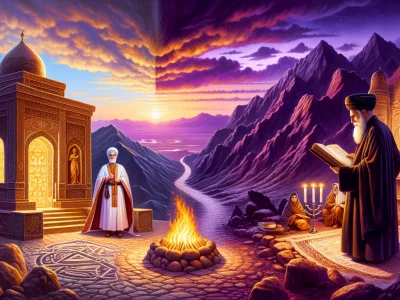
Imagine standing at the crossroads of two ancient traditions, each with its own vibrant world of beliefs, practices, and philosophies. Hinduism and Buddhism, born from the same cultural soil of the Indian subcontinent, share certain threads yet weave entirely distinct narratives about life, spirituality, and the path to enlightenment. Their similarities might intrigue you, but their differences hold the key to understanding their unique essence.
What sets these two apart isn’t just their origin stories or rituals—it’s their perspectives on the self, the divine, and the ultimate purpose of existence. Whether you’re curious about the role of gods, the concept of karma, or the journey toward liberation, exploring the contrasts between Hinduism and Buddhism offers a fascinating glimpse into two of the world’s most profound spiritual paths. Ready to uncover what makes each tradition truly one of a kind? Let’s dive deeper into their remarkable differences.
Origins Of Hinduism And Buddhism
Hinduism and Buddhism share a geographical birthplace but developed distinct paths through their unique origins. Their development reflects the rich cultural history of the Indian subcontinent.
Historical Background
Hinduism’s origins dating back over 4,000 years, emerge from the beliefs and rituals of the ancient Indus Valley Civilization, coupled with Indo-Aryan cultural influences. The Vedas, written around 1500 BCE, form the foundational texts of Hindu philosophy and practices. The religion evolved over centuries, absorbing diverse traditions and schools of thought.
Buddhism, in contrast, began in the 5th-4th century BCE, rooted in the teachings of Siddhartha Gautama (the Buddha). Historically tied to the social and religious context of Vedic-period India, Buddhism rose as an alternative to Brahmanical orthodoxy, emphasizing personal enlightenment and ethical living.
Founders And Influences
Hinduism doesn’t have a single founder. It arose as a synthesis of various religious philosophies, rituals, and regional practices. It incorporates contributions from sages like Vyasa and significant texts like the Upanishads, Bhagavad Gita, and Ramayana, illustrating moral and spiritual themes.
Buddhism’s founder, the Buddha, was a historical figure who renounced princely life in search of understanding human suffering. His teachings, known as the Dharma, were influenced by his reflections on meditation, ascetic practices, and his rejection of extremes, forming the Middle Way. Major Buddhist texts, like the Tripitaka, preserve his teachings.
Core Beliefs And Teachings
Hinduism and Buddhism encapsulate distinct ideologies and worldviews. While both address existential questions and spiritual growth, their core beliefs diverge significantly.
Concept Of God And Divine Entities
Hinduism embraces a polytheistic framework, acknowledging countless deities like Brahma, Vishnu, and Shiva, who represent creation, preservation, and destruction respectively. There’s also a belief in the ultimate, formless reality called Brahman. Devotees practice personalized worship (puja) based on family traditions or chosen deities. For example, one family might revere Ganesha for success, while another venerates Lakshmi for prosperity.
Buddhism, on the other hand, does not center around gods. Instead, it focuses on achieving enlightenment (nirvana) by overcoming suffering through self-realization. Though some Buddhist traditions have deified Buddha, he himself rejected the notion of divine intervention. You follow a path of mindfulness, ethics, and meditation rather than relying on worship.
Karma, Dharma, And Rebirth
Both religions share the concepts of karma (actions and their consequences), dharma (ethical duties), and rebirth, but they interpret these differently. In Hinduism, karma influences your caste and station in life, guided by dharma, which varies based on one’s age, gender, and social role (varna). For instance, a warrior’s duty includes protecting society, while a student focuses on acquiring knowledge.
In Buddhism, karma acts as the driver of samsara, the continual cycle of birth and death. Unlike Hinduism’s emphasis on caste, Buddhism highlights the Four Noble Truths and the Eightfold Path as tools to end this cycle. Your actions, rooted in intention, determine your spiritual progression. A compassionate act leads to positive karma, paving the way toward liberation.
Practices And Rituals
Hinduism and Buddhism share a rich world of practices, but their rituals reflect different spiritual goals and philosophies. You witness diverse expressions of devotion, contemplation, and community engagement within each tradition.
Worship And Meditation
Hinduism integrates worship (puja) with rituals directed at deities like Vishnu, Shiva, and Durga. Daily pujas involve offerings of flowers, incense, and food, performed in temples or home shrines. Complex yajnas (sacrificial rituals) bring communities together, particularly during festivals. Meditation (dhyana) in Hinduism aligns with yogic paths, emphasizing union with the divine.
Buddhism focuses on mindfulness and meditative practices rather than deity worship. Buddhist meditation cultivates insight (vipassana) and concentration (samatha) to achieve enlightenment. Monastic communities and lay practitioners engage in chanting sutras, bowing, and offering alms as acts of reverence towards the Three Jewels: Buddha, Dharma, and Sangha. In Theravada regions, for instance, monks mediate using breath awareness techniques.
Festivals And Pilgrimage
Hindu festivals like Diwali, Holi, and Navaratri celebrate deities’ triumphs, cosmic cycles, and seasonal changes. You’re likely to encounter grand processions, elaborate dances, and vibrant decorations during these occasions. Pilgrimage sites, including Varanasi, Rameswaram, and Kedarnath, draw millions annually, either to worship or attain spiritual merit. Ritual bathing in sacred rivers like the Ganges is considered purifying.
Buddhist festivals honor milestones in the Buddha’s life, like Wesak (Buddha’s birth, enlightenment, and death) and Asalha Puja (First Sermon). These events emphasize reflection, non-attachment, and generosity. Pilgrimages to sites like Bodh Gaya, where the Buddha attained enlightenment, foster collective devotion and personal growth. Sacred caves and stupas also attract seekers looking for peace.
Although intricate and varied, these practices illustrate the profound distinction in how each religion expresses spirituality.
Scriptures And Texts
Hinduism and Buddhism rely on different texts that shape their beliefs and practices. These sacred writings offer insights into their spiritual frameworks.
Sacred Writings Of Hinduism
Hinduism’s texts are vast, spanning thousands of years. They are classified into Shruti (heard) and Smriti (remembered) scriptures. Shruti texts, like the Vedas and Upanishads, are considered eternal truths revealed to ancient sages. The Vedas—Rig, Sama, Yajur, and Atharva—cover hymns, rituals, and metaphysical concepts. The Upanishads explore philosophical ideas, such as Brahman (universal spirit) and Atman (soul).
Smriti scriptures, including the Mahabharata, Ramayana, and Bhagavad Gita, narrate epics and provide ethical guidance. For example, the Bhagavad Gita, a dialogue between Arjuna and Krishna, discusses duty (dharma) and devotion (bhakti). The Puranas, another Smriti collection, detail cosmology, myths, and deity worship.
Hindu texts emphasize diverse paths to spiritual realization within society’s framework, guided by karma and dharma. How do these ancient teachings resonate in a modern world shaped by individualism?
Sacred Writings Of Buddhism
Buddhism’s texts, preserved initially through oral tradition, revolve around the teachings of the Buddha. The Tripitaka (Three Baskets), written in Pali, serves as the foundational scripture. It comprises the Vinaya Pitaka (monastic rules), Sutta Pitaka (Buddha’s discourses), and Abhidhamma Pitaka (philosophical analyses).
Apart from the Tripitaka, Mahayana Buddhism incorporates sutras, like the Heart Sutra and the Lotus Sutra, which elaborate on compassion (karuna) and wisdom (prajna). Tibetan Buddhism relies on texts like the Tibetan Book of the Dead, guiding practitioners in exploring the intermediate state (bardo) between death and rebirth.
Buddhist texts focus on practical paths to enlightenment through meditative insights and ethical conduct. They ask the profound question: can enlightenment be universal, or is it an individual discovery?
Even though varied literary traditions, both religions’ texts remain cornerstones of their enduring spiritual legacies.
Philosophical Differences
Hinduism and Buddhism address the human experience differently, focusing on distinct paths to spirituality and interpretations of key concepts. Their philosophies reflect unique purposes and methodologies.
The Path To Liberation
Hinduism emphasizes moksha, the liberation from the cycle of birth, death, and rebirth (samsara). Moksha arises from realizing one’s unity with Brahman, the ultimate reality. Paths to moksha include Jnana (knowledge), Bhakti (devotion), Karma (action), and Raja Yoga (meditation). For example, followers of Bhakti Yoga dedicate themselves to deities like Krishna or Shiva, channeling devotion as a means to spiritual freedom.
Buddhism centers on attaining enlightenment, or nirvana, by transcending samsara. Nirvana eliminates craving (tanha) and ignorance (avidya), leading to the cessation of suffering. The Buddha proposed the Eightfold Path—Right View, Intention, Speech, Action, Livelihood, Effort, Mindfulness, and Concentration—as a structured guide. Unlike Hinduism, liberation in Buddhism avoids reliance on external deities, focusing on inner transformation.
Approaches To Suffering
Both Hinduism and Buddhism, address suffering but through different lenses. Hinduism ties suffering (dukha) to karma and dharma, considering it a result of past actions and natural duties. Adhering to one’s dharma reduces karmic debt, gradually easing suffering across lifetimes. For example, the Bhagavad Gita highlights Arjuna’s battle dilemma, teaching that upholding righteous duty alleviates spiritual conflict.
Buddhism diagnoses suffering as life’s foundational problem, articulated through the Four Noble Truths: suffering exists, it has causes (craving and attachment), it ends, and the Eightfold Path leads to its cessation. Meditation, as practiced in Vipassana, encourages mindfulness of thoughts and feelings, dissolving attachment over time. Unlike Hinduism’s context of cosmic law, Buddhism treats suffering as inherently psychological.
Both philosophies illuminate contrasting yet profound methods to understanding and resolving the human condition.
Spread And Global Influence
Hinduism and Buddhism have significantly shaped global culture, inspiring diverse practices and philosophies. Their influence spans centuries, with unique trajectories.
Hinduism’s Cultural Influence
Hinduism’s impact remains deeply embedded in the traditions of the Indian subcontinent. The Hindu diaspora has spread these practices globally, where festivals such as Diwali and Holi are celebrated by millions. Yoga, originating as a spiritual discipline within Hinduism, has gained global recognition, influencing wellness industries worldwide. Ayurvedic medicine, another Hindu contribution, is also adopted for holistic healing.
In Southeast Asia, Hinduism has left indelible marks on art and architecture, evident in temples like Cambodia’s Angkor Wat and Indonesia’s Prambanan. These structures reflect Hindu cosmology and depict epics like the Ramayana and Mahabharata. The influence extends to languages, with Sanskrit contributing to the religious lexicon in multiple regions.
Hindu philosophy, particularly concepts like karma and moksha, resonates in modern self-help and motivational teachings. The Bhagavad Gita, a sacred Hindu text, is studied globally for its spiritual and ethical insights.
Buddhism’s Global Reach
Buddhism expanded beyond India through missionary activities and trade routes. Ashoka, an Indian emperor, played a pivotal role in its spread. He sent emissaries to surrounding regions in the 3rd century BCE, promoting the Buddha’s teachings.
In East Asia, countries like China, Japan, and Korea embrace Buddhism. Mahayana Buddhism, emphasizing compassion and wisdom, thrives in these regions. Artistic contributions include Zen gardens, Buddhist sculptures, and calligraphy. In Tibet, Tibetan Buddhism amalgamates local traditions with Mahayana doctrines, introducing practices like tantra.
Theravāda Buddhism prevails in Southeast Asia, influencing traditions in Sri Lanka, Thailand, and Myanmar. It shapes monastic systems, meditation practices, and societal ethics. In the West, mindfulness practices derived from Buddhist meditation are integrated into psychology and stress reduction therapies.
Buddhist festivals, such as Vesak, celebrate the Buddha’s life and teachings, bringing communities together worldwide. Contemporary Buddhist leaders like the Dalai Lama foster peace and compassion, extending Buddhism’s relevance to global issues.
Conclusion
Understanding the differences between Hinduism and Buddhism helps you appreciate the richness of their spiritual traditions. While they share historical and cultural roots, their unique philosophies, practices, and teachings offer distinct approaches to life, spirituality, and personal growth.
By exploring these two paths, you gain insight into their profound impact on history, culture, and modern society. Whether it’s Hinduism’s expansive rituals or Buddhism’s focus on mindfulness, each tradition provides valuable lessons that continue to inspire and guide millions around the world.
To provide the best experiences, we use technologies like cookies to store and/or access device information. Consenting to these technologies will allow us to process data such as browsing behaviour or unique IDs on this site. Not consenting or withdrawing consent, may adversely affect certain features and functions.
Functional
Always active
The technical storage or access is strictly necessary for the legitimate purpose of enabling the use of a specific service explicitly requested by the subscriber or user, or for the sole purpose of carrying out the transmission of a communication over an electronic communications network.
Preferences
The technical storage or access is necessary for the legitimate purpose of storing preferences that are not requested by the subscriber or user.
Statistics
The technical storage or access that is used exclusively for statistical purposes.The technical storage or access that is used exclusively for anonymous statistical purposes. Without a subpoena, voluntary compliance on the part of your Internet Service Provider, or additional records from a third party, information stored or retrieved for this purpose alone cannot usually be used to identify you.
Marketing
The technical storage or access is required to create user profiles to send advertising, or to track the user on a website or across several websites for similar marketing purposes.