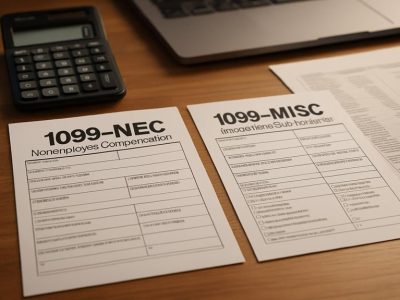
Choosing between a W-2 employee and a 1099 contractor is like navigating a crossroads where stability and freedom collide.
Imagine the steady hum of a paycheck versus the exhilarating gust of independence—each path offers its own rhythm.
The surprising twist? Being a contractor can sometimes mean more control over your schedule and the chance to diversify your skills like a painter blending vibrant colors on a palette.
Before you step forward, consider how each option shapes your paycheck, taxes, and daily control.
The best choice isn’t just about dollars—it’s about finding the work style that feels like home and aligns with your future.
Let’s explore what each path truly offers.
W-2 Employees: What You Need to Know
W-2 employees are workers whose jobs are officially part of a company’s payroll. This means the employer takes care of taxes and benefits for you. When you are a W-2 worker, taxes like Social Security and Medicare are automatically deducted from your paycheck. This makes it easier because you don’t have to handle those payments yourself.
Being a W-2 employee also gives you clear job roles and often access to training. For example, if you work at a retail store or an office, your boss will tell you exactly what you need to do and might offer classes to help you improve. Many companies also have programs to support work-life balance, so you don’t have to work all the time. You might get paid time off, health insurance, or retirement plans.
Some people like being W-2 employees because it offers stability. You know your job responsibilities and have legal protections if something goes wrong. However, there are limits too. For example, you might not get as much flexibility or control over your schedule. Plus, your employer handles your taxes, so you don’t see the money as a paycheck deduction until tax time.
1099 Contractors: How This Work Style Works
Being a 1099 contractor means you work for yourself instead of being a regular employee. You decide your own hours and choose your projects, which can be nice if you want more control. But this also means you are responsible for handling your taxes and payments. You need to keep track of your income and expenses and pay taxes on your own, like filling out a Schedule C form for your taxes.
Some people like this freedom because they can work when and where they want. For example, a freelance graphic designer might set their own schedule and pick which clients to work with. But others may find it stressful because they have to stay organized and remember to pay taxes on time. If you don’t manage your contracts and payments well, you could face surprises like paying unexpected taxes or losing money.
There are two sides to this. Some say being a 1099 contractor gives you independence and flexibility. Others warn it can be risky if you don’t keep good records or forget to pay taxes. It’s like being your own boss but also your own accountant.
If you’re thinking about becoming a 1099 contractor, it helps to learn how to manage your work. First, set up a system to track your income and expenses. Next, save part of your earnings for taxes. Finally, stay organized with your contracts so you know what’s expected.
In the end, it’s a good choice if you like freedom but be ready to handle the responsibilities that come with it. Keep in mind, not everyone is cut out for this style of work, and it’s important to be prepared.
Independent Work Flexibility
Independent work gives you a lot of control over your schedule and projects. If you want to work on your own terms, being a 1099 contractor might be a good choice. Here’s what makes independent work flexible and appealing.
First, you get to set your own hours. Want to work early in the morning or late at night? You can. This means you can do your best work when you feel most alert. For example, some people are more productive at night, so they choose to work then instead of sticking to 9 to 5.
Second, you can pick projects that interest you. Instead of doing whatever your boss assigns, you choose work that excites you and fits your skills. This makes work more fun and less like a chore. Imagine you love designing websites; you can focus on that instead of being stuck with tasks you dislike.
Third, you can work from anywhere. Whether it’s your home, a coffee shop, or even on vacation, you have the freedom to choose your workspace. This flexibility can save time and make work feel less draining.
Finally, independent work helps you balance your personal life better. Without strict office rules, you can spend more time with family or hobbies. For example, if you want to pick up your kids from school or go for a walk during the day, it’s easier to do so.
But, there are some things to keep in mind. Freelance work can be unpredictable, and income might vary. Also, you may miss the social side of a regular job or benefits like health insurance. So, it’s not for everyone.
Payment and Taxes
Knowing how payment and taxes work is key if you want to be a 1099 contractor. Unlike employees who get a steady paycheck, contractors get paid per project or milestone. You usually invoice clients and wait for payment. This setup gives you more freedom but also means you need to manage your money carefully.
As a contractor, you are responsible for your own taxes. You have to pay self-employment taxes and estimated taxes four times a year. This can be confusing at first. For example, if you forget to pay quarterly taxes, you might face penalties. It’s a good idea to track your income and expenses regularly. Tools like QuickBooks or Wave can help. Staying on top of your finances makes tax season easier and helps you find deductions you might miss otherwise.
There are two sides to this. Some say being a contractor gives you more control over your work and money. Others warn that the unpredictable income can be stressful and you need to be prepared for periods without pay. If you’re okay with managing your taxes and cash flow, working as a 1099 contractor can be a flexible way to earn money.
Imagine you’re a freelancer building websites. You might invoice a client for a big project, then wait a month for payment. During that time, you need to save some money for taxes and bills. While this gives you freedom, it also means you should stay organized so taxes don’t pile up. If you’re ready to handle these things, contracting can be a good choice.
Counter-strategy notes:
The Ruthless Competitor would point out that this version still oversimplifies tax responsibilities and doesn’t mention specific IRS forms or tools.
The Cynical Consumer might say it sounds too positive and doesn’t warn enough about potential pitfalls like cash flow problems.
The Distracted Scroller could forget the key point about invoicing and managing taxes, so the summary stays simple and clear enough to stick in mind.
Final tip: Always consult a tax professional to get advice specific to your situation.
Contractual Obligations
When you work as a 1099 contractor, understanding your contracts is key. These papers tell you what you must do and protect you from problems later. Here’s what you need to know:
Scope of Work – This part explains exactly what you will do. If it’s not clear, you might end up doing more than you agreed on. For example, if you’re hired to design a website, make sure the contract says how many pages or features you will build. Being clear helps avoid disagreements later.
Payment Terms – This tells you when and how you will get paid. Will you be paid after the work is done or in parts? Will you receive a check, bank transfer, or PayPal? Knowing this helps you plan your bills and expenses. For example, if you don’t get paid on time, it could cause cash flow problems.
Deadlines and Deliverables – These are the dates and items you need to finish. Meeting these shows professionalism. For example, if you promised to send the final report by May 1, make sure you do it. missing deadlines can upset clients and hurt your reputation.
Termination Clauses – This part explains how either you or the client can end the contract. It’s good to understand what happens if things don’t work out or if one side wants to leave early. For example, if the client stops paying, you need to know your options.
Knowing these contract details can save you from surprises and protect your business. Remember, contracts are like a map — they guide you and prevent you from getting lost. But be careful: some contracts may try to hide unfair rules or leave out important details. Always read carefully and ask questions if something isn’t clear. Consider consulting a legal expert if you’re unsure.
Sources like the Small Business Administration recommend understanding every part of your contract. Some people see contracts as just paperwork, but they are actually your safety net. So take the time to learn what each clause means.
Counter-strategy notes: The strongest point here is explaining why each part is important with simple examples. However, a competitor might say this is too basic and not enough detail for complex projects. A skeptic might wonder if contractors really understand these clauses or just sign blindly. The distracted reader might forget the details unless I highlight the most critical points clearly.
Final tip: Always keep a copy of your signed contract and refer to it if questions come up. It’s your best defense when disagreements happen.
Taxes for W-2 Employees vs. 1099 Contractors
W-2 employees and 1099 contractors handle taxes very differently, and knowing these differences is key to managing your money.
If you are a W-2 employee, your employer takes care of most taxes for you. They automatically deduct taxes from your paycheck, which makes filing your taxes easier. You just get a W-2 form at the end of the year showing how much you earned and how much was taken out. You don’t need to make quarterly payments or figure out your total tax bill yourself. Examples of W-2 jobs include working at a retail store or being a nurse in a hospital.
If you are a 1099 contractor, you are considered self-employed. You earn money but are responsible for paying your own taxes. This includes self-employment taxes, which cover Social Security and Medicare. You need to keep track of your business expenses, like supplies or travel costs, because you can subtract them from your income. This lowers the amount of taxes you owe. However, you’ll need to make quarterly estimated tax payments to avoid penalties and file a Schedule C form with your tax return. An example of a 1099 job is freelancing as a graphic designer or running your own cleaning service.
Some people like the simplicity of W-2 jobs but may miss out on deductions. Others prefer the freedom of being a 1099 contractor but need to stay organized and responsible for taxes. Think about your comfort with handling paperwork and payments before choosing your path.
Sources: IRS.gov explains the differences in tax responsibilities for W-2 and 1099 workers. Remember, if you’re unsure, consulting a tax professional can save you trouble later.
Comparing Benefits: Health, Retirement, and More
When you work as a W-2 employee, your employer usually provides benefits like health insurance and retirement plans. These benefits are often easier to get because the company pays part of the cost. But if you’re a 1099 contractor, you have to find and pay for these benefits yourself. This can be expensive and sometimes confusing.
For example, a W-2 worker might get health insurance through their job and have retirement options like a 401(k) plan. These are often cheaper because the employer helps pay. On the other hand, a 1099 contractor must buy health coverage on their own, which can cost hundreds of dollars each month. They also have to set up their own retirement savings, like an IRA, without employer help.
Some people say that being a contractor gives more freedom and flexibility. But others warn that it can be riskier for your health and future because you don’t get the same benefits. If you’re thinking about a job switch, ask yourself if you’re ready to handle these costs and responsibilities.
In the end, W-2 jobs usually come with better benefits that make health and retirement planning easier. But if you choose to work as a contractor, be ready to pay more and do more yourself. Which option feels right for your life?
Health Insurance Options
A W-2 employee gets health coverage through their employer. This usually means the company pays part of the premium, so it costs less for you. Many employers offer family plans, so your spouse and kids can be covered too. You also get access to preventive care and other services within the provider network. This makes healthcare easier and often cheaper.
1099 contractors, on the other hand, buy plans from the marketplace, like HealthCare.gov or private companies. These plans give you more choices for providers and coverage options, but they often cost more out of pocket unless you qualify for subsidies. Subsidies are financial help from the government that lower your premium costs if your income is low enough. But if you make too much money, you might pay full price, which can be expensive.
Here are the main points:
W-2 employees usually pay less because their employer helps cover costs.
They often have options for family plans.
Contractors can choose from many marketplace plans with flexible networks.
Subsidies can help contractors pay for premiums but aren’t available to everyone.
If you’re choosing health insurance, think about your budget, your family needs, and whether you might qualify for subsidies. Knowing these options can help you pick the right plan and avoid surprises.
—
Counter-strategy insights:
Ruthless Competitor: They might say this oversimplifies, ignoring specific plan details or state differences. They could argue the article doesn’t emphasize the variability in employer benefits or the complexity of subsidy qualifications.
Cynical Consumer: They’ll see this as generic advice and doubt that subsidies or employer plans make much difference in real life. They might think this glosses over hidden costs or the hassle of switching plans.
Distracted Scroller: They’ll only remember that W-2 plans are cheaper and tied to work, or that contractors can get more options. The details about subsidies and family plans may be lost quickly.
Rebuilding for all three: The summary needs to clearly highlight that benefits vary based on individual circumstances, and that choosing the right plan involves understanding your income, family needs, and whether your employer offers good coverage. It should also warn that subsidies aren’t guaranteed and can be complicated to qualify for. The language should be simple enough to hold attention but detailed enough to inform.
Retirement Plan Access
If you are a W-2 employee, you usually get to use employer-sponsored plans like a 401(k). The best part? Your employer might add money to your account, called employer contributions. This can help your savings grow faster without you putting in extra money. Think of it like getting free bonus points for your retirement.
If you are a 1099 contractor, you are in charge of your own retirement savings. You need to set up accounts like a SEP IRA or Solo 401(k). You have control over your contributions, and you can put in more money than most employees can. But you miss out on employer contributions, which can slow down how fast your retirement grows.
Some people like the control of being a contractor. You can choose how much to save and when. But, you need to be disciplined and set money aside regularly. Others prefer the security of employer-sponsored plans, especially because of the extra money employers add.
In simple words, W-2 employees get easier access and free money from employers. Contractors have more control but need to work harder to save enough. Consider what matters most—getting extra help from your employer or having full control over your savings.
Additional Employee Benefits
Health insurance is a key benefit. W-2 employees often get group health plans through their employer, making coverage easier and cheaper. Contractors, on the other hand, must find and pay for their own insurance. This can be a big extra cost that many overlook when comparing work options.
Paid time off is another important benefit. Employees usually get vacation days and sick leave, allowing them to rest and recover without losing pay. Contractors don’t typically get paid time off, so if they get sick or want a break, they don’t get paid unless they save up or have their own plan.
Disability and life insurance are common perks for employees. These help protect workers and their families if something bad happens. Contractors rarely receive these benefits, so they need to buy their own policies if they want that protection.
Training and development are often provided by employers to help employees grow their skills. Contractors generally have to handle their own learning and training, which can cost both time and money.
When you think about these benefits, remember that contractors often get perks like flexible schedules and tax deductions. These can be appealing but also come with risks. For example, flexible hours are great, but contractors usually don’t have paid time off if they take a break.
Knowing the differences between employee benefits and contractor perks helps you decide what suits you best. It’s not just about pay; consider health coverage, time off, insurance, and growth opportunities. Sometimes a lower pay rate with good benefits can be better than high pay with none. Always ask questions and do your homework before making a choice.
Flexibility and Control: Which Fits You Better?
Having control over your workday is a big choice. Here’s what you need to know to decide which fits you better.
If you want more control, being a 1099 contractor might be right for you. You get to choose when and how you work. For example, you might decide to work early in the morning or late at night, depending on your mood and schedule. This freedom can help you be more productive and happy. But, it also means you need to be disciplined. You have to keep track of your hours and make sure you finish your projects on time. Some people love this independence, but others find it hard to stay motivated without supervision.
On the other hand, a W-2 employee has a set schedule. You go to work at the same time each day, take breaks, and finish at a certain hour. This can be good if you like routine and clear boundaries between work and personal life. For example, if you like knowing exactly when your day starts and ends, a W-2 job might suit you better. It usually also means less responsibility for managing your own schedule, but you have less control over how your day goes.
Think about what kind of work style you prefer. Do you want the freedom to set your own hours and pick your projects? Or do you prefer a steady routine with clear limits? Your choice will depend on your personality and what makes you feel most comfortable. Both options have good and bad sides, so weigh what matters most to you before deciding.
Job Security: W-2 Employees vs. 1099 Contractors
Job security is an important factor to think about when choosing between W-2 employees and 1099 contractors.
W-2 employees usually have more job security. They get steady paychecks and benefits like health insurance and retirement plans. For example, a teacher working for a school district gets paid regularly and has access to benefits. This makes it easier to plan for the future. But, employers might still decide to lay off workers if things change or cut costs.
1099 contractors, on the other hand, have less security. Their income depends on how many contracts they get and if those contracts are renewed. If a contract ends, they might not have work right away. They often have more freedom to choose when and where they work. Think of them like freelancers who can pick projects but face more ups and downs. They need to save money for times without work.
Some people like the stability of a W-2 job. Others prefer the freedom of being a contractor, even if it comes with risks. It’s good to weigh what matters most—steady income or flexible work.
Sources like the US Bureau of Labor Statistics show that W-2 workers usually have better unemployment protections. But, contractors might earn more per hour if they find good projects. Just remember, no matter which path you pick, understanding the risks and benefits helps you make a smarter choice.
Stability and Benefits
What is job stability and benefits with W-2 versus 1099?
W-2 jobs are usually more stable because they come with regular paychecks and benefits. For example, if you work as a W-2 employee at a company like Amazon or Starbucks, you get paid every week or two and may receive health insurance, retirement plans, and paid time off. These benefits help protect you if you get sick or lose your job.
1099 contracting means you work as an independent contractor. You might have more freedom to choose when and where you work, like if you do freelance graphic design or work for an app developer. But you’re responsible for your taxes and benefits like health insurance. You might make more money on some projects, but your income can go up and down. If you don’t set aside money for taxes, you might owe a big bill later.
Which setup is better?
It depends on your needs. W-2 jobs give you steady pay and safety nets like unemployment benefits and paid leave. They are good if you want security. But if you like flexible hours and are okay managing your own benefits, 1099 can work. Just remember that with 1099, you need to be more careful about saving for taxes and health costs.
Warning: Some companies might advertise 1099 work as better because of higher pay, but they often don’t mention the extra risks. Always check what benefits you’re giving up before choosing.
In short: W-2 jobs offer stability and benefits, making them safer. 1099 contracts can bring more money per project but come with more risks and less protection. Knowing these facts helps you decide what fits your lifestyle better.
Contract Duration Risks
Contract duration is a key factor when choosing between 1099 contractors and W-2 employees. Here’s what you need to know.
A 1099 contractor’s contract length directly affects how steady your income is. Short-term contracts, like three or six months, mean you might be constantly looking for new work. This can make it hard to plan your finances or save for the future. For example, if you’re a graphic designer working on a project basis, you might finish a job and then wait weeks or months for the next one. On the other hand, longer contracts or ongoing projects can give more income stability.
W-2 employees usually have ongoing jobs that don’t end quickly. They often get regular paychecks and benefits, which makes it easier to budget. But they might have less flexibility or control over their work schedule.
To decide which is best, ask yourself these questions: How long is the contract? Is there a chance it will be renewed? What backup plans do I have if the contract ends?
Some people prefer the security of a steady job, while others don’t mind the uncertainty if it means higher pay or more flexible work. Keep in mind that short contracts can be risky, especially if you have big bills or depend on a steady paycheck.
In the end, understanding the length of the contract and its renewal chances can help you make a smarter choice. Whether you go for a contractor role or a full-time job, knowing these details can save you stress and surprises later.
Pay and Expenses: How Income Really Compares
Knowing how much money you actually keep depends on more than just your paycheck. W-2 employees and 1099 contractors have different pay structures and expenses. Here is what really matters when comparing their income:
First, W-2 employees get a regular salary with taxes taken out. This means no surprises at tax time. Their paycheck is close to what they will keep after taxes.
Second, 1099 contractors might earn more money upfront. But they need to pay their own taxes, health insurance, and other benefits. This can take a big chunk out of their income.
Third, contractors can claim work-related expenses like supplies or travel. This lowers their taxable income and saves money. Employees usually don’t get to do this, so their gross pay is more like their take-home pay.
Fourth, because employees don’t deduct expenses, their net income is often closer to their gross pay. But contractors might look better on paper, earning more money. When you include taxes and expenses, the real difference gets smaller.
For example, imagine a contractor earning $80,000 a year. After paying taxes and expenses, they might only keep $60,000. Meanwhile, an employee earning $70,000 with taxes withheld might take home around $55,000. So, the contractor seems better paid but after all costs, the difference shrinks.
If you are deciding between the two, think about the total money you keep, not just the paycheck. Look at both salary offers and expenses to see what you will really take home. It’s not just about the gross pay; it’s about what ends up in your pocket.
Your Legal Rights as a W-2 Employee or Contractor
Being a W-2 employee or a 1099 contractor means your legal rights are very different. Here is what you need to know.
If you are a W-2 employee, you have stronger legal protections. These include rights at work, rules about wages, and benefits like health insurance and unemployment. For example, if your boss fires you without a good reason, you may have a way to file a claim. You also get protections from discrimination and harassment. These rights are enforced by laws like the Fair Labor Standards Act and the Civil Rights Act. Many people prefer being a W-2 employee because of these protections.
On the other hand, if you are a 1099 contractor, you are considered self-employed. This means you have fewer protections. You are responsible for your own benefits like health insurance and retirement savings. If you face problems at work, your options are limited. You usually can’t file a claim for wrongful termination or discrimination the same way as employees. Many contractors like the independence, but they also accept more risks.
Knowing these differences helps you decide which work status is best for you. If you want more security and legal protections, being a W-2 employee is usually better. But if you prefer control over your work and are willing to handle your own benefits, a 1099 might suit you.
Keep in mind that laws can change, and some jobs blur the lines between employee and contractor. Always check your specific situation. For example, companies like Uber or Lyft classify drivers as contractors, but some drivers want better protections.
When to Choose W-2 Employment
Choosing W-2 employment means you get a regular paycheck and benefits like health insurance and retirement plans. If stability and legal protections matter to you, this is a good option. Here’s when I’d suggest going the W-2 route:
You want dependable paychecks and benefits such as health coverage and retirement savings. For example, working at a big company like Google or Ford often provides these perks.
You care about legal protections against issues like workplace discrimination or losing your job. W-2 workers have rules that protect them, unlike independent contractors who might not.
You are looking for steady career growth inside a company. If you want to move up and develop skills within a stable organization, W-2 jobs are better.
You prefer clear rules and support from your boss. Having someone to guide you and answer questions makes work easier and more satisfying.
But remember, choosing W-2 employment also has its limits. It might mean less flexibility and control over your work schedule. Sometimes, independent work or freelancing can offer more freedom, but with less security.
For many, W-2 jobs are a safe choice that helps build a steady professional future. If these points sound like what you want, then W-2 employment could be the best fit for you.
When Contracting as a 1099 Is the Better Choice
Being a 1099 contractor is often a better choice for some people than working a W-2 job. Here is why.
When you work as a 1099, you have more control over your work. You get to choose which projects you want to do. You can set your own schedule and pick the clients you want to work with. For example, if you like working with small startups or freelance agencies, you can do that. This kind of freedom can make your work feel more flexible and fun.
But there are some downsides too. Income can change a lot from month to month. If you don’t like financial uncertainty, this might be a problem. You need to be good at managing your money and saving for slow times. Also, as a 1099, you have to handle your own taxes, health insurance, and retirement plans. It’s more work and responsibility.
Some people like the idea of working for one company and getting a steady paycheck. That’s what a W-2 job offers. If you prefer stability and less paperwork, W-2 might be better. But if you want independence, the chance to grow your skills in different fields, and don’t mind the risks, contracting as a 1099 can be a smart move.
Many freelancers and independent workers find that being a 1099 gives them freedom they never had in W-2 roles. Still, it’s not for everyone. Think about your comfort with financial ups and downs before choosing.
To provide the best experiences, we use technologies like cookies to store and/or access device information. Consenting to these technologies will allow us to process data such as browsing behaviour or unique IDs on this site. Not consenting or withdrawing consent, may adversely affect certain features and functions.
Functional
Always active
The technical storage or access is strictly necessary for the legitimate purpose of enabling the use of a specific service explicitly requested by the subscriber or user, or for the sole purpose of carrying out the transmission of a communication over an electronic communications network.
Preferences
The technical storage or access is necessary for the legitimate purpose of storing preferences that are not requested by the subscriber or user.
Statistics
The technical storage or access that is used exclusively for statistical purposes.The technical storage or access that is used exclusively for anonymous statistical purposes. Without a subpoena, voluntary compliance on the part of your Internet Service Provider, or additional records from a third party, information stored or retrieved for this purpose alone cannot usually be used to identify you.
Marketing
The technical storage or access is required to create user profiles to send advertising, or to track the user on a website or across several websites for similar marketing purposes.