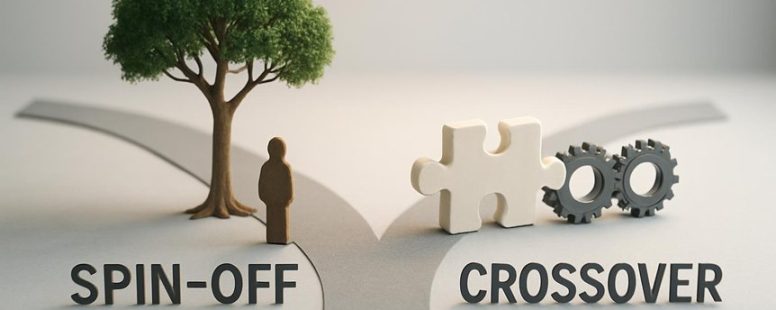
Imagine witnessing two beloved characters collide on the same screen, their worlds intertwining in a burst of excitement and curiosity. That’s the magic of crossovers—moments that feel like a fireworks display of fandom.
But spin-offs take you deeper, peeling back layers of a single character’s universe, like uncovering hidden treasures in a well-worn map. Both storytelling tools shape your experience in unexpected ways, even influencing how you see your favorite shows and movies.
Surprisingly, spin-offs can enrich your understanding, offering a more intimate connection. So, what truly sets them apart, and how might they transform your viewing journey?
What Is a Spin-Off and How Does It Work?
A spin-off is a new story or product that comes from an existing one. It focuses on a character, idea, or element from the original to tell a new story or explore different themes. For example, the TV show “Better Call Saul” is a spin-off from “Breaking Bad.” It takes the character Saul Goodman and builds a new story around him.
Spin-offs work by taking popular parts of a franchise and using them to attract fans. They help the original series grow by giving fans more of what they like. But creating a spin-off has challenges too. Writers need to keep the new story interesting without copying the original too much. Fans will get bored if it feels repetitive, so creators have to find a good balance.
Some people think spin-offs are a smart way to keep a franchise fresh. They can introduce new ideas while keeping familiar characters or themes. Others worry that spin-offs might stretch the story too thin or lose the quality of the original. For example, some spin-offs of popular shows or movies have failed because they didn’t meet fans’ expectations.
In the end, spin-offs are a way for companies like Disney or Netflix to expand their stories and keep audiences engaged. They can be successful when made well, but they also need to avoid repeating the same stories. So, if you see a new show or movie based on an old one, remember it might be a spin-off trying to bring more to a beloved universe.
What Is a Crossover in TV and Film?
A crossover in TV and film is when characters or stories from different shows or movies come together in one place. It’s like mixing two different flavors to make something new and exciting. For example, in the TV world, characters from the shows “Supergirl” and “The Flash” did a crossover where they worked together in one story. Fans love crossovers because they get to see their favorite characters interact in ways they normally wouldn’t.
There are different types of crossovers. Some happen within the same series, like when a character from one season appears in another. Others happen between different shows, like a superhero team-up, which can be a big event that brings viewers from both worlds together. Sometimes, movies also crossover, such as in Marvel films where characters from different movies team up.
But there are some things to watch out for. Crossovers can be confusing if you don’t watch all the shows involved. Also, they might seem like a way to just get more viewers instead of telling a good story. So, while crossovers can be fun, they aren’t always perfect.
Definition and Purpose
Crossovers are scenes or episodes where characters or storylines from different TV shows or movies come together. They are popular because they mix familiar characters into new situations, making the story more exciting. For example, a superhero show might team up with another superhero show for a special episode. This keeps viewers interested because it feels fresh but still familiar.
Crossovers also help us learn more about characters. When characters from different shows meet, they might face new problems or have interesting conversations. This helps us understand their personalities better. Sometimes, crossovers are used to boost ratings, as fans get excited to see their favorite characters interact. For example, the Marvel movies often include crossover scenes with characters like Iron Man and Spider-Man.
However, not all crossovers work well. Sometimes they feel forced or confusing if they don’t fit the story. Also, if you aren’t familiar with the different shows, the crossover might not make much sense. So, while crossovers can make stories more fun and engaging, they need to be planned carefully to work best.
In short, crossovers are a way to connect stories and characters across shows or movies. They can make stories more interesting and help fans see new sides of their favorite characters. But if done poorly, they can confuse viewers or seem unnecessary.
Common Crossover Types
Crossover types are ways stories or characters from different shows or movies come together. Knowing these types helps understand why fans get excited. Here are the main kinds:
Single Episode Crossovers: This is when characters from different shows appear in just one episode. For example, in “The Simpsons,” characters might visit “Futurama” for a quick story. It’s like a special guest appearance that doesn’t last long. These are easy for viewers to enjoy without committing to a big story.
Multi-episode Events: These are longer stories that spread across several episodes or even different series. Think of it like a big adventure that happens over time. An example is the “Arrowverse” on CW, where multiple superhero shows like “Arrow” and “The Flash” share storylines over several episodes. These keep fans hooked for a while.
Genre Crossovers: This mixes different types of stories or styles. For example, a comedy TV show might suddenly include a spooky horror element. It’s like adding a twist to surprise viewers and make things more interesting. Sometimes, this can be risky because it might confuse fans who prefer one genre.
Character Crossovers: When a character from one show appears in another. For instance, Spider-Man making a cameo in a Marvel movie. It creates a connection between stories and makes fans excited to see their favorite character in new settings. But sometimes, it can feel forced if not done well.
Shared Universe Crossovers: This is when all stories happen in the same world or universe. For example, Marvel movies all take place in one universe where characters cross paths. This creates a bigger story and makes fans feel like they are part of a larger world. However, it can also be complicated to keep everything consistent.
Each crossover type has its own strengths and risks. Some fans love the surprises, while others worry about confusing stories or overloading the universe. Knowing these types helps understand how creators try to keep things fresh and exciting.
Impact on Storylines
Crossovers are when characters from different shows or movies come together in one story. They are useful because they make stories more exciting and keep viewers interested. When characters from separate worlds meet, new problems and solutions can happen. For example, when the Avengers team up with Spider-Man in Marvel movies, it creates fresh action scenes and new challenges. Crossovers also help show different sides of characters as they react to unfamiliar situations. This can add new meaning and feelings to the story.
However, it’s important that the crossover feels natural. If the stories don’t fit well, viewers might get confused or annoyed. For example, if a superhero suddenly acts like a normal person without explanation, it can ruin the story. When done well, crossovers can make each episode or movie more important because they add new layers and ideas.
Some people think crossovers are great for expanding stories. Others worry they might make the story too complicated or seem forced. For example, a crossover between two popular TV shows might bring excitement but could also confuse viewers who don’t watch both shows. So, creators should plan carefully to keep the story clear and interesting.
Spin-Offs vs Crossovers: What’s the Difference?
A spin-off is a new show or movie that focuses on a character or story from an existing series. For example, “Better Call Saul” is a spin-off from “Breaking Bad” that centers on Saul Goodman. Spin-offs help fans learn more about favorite characters or explore new parts of a story world. But they usually stand alone and don’t need the original series to understand them.
A crossover is when characters or stories from different series come together for a special event. Imagine Superman teaming up with Batman in a comic book or a TV episode where two shows share a story. Crossovers are fun because they bring fans of different series together and create exciting moments. However, crossovers can also confuse viewers if they are not familiar with all the series involved.
Some people prefer spin-offs because they let them follow a favorite character longer. Others like crossovers because they bring new excitement and new storylines. But both can have limits. Spin-offs might get stuck if they don’t attract enough viewers, and crossovers can be confusing if they are not well explained.
In the end, understanding the difference helps fans choose what they like best. Spin-offs focus on expanding a story around one character or idea. Crossovers mix different stories for a big event. Both are popular ways to tell stories in movies or TV shows, but they do different things for the audience.
Definition And Core Concept
A spin-off is a story that focuses on one character or a small group from an original show or movie. It creates a new, separate story that still connects to the original. For example, the TV series “Better Call Saul” is a spin-off from “Breaking Bad.” It explores the life of Saul Goodman before he became Walter White’s lawyer. Spin-offs are good if you want to see more about a favorite character or learn about new places and themes linked to the original story.
Crossovers are when characters from different stories meet and work together or face off. They blend parts of two or more shows or movies into one. Think about the Marvel movies where Spider-Man teams up with Iron Man, or when characters from different Disney movies appear together. Crossovers are fun because they bring together familiar characters in new ways, but they don’t usually change the main story of each one.
Understanding the difference matters. Spin-offs expand on one story or character by making a new, standalone show or movie. Crossovers mix things up by bringing characters from different stories into one event or episode. Both help keep stories interesting and fresh, but they do different things. Some critics say spin-offs can feel like just more of the same, while crossovers might confuse viewers if they aren’t familiar with all the stories involved.
In real life, think of spin-offs like a side story about a character you love, while crossovers are like a team-up of heroes from different comics or movies. Both are tools creators use to tell more stories but in different ways. If you want to understand how your favorite shows stay exciting, knowing these differences can help you see how creators build new adventures.
Narrative And Character Focus
A quick way to understand the difference is to say that spin-offs focus on one character or a small group, while crossovers bring characters from different stories together.
Spin-offs are good for showing a character’s personal growth and telling a focused story. For example, the TV show “Better Call Saul” is a spin-off of “Breaking Bad” that explores the life of Saul Goodman. It keeps the story from one character’s point of view, making it easier for viewers to connect with their journey. Spin-offs work well when you want to dive deep into one character’s feelings and experiences. However, they might miss the excitement of seeing different characters interact.
Crossovers, in contrast, show characters from different stories meeting and working together. Think about how Marvel movies often have heroes like Iron Man teaming up with Captain America. Crossovers create interesting tension and new friendships because characters with different backgrounds come together. But, they can also be confusing if the stories don’t fit well. You need to balance the worlds so the story makes sense.
Both types of stories have their strengths. Spin-offs let you focus on one character and really get to know them. Crossovers give you exciting interactions and new adventures by mixing characters. But, spin-offs might get boring if they stick too much to one perspective, and crossovers can feel messy if not done carefully.
In the end, it depends what you like. Do you prefer detailed stories about one person? Or do you want to see characters from different stories interact? Both are popular ways to tell stories, but they serve different purposes.
Audience Engagement Differences
Audience engagement with spin-offs and crossovers works differently. Knowing these differences can help you understand how each one connects with viewers.
A spin-off is a new story based on a popular show or movie. It mainly aims to keep existing fans interested. For example, a spin-off from “Breaking Bad” called “Better Call Saul” focuses on a character fans already love. Spin-offs usually use familiar characters and themes to make viewers feel comfortable and loyal. They are good at keeping fans watching over a long time.
Crossovers mix characters from different shows or movies in one story. They try to attract new viewers and create excitement. For example, when Marvel characters team up in movies like “Avengers,” it makes people curious to see how characters from different stories come together. Crossovers often use social media and big events to get attention quickly. They want to bring in a wide range of viewers for one big event.
Some people might think spin-offs are better for deepening a story because they focus on familiar characters. Others might believe crossovers are better for creating buzz and attracting new fans. Both have limits—spin-offs can become repetitive if they don’t innovate, and crossovers might confuse viewers who don’t know all the characters.
Understanding these differences helps you see why some shows or movies choose one approach over the other. Whether you prefer familiar stories or exciting team-ups, knowing how each works can change how you enjoy them.
Why Creators Choose Spin-Offs Over Crossovers
Creators often choose spin-offs instead of crossovers because they give more control over stories and characters. A spin-off is when a creator takes a popular character or idea from a larger story and builds a new story around it. This way, they can focus on that character without mixing too many other storylines. Crossovers, on the other hand, try to combine different characters or worlds, which can be exciting but also tricky to pull off.
One reason creators prefer spin-offs is because they can tell stories that fit their vision better. For example, Disney created the “Frozen” spin-off “Olaf’s Frozen Adventure” to explore a side character more deeply. Spin-offs also help keep a brand strong. When a familiar character gets a new setting or story, fans stay interested and want to see more. Think about how “Better Call Saul” expanded the “Breaking Bad” world without changing what made the original great.
Another benefit is that spin-offs are easier to produce. Coordinating multiple stories for a crossover can be a headache, with many moving parts and deadlines. Spin-offs are simpler because they stick to a single universe or theme. This makes it easier for creators to stay on track and make sure the story makes sense.
However, some critics say that spin-offs can become repetitive or lose their charm if they don’t bring anything new. Crossovers can bring excitement by mixing things up, but they are more risky and harder to plan well. So, choosing between a spin-off and a crossover depends on what the creator wants to do. If they want control and consistency, spin-offs are often the smarter choice. But if they want a big, exciting event, crossovers might be better—even if they come with more challenges.
How Spin-Offs Expand TV and Film Universes Differently
Spin-offs are shows or movies that come from a bigger universe, like a popular TV series or film franchise. They help expand that universe in different ways. Instead of just continuing the main story, spin-offs focus on side characters or new ideas. This makes the universe feel bigger and more interesting. For example, the show “Better Call Saul” is a spin-off from “Breaking Bad,” giving fans more details about a character they liked.
Spin-offs also help the franchise grow without changing the main story too much. They introduce new themes and settings that fit with the original, but add fresh ideas. For instance, “The Mandalorian” expanded the Star Wars universe by exploring new planets and characters, while still sticking to the core story.
There are some good points and some warnings about spin-offs. On one hand, they let creators develop characters and worlds further, making the universe richer. They can attract new fans and keep the franchise alive longer. On the other hand, some spin-offs don’t catch on or feel disconnected from the original. If they stray too far or don’t add anything new, fans might lose interest.
Examples of Spin-Offs and Crossovers in Action
A spin-off and a crossover are two different ways to expand a TV show or movie series. A spin-off focuses on a character or story from an original show, creating a new series that stays connected. For example, “Better Call Saul” is a spin-off from “Breaking Bad.” It takes a character from the original show and tells a new story about him. Spin-offs help fans learn more about a favorite character and stay in the same world.
A crossover happens when characters from different shows or movies meet in one story. An example is Marvel’s “Avengers” films. They bring together heroes like Iron Man, Captain America, and Thor from different series to fight a common enemy. Crossovers create excitement because fans see their favorite characters interact and work together. They also attract viewers from multiple shows.
Spin-offs usually focus on expanding one story or character, making it richer. Crossovers mix different worlds, creating buzz and new adventures. Both ways help companies grow their franchises and keep fans interested. But they have limits. Spin-offs might become less exciting if they don’t add new things, and crossovers can confuse viewers if the stories don’t fit well together.
Knowing these differences helps when you watch TV or movies. Do you prefer a spin-off that deepens a character or a crossover that brings your favorite heroes together? Both are fun, but they serve different goals for storytellers and fans alike.
How Spin-Offs and Crossovers Impact Fan Engagement
What are spin-offs and crossovers? They are ways TV shows and movies bring back familiar characters or have characters from different stories team up. These ideas help fans feel more connected to the stories they love.
Spin-offs and crossovers make fans more loyal. When a favorite character appears in a new show or when characters from different stories meet, fans get excited. It makes them want to watch more. For example, when the Marvel movies brought together characters like Iron Man and Captain America, fans loved seeing their worlds connect.
These strategies also add more details to the story. They let writers explore new places or ideas that weren’t in the original. This makes the story richer and more interesting. Think of it like adding new rooms to a house; it makes the house feel bigger and more fun to explore.
Another good thing about spin-offs and crossovers is they help marketers sell more products. When fans see their favorite characters in new shows or movies, they get excited and want to buy related toys, clothes, or games. For example, the Star Wars universe expanded with spin-offs like The Mandalorian, bringing new fans and more merchandise sales.
Plus, these stories can bring in new viewers. Someone who loved seeing Spider-Man team up with the Avengers might start watching other Marvel movies. This helps keep the franchise alive for a long time. But, there are some risks too. Sometimes, fans don’t like the new story or feel it ruins their favorite characters. Also, making these crossover stories can be expensive and complicated.
In the end, spin-offs and crossovers can be a smart way to keep fans interested and bring new audiences in. But creators need to do it carefully so they don’t disappoint the fans or waste money. When done right, they can turn a simple story into a big, shared universe that keeps everyone talking.
How to Spot Spin-Offs vs Crossovers in TV and Film
A spin-off is a new show or movie that focuses on a character or story from an original one. It expands on that character’s world but keeps the main story connected. For example, *Better Call Saul* is a spin-off from *Breaking Bad*. You’ll see the main character, Saul Goodman, getting his own show while still staying linked to the original. Spin-offs usually change the focus to new plots involving familiar characters or settings.
A crossover is when characters from different shows or movies come together for a temporary story. Imagine Superman teaming up with Batman in a special episode. They keep their own stories but interact with each other. Crossovers blend plots and characters for a short time, like in the *Arrow* and *The Flash* crossover event on The CW.
Here are some steps to tell the difference:
Look at the focus. If the story centers on a character from the original show but with new adventures, it’s a spin-off.
Check if characters from different shows or movies meet. If yes, it’s a crossover.
See if the story continues the main plot from the original or if it’s a new story. Spin-offs usually keep the same universe but focus on different characters, while crossovers bring different stories together temporarily.
Sometimes, it’s tricky because a show can be both. For example, a spin-off might include a crossover episode. Be cautious — not all spin-offs are good, and crossovers can sometimes feel forced or confusing. Keep these clues in mind, and you’ll be able to tell them apart easily.
Remember, some creators love to mix both styles to keep viewers hooked. Just don’t assume everything is straightforward — a crossover can look like a spin-off if it focuses on a character from another show, but it’s still a crossover if it involves multiple series meeting.
To provide the best experiences, we use technologies like cookies to store and/or access device information. Consenting to these technologies will allow us to process data such as browsing behaviour or unique IDs on this site. Not consenting or withdrawing consent, may adversely affect certain features and functions.
Functional
Always active
The technical storage or access is strictly necessary for the legitimate purpose of enabling the use of a specific service explicitly requested by the subscriber or user, or for the sole purpose of carrying out the transmission of a communication over an electronic communications network.
Preferences
The technical storage or access is necessary for the legitimate purpose of storing preferences that are not requested by the subscriber or user.
Statistics
The technical storage or access that is used exclusively for statistical purposes.The technical storage or access that is used exclusively for anonymous statistical purposes. Without a subpoena, voluntary compliance on the part of your Internet Service Provider, or additional records from a third party, information stored or retrieved for this purpose alone cannot usually be used to identify you.
Marketing
The technical storage or access is required to create user profiles to send advertising, or to track the user on a website or across several websites for similar marketing purposes.