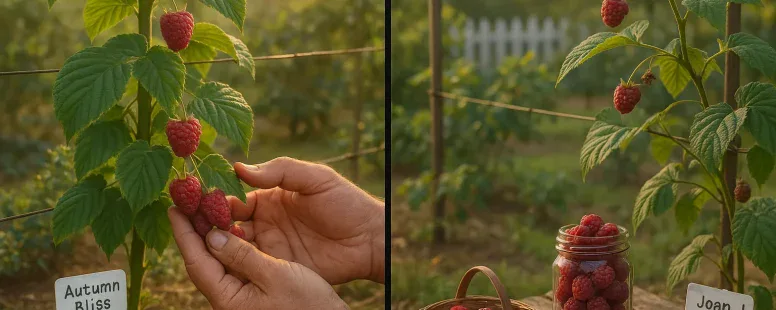
Both ‘Autumn Bliss’ and ‘Joan J’ produce late-season raspberries, but they serve different garden goals. Which one fits your patch, a low-maintenance, disease-tolerant producer or a high-yielding berry with a classic flavor? You’ll smell the difference before you taste it: ‘Autumn Bliss’ often gives a floral, candy-sweet scent while ‘Joan J’ has a deeper, traditional raspberry aroma. This comparison will give you clear facts, practical experience, and a simple decision path so you can pick the cultivar that fits your climate, space, and culinary plans.
Quick Comparison At A Glance
Start fact: ‘Autumn Bliss’ is an everbearing (primocane) variety prized for large, firm berries and broad disease tolerance: ‘Joan J’ is a floricane variety known for high yields and classic flavor.
Season: ‘Autumn Bliss’ gives late summer through fall fruit on primocanes: ‘Joan J’ fruits primarily in mid to late summer on floricanes.
Flavor: ‘Autumn Bliss’ is sweet with complex aromatics: ‘Joan J’ is rich, slightly tangy, and traditional.
Hardiness: Both perform well in USDA zones 4–8, though microclimates matter.
If you want simple: choose ‘Autumn Bliss’ for extended harvest and firmer fruit. If you want maximum summer yield and classic jam quality: choose ‘Joan J’.
Quick follow-up: ask whether you’ll freeze, eat fresh, or sell fruit, that changes the best pick.
Plant Characteristics And Growth Habits
Fact: The two varieties differ in cane timing, vigor, and how you prune them.
Growth Habit And Vigor
‘Autumn Bliss’ grows vigorously on primocanes and often reaches tall canes in a single season. You’ll notice cane growth that’s thick and upright: that makes it easier to trellis. ‘Joan J’ shows strong floricane vigor with a slightly more arching habit. It spreads less aggressively than some wild types but needs a reliable support system.
Cold Hardiness And Zone Adaptability
Both varieties survive common northern winters. ‘Autumn Bliss’ and ‘Joan J’ are typically hardy to USDA zone 4 when planted in well-drained soil and given winter mulch. If you’re in zone 9 or warmer, heat stress can reduce fruit set: shade or afternoon cooling strategies help.
Disease Resistance And Pest Susceptibility
‘Autumn Bliss’ has above-average resistance to cane blight and verticillium relative to older cultivars, though it still can get botrytis in wet seasons. ‘Joan J’ shows solid resistance to viruses but can be more prone to cane lesions under constant wet conditions. Both attract common pests: spotted wing drosophila, raspberry crown borer, and aphids. You must scout regularly.
Mature Size And Spacing Requirements
Expect 4–6 feet height for both when left unpruned. Space plants 2–3 feet apart within rows: leave 8–10 feet between rows for access and air circulation. If you grow ‘Autumn Bliss’ as a fall-only producer, you can plant a bit closer, but avoid crowding that increases disease risk.
Fruit Quality, Flavor And Yield
Fact: Fruit character and yield pattern strongly influence how you use each raspberry.
Flavor Profile And Eating Quality
‘Autumn Bliss’ flavor is bright and sweet with honeyed notes: the sugar-acid balance makes it excellent fresh. ‘Joan J’ carries the tang and depth many cooks prefer for preserves. If you want berries for eating straight from the bush, you’ll likely prefer ‘Autumn Bliss’: for cooked products, ‘Joan J’ may be your go-to.
Berry Size, Texture, And Color
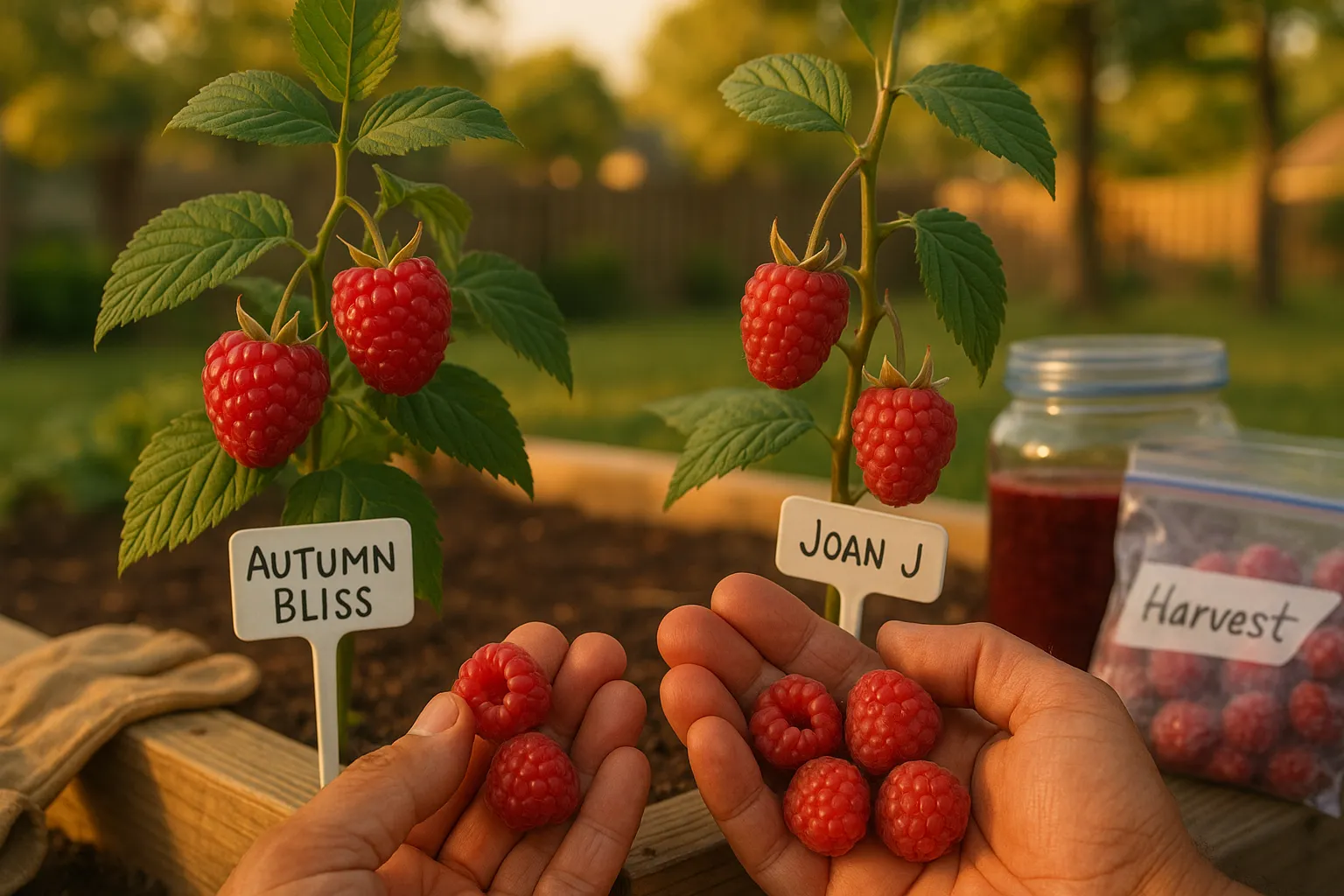
‘Autumn Bliss’ usually produces larger, firmer berries with a glossy, deep red color. ‘Joan J’ berries are medium to large, sometimes softer, and can show a darker maroon hue when fully ripe. Texture matters: firmer berries hold up better for shipping and freezing.
Typical Yield And Harvest Timing
‘Joan J’ typically yields heavily over a concentrated summer window. ‘Autumn Bliss’ yields more spread out, with a significant fall crop on primocanes. A mature row of ‘Joan J’ can out-yield a similar area of ‘Autumn Bliss’ during peak summer, but total seasonal production may be similar because ‘Autumn Bliss’ repeats.
Postharvest Handling And Best Uses
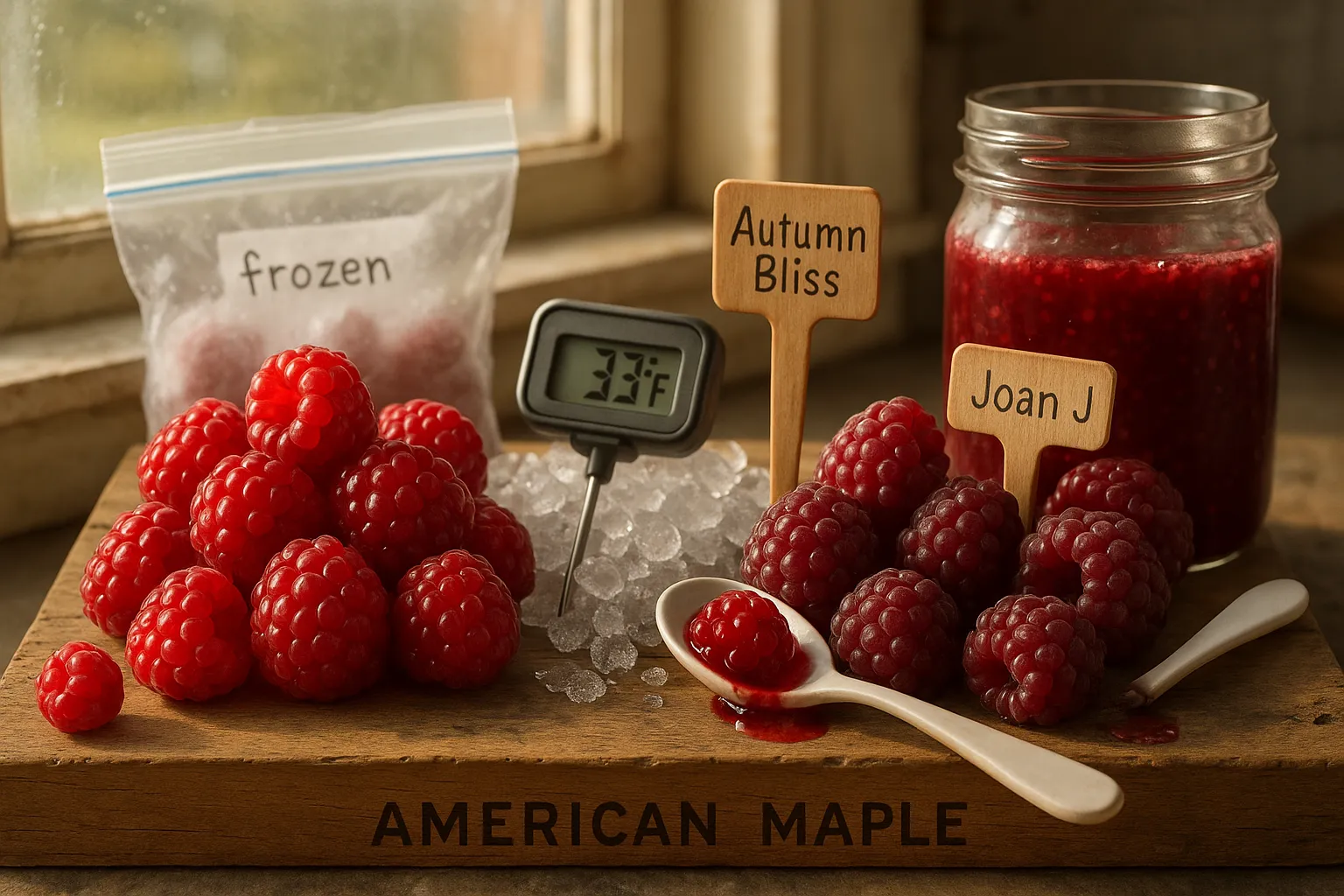
Handle ‘Autumn Bliss’ gently but you’ll find it ships and freezes better due to firmness. Use it fresh, in salads, or frozen slices. Use ‘Joan J’ for jam, sauces, and desserts where softer texture and deeper flavor are assets. For either variety, cool fruit to 33–34°F promptly to extend shelf life.
Cultivation, Care, And Common Problems
Fact: Proper site choice and season-specific care reduce most problems and boost yield.
Soil, Sunlight, And Water Needs
Raspberries prefer well-drained loam and full sun for best yields, at least six hours of direct sun. In hotter sites, afternoon shade improves fruit quality. Maintain consistent moisture: drip irrigation reduces foliar disease compared with overhead watering.
Pruning, Training, And Support Systems
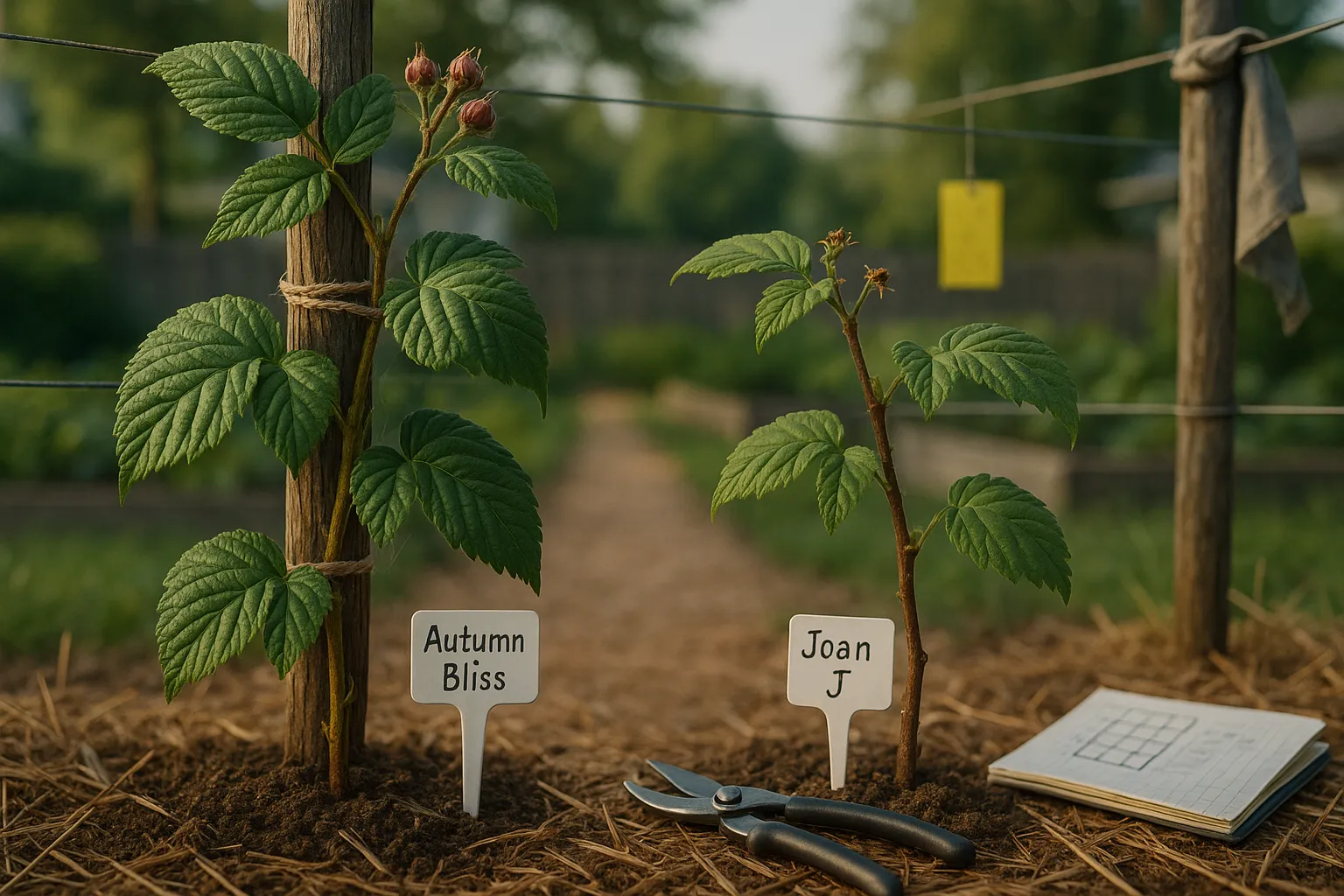
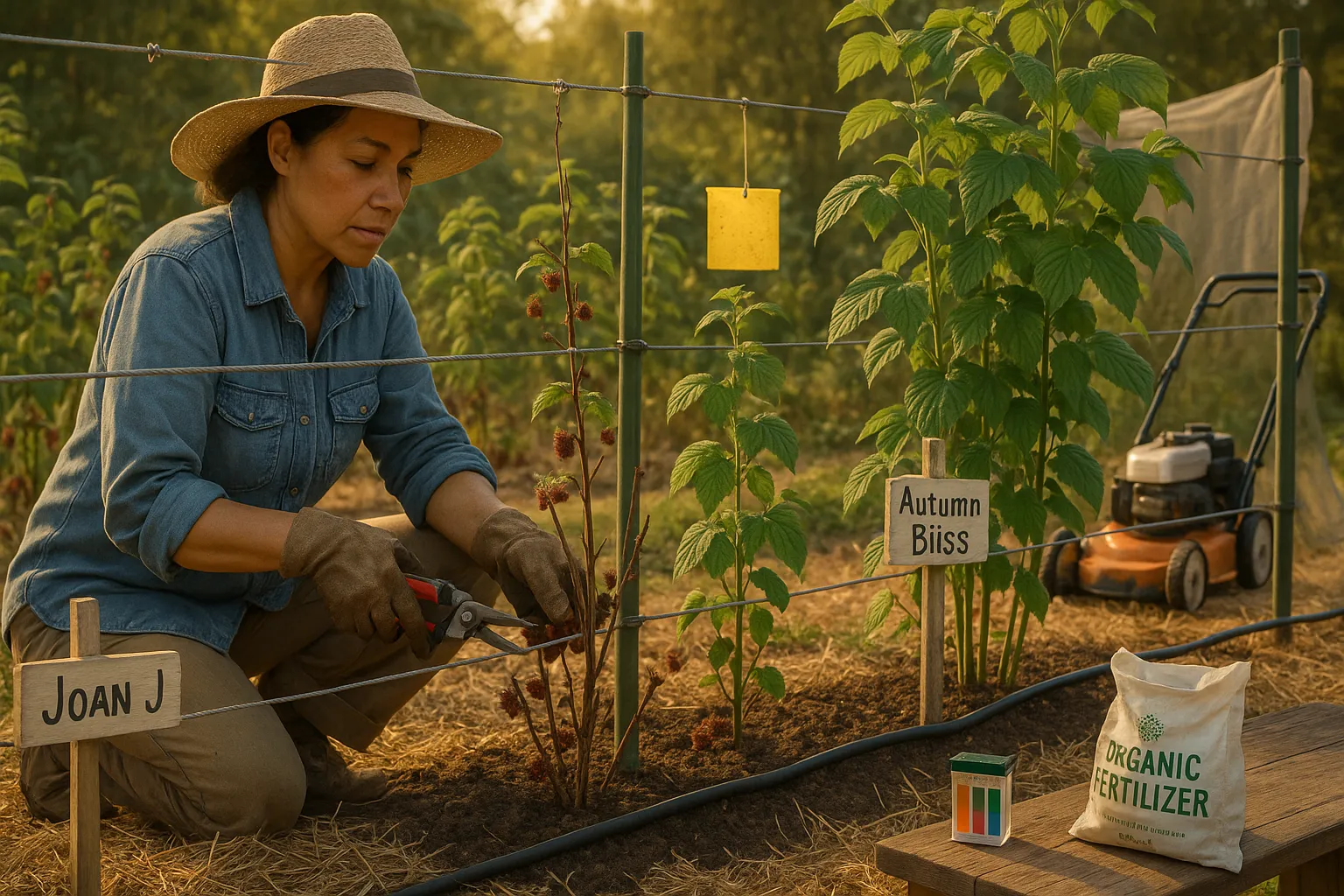
Prune ‘Joan J’ after harvest: remove spent floricanes to the crown. For ‘Autumn Bliss’ you have options: mow primocanes in late winter for a large single fall crop, or thin and train for both summer and fall production. Use T-posts and two-wire trellises or double-T systems for heavier canes.
Fertilization And Soil Management
Start with a soil test. Apply balanced fertilizer in early spring and again after heavy harvests. Organic matter boosts water-holding capacity and beneficial microbes. Mulch with straw or wood chips to conserve moisture and suppress weeds.
Common Pests, Diseases, And Management Strategies
Scout weekly for spotted wing drosophila near harvest, use exclusion netting and sanitation to reduce pressure. For cane diseases, remove and destroy infected canes and rotate planting sites if possible. Consider resistant rootstocks or certified virus-free plants to avoid long-term declines. Use pheromone traps for cane borer monitoring.
Landscape, Garden, And Commercial Uses
Fact: You can grow these raspberries for small-scale sale, private use, or as productive landscape shrubs.
Best Roles In Home Gardens And Small Orchards
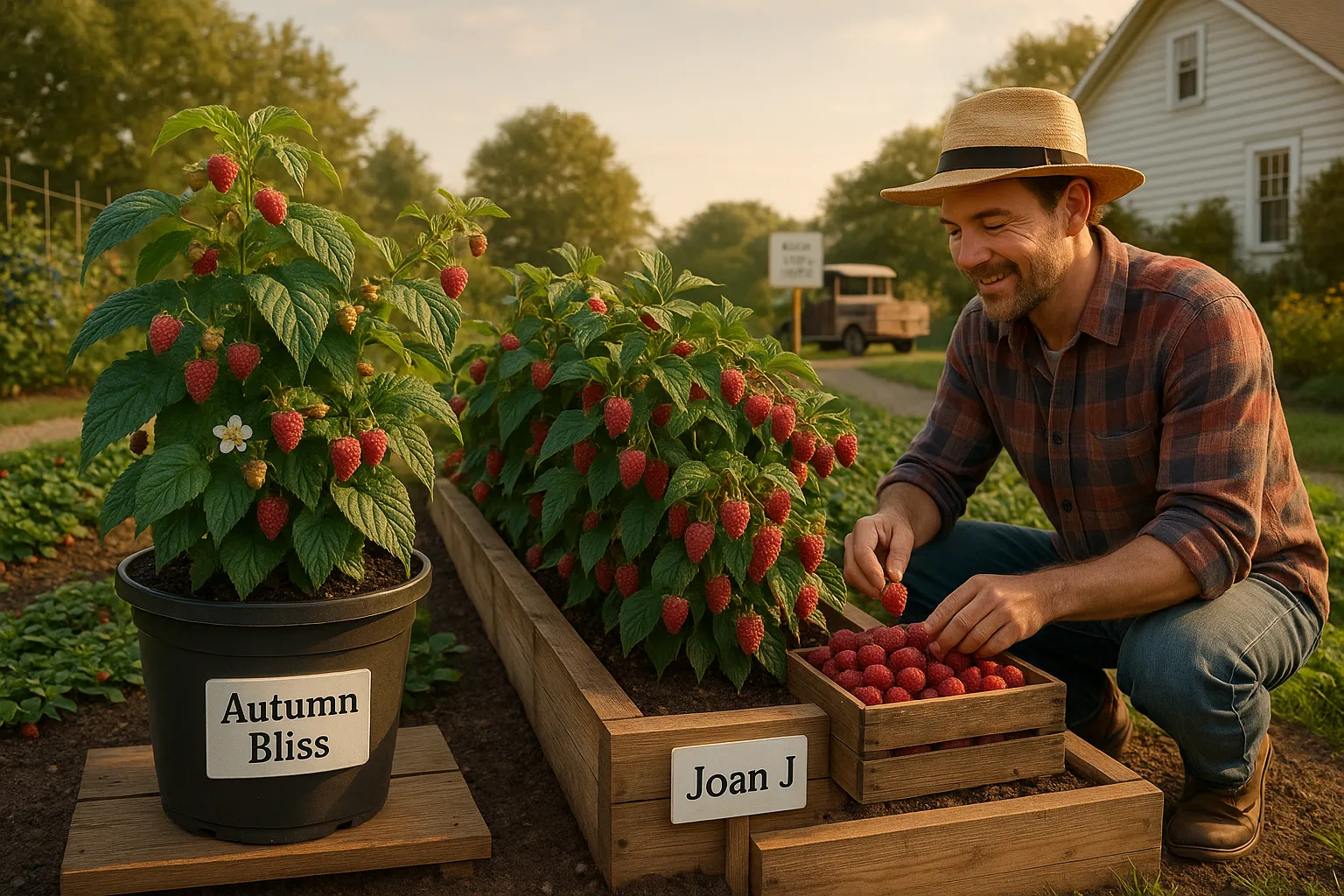
‘Autumn Bliss’ works well as a long-season edible hedge that gives repeated harvests for a household. ‘Joan J’ is ideal for a dedicated summer-bearing row if you want a big harvest for canning. Both can anchor mixed berry beds with strawberries and blueberries.
Suitability For Containers Or Urban Gardens
You can grow either cultivar in large containers, but ‘Autumn Bliss’ is the better container choice because of the repeated production and firmer fruit. Use a 20–30 gallon container with quality potting mix and regular feeding.
Commercial Production Considerations
Commercial growers favor ‘Joan J’ where a single, heavy harvest simplifies labor scheduling and processing. Processors and pick-your-own operations may prefer ‘Autumn Bliss’ for extended season sales. Consider labor, machine-harvest compatibility, and local market when choosing.
How To Choose Between ‘Autumn Bliss’ And ‘Joan J’
Fact: Your climate, space, and end use determine the better cultivar.
Decision Checklist Based On Climate, Space, And Goals
You want extended harvest and firmer fruit for fresh eating or freezing → choose ‘Autumn Bliss’.
You want a large single-season yield for canning or selling in bulk → choose ‘Joan J’.
You have limited space or containers → favor ‘Autumn Bliss’.
You need a simple summer-only pruning routine and minimal winter work → favor ‘Joan J’.
Recommendations For Home Growers Vs. Commercial Growers
Home growers who value fresh eating and staggered harvests should pick ‘Autumn Bliss’. Commercial growers aiming for high summer throughput and processing efficiency often pick ‘Joan J’. If you’re unsure, plant a few of each, many small-scale operations split rows to spread risk and seasonality.
Propagation, Availability, And Cost Considerations
Fact: Both varieties propagate readily, but availability and price vary by region and season.
Propagation Methods And Establishment Tips
You propagate ‘Autumn Bliss’ by tip layering or root cuttings: it also roots from suckers if you allow them. ‘Joan J’ also spreads by suckers and roots well from hardwood cuttings. Plant dormant, disease-free canes in early spring. Water well the first season and control weeds to allow root establishment.
Availability, Nursery Selection, And Cost Factors
Nurseries often sell both as bare-root stock in spring and as potted plants later. Certified virus-free stock costs more but reduces future issues. Prices vary: expect slightly higher cost for named certified cultivars versus generic raspberry starts. Buy from regional extension-recommended suppliers when possible to ensure cultivars match your climate.
Practical warning: cheaper plants can bring viruses or weak genetics. Spend a bit more for healthy starts: you’ll recover the cost in fewer losses and better yields.
To provide the best experiences, we use technologies like cookies to store and/or access device information. Consenting to these technologies will allow us to process data such as browsing behaviour or unique IDs on this site. Not consenting or withdrawing consent, may adversely affect certain features and functions.
Functional
Always active
The technical storage or access is strictly necessary for the legitimate purpose of enabling the use of a specific service explicitly requested by the subscriber or user, or for the sole purpose of carrying out the transmission of a communication over an electronic communications network.
Preferences
The technical storage or access is necessary for the legitimate purpose of storing preferences that are not requested by the subscriber or user.
Statistics
The technical storage or access that is used exclusively for statistical purposes.The technical storage or access that is used exclusively for anonymous statistical purposes. Without a subpoena, voluntary compliance on the part of your Internet Service Provider, or additional records from a third party, information stored or retrieved for this purpose alone cannot usually be used to identify you.
Marketing
The technical storage or access is required to create user profiles to send advertising, or to track the user on a website or across several websites for similar marketing purposes.