Imagine never running out of hot water, even during those long, relaxing showers on a chilly morning. A tankless water heater promises just that—instant, endless hot water without the bulky storage tank. It’s a sleek, modern solution that’s gained popularity for its energy efficiency and space-saving design. But is it the perfect fit for your home?
While the idea of on-demand hot water sounds appealing, it’s essential to weigh the benefits against potential drawbacks. From reduced energy bills to higher upfront costs, a tankless water heater comes with its own set of trade-offs. Understanding these pros and cons can help you decide if this innovative system aligns with your needs and budget. So, is the tankless revolution worth it? Let’s immerse.
What Is A Tankless Water Heater?
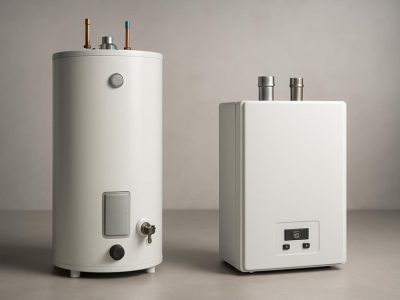
A tankless water heater, often called an on-demand water heater, heats water directly without storing it in a tank. It uses either electric coils or gas burners to heat water as it flows through the unit. Unlike traditional storage water heaters, there’s no waiting for a storage tank to refill or reheat after use.
Water is heated instantly when you turn on the faucet, offering a continuous supply. For example, you can take a long shower without running out of hot water. It eliminates standby heat loss, which occurs in tank-based systems. According to the Department of Energy, this can improve energy efficiency by 24-34% for homes using less than 41 gallons daily.
Tankless systems are compact, saving space. They’re typically mounted on walls or in tight areas, making them ideal for homes with limited space. If your home has multiple bathrooms or high water usage, specific models with higher flow rates can support simultaneous usage, ensuring consistent hot water across different fixtures.
But, the system’s capacity depends on the flow rate. For instance, while it may handle a single shower and dishwasher simultaneously, adding a second shower could exceed its limitations. Understanding this helps you evaluate your household’s hot water needs.
How Does A Tankless Water Heater Work?
Tankless water heaters operate by heating water directly as it flows through the system, eliminating the need for a storage tank. When you turn on a hot water faucet, cold water travels through a pipe into the unit. Gas burners or electric coils heat the water instantly, providing an on-demand supply.
These systems monitor water flow and temperature to adjust heating levels in real-time. For example, if two showers are running simultaneously, the unit increases its output to maintain consistent water temperature. But, exceeding the unit’s maximum flow rate can lead to a decrease in performance, resulting in cooler water temperatures.
Energy efficiency is a standout feature of tankless heaters. By avoiding standby heat loss associated with storage tanks, they conserve energy. According to the Department of Energy, homes using under 41 gallons of hot water daily can achieve energy savings of 24-34%. For larger households, the efficiency rate typically ranges from 8-14%.
Installation involves connecting the system to your home’s water and energy sources. Wall-mounted designs save space, making them well-suited for smaller homes. But, to meet higher water demands, larger or multiple tankless units may be required. Knowing your household’s peak usage patterns is critical to choosing the right model.
Pros Of A Tankless Water Heater
Tankless water heaters offer several benefits, making them a popular choice for modern households. Their design, efficiency, and performance provide practical advantages tailored to diverse needs.
Energy Efficiency
Tankless systems eliminate standby heat loss by heating water only when needed. Traditional storage heaters continuously reheat water, consuming more energy. The Department of Energy reports that homes using less than 41 gallons of hot water daily can save 24-34% in energy consumption. Meanwhile, larger households using around 86 gallons still achieve savings of 8-14%.
For example, a small family in a two-bedroom home might reduce their annual energy bill significantly with a tankless system. Efficient energy usage translates not only into savings but also reduces your carbon footprint, an advantage worth considering.
Endless Hot Water Supply
On-demand heating ensures you never run out of hot water, regardless of usage duration. Instead of waiting for a storage tank to refill, tankless units heat water as it flows through the system. This makes them ideal for families or shared homes with high simultaneous hot water usage.
Imagine running the dishwasher while your partner enjoys a long shower—tankless systems maintain consistent water temperature without interruptions. But, exceeding the maximum flow rate may result in a drop in temperature, so matching your system’s capacity with your household’s peak usage is crucial.
Space-Saving Design
Tankless water heaters are compact and can be mounted on walls. Unlike traditional water heaters, they eliminate the need for a bulky storage tank, saving valuable floor space. This feature is particularly useful for smaller homes, apartments, or utility areas where space is limited.
For instance, a 1,000-square-foot urban condo might lack the room for a standard 50-gallon tank, making a tankless unit a better fit. Wall-mounted designs also allow more flexibility for storage or additional installations in utility rooms.
Longevity And Durability
Tankless models often last longer than traditional water heaters. Their lifespan typically ranges from 20-25 years, compared to 10-15 years for conventional systems. With proper maintenance, they outlast their counterparts and offer long-term value.
Corrosion-resistant components and a design that avoids constant water storage contribute to their durability. If you’re contemplating an investment for the long haul, a tankless heater ensures reliability and reduced replacement frequency, saving money over time. Also, manufacturer’s warranties often range from 10-15 years, adding an extra layer of assurance for buyers.
Cons Of A Tankless Water Heater
While tankless water heaters offer many advantages, they come with certain downsides that should be carefully considered before installation.
Higher Initial Cost
The upfront cost of a tankless water heater is substantially higher compared to traditional models. Purchase prices range between $500-$2,000, excluding installation fees, which can add another $1,000-$3,000 depending on your home’s existing setup. A conventional storage-tank water heater, by comparison, costs less than $500 on average. Although energy savings can offset this expense over time, the initial investment might not align with every household’s budget.
Limited Hot Water Flow Rate
Tankless water heaters have a maximum flow rate, meaning they might struggle to provide hot water during peak usage. Units generally deliver 2-5 gallons per minute (GPM), with gas models typically offering higher flow rates than electric ones. For example, taking a shower (2 GPM) while running a dishwasher (1.5 GPM) can exceed the capacity of smaller units, leading to insufficient heat. In colder regions, even lower groundwater temperatures can affect performance. Understanding your household’s peak demand is essential to minimizing this issue.
Complex Installation Process
Installing a tankless water heater requires professional expertise. Retrofitting gas lines, upgrading electrical systems, and ensuring proper venting significantly add to the installation cost and complexity. For instance, gas units may require higher BTU capacities, needing a larger gas supply line or a specialized venting system. Improper installation can result in safety risks, such as carbon monoxide leaks or insufficient water pressure, further underscoring the importance of certified installers.
Potential Maintenance Requirements
Mineral buildup from hard water poses a frequent challenge for tankless systems. Routine descaling every 1-2 years is necessary to maintain efficiency, especially in areas with high mineral content. Neglecting maintenance could reduce efficiency or clog the heat exchanger, shortening the unit’s lifespan. You might also need to install a water softener to combat hard water issues, increasing ownership costs. Regular inspections and flushing ensure optimal performance but require ongoing commitment.
Factors To Consider Before Choosing A Tankless Water Heater
Evaluating several factors ensures the right tankless water heater for your home. Your household’s unique needs and circumstances play a significant role in your decision.
Household Size And Hot Water Demand
Your household size determines hot water needs. For example, a family of four might require higher flow rates compared to a single individual. Tankless water heaters have maximum flow rates measured in gallons per minute (GPM). A standard unit can support 2-5 GPM depending on type and energy source.
Consider simultaneous usage. Running two showers and a dishwasher might exceed a single unit’s capacity, leading to temperature drops. If your home often uses multiple outlets at once, larger models or multiple heaters might be necessary. Evaluate peak-hour demand by listing activities requiring hot water, such as showering, washing dishes, or laundry. This helps in selecting a model that effectively meets your needs.
Initial Budget And Long-Term Savings
Tankless water heaters cost $500-$2,000 before installation, with professional setup adding $1,000-$3,000. These expenses can seem high initially. But, their energy efficiency offsets long-term operational costs. According to the U.S. Department of Energy, homes using less than 41 gallons daily can save 24-34% in energy costs compared to traditional heaters.
Maintenance expenses affect cost calculations. For instance, regular descaling prevents mineral buildup, protecting efficiency and lifespan. Consider investing in a water softener in hard water regions. Over 20-25 years, the longer lifespan of tankless units can reduce replacement costs, providing additional savings over time.
Local Climate And Water Conditions
Your region’s climate impacts heating efficiency. In colder areas, groundwater temperatures are lower, requiring more energy to heat water to the desired temperature. Ensure the tankless heater can meet your heating needs based on local weather patterns. Manufacturers often provide temperature rise capabilities in their specifications.
Water quality is another key factor. Hard water, prevalent in many areas, can cause scaling within the unit. This reduces efficiency and increases maintenance needs. If you live in a region with hard water, consider a water conditioning system alongside your tankless heater to prevent mineral accumulation.
Conclusion
Choosing a tankless water heater comes down to understanding your household’s specific needs and priorities. While the energy efficiency, space-saving design, and endless hot water are appealing, the higher upfront costs and potential limitations during peak usage require careful consideration.
By evaluating your hot water demand, budget, and maintenance capabilities, you can determine if a tankless system aligns with your lifestyle. Investing in the right model can provide long-term savings and convenience, making it a worthwhile upgrade for many homes.
To provide the best experiences, we use technologies like cookies to store and/or access device information. Consenting to these technologies will allow us to process data such as browsing behaviour or unique IDs on this site. Not consenting or withdrawing consent, may adversely affect certain features and functions.
Functional
Always active
The technical storage or access is strictly necessary for the legitimate purpose of enabling the use of a specific service explicitly requested by the subscriber or user, or for the sole purpose of carrying out the transmission of a communication over an electronic communications network.
Preferences
The technical storage or access is necessary for the legitimate purpose of storing preferences that are not requested by the subscriber or user.
Statistics
The technical storage or access that is used exclusively for statistical purposes.The technical storage or access that is used exclusively for anonymous statistical purposes. Without a subpoena, voluntary compliance on the part of your Internet Service Provider, or additional records from a third party, information stored or retrieved for this purpose alone cannot usually be used to identify you.
Marketing
The technical storage or access is required to create user profiles to send advertising, or to track the user on a website or across several websites for similar marketing purposes.