MDF and particle board—they look so similar at a glance, like twins in a crowd.
But beneath that surface, a silent battle unfolds—small differences that can turn your project from a masterpiece into a headache.
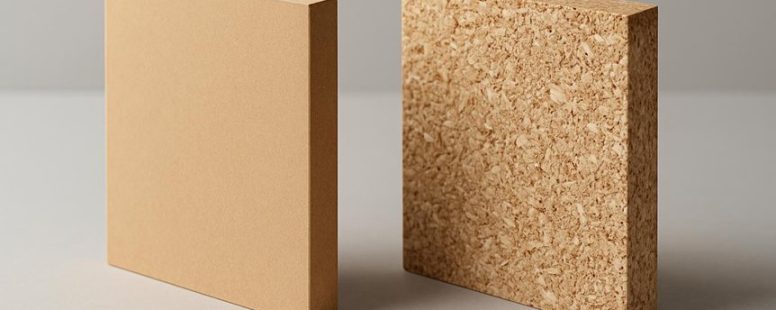
Imagine the feel of slick, smooth MDF versus the rough, crumbly texture of particle board.
One might surprise you with its lightweight strength, making your work easier and less tiring.
Choosing the right one could be the difference between a flawless finish and a costly mistake.
Let’s uncover what truly sets them apart before you make your final call.
What’s Inside MDF and Particle Board
MDF and particle board are two common wood-based materials used in furniture and building projects. MDF stands for medium-density fiberboard. It is made from very fine wood fibers that are bonded together with heat and pressure. This makes it a smooth and dense panel, perfect for detailed work like cabinets or decorative surfaces. Particle board, on the other hand, is made from larger wood chips and shavings combined with resin. It is lighter and less dense than MDF, which makes it cheaper but also weaker.
The differences in density affect how you should use these materials. MDF is better if you want a smooth finish and good soundproofing, making it great for indoor furniture. It also holds paint and veneer well. Particle board costs less, so it’s good for budget projects where strength isn’t the main concern, like simple shelves or furniture that won’t see much wear.
Environmental impact can vary. Some brands use eco-friendly glues and sustainable wood, but others don’t. Be careful when choosing, especially if you want a greener option.
Strength and Durability: MDF vs Particle Board
MDF is stronger and lasts longer than particle board. If you want furniture or shelves that can hold weight, MDF is the better choice. It is denser and can handle more stress without cracking or chipping. For example, a bookshelf made from MDF is less likely to break when you put heavy books on it.
Particle board is cheaper but weaker. It tends to get damaged easily if you put heavy things on it or if it gets bumped. For instance, a cheap desk made from particle board might bend or crack after a few months of use. If your project needs to last a long time and support weight regularly, MDF is the safer pick.
Some people might think particle board is good because it costs less, but it might not be worth it in the long run if it breaks easily. Also, MDF is heavier and harder to work with, so consider that. Both materials can be good depending on what you need, but for strength and durability, MDF usually wins.
Would you prefer a cheap, quick fix or something that lasts longer? Think about how much weight you plan to put on your furniture before choosing.
Appearance and Finish: MDF vs Particle Board
MDF has a smoother surface that looks better when painted or stained compared to particle board. Particle board often shows rough edges and visible seams, which can make the final look less neat. This difference matters if you want a clean, polished finish for your furniture or project.
Some people prefer MDF because it takes paint evenly and creates a sleek appearance. But remember, MDF can be more expensive and heavier. Particle board is cheaper and lighter but may need extra sanding and finishing to hide rough edges.
If you plan to paint a piece of furniture, MDF usually gives a nicer, more professional look. But if you are on a budget and don’t mind some extra work, particle board can work, especially if you cover the edges with trim or veneer.
Both materials have their pros and cons. MDF looks better and is easier to finish, but it can be more fragile and more expensive. Particle board is cheaper and lighter but might need more effort to get a good look. Think about what matters most for your project and choose based on that.
Surface Texture Differences
MDF usually has a much smoother surface than particle board. This makes MDF a better choice if you want a clean, professional look on your project. Its tiny fibers create a flat finish with few bumps or rough patches. Because of this, sanding and finishing MDF is much easier. It’s often used for furniture, cabinets, and detailed craft projects where appearance really matters.
Particle board, however, has a rougher surface. It’s made of wood chips and resin pressed together, which creates more texture. You might feel bumps or porous spots on its surface. If you don’t sand or treat it well, these areas might show up in the final look. Particle board is cheaper than MDF but isn’t as smooth or durable on visible surfaces.
There are two sides to consider. MDF gives a sleek, smooth finish and is easier to work with if you want a polished look. But, it can be more expensive and prone to water damage if not sealed properly. Particle board is less costly and good for hidden parts of furniture where appearance isn’t a big concern. Still, if you plan to paint or stain your project, MDF often provides a better finish with fewer extra steps.
Think about your project needs. Do you want a smooth surface that looks professional? MDF might be your best bet. But if cost is a big factor and the surface won’t show much, particle board could work. Just remember, both materials have their strengths and limitations, so choose what fits your project best.
Paint and Stain Compatibility
Paint and stain don’t work the same on all materials. Here’s what you need to know:
MDF is a softwood board that needs sealing before staining. If you skip this step, it can get blotchy and uneven. A good wood conditioner or primer helps the stain look smooth and even. Think of it like priming a wall before painting—without it, the finish can look patchy.
Particle board is made of wood chips glued together. Its surface is very porous, so painting can be tricky without proper priming. Applying a quality primer helps paint stick better and prevents the surface from soaking up too much paint, which can cause streaks or uneven color. Some people try to skip priming to save time, but then the finish looks cheap or uneven.
Both MDF and particle board benefit from a good primer. It’s like giving the surface a sticky base so paint or stain can grip well. Without primer, the finish can peel or chip faster, especially on these softer materials.
When choosing between stain and paint, paint is usually more reliable on MDF and particle board. Stain can highlight the grain on real wood, but on these materials, it can look uneven or blotchy unless you’re experienced. Paint covers better and hides imperfections, giving you a smooth look every time.
Here’s a quick tip: ask yourself what look you want. Do you want the natural wood grain showing? Stain might be the way. Want a bright, uniform color? Paint is safer. Both options require prep work, so don’t skip priming or sealing.
In the end, picking the right finish depends on your project, skill, and patience. Remember, rushing can ruin the look. Take your time with proper prep and choose the finish that matches your style.
Visible Seams and Edges
Seams and edges are the main concerns with MDF and particle board projects. Seam visibility is important because it affects how professional your finished project looks. MDF tends to have less noticeable seams because it has a uniform density, making it easier to cut cleanly and sand smoothly. Particle board often shows rougher edges and more visible seams because of its coarse texture.
Edge finishing is key here. With MDF, you can easily add veneer or paint to hide seams and create a smooth look. Particle board needs more prep work, like sanding and applying edge banding, to hide imperfections. If you want a project with minimal seams and sharp edges without much hassle, MDF usually is the better choice.
But, be careful. MDF can be more expensive and heavy, which might not suit all projects. Particle board is cheaper and lighter but needs more work to look good. So, consider what matters most for your project—cost, weight, or a clean finish.
Would you prefer easy finishing or saving money? Both options have their pros and cons. Decide what fits your project best.
Which Material Is Easier to Cut, Drill, and Shape?
When choosing between materials for cutting, drilling, and shaping, MDF is generally easier to work with than particle board. This is because MDF tends to cut cleaner and more precisely. It also holds screws better and doesn’t crumble as easily as particle board does.
If you want smooth edges when cutting, MDF is a better choice. It responds well to power tools like saws and drills, giving you a neater finish. For example, if you’re making a bookshelf, MDF will let you get tight joints without chipping. On the other hand, particle board can break apart or chip when you cut or drill into it, making it messier to work with.
However, some people say MDF is heavier and can produce more dust when cut. It also absorbs paint and glue more evenly, which helps with finishing. Particle board, being lighter, might seem easier to handle, but it often needs more sanding and touch-up afterward.
Cutting Precision Differences
MDF is better for cutting with precision than particle board. This is because MDF has a smooth, uniform surface that makes it easier to cut, drill, and shape accurately. When you use tools like fine-toothed blades or routers, MDF cuts cleanly without splintering. It also holds edges well, so your finished project looks neat.
Particle board, on the other hand, often chips and crumbles when cut. This makes it harder to get straight, accurate lines. If you want sharp, precise edges and less frustration, MDF is the best choice for projects that need detailed work.
Here’s how to get the best cuts with MDF:
Use sharp, fine-toothed blades or routers.
Cut slowly and steadily to avoid splintering.
Support the board well to prevent bending during cutting.
Sand the edges after cutting for an even finish.
Some people prefer particle board because it costs less, but it may not give you the precision you want. Be aware that MDF can produce dust that’s harmful if inhaled over time, so always wear a mask. Also, MDF might be heavier than particle board, which can be a concern for larger projects.
In short, if you want clean cuts and sharp edges, MDF is the better choice. But if cost is a big factor and you don’t mind rougher edges, particle board might work. Both have their uses, but for detailed and precise work, MDF wins.
Drilling And Shaping Ease
Drilling and shaping MDF is easier than working with particle board. MDF, which stands for medium-density fiberboard, has a smooth and dense surface. This makes cutting cleaner and reduces splinters. Because of this, standard drill bits work well without causing damage. Particle board, on the other hand, tends to chip and crumble when drilled or shaped. It often needs special drill bits and extra care to avoid breakage.
When shaping these materials, MDF responds better to tools like routers and saws. It gives smooth edges every time. Particle board’s rough surface often leads to uneven shapes. It usually needs more sanding to make it look good.
Some people might think particle board is cheaper, but that can mean more work and frustration. MDF is more forgiving for beginners because it’s easier to work with. Still, MDF is heavier and can produce dust that irritates eyes and lungs, so wearing a mask is smart.
If you want a material that is easier to drill and shape, MDF is the better choice. It’s more practical if you need precision and a clean look. But if cost is the main concern and you don’t mind extra work, particle board can be okay — just be prepared for more chips and mess.
How Moisture Impacts MDF vs Particle Board
Moisture is a big problem for both MDF and particle board, but they react differently when exposed to water. MDF tends to soak up water faster, which causes it to swell, weaken, and can even make it fall apart. Particle board also gets damaged by water, but if it’s sealed properly, it can resist moisture a little better. Still, neither material is great for humid places unless you add a protective coating.
Imagine leaving a sponge and a crumbly cookie in the rain. The sponge quickly absorbs water and gets heavy, while the cookie might hold up a bit longer if it’s well wrapped. This shows how MDF is like the sponge—quick to soak up water—while particle board can resist a little longer if protected. But if water keeps seeping in, both will eventually fail. Water damage might cause warping, crumbling, or breakage, making your furniture or project useless.
Some people say sealing or coating the surfaces helps. That’s true, but it’s only a temporary fix. MDF and particle board are still vulnerable over time, especially in places with lots of humidity or spills. For example, using MDF for a bathroom cabinet without proper sealing can lead to quick damage. On the other hand, particle board can hold up a little better if sealed well, but it’s not guaranteed to last forever.
You might ask, is one better than the other? Well, if you want a material that resists moisture slightly better and is cheaper, particle board could be a choice. But for areas prone to water, you might want to look at plywood or specialized water-resistant boards instead.
Beware, no matter what, both materials are prone to water damage if not protected. Rushing into a project with MDF or particle board without thinking about moisture can lead to costly repairs or replacements later. So, always consider the environment where you’ll use them. Moisture resistance is not the same for everyone, and understanding these differences can save you time and money.
Choosing MDF or Particle Board for Your Project
When choosing between MDF and particle board, you should first think about how and where you’ll use the material. MDF is a good choice if you want a smooth surface that’s easy to paint or carve. It’s also better if your project needs lots of detailed work. Particle board, on the other hand, is lighter and usually costs less. This makes it a good pick for budget projects or things that don’t need to last a long time.
Money is a big factor when picking material. Particle board is cheaper, so it’s often used in furniture that doesn’t need to be super strong. But if you want something more durable or a nicer look, MDF might be the better choice even if it costs more. Also, think about moisture. MDF handles water better than particle board, so it’s better for projects that might get damp or humid.
Some people worry about the strength of these materials. Particle board can break easier if you put too much weight on it, while MDF is denser and stronger. But remember, MDF weighs more and can be more difficult to work with if you don’t have the right tools.
Both materials have their pros and cons. If you need something cheap and light for a short-term project, particle board might be best. If you want a smooth, paint-ready surface and more durability, MDF is worth the extra cost. Think about what matters most for your project—cost, look, or strength—and pick accordingly. Just remember that no matter what you choose, it’s good to double-check if the material suits your specific needs.
Project Examples: MDF vs Particle Board in Use
Choosing the right type of board matters a lot in making furniture or remodeling your home. Let’s look at the two popular options: MDF and particle board. Each has its strengths and weaknesses.
MDF, or Medium Density Fiberboard, is known for its smooth surface. This makes it perfect when you want to paint or add decorative details. For example, if you’re making a fancy headboard or detailed moldings, MDF is a good choice because it cuts cleanly and looks nice after finishing. But keep in mind, MDF is heavier and can absorb moisture if not sealed properly. It’s also more expensive than particle board, so if you are on a tight budget, it might not be the best option.
Particle board is made from small wood particles glued together. It’s cheaper and lighter than MDF. Many people use particle board for kitchen cabinets or simple shelves because it’s affordable and strong enough for everyday use. However, it doesn’t hold up well when it gets wet, and it can easily break if it’s loaded with heavy stuff. So, if you want something durable for long-term use, consider other materials or reinforce the particle board.
Some people prefer MDF for projects that need a nice finish or detailed cuts. For example, a DIYer painting a custom piece would pick MDF because it accepts paint well. Others might choose particle board for quick, budget-friendly furniture in an office or garage. But don’t forget, neither material is perfect. MDF can be more costly and messy to work with, while particle board might fall apart if not supported properly.
In the end, think about your project’s needs. Do you want a smooth, painted look? MDF might be better. Need something cheap and simple? Particle board can work. Just be aware of each material’s limits, especially with moisture and weight. Picking the right board can save you time and money, but knowing when each one shines is key.
To provide the best experiences, we use technologies like cookies to store and/or access device information. Consenting to these technologies will allow us to process data such as browsing behaviour or unique IDs on this site. Not consenting or withdrawing consent, may adversely affect certain features and functions.
Functional
Always active
The technical storage or access is strictly necessary for the legitimate purpose of enabling the use of a specific service explicitly requested by the subscriber or user, or for the sole purpose of carrying out the transmission of a communication over an electronic communications network.
Preferences
The technical storage or access is necessary for the legitimate purpose of storing preferences that are not requested by the subscriber or user.
Statistics
The technical storage or access that is used exclusively for statistical purposes.The technical storage or access that is used exclusively for anonymous statistical purposes. Without a subpoena, voluntary compliance on the part of your Internet Service Provider, or additional records from a third party, information stored or retrieved for this purpose alone cannot usually be used to identify you.
Marketing
The technical storage or access is required to create user profiles to send advertising, or to track the user on a website or across several websites for similar marketing purposes.