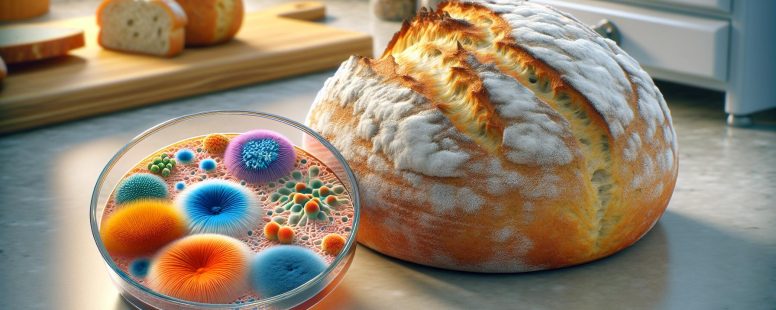
Picture this: you’re baking fresh bread, and the aroma of yeast fills the air. Now, contrast that with the sight of fuzzy mold creeping across forgotten leftovers in your fridge. Both yeast and mold belong to the fungi kingdom, yet they couldn’t be more different in their roles and impact on your daily life. One helps create, while the other often signals decay.
You might encounter these tiny organisms more often than you realize, but do you know what truly sets them apart? From their structure to their uses—and even their effects on health—yeast and mold have unique traits that influence everything from food production to medicine. Understanding these differences not only satisfies curiosity but also empowers you to make better decisions in your kitchen and beyond. So, what makes yeast the hero of fermentation and mold the culprit of spoilage? Let’s jump into their intriguing area.
Overview Of Yeast And Mould
Yeast and mold are microorganisms within the fungi kingdom, yet their characteristics and applications differ vastly. They interact with your environment, food, and even health in unique ways.
What Is Yeast?
Yeast, a type of unicellular fungi, thrives in environments rich in sugars. It’s used extensively in brewing, baking, and biofuel production. Saccharomyces cerevisiae, commonly referred to as baker’s yeast, facilitates the fermentation process, releasing carbon dioxide and ethanol.
Yeast reproduces asexually through budding and prefers anaerobic conditions for fermentation. With over 1,500 species identified, each type serves specific purposes. For example, some species aid probiotics by supporting gut health, while others, like pathogens, can cause infections under certain conditions.
What Is Mould?
Mold exists as multicellular fungi and forms thread-like structures known as hyphae. These hyphae create a network called mycelium, visible as the fuzzy growth on decomposing food. Mold prefers damp, warm conditions but can also grow in cold or acidic environments.
Molds like Penicillium notatum play pivotal roles in producing antibiotics, while others contribute to making cheeses. Yet, harmful molds like Aspergillus can generate mycotoxins, contaminating food and impacting human health. Mold reproduces through spore formation, aiding in its widespread distribution via air and surfaces.
Key Differences Between Yeast And Mould
Yeast and mould share the fungi kingdom yet exhibit distinct differences in their characteristics. You can observe these differences in their structure, reproduction, and growth environments.
Cellular Structure
Yeast consists of unicellular organisms, meaning each cell functions independently. The single-cell structure allows it to thrive in fermentation, breaking down sugars into alcohol and carbon dioxide. This property makes it essential in industries like baking and brewing.
Mould, unlike yeast, is multicellular. It forms hyphae, which collectively create a mycelium network. These interconnected structures support nutrient absorption and make molds adaptable to diverse surfaces, from bread to building materials. For example, black mold (Stachybotrys chartarum) grows in damp areas by penetrating layers for sustenance.
Reproduction Methods
Yeast reproduces asexually, primarily through budding. A smaller daughter cell detaches from the parent yeast cell to form a new organism. But, some species under certain conditions exhibit sexual reproduction via spore formation, enhancing genetic diversity.
Mould reproduces by producing spores, which disperse through air, water, or animals. These spores, resistant against harsh environments, enable mold proliferation. For instance, Aspergillus releases airborne spores leading to rapid colonization in moist settings.
Growth Conditions
Yeast grows best in sugar-rich, oxygen-limited conditions but can adapt to aerobic environments. It prefers moderate temperatures, around 30°F to 37°F, used in baking and brewing processes effectively.
Mould thrives in damp, warm but can also survive cold or acidic conditions. Its adaptability allows colonization of refrigerators, spoiled food, or humid walls. Not all molds are harmful—Penicillium, under controlled methods, enhances blue cheese production.
Applications Of Yeast And Mould
Yeast and mold serve diverse roles across multiple industries, leveraging their unique biological properties. From food production to pharmaceuticals, understanding their applications highlights their impact on society.
Common Uses Of Yeast
Yeast drives fermentation processes critical in food and beverage manufacturing. Saccharomyces cerevisiae, for example, is essential for baking, transforming sugars into ethanol and carbon dioxide. This reaction helps bread rise and infuses alcoholic beverages with distinct flavors.
Biofuel industries also rely on yeast to produce ethanol as an alternative energy source. Also, yeast contributes to biotechnology, where specific strains aid in producing insulin and other recombinant proteins. Some species, such as Saccharomyces boulardii, promote gut health and address gastrointestinal disorders, underscoring its medicinal value.
Common Uses Of Mould
Mold plays a significant role in producing antibiotics and food enhancement. Penicillium notatum, for example, is the source of penicillin, an antibiotic that transformed medicine by battling bacterial infections. In food production, molds like Penicillium roqueforti impart unique flavors and textures to blue cheeses.
Industries use molds to synthesize enzymes and organic acids. Aspergillus niger, for instance, is instrumental in creating citric acid used in foods, beverages, and pharmaceuticals. Mold also supports biotechnology through bioremediation, breaking down environmental pollutants into less harmful substances.
Even though its benefits, mold’s risks arise if exposure occurs to hazardous species. Toxigenic molds, such as Aspergillus flavus, can produce mycotoxins that contaminate crops and pose health risks. This example reinforces the need for understanding and managing its dual nature responsibly.
Health Impacts Of Yeast And Mould
Positive Effects
Both yeast and mold can offer health benefits in controlled scenarios. Yeast, such as Saccharomyces cerevisiae, supports gut health by promoting a balanced microbiome. Probiotic strains like Saccharomyces boulardii are used to treat diarrhea and maintain digestive harmony. Yeast also contributes to the synthesis of essential vitamins, including B-complex vitamins, which support energy production.
Certain molds, when carefully cultivated, contribute to antibiotic production. For instance, Penicillium notatum played a crucial role in the discovery of penicillin, revolutionizing medical treatments for bacterial infections. Also, molds like Penicillium roqueforti enhance cheese flavors and textures, creating gourmet products appreciated worldwide.
Potential Risks
Exposure to harmful molds or certain pathogenic yeasts can pose health risks. Mycotoxins, produced by molds like Aspergillus flavus, contaminate grains, nuts, and dairy, potentially causing liver damage and immunosuppression if ingested over time. Spores released by molds, such as Stachybotrys chartarum (black mold), trigger respiratory issues, allergic reactions, and chronic sinus infections when inhaled.
Pathogenic yeast species, including Candida albicans, may cause infections such as thrush or systemic candidiasis, particularly in individuals with weakened immune systems. Overgrowth of Candida also disrupts natural flora, leading to complications like vaginal yeast infections.
To minimize these risks, prioritize mold remediation in damp indoor spaces and follow food storage guidelines to prevent microbial growth. Seek guidance from healthcare professionals if signs of fungal-related health conditions arise.
Conclusion
Understanding the differences between yeast and mold helps you appreciate their roles in your daily life. While yeast contributes to essential processes like baking and fermentation, mold showcases both beneficial and harmful traits, influencing everything from food production to health. By recognizing their unique characteristics and applications, you can make informed decisions about their use and management. Whether you’re baking bread or addressing mold in your home, this knowledge empowers you to handle these fungi with confidence and care.
To provide the best experiences, we use technologies like cookies to store and/or access device information. Consenting to these technologies will allow us to process data such as browsing behaviour or unique IDs on this site. Not consenting or withdrawing consent, may adversely affect certain features and functions.
Functional
Always active
The technical storage or access is strictly necessary for the legitimate purpose of enabling the use of a specific service explicitly requested by the subscriber or user, or for the sole purpose of carrying out the transmission of a communication over an electronic communications network.
Preferences
The technical storage or access is necessary for the legitimate purpose of storing preferences that are not requested by the subscriber or user.
Statistics
The technical storage or access that is used exclusively for statistical purposes.The technical storage or access that is used exclusively for anonymous statistical purposes. Without a subpoena, voluntary compliance on the part of your Internet Service Provider, or additional records from a third party, information stored or retrieved for this purpose alone cannot usually be used to identify you.
Marketing
The technical storage or access is required to create user profiles to send advertising, or to track the user on a website or across several websites for similar marketing purposes.