Picture this: you’re baking bread, and the recipe calls for yeast, but then you remember spotting mold on an old loaf in your pantry. Both are tiny fungi, yet they couldn’t be more different in how they behave and impact your world. Have you ever wondered what truly sets them apart?
From the fluffy rise of your favorite dough to the fuzzy invader on forgotten leftovers, yeast and mold play distinct roles in your daily life. One is a hero in food and drink production, while the other often signals spoilage. Understanding their differences isn’t just fascinating—it can also help you make better choices in your kitchen and beyond.
So, what makes yeast a culinary ally and mold a potential nuisance? Let’s jump into the intriguing area of these microscopic organisms and uncover what makes each unique.
Overview Of Yeast And Mold
Yeast and mold are two distinct types of fungi that profoundly influence food, health, and the environment. Though both are microscopic, their characteristics and roles vary significantly.
What Are Yeasts?
Yeasts are single-celled fungi commonly found in soil, fruits, and human skin. They reproduce asexually through a process called budding. Saccharomyces cerevisiae, or baker’s yeast, is one of the most well-known species used in baking and brewing.
Yeasts play a critical role in fermentation. They convert sugars into alcohol and carbon dioxide, enabling bread to rise and alcohol production in beverages like beer and wine. Some yeasts are used in probiotics for their health benefits, such as improving digestion. Examples include Candida utilis, which is used in animal feed, and Kluyveromyces lactis, often used in dairy.
But, certain yeast species, like Candida albicans, can cause infections. This highlights how yeast impacts both beneficial and harmful processes.
What Are Molds?
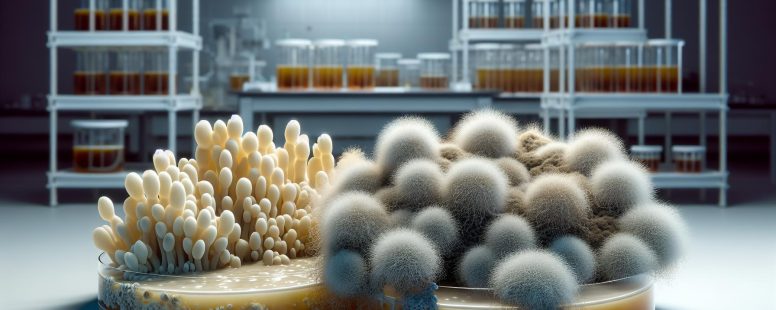
Molds are multicellular fungi that grow as branching filaments called hyphae. These filaments form a network, or mycelium, visible to the naked eye. Mold thrives in warm, moist environments and reproduces via spores that are easily spread through the air.
Molds are known for causing food spoilage, appearing as fuzzy growths on items like bread and fruit. Common examples include Rhizopus stolonifer (black bread mold) and Penicillium species, which spoil fruits but contribute to antibiotics and cheese production.
While molds are often viewed as harmful, they also play essential roles. Penicillium notatum, for instance, was the source of the first antibiotic, penicillin. Aspergillus oryzae aids in the fermentation of soy sauce and sake.
Mold exposure can pose health risks, especially when inhaling spores. Allergic reactions, asthma, and infections are common concerns, particularly with indoor mold growth.
Key Differences Between Yeast And Mold
Understanding yeast and mold highlights how their cellular structures, growth methods, and uses diverge. These distinctions impact their behavior in food, industry, and the environment.
Cellular Structure
Yeast consists of single-celled organisms with a round or oval shape. Its cellular structure includes a nucleus, cytoplasm, and a rigid cell wall. For example, Saccharomyces cerevisiae, a common yeast type, demonstrates this simplicity in baking and brewing.
Mold is multicellular and forms branching hyphae that create a visible network called mycelium. The structure supports nutrient absorption and spore production. Common molds like Penicillium and Aspergillus illustrate this complexity.
Growth and Reproduction
Yeast reproduces primarily through budding, where a small cell buds off the parent cell. This method ensures rapid population growth in warm, nutrient-rich environments. Some species, like Candida, can also reproduce sexually under certain conditions.
Mold spreads by producing spores, both sexually and asexually. These spores, lightweight and airborne, promote survival in extreme conditions. For instance, Rhizopus stolonifer (black bread mold) showcases this efficient reproduction cycle.
Habitat and Environmental Preference
Yeast thrives in moist settings like fruit surfaces, soil, and the human gut. It prefers environments rich in sugars and low oxygen levels, aiding in fermentation.
Mold grows in diverse habitats, including damp walls, decaying food, and forest floors. Molds resist harsher conditions than yeast, making them versatile yet often harmful in indoor environments.
Usage in Industry and Food Production
Yeast contributes significantly to food, beverage, and pharmaceutical production. Saccharomyces cerevisiae aids bread making, beer brewing, and wine fermentation. Also, yeast-derived beta-glucans benefit the immune system.
Mold supports industries like medicine and cheese production. Penicillium notatum revolutionized medicine by producing penicillin, the first antibiotic. Mold also enhances flavors in blue cheese varieties like Roquefort and Stilton.
Similarities Between Yeast And Mold
Both yeast and mold belong to the fungi kingdom, making them eukaryotic organisms with a defined nucleus. They share the ability to reproduce asexually, although through different mechanisms, such as budding in yeast and spore formation in mold. Both play crucial roles in natural decomposition by breaking down organic matter, contributing to nutrient cycling in ecological systems.
Yeast and mold are both used in industrial applications. Yeast is harnessed for fermentation in baking and brewing, while molds contribute to producing antibiotics like penicillin. Both fungi types thrive in specific environmental conditions, particularly moisture and warmth, which support their growth and metabolic activities.
These fungi can also influence human health, either positively or negatively. While yeast such as Saccharomyces cerevisiae supports fermentation, other strains can cause infections like candidiasis. Similarly, certain molds like those in the Aspergillus genus produce beneficial compounds, but others can release harmful mycotoxins in food.
Health Impacts Of Yeast And Mold
Yeast and mold affect human health in both positive and negative ways, depending on their usage or exposure.
Beneficial Effects
Yeast benefits your body by aiding digestion and supporting gut health. Saccharomyces boulardii, a probiotic yeast, helps manage diarrhea and improves gastrointestinal function. Also, yeast often enhances nutritional value, providing B vitamins and proteins in food products. For example, fortified nutritional yeast is a popular dietary supplement for vegans.
Molds contribute positively through their role in medicine and food processing. Penicillium mold produces antibiotics like penicillin, revolutionizing healthcare. Other molds help in creating blue cheeses such as Roquefort by adding unique flavors and textures. Even though its image as a contaminant, certain molds provide crucial health benefits.
Harmful Effects
Excessive yeast, like Candida albicans in your body, leads to infections such as oral thrush or yeast-related skin rashes. If untreated, systemic candida infections can cause severe complications, particularly in immunocompromised individuals. Fermented foods with uncontrolled yeast growth may exacerbate sensitivities or allergies.
Mold exposure presents health risks through allergens and mycotoxins. Stachybotrys chartarum, a toxic black mold, contaminates indoor environments, causing respiratory issues and neurological symptoms. Spoiled food contaminated by Aspergillus mold poses risks by releasing aflatoxins, which are linked to liver damage and cancer. Prolonged exposure to moldy homes aggravates asthma and other chronic respiratory diseases in sensitive individuals.
Choosing Between Yeast And Mold for Specific Applications
Selecting yeast or mold depends on your specific needs, as they offer distinct functionalities in industrial, culinary, and medical contexts.
Culinary Applications
Yeast is commonly used in baking and brewing due to its ability to ferment sugars. For example, Saccharomyces cerevisiae helps bread rise and converts fermentable sugars into alcohol during beer production. Mold, on the other hand, is essential in crafting certain cheeses like blue cheese (Penicillium roqueforti) and brie (Penicillium camemberti), where it enhances flavor and texture. If you prioritize bread-making or alcohol production, yeast is indispensable. To develop unique flavors or textures in cheese, mold is the better choice.
Industrial Processes
Yeast is the go-to option for bioethanol production, supporting sustainable energy initiatives. It’s preferred for industries focusing on environmentally friendly materials, as it efficiently ferments plant biomass. Mold, but, is critical in manufacturing antibiotics like penicillin and enzymes used in detergents and textiles. If antibiotic production or enzyme creation aligns with your goals, mold should be your focus.
Medical Uses
Beneficial yeast strains like Saccharomyces boulardii are widely used in probiotics to support gut health and treat digestive problems. Mold has revolutionized medicine through antibiotics, with Penicillium chrysogenum producing life-saving penicillin. Choose yeast in fields targeting gut health and probiotics; opt for mold in pharmaceutical settings requiring antimicrobial agents.
Environmental Adaptability
Yeast thrives in controlled, sugar-rich environments, making it effective for industries requiring steady fermentation. Mold adapts to diverse habitats, even harsh conditions, enabling applications in waste decomposition and food aging processes. If consistency is important, yeast offers predictability. Mold performs well when operating in unpredictable environmental contexts.
Mold and yeast compliment differing niches, choose one that matches your purpose.
Conclusion
Understanding the differences between yeast and mold helps you appreciate their unique roles in food, industry, and health. While yeast supports fermentation and gut health, mold contributes to medicine and specialized food production. Both fungi have their benefits and risks, making it essential to use them appropriately. By recognizing their distinct characteristics, you can make more informed decisions in your daily life and culinary pursuits.
To provide the best experiences, we use technologies like cookies to store and/or access device information. Consenting to these technologies will allow us to process data such as browsing behaviour or unique IDs on this site. Not consenting or withdrawing consent, may adversely affect certain features and functions.
Functional
Always active
The technical storage or access is strictly necessary for the legitimate purpose of enabling the use of a specific service explicitly requested by the subscriber or user, or for the sole purpose of carrying out the transmission of a communication over an electronic communications network.
Preferences
The technical storage or access is necessary for the legitimate purpose of storing preferences that are not requested by the subscriber or user.
Statistics
The technical storage or access that is used exclusively for statistical purposes.The technical storage or access that is used exclusively for anonymous statistical purposes. Without a subpoena, voluntary compliance on the part of your Internet Service Provider, or additional records from a third party, information stored or retrieved for this purpose alone cannot usually be used to identify you.
Marketing
The technical storage or access is required to create user profiles to send advertising, or to track the user on a website or across several websites for similar marketing purposes.