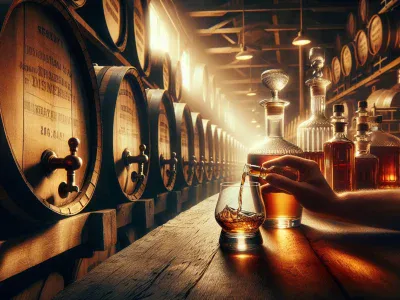
Picture this: you’re at a bar, scanning the menu, and the bartender asks if you’d like whiskey or bourbon. You pause, wondering—aren’t they the same thing? The truth is, while they might share a family resemblance, whiskey and bourbon are far from identical. Their differences go beyond just a name; they’re rooted in history, ingredients, and even geography.
Every sip tells a story, and understanding these spirits can elevate your appreciation for what’s in your glass. Whether it’s bourbon’s signature sweetness or whiskey’s diverse flavor profiles, knowing what sets them apart can make your next drink choice more intentional—and a bit more impressive. Ready to uncover the subtle yet fascinating distinctions? Let’s immerse.
What Is Whiskey?
Whiskey refers to a distilled alcoholic beverage made from fermented grain mash. Its production spans various styles and regions, offering diverse flavors and characteristics.
Overview Of Whiskey Types
There are several whiskey types, each defined by production methods and origins. Scotch whiskey originates in Scotland and typically uses malted barley. Irish whiskey comes from Ireland, smoother and often triple-distilled. Bourbon whiskey is an American variety with at least 51% corn in its mash. Rye whiskey, found in the US and Canada, includes a high proportion of rye grain. Japanese whiskey, inspired by Scotch, features refined blending techniques. Each variety represents distinct traditions and regional influences.
Common Ingredients In Whiskey
Whiskey ingredients depend on the type. The primary grains include barley, corn, rye, and wheat. For instance, Scotch predominantly uses malted barley, while bourbon requires a mash with over 51% corn. Water facilitates fermentation and affects taste. Yeast converts sugar in grains to alcohol during fermentation. Additional factors like barrel wood (oak) and aging contribute to whiskey’s final profile.
What Is Bourbon?
Bourbon is a type of whiskey that’s closely tied to American heritage. Recognized for its distinct flavor and stringent production standards, bourbon holds a special place among whiskey varieties. It’s more than just a drink—it’s a symbol of craftsmanship.
Key Characteristics Of Bourbon
Bourbon must be made in the United States, with most of it originating from Kentucky. To meet legal specifications, it’s distilled at no higher than 160 proof (80% alcohol by volume) and entered into new, charred oak barrels at no more than 125 proof. Its aging in these barrels contributes to the rich caramel, vanilla, and oak notes that define bourbon.
The final spirit needs to be bottled at a minimum of 80 proof (40% alcohol by volume). Unlike Scotch or Irish whiskey, bourbon cannot include flavoring or color additives. These regulations ensure that its taste purely reflects the ingredients and production process.
Ingredients That Define Bourbon
Bourbon’s mash bill (grain composition) requires at least 51% corn, contributing to its characteristic sweetness. Secondary grains often include rye, for a spicier profile, or wheat, for a softer and smoother flavor. Barley helps in fermentation by providing necessary enzymes to convert starches to sugars.
The water used in bourbon production plays a critical role. Kentucky’s natural limestone-filtered water, devoid of iron, is ideal for creating pure, clean-tasting bourbon.
Yeast strains, chosen specifically by distillers, shape the unique flavors of each bourbon brand. The interaction of these ingredients during distillation and aging gives bourbon its complex and dynamic profile.
Key Differences Between Whiskey And Bourbon
Whiskey and bourbon differ in their production methods, origins, and flavor profiles. These differences create distinct experiences for enthusiasts of both spirits.
Production Process
Bourbon requires specific production rules to qualify as bourbon, including being distilled from a mash containing at least 51% corn. Producers age it in new, charred oak barrels to give it its characteristic depth of flavor. Whiskey, but, offers broader production methods. It can be made from various grains like barley, rye, and wheat, aged in barrels that aren’t necessarily new or charred, leading to more diverse styles.
While bourbon’s distillation can’t exceed 160 proof and entry into barrels must be at 125 proof or less, other whiskeys allow higher proof distillation for lighter taste. Consider Scotch, often made from malted barley and aged in used casks, creating earthy and peaty notes distinct from bourbon.
Geographic Origin
Whiskey refers to a global category of spirits, produced in regions like Scotland, Ireland, the United States, and Japan. The location influences the style and identity of the whiskey. For instance, Scotch must come from Scotland and undergo specific aging processes, while Irish whiskey is smooth and triple-distilled.
Bourbon, on the other hand, is uniquely American. Federal law mandates bourbon to be made in the United States. Though it’s synonymous with Kentucky due to its limestone water and weather conditions, bourbon can technically be produced in any U.S. state.
Flavor Profile
Bourbon offers a sweeter flavor profile with notes of caramel, vanilla, and warm spices, resulting from its high corn content and interaction with charred oak barrels. This makes it approachable for newcomers to whiskey.
Whiskey flavor profiles vary based on grains and aging methods. Rye whiskey provides spicier, peppery tones, while Scotch delivers bold peaty or smoky flavors influenced by malt and regional characteristics. Japanese whiskey, inspired by Scotch, brings a delicate and balanced profile.
Similarities Between Whiskey And Bourbon
Both whiskey and bourbon derive from fermented grain mash, ensuring they share foundational production methods. Grains like corn, barley, rye, and wheat dominate the mash, creating diverse yet interconnected flavor profiles. For instance, corn contributes sweetness, while rye adds spiciness, providing a balance seen in both spirits.
Aged in wooden barrels, both achieve their distinct tastes through interaction with the wood. Charring enhances caramel and vanilla notes, influencing the richness of the spirit. Although bourbon requires new, charred oak barrels, whiskey variants like Scotch or Irish whiskey can reuse barrels, but the aging principle remains consistent.
You’ll also find that whiskey and bourbon rely heavily on water’s purity. Limestone-filtered water, celebrated for removing impurities, is essential, particularly for authentic Kentucky bourbon. This similarity underscores the role of water quality in shaping the character of both spirits.
Both maintain strong cultural ties to their regions of origin. Whiskey finds its heart in Scotland, Ireland, and Japan, while bourbon embodies American craftsmanship. Even though these geographic nuances, both share a heritage of tradition and innovation that attracts enthusiasts worldwide.
How To Choose Between Whiskey And Bourbon
Choosing between whiskey and bourbon involves considering your taste preferences, usage scenarios, and occasion. It’s essential to understand the flavor profiles and context for each spirit.
Flavor Preferences
Bourbon offers sweeter notes of caramel, vanilla, and oak due to its high corn content and aging in new, charred oak barrels. Whiskey, on the other hand, comes in diverse flavor profiles; Scotch has smoky or peaty tones, rye whiskey provides spiciness, and Irish whiskey is smoother with lighter flavors. If you like rich, sweet flavors, go with bourbon, but explore other whiskey types if you’re after variety or boldness.
Usage Scenarios
Bourbon suits classic cocktails like the Old Fashioned or Manhattan because of its sweetness. Various whiskey types pair better with regional cocktails or straight enjoyment. For instance, use Scotch for a Rob Roy or Japanese whiskey for highballs. Your cocktail choice can guide your selection.
Gifting Options
Bourbon appeals to someone who appreciates American heritage or enjoys sweeter spirits, while whiskey offers global variants. Gift bourbon to fans of classic U.S. distilling styles, and pick whiskey based on the recipient’s specific preferences.
Cultural Significance
Bourbon connects to Southern U.S. traditions and might resonate with events like 4th of July celebrations. Scotch or Irish whiskey offers richer ties to European heritage. Select based on the cultural context of the occasion.
Understanding these factors and experimenting with both whiskey and bourbon enables you to refine your choice, making every sip tailored to your experience.
Conclusion
Understanding the differences between whiskey and bourbon opens up a world of flavor, culture, and craftsmanship for you to explore. Each spirit carries its own story, shaped by unique ingredients, production methods, and regional traditions.
Whether you’re savoring bourbon’s rich sweetness or exploring the diverse profiles of whiskey, your appreciation for these iconic beverages will deepen with every sip. Let your preferences guide you as you uncover the distinctive qualities that make each spirit truly special.
To provide the best experiences, we use technologies like cookies to store and/or access device information. Consenting to these technologies will allow us to process data such as browsing behaviour or unique IDs on this site. Not consenting or withdrawing consent, may adversely affect certain features and functions.
Functional
Always active
The technical storage or access is strictly necessary for the legitimate purpose of enabling the use of a specific service explicitly requested by the subscriber or user, or for the sole purpose of carrying out the transmission of a communication over an electronic communications network.
Preferences
The technical storage or access is necessary for the legitimate purpose of storing preferences that are not requested by the subscriber or user.
Statistics
The technical storage or access that is used exclusively for statistical purposes.The technical storage or access that is used exclusively for anonymous statistical purposes. Without a subpoena, voluntary compliance on the part of your Internet Service Provider, or additional records from a third party, information stored or retrieved for this purpose alone cannot usually be used to identify you.
Marketing
The technical storage or access is required to create user profiles to send advertising, or to track the user on a website or across several websites for similar marketing purposes.