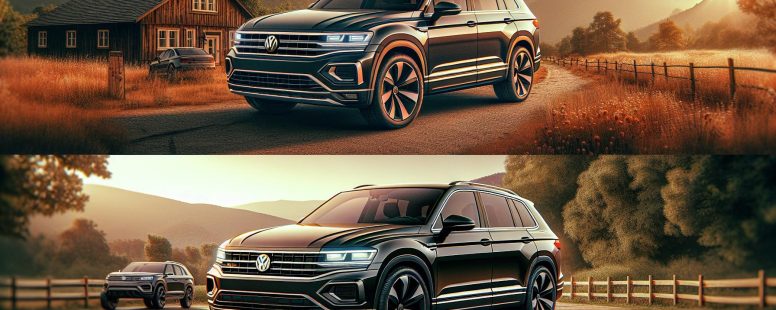
Choosing the right SUV can feel like navigating a maze, especially when two models share a name yet promise distinct experiences. The Volkswagen Atlas and Atlas Cross Sport may seem like siblings at first glance, but their differences go beyond just design tweaks. Whether you’re after extra space for family road trips or a sleek, sporty vibe for city adventures, these vehicles cater to unique lifestyles.
Picture cruising down the highway—do you picture yourself in a spacious three-row SUV built for comfort or something more compact with bold styling and agility? The Atlas delivers practicality and roominess, while the Cross Sport leans into modern aesthetics and dynamic performance. Understanding what sets them apart could be the key to finding your perfect match.
Overview Of The VW Atlas And Atlas Cross Sport
The VW Atlas and Atlas Cross Sport share a foundation but serve distinct purposes. Both fall under the midsize SUV category, yet their designs cater to different lifestyles. The Atlas features a three-row configuration, making it ideal for families needing ample seating and cargo space. In contrast, the two-row Atlas Cross Sport prioritizes style and agility over maximum capacity.
You’ll notice differences in exterior aesthetics too. The Atlas sports a traditional SUV silhouette with a boxier design aimed at functionality, while the Cross Sport adopts a sleeker, coupe-like profile that emphasizes modernity and sophistication. These contrasting styles reflect their intended audiences: practical utility versus urban-driven design.
Inside both models, premium materials and advanced tech create an upscale experience. But, the spaciousness of the standard Atlas outshines that of the Cross Sport when passenger capacity matters most. If you’re focused on versatility for road trips or daily errands involving multiple passengers (e.g., carpooling), the Volkswagen Atlas offers unmatched roominess.
Under the hood, both vehicles offer similar engine options—like a 2.0L turbocharged four-cylinder or an available 3.6L V6—but differing weights impact driving dynamics slightly. For example, the lighter weight of the Cross Sport lends itself to more nimble handling compared to its larger sibling’s robust stability on highways.
Whether your priority is accommodating family needs or achieving standout city performance, these distinctions make each model uniquely suited for specific scenarios.
Design And Exterior Differences
The Volkswagen Atlas and Atlas Cross Sport offer distinct design elements that cater to different preferences. While both share the same platform, their exterior styling and dimensions highlight their unique purposes.
Body Style And Dimensions
The Atlas features a traditional three-row SUV body style with a boxy silhouette. Its overall length of 200.7 inches provides ample space for passengers and cargo, making it ideal for families or those needing extra room during travel. The Atlas Cross Sport, on the other hand, adopts a two-row layout with a coupe-inspired roofline, reducing its length to 195.5 inches. This shorter profile enhances maneuverability in urban settings.
Both vehicles have similar widths at 78.4 inches but differ slightly in height; the Atlas stands at 70 inches tall while the Cross Sport measures 67.8 inches due to its sloped roofline. These dimensional differences reflect each model’s target audience—spacious practicality versus sleek compactness.
Styling And Aesthetic Features
The styling of the Atlas emphasizes functionality with clean lines and a bold grille that highlights its robust presence on the road. It incorporates larger windows and squared-off edges designed for maximum interior space and visibility.
In contrast, the Atlas Cross Sport boasts sportier aesthetics like sculpted side panels, an aggressive front fascia, and narrow LED headlights that create a modern look appealing to younger or style-conscious drivers. The rear spoiler further accentuates its sporty vibe while distinguishing it from its sibling.
Wheel designs also vary between models; standard options include smaller sizes for the Atlas focusing on comfort compared to larger alloy wheels offered by higher trims of the Cross Sport prioritizing visual appeal over utility flexibility.
Interior And Comfort Comparison
The Volkswagen Atlas and Atlas Cross Sport offer distinct interior experiences tailored to different lifestyles. While both share high-quality materials and advanced tech, their layouts and focus areas set them apart.
Seating Capacity And Space
The Atlas provides three rows of seating, accommodating up to seven passengers. With a generous 154 cubic feet of passenger volume, it ensures ample headroom and legroom in all rows. Families benefit from its spacious third row, which comfortably seats adults—a rarity among midsize SUVs. The cargo space reaches up to 96.8 cubic feet with the rear seats folded flat.
In contrast, the Atlas Cross Sport adopts a two-row layout for five passengers. This design prioritizes rear-seat comfort with expansive legroom but sacrifices third-row seating for a sportier profile. It offers 77.8 cubic feet of maximum cargo capacity—sufficient for urban errands or weekend getaways.
Technology And Features
Both models feature Volkswagen’s Digital Cockpit display, offering customizable instrument clusters for essential driving data like navigation directions or fuel efficiency metrics. Standard infotainment systems include an 8-inch touchscreen compatible with Apple CarPlay and Android Auto.
The Atlas focuses on family-friendly features like multiple USB ports across all three rows and optional second-row captain’s chairs for added convenience during long trips. Available tri-zone climate control enhances comfort by allowing individualized temperature settings.
On the other hand, the Cross Sport emphasizes modern aesthetics through ambient lighting options in ten colors and sleek dashboard designs that cater to style-conscious drivers navigating cityscapes. Its available panoramic sunroof amplifies cabin openness while complementing its coupe-inspired exterior design elements.
Both SUVs integrate safety technologies such as adaptive cruise control (ACC), forward collision warning (FCW), and lane-keeping assist (LKA). But, you might find more emphasis on road-trip comfort in the Atlas versus urban practicality in the Cross Sport’s offerings.
Performance And Engine Options
Engine Choices
The Volkswagen Atlas and Atlas Cross Sport both offer two engine options tailored to balance power and efficiency. Both SUVs feature a standard 2.0-liter turbocharged four-cylinder engine generating 235 horsepower and 258 lb-ft of torque. This engine delivers smooth acceleration, ideal for daily commutes or city driving scenarios.
For drivers seeking more robust performance, an available 3.6-liter V6 engine produces 276 horsepower with 266 lb-ft of torque. This option enhances highway cruising capabilities and provides better load-carrying potential. In the lighter Atlas Cross Sport, the V6’s output translates into improved agility compared to the heavier three-row Atlas, which leverages its stability for long-distance trips.
Both engines pair with an eight-speed automatic transmission, ensuring seamless gear shifts. Volkswagen’s 4MOTION all-wheel-drive system is optional on both models, offering enhanced traction in varying weather conditions or off-road terrains.
Towing Capacity And Handling
Towing capacity differs slightly between these SUVs due to their design priorities. The Atlas boasts a maximum towing capability of up to 5,000 pounds when equipped with the V6 engine and a factory-installed towing package—suitable for trailers or small boats during family outings. In contrast, the Atlas Cross Sport offers up to 5,000 pounds as well but caters more towards urban adventurers needing occasional towing needs rather than regular heavy-duty tasks.
Handling characteristics reveal distinct strengths rooted in their builds: The larger wheelbase of the Atlas contributes to a smoother ride on highways but can feel less nimble in tight spaces. Meanwhile, the shorter length and reduced weight of the Cross Sport enhance cornering precision and maneuverability within cities while retaining adequate stability at higher speeds.
Both vehicles incorporate advanced suspension systems designed to absorb road imperfections efficiently while maintaining driver confidence through responsive steering dynamics across diverse driving environments.
Price And Trim Levels
The Volkswagen Atlas and Atlas Cross Sport differ in pricing and trim options, reflecting their distinct target audiences. Both models offer a range of configurations to cater to various preferences, but the Atlas typically costs more due to its larger size and additional seating capacity.
Pricing Differences
The starting MSRP for the 2024 Volkswagen Atlas is approximately $37,725, while the 2024 Atlas Cross Sport begins at around $34,760. The price gap stems from differences in size and features. For example, the three-row configuration of the Atlas adds value for families needing extra space. On the other hand, urban drivers might find the lower cost of the two-row Cross Sport more appealing.
Optional upgrades influence pricing further. Adding all-wheel drive (4MOTION) or opting for premium trims like SEL Premium R-Line can increase costs significantly. While both SUVs share similar engine choices—like the 2.0-liter turbocharged four-cylinder—their differing designs impact base prices and optional packages.
Available Trims And Variations
Both models come with multiple trims offering distinct features:
Volkswagen Atlas: Available in trims such as SE, SE w/ Technology, SEL, SEL R-Line Black, SEL Premium R-Line. Higher trims include advanced tech like a head-up display or leather upholstery.
Atlas Cross Sport: Offered in comparable trims but tailored to its sportier design. For instance, its R-Line variants highlight dynamic styling elements like a blacked-out grille or unique bumpers.
Customizable options enhance flexibility across both vehicles—for instance choosing between front-wheel drive or all-wheel-drive configurations depending on driving needs—but trim-specific amenities vary based on whether you prioritize family functionality (Atlas) or an agile city-friendly SUV (Cross Sport).
Which One Should You Choose?
Your choice between the Volkswagen Atlas and Atlas Cross Sport depends on your specific lifestyle and priorities. The Atlas is a better fit if you often travel with family or need maximum interior space. Its three-row configuration accommodates up to seven passengers, making it ideal for larger groups or families with kids. For example, long road trips become more comfortable with its generous cargo capacity and spacious seating.
If you’re drawn to modern design and agile handling, the Atlas Cross Sport aligns better with urban-focused needs. Its two-row layout enhances maneuverability in city traffic while maintaining rear-seat comfort for five passengers. This model works well for individuals or couples who prioritize style over additional seating.
Budget considerations also play a role since the 2024 Atlas starts at approximately $37,725 compared to the Cross Sport’s base price of around $34,760. If affordability ranks high on your list, the lower starting MSRP of the Cross Sport makes it an attractive option without sacrificing advanced features.
Think about performance requirements as well. The Cross Sport offers nimble cornering capabilities thanks to its compact dimensions, whereas the Atlas excels in highway stability and towing heavier loads up to 5,000 pounds—perfect for outdoor enthusiasts hauling trailers or boats.
Assess daily usage scenarios like commuting versus frequent road trips before deciding which model suits you best. Both SUVs come equipped with Volkswagen’s Digital Cockpit and state-of-the-art infotainment systems but cater differently; family-friendly functionality defines the Atlas while urban practicality shapes the Cross Sport.
Eventually what matters most is aligning your vehicle choice with how you live every day—whether that’s navigating city streets effortlessly or embarking on cross-country adventures comfortably.
Conclusion
Choosing between the Volkswagen Atlas and Atlas Cross Sport depends entirely on your lifestyle and priorities. Whether you value the spacious versatility of a three-row SUV or prefer a sleeker, more agile design for city driving, both models offer unique strengths to meet your needs.
By carefully considering factors like seating capacity, performance, design preferences, and budget, you can confidently select the SUV that aligns with your daily routine and future adventures. Both vehicles deliver quality craftsmanship and advanced features, ensuring whichever option you choose will enhance your driving experience.
Last Updated: August 11, 2025 at 7:24 am by Ellie B, Site owner & Publisher
To provide the best experiences, we use technologies like cookies to store and/or access device information. Consenting to these technologies will allow us to process data such as browsing behaviour or unique IDs on this site. Not consenting or withdrawing consent, may adversely affect certain features and functions.
Functional
Always active
The technical storage or access is strictly necessary for the legitimate purpose of enabling the use of a specific service explicitly requested by the subscriber or user, or for the sole purpose of carrying out the transmission of a communication over an electronic communications network.
Preferences
The technical storage or access is necessary for the legitimate purpose of storing preferences that are not requested by the subscriber or user.
Statistics
The technical storage or access that is used exclusively for statistical purposes.The technical storage or access that is used exclusively for anonymous statistical purposes. Without a subpoena, voluntary compliance on the part of your Internet Service Provider, or additional records from a third party, information stored or retrieved for this purpose alone cannot usually be used to identify you.
Marketing
The technical storage or access is required to create user profiles to send advertising, or to track the user on a website or across several websites for similar marketing purposes.