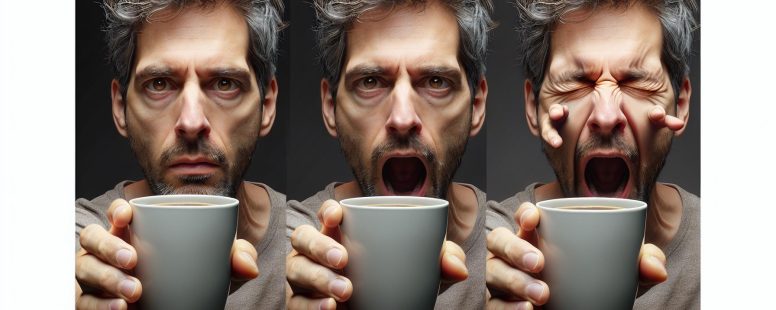
Ever found yourself pondering the difference between voluntary and involuntary actions? You’re not alone. This complex topic has been a subject of interest for scientists, philosophers, and curious minds alike throughout history.
In our day-to-day lives, we perform countless tasks – some with deliberate intent while others seem to happen on their own accord. But what exactly sets these two apart? If you’ve ever wondered why your heart beats without any conscious effort or how come you can’t stop blinking no matter how hard you try – then buckle up! We’re about to investigate into an intriguing exploration that will shed light on this fascinating dichotomy.
Understanding Voluntary and Involuntary Actions
In the area of human behavior, actions we take fall into two main categories: voluntary and involuntary. This section delves deeper to illuminate these concepts.
Definitions and Key Differences
Voluntary actions encompass those behaviors initiated consciously, such as picking up a book or typing on a keyboard. They’re products of your brain’s decision-making process; you control when they start or stop.
Contrastingly, involuntary actions aren’t under conscious control — think heartbeat regulation or digestion processes. Your body performs these tasks automatically without requiring specific thought input from you.
The key difference lies in consciousness involvement. While both types involve neural pathways transmitting signals from the brain to various body parts, only voluntary actions require active mental engagement for execution.
The Role of Conscious Decision-Making
Conscious decision-making serves an integral role in dictating voluntary action occurrence – it’s what separates intentional movement like waving hello versus automatic responses like sneezing when exposed to dust particles.
For example:
Choose an ice cream flavor at your local parlor? That’s conscious choice steering a voluntary action – extending your arm towards mint chocolate chip tub!
Find yourself blinking rapidly while chopping onions? Therein lies unconscious response prompting an involuntary reaction!
The Science Behind Voluntary Actions
Diving deeper into the area of voluntary actions, we’ll scrutinize how they occur and examine examples that illustrate their occurrence in our daily lives.
Neural Pathways Involved
Understandably, you might wonder about what goes on within your brain when it initiates a voluntary action. In essence, these are orchestrated by neural pathways involving various regions of your brain. Let’s simplify this complex process:
Initiation: An area at the front of your brain known as the prefrontal cortex sparks off a thought or decision to act.
Planning: This is then forwarded to an adjacent region called premotor areas where planning for movement happens.
Execution: Finally, signals from here reach down through motor cortices which dispatch them via nerves causing muscles contractions and so creating motion.
The beauty lies not just in these individual components but also their seamless synchronization making tasks like picking up a cup seem so effortless!
Typing on keyboard entails conscious movements – each keystroke involves careful coordination between eye-hand-brain trifecta ensuring accurate transmission from mind onto screen!
Playing sports such soccer necessitates quick decisions about speed direction ball maneuvered based skill tactics opponents’ positions many more factors – all under control consciousness!
Exploring Involuntary Actions
In the area of human physiology, involuntary actions play a crucial role. They’re automatic processes that your body performs without conscious thought.
Autonomic Nervous System and Reflexes
Your autonomic nervous system governs these spontaneous responses. It’s split into two parts: sympathetic and parasympathetic systems. The former prepares you for ‘fight or flight’ situations by increasing heart rate, dilating pupils among others; conversely, the latter calms down after such instances to restore balance in your body.
Reflex actions are another category under this umbrella – they happen instantly in response to stimuli like touching a hot surface causing immediate withdrawal of hand even before feeling pain!
Sympathetic
Parasympathetic
Role
Preparing for emergencies
Restoring normalcy
Examples include:
Rapid heartbeat when frightened (Sympathetic)
Slowing down heartbeat during rest (Parasympathetic)
Examples of Involuntary Actions
Diverse bodily functions constitute as examples of involuntary activities:
Blinking protects eyes from foreign bodies,
Sweating cools down your body temperature,
Digestion breaks food into energy,
Psychological Perspectives
Diving deeper into the realms of psychology, let’s examine how intentions and subconscious processes play crucial roles in shaping voluntary and involuntary behaviors.
How Intentions Influence Voluntary Behaviors
Voluntary actions aren’t just about moving muscles; they’re intricately tied to your intents. For instance, when you reach for a glass of water on a hot day, it isn’t simply an act but rather driven by your intention to quench thirst. Researchers from the Max Planck Institute demonstrated this link using brain scans that show increased activity in areas responsible for decision-making before executing any physical movement[1].
In another experiment conducted at University College London[2], participants exhibited different patterns of neural activity depending on whether their movements were spontaneous or based on cues. This finding further reinforces the role of conscious intent driving voluntary behavior.
Besides, individuals suffering from neurological conditions such as Parkinson’s disease exhibit impaired intentional action due to damage in specific brain regions related to planning and execution [3]. So implying our brains must orchestrate complex plans even for seemingly simple tasks – all triggered by underlying intentions.
The Subconscious and Involuntary Behaviors
Moving towards involuntary responses—actions we don’t consciously control—your body is constantly working behind-the-scenes through autonomic nervous system functions like heart rate regulation or digestion. But have you ever wondered if these could be influenced subconsciously?
Research indicates certain aspects can indeed fall under unconscious influence! A study carried out at Radboud University revealed participants being able to train their immune response unconsciously via conditioning techniques similar used by Ivan Pavlov (known famously as ‘Pavlovian Conditioning’)[4]. Such findings shed light upon potential ways our mind-body connection might impact health beyond conscious awareness.
On top of physiological responses mentioned above lies automatic social behaviors often guided subconsciously too: Ever found yourself mirroring someone else’s posture during conversation without intending? It turns out, this ‘mimicry’ is an involuntary social behavior aimed at fostering rapport and empathy [5].
Taken together, it’s evident that both conscious intentions and subconscious processes drive our complex spectrum of behaviors. Understanding these nuances can provide insights into not only how we function but also potential therapeutic interventions for behavioral or physiological disorders.
References:
Conclusion
So you’ve journeyed through the intricate world of voluntary and involuntary actions. You now know that conscious decision-making drives your voluntary movements while automatic responses rule over those reflexes and functions outside your control. Your brain’s an amazing orchestra, conducting different regions to work in sync for simple tasks like lifting a cup or even complex ones requiring focus. But there’s more beneath the surface with subconscious processes influencing seemingly uncontrolled reactions such as immune response or social mimicry.
This understanding isn’t just academic; it has real-world applications too! It could lead to breakthroughs in addressing behavioral disorders or designing new therapeutic strategies. So keep exploring these fascinating aspects of human behavior because who knows – one day you might use this knowledge to make a big difference!
To provide the best experiences, we use technologies like cookies to store and/or access device information. Consenting to these technologies will allow us to process data such as browsing behaviour or unique IDs on this site. Not consenting or withdrawing consent, may adversely affect certain features and functions.
Functional
Always active
The technical storage or access is strictly necessary for the legitimate purpose of enabling the use of a specific service explicitly requested by the subscriber or user, or for the sole purpose of carrying out the transmission of a communication over an electronic communications network.
Preferences
The technical storage or access is necessary for the legitimate purpose of storing preferences that are not requested by the subscriber or user.
Statistics
The technical storage or access that is used exclusively for statistical purposes.The technical storage or access that is used exclusively for anonymous statistical purposes. Without a subpoena, voluntary compliance on the part of your Internet Service Provider, or additional records from a third party, information stored or retrieved for this purpose alone cannot usually be used to identify you.
Marketing
The technical storage or access is required to create user profiles to send advertising, or to track the user on a website or across several websites for similar marketing purposes.