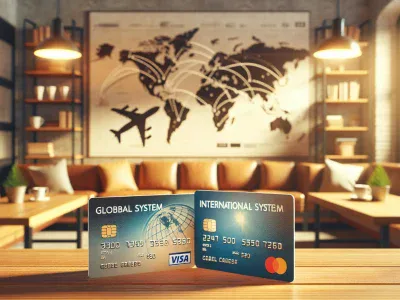
Picture this: you’re at the checkout counter, card in hand, ready to pay. But have you ever stopped to wonder if it really matters whether your card says Visa or Mastercard? These two names are everywhere, yet their differences often remain a mystery. Understanding what sets them apart isn’t just about curiosity—it can actually help you make smarter financial choices.
Both Visa and Mastercard dominate the global payments world, but they’re not the same. From perks and protections to how they’re accepted worldwide, each brings its own unique features to the table. Whether you’re a frequent traveler or someone who just wants a reliable card for everyday purchases, knowing the distinction can make all the difference in finding the right fit for your lifestyle. So, what truly separates these two giants? Let’s unravel the details and empower your next financial decision.
Overview Of Visa And Mastercard
Visa and Mastercard dominate the global payments ecosystem, connecting consumers, merchants, and financial institutions. These networks help seamless electronic transactions but operate under distinct structures and partnerships.
What Is Visa?
Visa isn’t a credit card issuer itself but a payment network that processes transactions between banks, merchants, and consumers. Headquartered in California, Visa operates in over 200 countries, ensuring widespread acceptance of its branded cards.
Visa’s focus lies in technology and security innovation, providing features like fraud protection and zero-liability policies. Its layers of encryption safeguard customer data during transactions. For example, their “Visa Secure” tool enhances customer verification in online payments, reducing risks tied to digital purchases. Through partnerships with issuing banks, Visa supports traditional and innovative payment methods, including mobile wallets like Google Pay.
Visa cards can be credit, debit, or prepaid, depending on the financial institution offering them, and they often integrate rewards such as cashback on travel or groceries specific to the bank’s program.
What Is Mastercard?
Mastercard functions as another global payment network connecting businesses and consumers. Operating across 210+ countries, the company distinguishes itself through its dynamic focus on digital innovation and efforts to enhance user experience.
Mastercard offers robust cybersecurity tools, such as its AI-driven fraud detection and tokenization technology. Its proprietary “Mastercard Identity Check” replaces passwords with biometrics for improved online payment security. For instance, you might encounter this while authorizing a transaction via fingerprint or facial recognition.
Like Visa, Mastercard collaborates with banks to issue debit, credit, and prepaid cards, tailored to customer needs. Many of their cards include travel benefits or exclusive event access through programs like “Priceless Cities,” enhancing lifestyle opportunities worldwide.
Key Differences Between Visa And Mastercard
Visa and Mastercard dominate the global payment network industry, offering similar core services, yet they differ in key elements like scope, perks, and collaborations that impact your card selection.
Network Coverage And Acceptance
Visa operates in over 200 countries, enabling seamless card acceptance at more than 80 million merchant locations globally. Mastercard similarly spans a broad network across 210 countries, with comparable merchant acceptance. But, some retailers might exclusively accept either Visa or Mastercard based on regional contracts.
For travel purposes, both networks offer exceptional reach. If you’re visiting remote regions, verify local payment preferences as acceptance could vary, especially in less digitized areas.
Rewards And Benefits
Rewards programs differ based on the card’s issuer rather than solely on whether it’s Visa or Mastercard. Visa-branded cards might feature cash back rewards or travel miles, often shaped by the issuing bank like Chase or Capital One. Mastercard cards provide unique benefits like “Priceless Experiences,” enabling exclusive access to events or curated travel perks.
Check your card’s terms for additional privileges, like hotel upgrades, purchase protection, or rental car insurance, which vary across product tiers such as Platinum, World, or Signature cards.
Security Features
Visa emphasizes transaction protection through “Visa Secure,” which uses advanced encryption for online purchases. Mastercard employs “Mastercard Identity Check,” combining biometric authentication and AI-driven fraud detection to enhance security.
Fraud monitoring is proactive with both networks. For instance, Mastercard’s AI-powered systems analyze thousands of transactions per second to detect anomalies, while Visa offers zero fraud liability for unauthorized transactions.
Fees And Charges
Fees, including forex conversion rates or annual charges, depend on your card issuer rather than solely on the payment network. In foreign transactions, Mastercard sometimes offers slightly better currency conversion rates compared to Visa, though the margin is minimal.
Analyze your issuer’s fee structure before international travel to avoid surprises, as both networks don’t dictate charges directly to cardholders.
Partnerships With Banks
Visa collaborates with financial institutions worldwide, such as Citi, Chase, and Wells Fargo, to issue co-branded cards tailored to customer needs. For example, the Chase Sapphire Preferred Visa offers extensive travel rewards.
Mastercard partners with institutions like Barclays and HSBC, offering co-branded cards with distinct benefits. An example is the American Airlines AAdvantage Mastercard, which provides bonus airline miles.
Choosing between Visa and Mastercard often boils down to your issuer’s specific benefits rather than the underlying network.
Choosing Between Visa And Mastercard
Deciding between Visa and Mastercard involves analyzing various factors. Both networks offer extensive global acceptance, strong security, and collaboration with banks, but individual preferences and needs play a critical role.
Factors To Consider
Focus on the specific perks, fees, and rewards offered by individual cards. Although Visa and Mastercard set the foundation for payment processing, benefits like travel insurance, cashback, or access to exclusive events depend on the issuing bank. For example, a Visa card might include cashback on groceries, while a Mastercard could provide VIP concert access. Security features also differ; Mastercard may use AI-driven fraud detection, while Visa offers “Visa Secure” for transaction protection.
Evaluate global acceptance if you travel often. Visa is accepted at over 80 million merchant locations across 200 countries, while Mastercard spans 210 countries with comparable reach. Both are well-suited for international usage, but some regions might lean towards one network based on partnerships or banking systems.
Suitability For Different Needs
Match your choice to your financial goals and lifestyle. A frequent traveler might benefit from Mastercard’s travel perks, including airport lounge access and trip cancellation insurance. Meanwhile, a Visa card user could gain from benefits like discounted hotel bookings or rental car protection provided by certain card issuers. If your focus is on earning points for everyday purchases, either network can offer rewards, but specific categories like dining or fuel spend may favor one card over the other.
Consider collaborative offers and promotions. For example, Mastercard’s “Priceless Cities” program provides unique experiences that could align with your leisure activities. Alternatively, corporate users might appreciate Visa’s tailored business solutions and expense management tools.
Make an informed choice by comparing cards individually, prioritizing the features that benefit your spending pattern the most.
Pros And Cons Of Visa And Mastercard
The pros and cons of Visa and Mastercard share similarities but differ based on features, perks, and user preferences. Exploring these can help you decide which payment network aligns better with your financial goals.
Pros And Cons Of Visa
Visa offers widespread global acceptance and robust security tools. Its primary advantage lies in its seamless services across over 200 countries. With “Visa Secure” and zero-liability fraud protection, your transactions remain highly secure. Benefits often include cashback, travel rewards, or shopping offers, depending on the issuer. For example, some cards provide airline miles or discounts on fuel purchases.
But, rewards and perks are limited to what the issuing bank customizes. Visa’s offerings can feel restrictive if you’re looking for more experiential rewards rather than direct savings.
Pros And Cons Of Mastercard
Mastercard stands out with digital innovation and exclusive perks. Its “Priceless Cities” program gives you access to unique events, many unavailable through Visa. Mastercard has a global reach in over 210 countries and enables biometric authentication for added security. Reward options often cater to lifestyle enthusiasts, including luxury dining, concerts, or travel experiences.
On the downside, Mastercard’s rewards flexibility depends on the issuer’s programming too. If your focus is on cash back rather than experiences, some Mastercard cards might not appeal to you. Merchant-specific partnerships may also be more limited in certain regions.
Conclusion
Choosing between Visa and Mastercard eventually comes down to your individual preferences and financial goals. Both networks provide reliable global payment solutions with robust security features and extensive acceptance, but the specific perks and rewards depend on the card issuer.
By focusing on what matters most to you—whether it’s travel benefits, cashback, or exclusive experiences—you can select a card that aligns with your lifestyle and spending habits. Take the time to compare options and evaluate the features that best suit your needs to make an well-informed choice.
Published: July 25, 2025 at 8:37 am by Ellie B, Site owner & Publisher
To provide the best experiences, we use technologies like cookies to store and/or access device information. Consenting to these technologies will allow us to process data such as browsing behaviour or unique IDs on this site. Not consenting or withdrawing consent, may adversely affect certain features and functions.
Functional
Always active
The technical storage or access is strictly necessary for the legitimate purpose of enabling the use of a specific service explicitly requested by the subscriber or user, or for the sole purpose of carrying out the transmission of a communication over an electronic communications network.
Preferences
The technical storage or access is necessary for the legitimate purpose of storing preferences that are not requested by the subscriber or user.
Statistics
The technical storage or access that is used exclusively for statistical purposes.The technical storage or access that is used exclusively for anonymous statistical purposes. Without a subpoena, voluntary compliance on the part of your Internet Service Provider, or additional records from a third party, information stored or retrieved for this purpose alone cannot usually be used to identify you.
Marketing
The technical storage or access is required to create user profiles to send advertising, or to track the user on a website or across several websites for similar marketing purposes.