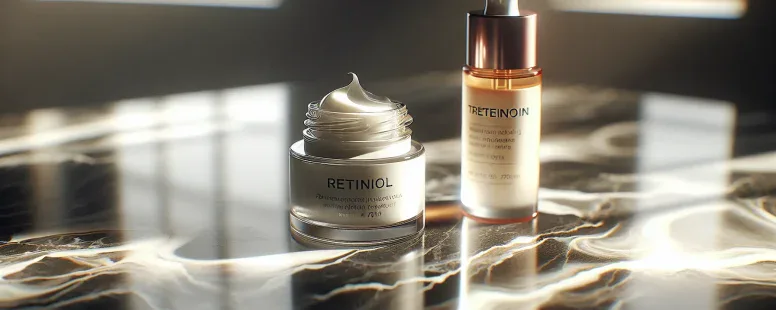
Picture your skin as a canvas—sometimes it glows with radiant light, other times it seems to dull beneath the weight of time and stress. You might crave that elusive, smooth finish, searching for a secret weapon in the crowded world of skincare. As you scan glossy bottles and clinical tubes, two names stand out: retinol and tretinoin. Both promise transformation, but what truly sets them apart?
Picture unlocking the door to visible results—fewer fine lines, clearer pores, and a complexion that feels refreshed each morning. While retinol and tretinoin often get lumped together, their differences can mean the world for your skin’s future. Curious about which one will help you wake up to your best skin yet? Let’s unravel the science and discover the surprising benefits that could change your routine forever.
What Are Retinol and Tretinoin?
Retinol and tretinoin both stems from the same vitamin A family but work quite differently on your skin. You can think of vitamin A like an artist, and retinoids are its brushes—each creates a new stroke, some soft and gradual, some precise and bold. You might wonder, “Which brush crafts the masterpiece fastest?”. That depends on what’s needed for your canvas.
Retinol often appears in over-the-counter creams at beauty stores, offering smaller molecular structure that slowly converts inside skin cells to retinoic acid, the active form responsible for results like smoother texture or fewer fine lines (source: American Academy of Dermatology). That slow journey can feel like waiting for paint to dry—you’ll catch results over weeks or months, with less risk of intense irritation. Many users, from college students to busy parents, start with this gentler option.
Tretinoin, in contrast, is only available with a prescription from dermatologists in the United States. As pure retinoic acid, tretinoin skips the conversion step and acts immediately after application, sometimes shocking your skin into a remodeling phase much like a sculptor revealing a statue from stone. Some people see redness, peeling, or sensitivity in the first weeks, but studies (Journal of Cosmetic Dermatology, 2022) show more significant collagen stimulation and improvement in hyperpigmentation in a shorter time compared with retinol.
What’s your skin story? Perhaps you tried that serum your friend swore by, only to find nothing happened, or you remember when a dermatologist first handed you a tiny tube with a warning to use just a pea-sized amount. Retinol might fit first-time skincare explorers, while tretinoin targets persistent concerns—acne scars or sunspots that refuse to fade.
Both work best with sun protection, gentle cleansers, and patience. If your skin gets itchy or red, you’re might be overdoing it, or using a product that’s strength outpaces your tolerance.
Here’s a quick table for a side-by-side glance:
Property
Retinol (OTC)
Tretinoin (Rx)
Source
Vitamin A
Vitamin A
Accessibility
Non-prescription
Prescription only
Conversion Needed
Yes
No
Onset of Results
Gradual (weeks)
Faster (days-weeks)
Side Effects
Mild
More frequent
Suitability
Beginners, sensitive skin
Moderate to severe skin concerns
So, how do you choose when both share the same DNA yet paint with such different hues? Always consider your goals, time frame, and how much you willing to risk for faster progress. Remember, the right ingredient unlocks the story beneath your skin’s surface.
How Retinol and Tretinoin Work
You’ll find both retinol and tretinoin woven into the stories of many who crave smoother, brighter skin. Understanding how these vitamin A derivatives interact with your skin can feel like uncovering the blueprint behind a masterpiece—each stroke, each reaction, is deliberate.
Mechanism of Action
With retinol, your skin plays the role of a patient artist. It slowly transforms retinol, layer by layer, into retinoic acid, which is the true agent behind change. Because of this gradual conversion, retinol feels like a gentle suggestion to your skin cells, urging them to renew, but never demanding instant transformation all at once. Picture starting a new book—you’re eased in, chapter by chapter, rather than rushed through the story (Kafi et al., 2007).
Tretinoin doesn’t wait for your skin to catch up—it’s like giving a sculptor clay that’s already been prepped to shape. As pure retinoic acid, tretinoin skips the preliminary steps, binding directly to its receptors and setting off a chain of signals that accelerate cell turnover and collagen production (Mukherjee et al., 2006). No slow build-up, just an immediate push. That’s why dermatologists might compare using tretinoin to flipping a switch instead of dimming the lights.
Effects on the Skin
When you look in the mirror after weeks of retinol use, fine lines seem to fade almost quietly—you won’t see anything dramatic overnight, but one morning you wonder when your skin smoothed out. Reducing hyperpigmentation and increasing radiance are subtle yet steady gifts from retinol. Take, for example, someone with mild sun damage—after three months, their complexity often appears clearer and more luminous, with less irritation than stronger actives tend to cause.
Tretinoin is more like a thunderstorm before clear skies break through. Early weeks might bring irritation, peeling, or persistent redness, especially if your skin’s not used to strong topicals. According to studies from the American Academy of Dermatology, over 40% of new users report visible flaking or tingling in the first month. Once your skin acclimates though, benefits emerge rapidly, including reduced acne lesions, noticeably diminished wrinkles, and even reversal of some sun damage.
Ever wonder why some people rave about the ‘retinoid glow’ yet others struggle with red patches? It often comes down to the pace of renewal. Your skin’s story with retinol and tretinoin depends on its sensitivity, your patience, and the narrative you hope to see in the mirror.
Key Differences Between Retinol and Tretinoin
Consider the difference between retinol and tretinoin as the gap between learning to swim and diving straight into the deep end. Both transform skin, both trace their roots to vitamin A, and both stir the curiosity of anyone mapping their skincare journey.
Potency and Effectiveness
Retinol and tretinoin both belong to the retinoid family, but their strengths aren’t really resemblin’ twins. Tretinoin, sometimes called all-trans retinoic acid, starts working the moment it sink into your skin. Dermatologists—like Dr. Shereene Idriss and Dr. Ranella Hirsch—often recommend tretinoin for moderate-to-severe acne, stubborn photodamage, or pronounced wrinkles (American Academy of Dermatology, 2023). Some people say their skin texture evolved in as little as 4 weeks when using tretinoin, but that quick change can come at a price: irritation.
Retinol, meanwhile, needs to change forms inside your skin before it tackles fine lines or dullness. It passes through several conversion steps—first to retinaldehyde, then to retinoic acid. Because of this time delay, retinol acts like a patient gardener, nurturing smoother skin over months. Many over-the-counter retinol products hover between 0.1% and 1% concentrations; by contrast, tretinoin prescriptions rarely exceed 0.1%, but they still pack more punch by weight.
If you ever wondered why that fancy-sounding bottle at the drugstore doesn’t make your skin peel like the prescription your friend got, it hinges on how “ready” they are as retinoids. Potency, conversion rate, and molecular structure drive these differences.
Availability and Usage
Retinol, easy to spot on beauty shelves—from brands like Olay, The Ordinary, and Neutrogena—requires no prescription. Anyone can incorporate it into their nightly routine, regardless of whether a dermatologist has been consulted. You could find a 0.5% retinol cream next to gentle moisturizers at a pharmacy.
Tretinoin sits behind the pharmacy counter in the US and requires medical oversight. Since it’s classified as a drug for conditions like acne vulgaris or actinic keratosis (Mayo Clinic, 2022), physicians will screen your skin first. They might start you on a pea-sized amount every third night, then titrate up based on results and tolerance. Most insurance plans recognize it as a therapeutic prescription in acne cases, though not always for wrinkle-fighting.
Skincare enthusiasts sometimes experiment with both ingredients, moving from retinol to tretinoin for stronger results; the sequence matters, since sudden jumps can triggers flares. If you’re ever unsure, patch testing on a small facial area—think jawline or behind the ear—narrows risk.
Potential Side Effects
Potential side effects highlight a key fork in the road between these retinoids. Tretinoin earns a reputation for causing peeling, pinpoint redness, dryness, or even a temporary acne flare (often dubbed “retinoid uglies”), especially in the first 2-4 weeks. One clinical study found almost 50% of new users experienced mild-to-moderate irritation (Journal of Drugs in Dermatology, 2019).
Retinol users, by contrast, report a smoother onboarding—thanks to that slow conversion. While some redness and flaking can appear, most describe it as mild and manageable. It’s possible to buffer the irritation by layering moisturizer before applying retinol, which dermatologists recommend for sensitive skin types.
That said, skin’s reaction doesn’t always follow a script. Some users adapt to tretinoin within weeks, while others continue to encounter dryness after months, especially if environmental stressors like cold air or harsh cleansers enter the picture.
Key Data Table (Potency & Side Effects)
Feature
Retinol (OTC)
Tretinoin (Rx only)
Conversion
Requires multiple enzymatic steps
Ready-to-use acid
Onset time
Up to 12 weeks
4–6 weeks
Common strengths
0.1%–1%
0.01%–0.1%
Initial irritation rate
10–20% (mild)
40–50% (moderate)
If someone’s ever told you, “start low and go slow with retinoids,” they’re hinting at this difference in risk. You’ll discover your skin, like every canvas, tells a unique story.
Choosing Between Retinol and Tretinoin
Deciding between retinol and tretinoin feels like standing at a skincare crossroads. At this junction, little choices echo throughout your future routines, echoing with every glance in the mirror or skincare aisle.
Factors to Consider
Comparing retinol vs. tretinoin, your unique situation shapes the most fitting path. Age matters: if you’re in your late 20s or early 30s, retinol often aligns better as it introduces retinoids gently, according to Mayo Clinic dermatologists. Skin sensitivity, history of eczema or rosacea, leans the scale toward retinol; its slower conversion reduces harsh side effects like visible redness or peeling.
Lifestyle influences results, too. If you travel often or struggle to keep routines consistent, retinol offers flexibility—missing one or two applications usually won’t spark irritation. Prescription tretinoin, though, demands stricter consistency and slower initial ramp-up to minimize reactions. For example, board-certified dermatologist Dr. Shereene Idriss recommends retinol for first-time users who want subtle, gradual improvements, while tretinoin suits those chasing dramatic changes in stubborn acne or deep wrinkles.
Budget and availability play a role. Retinol’s available everywhere: drugstores, online, beauty subscription boxes (like Allure or Sephora Play). Tretinoin needs a doctor’s consultation, tying accessibility to insurance, location, or willingness for medical appointments.
Who Should Use Each One?
Tretinoin fits users with persistent acne that hasn’t responded to over-the-counter retinoids—think teens battling cystic breakouts or adults chasing prescription-strength results. If you’ve ever tried everything else—benzoyl peroxide, salicylic acid, even antibiotics—with little progress, dermatologists (JAMA Dermatology, 2021) often reach for tretinoin.
In contrast, retinol claims the spotlight for retinoid beginners or those interested in smoothing early fine lines, brightening dullness, or maintaining their skin’s glow with less risk. People with melanin-rich skin or a history of hyperpigmentation also start slow with retinol to prevent post-inflammatory discoloration (American Academy of Dermatology).
Ask yourself, “How much change do I want, and how fast?” If you’re eager for dramatic texture shifts or rapid anti-aging, tretinoin answers that call—like hitting fast-forward on your skin’s timeline, as Dr. Ranella Hirsch explains in her patient stories. If your preference tilts toward gradual evolution, retinol rides beside you like a patient coach, guiding you through weeks to visible change.
Does your skin peel easily? Have drugstore products caused flaking before? Go with retinol first—the path’s less rocky. Have your dermatologist ever said you needed something prescription-strength? Tretinoin’s probably your canvas, especially if pigment and wrinkles started their silent march years ago.
Choosing between retinol and tretinoin isn’t just science—it’s part intuition, part experiment. Listen to your skin’s feedback, and let each unexpected result shape your journey.
Conclusion
Choosing between retinol and tretinoin isn’t just about following trends—it’s about understanding your skin’s unique needs and responding with the right solution. Whether you’re easing into retinoids or ready for a more intensive approach your skincare journey should feel empowering and informed.
Trust your instincts and pay attention to how your skin reacts. With patience and the right choice you’ll be well on your way to a healthier more radiant complexion.
To provide the best experiences, we use technologies like cookies to store and/or access device information. Consenting to these technologies will allow us to process data such as browsing behaviour or unique IDs on this site. Not consenting or withdrawing consent, may adversely affect certain features and functions.
Functional
Always active
The technical storage or access is strictly necessary for the legitimate purpose of enabling the use of a specific service explicitly requested by the subscriber or user, or for the sole purpose of carrying out the transmission of a communication over an electronic communications network.
Preferences
The technical storage or access is necessary for the legitimate purpose of storing preferences that are not requested by the subscriber or user.
Statistics
The technical storage or access that is used exclusively for statistical purposes.The technical storage or access that is used exclusively for anonymous statistical purposes. Without a subpoena, voluntary compliance on the part of your Internet Service Provider, or additional records from a third party, information stored or retrieved for this purpose alone cannot usually be used to identify you.
Marketing
The technical storage or access is required to create user profiles to send advertising, or to track the user on a website or across several websites for similar marketing purposes.