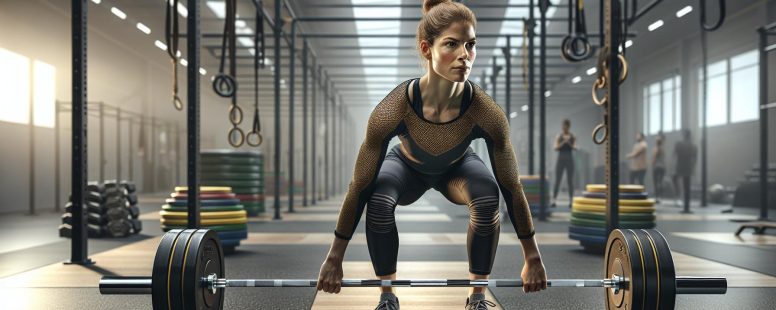
Picture yourself at the gym, standing in front of a barbell, ready to tackle your workout. You’ve heard trainers mention exercises like Romanian Deadlifts (RDLs) and Good Mornings, but how do you know which one’s right for your goals? Both moves are powerhouse exercises that target your posterior chain, yet they differ in technique and benefits.
Understanding these differences can transform how you approach strength training. Whether you’re aiming to build explosive power or improve flexibility, knowing when to choose an RDL over a Good Morning—or vice versa—can make all the difference. Ready to unlock their unique advantages? Let’s jump into what sets them apart.
Understanding RDL And Good Morning
Romanian Deadlifts (RDLs) and Good Mornings are foundational exercises for strengthening the posterior chain. Even though their similarities, they differ in execution and focus, making each suited for specific training goals.
What Is An RDL (Romanian Deadlift)?
An RDL emphasizes hip hinge mechanics while targeting hamstrings, glutes, and lower back. You perform it by holding a barbell or dumbbells and lowering the weight with a slight bend at your knees while keeping your back neutral. The movement ends when you feel tension in your hamstrings before returning to standing.
Athletes often use RDLs to improve explosive power and posterior chain endurance. For example, sprinters gain stronger strides by integrating RDLs into training routines.
What Is A Good Morning?
A Good Morning focuses on strengthening hip extensors and spinal erectors through a bowing motion. You begin the exercise with a weighted barbell resting across your upper traps, then hinge forward at the hips until your torso is near parallel to the ground before returning upright.
Good Mornings are suitable for enhancing flexibility and core stability. Powerlifters frequently incorporate them to build resilience against low-back injuries during heavy lifts like squats or deadlifts.
Key Differences Between RDL And Good Morning
Both the Romanian Deadlift (RDL) and Good Mornings are crucial for posterior chain development, but their differences lie in mechanics, target areas, and training goals.
Body Mechanics
The RDL involves a hip hinge motion. You maintain a neutral spine while lowering the barbell by pushing your hips backward. In contrast, Good Mornings emphasize a bowing movement where the torso leans forward with the weight resting on your upper back. The primary difference is that RDLs rely heavily on hip extension, whereas Good Mornings engage more spinal flexion during execution.
Targeted Muscle Groups
RDLs primarily work the hamstrings, glutes, and lower back. For example, athletes use them to build power in these muscle groups for explosive movements like sprints or jumps. Good Mornings focus more on spinal erectors and hip extensors, making them ideal for improving core stability and low-back strength in heavy lifts.
Range Of Motion
The range of motion in an RDL is shorter as you stop once maximum hamstring stretch is achieved without losing form. But, Good Mornings have a greater range since they involve deeper forward bending of the torso until near-parallel to the ground if flexibility allows it.
Equipment Used
RDLs typically require a barbell or dumbbells as primary equipment examples include performing them with heavy barbells for strength-focused routines or lighter weights for endurance training. For Good Mornings, most lifters prefer barbells placed across their shoulders; but resistance bands can be used as alternatives during mobility drills.
Benefits Of Each Exercise
Both the Romanian Deadlift (RDL) and Good Morning exercises offer distinct advantages for building strength, improving posture, and enhancing functional movement. Understanding their unique benefits helps you select the right exercise to meet specific fitness goals.
Advantages Of RDL
Hamstring Development
The RDL targets hamstrings effectively by emphasizing the hip hinge motion. This isolates the muscles at a greater stretch compared to standard deadlifts, promoting improved flexibility and muscle growth.
Glute Engagement
Performing RDLs engages your glutes during both the eccentric and concentric phases of the lift. This makes it ideal for athletes focusing on explosive power in sports like sprinting or jumping.
Lower Back Strength
With a neutral spine position maintained throughout the movement, RDLs strengthen spinal stabilizers without excessive stress on your lower back. This reduces injury risk during heavy compound lifts.
Improved Athletic Performance
Athletes integrating RDLs into training experience enhanced hip extension mechanics, critical for optimizing running speed and lifting efficiency.
Advantages Of Good Morning
Spinal Erector Activation
Good Mornings primarily target spinal erectors through controlled forward flexion movements under load, making them effective for strengthening your posterior chain’s endurance.
Core Stability
Keeping control of your torso during this exercise activates deep core muscles like transverse abdominis, contributing to better balance and posture over time.
Hip Extensor Strengthening
Hip extensors work harder due to increased range of motion in Good Mornings compared to RDLs. Powerlifters benefit from this when transitioning between squats or deadlifts with heavier loads.
Flexibility Enhancement
Practicing Good Mornings improves hamstring flexibility while reinforcing proper biomechanics needed for bending motions in daily activities or sports performance tasks such as rowing or judo throws.
Common Mistakes To Avoid
Understanding common mistakes in RDLs and Good Mornings ensures effective execution while minimizing injury risk. Proper form is crucial for targeting the correct muscle groups and achieving desired fitness outcomes.
RDL Mistakes
Rounding the Lower Back
Maintaining a neutral spine during an RDL is essential to avoid lower back strain. If you allow your back to round, the load shifts from your hamstrings to your lumbar spine, increasing injury risk. Focus on hinging at the hips rather than bending at the waist.
Excessive Knee Bend
An RDL isn’t a squat; excessive knee bend reduces hamstring engagement. Keep your knees slightly bent but fixed throughout the movement. This ensures tension remains in your posterior chain muscles.
Overextending at Lockout
Hyperextending your lower back at the top of an RDL can lead to unnecessary spinal compression. Instead, stand tall with a neutral posture when you’re returning to start position.
Improper Grip Control
Losing grip control impacts stability and limits strength progression in RDLs, especially if using heavier weights like barbells or dumbbells.
Good Morning Mistakes
Collapsing Forward
In Good Mornings, collapsing forward compromises spinal alignment and places undue stress on the lower back instead of engaging hip extensors and spinal erectors properly.
Incorrect Barbell Placement
Positioning a barbell too high on your neck causes discomfort and increases strain on cervical vertebrae during Good Mornings exercises.
Inadequate Core Engagement
Failing to brace your core leads to poor stability throughout this exercise’s bowing motion, which reduces its effectiveness in strengthening core muscles alongside hip extensors.
Skipping Warm-Ups Before Execution
How To Incorporate Into A Workout Routine
Integrating Romanian Deadlifts (RDLs) and Good Mornings into your workout routine enhances posterior chain strength and flexibility. Tailoring their use to your goals ensures maximum benefits.
RDL In Training Plans
Include RDLs in lower-body or full-body workouts for hamstring development and glute activation. Use them as a primary lift if building strength is the goal, performing 3–4 sets of 6–8 reps with heavier loads. For endurance, opt for lighter weights and higher reps (10–12).
Incorporate accessory movements like hamstring curls or single-leg deadlifts post-RDLs to target stabilizing muscles further. Rest at least 48 hours between sessions focusing on the lower back to avoid overtraining.
Example: Pair RDLs with squats during a leg-focused day, starting with squats for quad engagement followed by RDLs for posterior chain balance.
Good Morning In Training Plans
Use Good Mornings in mobility warm-ups or core-centric routines to improve hip hinge mechanics and spinal stability. For powerlifters, include them after heavy compound lifts like squats or deadlifts, using moderate weights for 3–5 sets of 8–10 reps.
For beginners, start with an empty barbell or resistance bands until form improves. Advanced lifters can integrate paused Good Mornings at the bottom position to enhance control under tension.
Example: Combine Good Mornings with planks in a functional training session to develop balanced core strength while reinforcing proper bending mechanics.
Conclusion
Choosing between the Romanian Deadlift and Good Mornings depends on your fitness goals and training needs. Both exercises offer unique benefits that can enhance strength, flexibility, and stability when performed correctly. By understanding their differences and focusing on proper form, you can safely incorporate them into your routine to target the posterior chain effectively. Whether you’re aiming for explosive power or improved mobility, these movements are valuable tools to help you achieve a well-rounded workout regimen.
To provide the best experiences, we use technologies like cookies to store and/or access device information. Consenting to these technologies will allow us to process data such as browsing behaviour or unique IDs on this site. Not consenting or withdrawing consent, may adversely affect certain features and functions.
Functional
Always active
The technical storage or access is strictly necessary for the legitimate purpose of enabling the use of a specific service explicitly requested by the subscriber or user, or for the sole purpose of carrying out the transmission of a communication over an electronic communications network.
Preferences
The technical storage or access is necessary for the legitimate purpose of storing preferences that are not requested by the subscriber or user.
Statistics
The technical storage or access that is used exclusively for statistical purposes.The technical storage or access that is used exclusively for anonymous statistical purposes. Without a subpoena, voluntary compliance on the part of your Internet Service Provider, or additional records from a third party, information stored or retrieved for this purpose alone cannot usually be used to identify you.
Marketing
The technical storage or access is required to create user profiles to send advertising, or to track the user on a website or across several websites for similar marketing purposes.