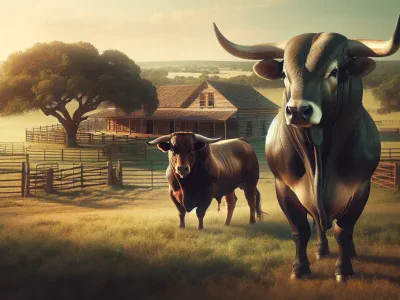
Picture yourself standing at dawn, boots sinking into dew-soaked grass, the air alive with the scent of earth and distant hay. Maybe you hear the lowing of cattle echoing across wide open fields, or perhaps you spot rows of corn stretching toward the horizon like green soldiers. But do you know if you’re on a ranch or a farm?
It’s easy to blur the lines between these two iconic landscapes, yet their differences shape not just the land but entire ways of life. Understanding what sets a ranch apart from a farm might change how you see the countryside—and reveal surprising benefits for those who crave adventure, sustainability, or a taste of rural tranquility. Get ready to discover the unexpected distinctions that make each place unique.
Understanding the Basics: What Is a Ranch and What Is a Farm?
Grasp the difference between a ranch and a farm by looking at how each operates in the landscape of US agriculture. Ranches typically center around raising livestock—think cattle, sheep, or horses. You might picture cowboys riding under sprawling skies, pushing herds across dry grasslands. Entities like the King Ranch in Texas, which covers over 825,000 acres (Texas State Historical Association), stick in your mind for their size and focus on animal husbandry. Farms, in contrast, focus on growing crops like corn, wheat, or soybeans, though some mix crop production with dairy or poultry. Picture rows of golden wheat swaying in the wind, or tractors rolling across the fields at sunrise.
You heard stories about generational ranch families, their days marked by cattle drives and branding, while farm life might recall tales of harvest festivals and the hum of combines during the busy autumn season. Both create iconic rural scenes, yet their purposes diverge—the ranch fixes on livestock, the farm fixes on crops.
Consider this: Did you ever walk through a pumpkin patch and wonder whether you’re on a farm or a ranch? The answer lies in what’s being raised. Farms grow what you eat as plant-based food. Ranches raise what ends up as animal products. Both types of land support rural economies, but the ranch often sprawls, fenced for grazing and animal movement, while the farm carefully parcels land for planting and mechanized cultivation.
USDA differentiates ranches from farms based on their dominant activity (USDA, Census of Agriculture). If your dream involves open rangeland and caring for herds, ranch life fits that vision. If you lean toward planting and harvesting, a farm’s routines might resonate more.
What draws you in—the endless grass of a cattle ranch, or the symmetry of crop rows? Both shape American landscapes, economies, and cultures, each with a distinctive grammar for working the land.
Key Differences Between Ranch and Farm
You might picture endless grasslands, cattle trails, or rows of golden corn, but ranches and farms weave surprisingly different stories on America’s rural canvas. When you look close, each has a distinctive rhythm—marked by daily tasks, unique wildlife, and land stretching as far as the eye can see.
Purpose and Activities
Ranches exist, mainly, for the rearing of livestock—think herds of cattle drifting across states like Wyoming or Texas. Branding, herding, and rotational grazing anchor ranch life, as seen at places like the 825,000-acre Vermejo Park Ranch. In contrast, farms pulse with seasonal cycles of planting and harvesting; for example, a family farm in Iowa growing soybeans may rotate crops each spring and autumn. According to the USDA, over 90% of farms prioritize crop cultivation while less than 10% run cattle as their core activity. how dawn sounds different on a ranch with animals waking compared to a wheat field stirred by the breeze?
Types of Animals and Crops
Ranches sustain mainly livestock—cattle, sheep, or horses dominate the pastures. You’ll rarely spot rows of crops on a classic cattle ranch, though you might encounter wild mustangs or native elk among the grazing herds. Farms, by contrast, raise diverse plants, with Midwest farms harvesting corn, soybeans, or wheat. Some specialty farms also care for chickens or dairy cows, but typically, the crop fields stretch wider than the barns. Multiple agricultural surveys, like the 2017 Census of Agriculture, show that only about 6% of farms report livestock as their principal product, while over 80% call crops their business centerpiece.
Land Size and Management
Ranches sprawl—many cover thousands or tens of thousands of acres, and vast fencing defines boundaries. The King Ranch? It’s larger than Rhode Island and manages range through detailed rotational grazing plans, using horses and ATVs to monitor livestock. Farms, on average, consist of smaller plots, with the USDA reporting median farm size at 444 acres in 2022 versus ranches often surpassing 2,000 acres. Farm managers focus on crop rotation, soil fertility, and irrigation systems for efficiency; if extreme weather strikes, both must adapt, but their tactics diverge. Can you picture the difference in energy—machines humming through rows or cowboys calling across sunbaked grass? These distinctions, woven through routines and resources, shape the landscape and your image of rural America.
Similarities Between Ranches and Farms
You see the sun rising over dew soaked fields, the air thick with the promise of hard work and reward—whether you’re at a ranch in Wyoming or a corn farm in Illinois, some core truths bind you to rural life. Rancher or farmer, you rely on the land’s rhythms, and nature’s unpredictable moods guide your daily workflow. Both ranches and farms depend on sustainable land management. For example, rotational grazing on a ranch prevents soil exhaustion, just like crop rotation conserves nutrients on a farm. In both spaces, stewardship links every action—you’re callin’ on weather forecasts, examining soil, and weighing up market prices, deciding next moves in a dance with your environment.
Distance might stretch between ranchers who herd longhorns on far-reaching open ranges and family farmers with their tractors humming between neat rows, but shared economic challenges create a thread connecting lives. Drought hits cattle and corn alike. According to the USDA, over 89% of US farms and ranches are family-owned, showing that tradition and adaptation go hand in hand, whether you’re mending a fence or repairing an irrigation line. Have you ever thought about how community ties shape daily routines? Building barns, gathering for harvest suppers, and caring for sick animals—these stories echo across fence lines nationwide.
Growth and maintenance, those are the heartbeats of ranches and farms. You’ve got to plan for disease control, keep up with equipment, and secure feed or seed for next season. Both face modern regulatory challenges, from environmental rules to food safety standards, forcing innovation and resilience. Sometimes, both you and your neighbor—just miles apart—register the same frustrations as new technology changes expectations for yield and efficiency.
If you’ve ever stood beneath a sky fretted with stars after a long day working cattle or bringing in hay, you’ve noticed a shared peace descends, reminding you resilience and pride span all rural enterprise. Are you ready to see unseen similarities in the world around you, or is your focus left behind in those rows and ranges? Maybe next time, as you pass a barn’s faded red or glimpse cattle on distant hills, you’ll remember: every callused hand and every weathered boot tells a story, and the ground beneath both ranches and farms connect across America’s soul.
Regional and Cultural Perspectives
Step into Texas and Montana ranch country, you’ll find the word “ranch” spoken with the same pride as a family name. Ranches in Western United States are deeply embedded in cowboy folklore, their brands burned into both leather and legend. You might see cattle grazing across Wyoming’s endless rangelands, as families recount stories of the great cattle drives and high plains drifters. Over 60% of all U.S. cattle comes from states west of the Mississippi, according to the USDA—a statistic that roots ranching in a particular landscape and mindset.
Head east or to the Midwest, and the narrative shifts. Here, you’ll encounter rolling swaths of corn and soybean fields, dotted with silos and red barns that seem to grow out of the soil itself. In Iowa, Illinois, and Ohio, “farm” doesn’t just mean rows of wheat—it’s a cornerstone of community and tradition. Harvest festivals and county fairs set the rhythm, while conversations center on rainfall forecasts and tractor brands. The Farm Bureau reports nearly 80% of farms in these regions focus on crops rather than livestock, reflecting an agricultural identity shaped by fertile ground and changing seasons.
Consider how language conveys these differences. “Ranching” conjures images in Spanish as “hacienda ganadera” and in Australian English as “station,” transporting you to the outback’s vast grazing expanse—a cultural echo from an entirely different hemisphere. In France, for instance, the concept of a “ranch” is rare, while “exploitation agricole” encompasses both livestock and crops, blurring distinctions you might take for granted in the States.
Cultural traditions drive daily realities—a ranch mural might feature bucking broncs, while a farmhouse kitchen celebrates fresh bread under an old family recipe. For Navajo communities, sheep ranching carries deep spiritual significance, intertwining land stewardship with generational knowledge (Navajo Nation Department of Agriculture). Meanwhile, Mennonite farms in Pennsylvania blend modern machinery with time-honored simplicity, as neighbors pitch in for barn-raisings.
Ask yourself: what images fill your mind when you hear “ranch” or “farm”? Your perspective may come from movies, memories, or even songs, each shaped by the landscapes and communities they describe. Do you notice how Hollywood often paints ranches as places of rugged individualism, like in John Wayne classics, while farms appear as nurturing family enterprises with sunlit fields?
Travelers seeking authentic experiences can visit places like King Ranch (the largest in Texas, over 825,000 acres) for a taste of cowboy culture or attend the Iowa State Fair for a full immersion into farm life. Each offers a window into the regional heartbeat that animates American agriculture.
It’s fascinating, isn’t it, how a single word—ranch or farm—triggers so many stories, metaphors, and meanings, depending on where you stand? Maybe next time you drive past a sea of grass or a patchwork quilt of crops, you’ll wonder: what invisible threads connect their past, their people, and their purpose?
Which One Is Right For You?
Picture yourself standing at a crossroads bordered by the untamed sweep of rangeland on one side and the geometric patchwork of a fertile field on the other. Choosing between a ranch and a farm isn’t just about selecting a plot of land—it’s about stepping into a story that’s been written by climate, tradition, and your own ambitions. The dependency framework of this choice unfolds as you weigh your strengths against the demands of each, letting context guide your next step.
Ranches often attract those who thrive on open spaces, herd dynamics, and the unpredictable pulse of animal life. You might have pictured yourself, like the legendary King Ranch hands, beginning each day before sunup, saddle creaking and cattle drifting like shadows across the plains. What calls you: the bond with livestock, the challenge of drought-season grazing, or the legacy of managing rangeland ecosystems for future generations? According to the USDA, ranches in Texas average over 500 acres; they reward those who like solitude, resilience, and the kind of satisfaction that only comes after a long ride (USDA Census of Agriculture, 2017).
Farms demand a different syntax with the soil, speaking in rows of seeds, irrigation schedules, and the arithmetic of yields-per-acre. If the scent of freshly tilled earth and the hum of a combine resonate with you, you might find your rhythm in the cyclical logic of planting and harvest. Corn producers in Iowa, for instance, coordinate machinery, market trends, and weather forecasts like conductors guiding a neverending symphony. Do you get motivated by tangible results, by crops stretching towards the sky, or by stewardship of soil health through cover cropping and rotation (National Corn Growers Association, 2022)?
Some people find themselves caught between the two: picture a spot in Nebraska with cattle grazing on one side of the fence and soybeans ripening on the other, families navigating both worlds out of necessity and tradition. Over 52% of US agricultural operations combine livestock and crop production, crafting hybrid stories that don’t fit cleanly into one label (USDA ERS, 2021).
Questions worth asking: Are you comfortable managing unpredictable animal health, or do you prefer mastering the calculations of irrigation? Do economic cycles tied to beef prices excite or terrify you? Is biodiversity your north star, or do you prioritize efficient monoculture? Neither path is easier, each bends under unique pressures—weather, markets, community expectation, and regulatory frameworks.
Envision the impact your choice could have. Stakeholders like your family, neighbors, and the local ecosystem all become part of your agricultural sentence. The grammar of your decision links to verbs like cultivate, steward, adapt, and thrive. No matter if you pick the wide rangelands or the measured rows, you write a new stanza in an old poem—one shaped by countless hands before yours, each chapter echoing across the rural landscape.
Conclusion
Whether you’re drawn to the sweeping rangelands of a ranch or the neatly planted fields of a farm your choice reflects more than just a preference for animals or crops. It speaks to the lifestyle you picture and the values you hold close.
Exploring both worlds can deepen your appreciation for the land’s diversity and the people who shape it. As you consider your own rural dreams think about what truly inspires you—open horizons or the rhythm of the harvest—and let that guide your journey.
Published: August 2, 2025 at 4:30 am by Ellie B, Site owner & Publisher
To provide the best experiences, we use technologies like cookies to store and/or access device information. Consenting to these technologies will allow us to process data such as browsing behaviour or unique IDs on this site. Not consenting or withdrawing consent, may adversely affect certain features and functions.
Functional
Always active
The technical storage or access is strictly necessary for the legitimate purpose of enabling the use of a specific service explicitly requested by the subscriber or user, or for the sole purpose of carrying out the transmission of a communication over an electronic communications network.
Preferences
The technical storage or access is necessary for the legitimate purpose of storing preferences that are not requested by the subscriber or user.
Statistics
The technical storage or access that is used exclusively for statistical purposes.The technical storage or access that is used exclusively for anonymous statistical purposes. Without a subpoena, voluntary compliance on the part of your Internet Service Provider, or additional records from a third party, information stored or retrieved for this purpose alone cannot usually be used to identify you.
Marketing
The technical storage or access is required to create user profiles to send advertising, or to track the user on a website or across several websites for similar marketing purposes.