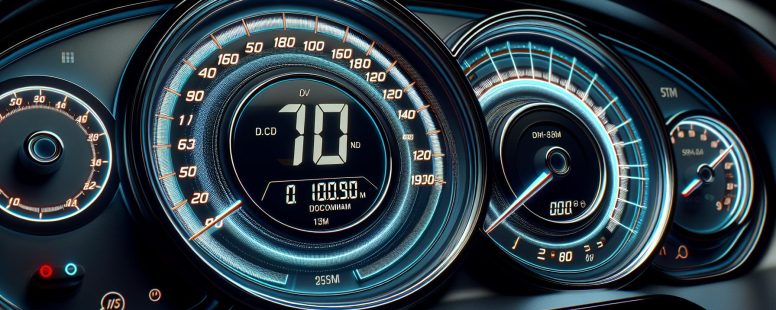
Picture yourself cruising down a scenic highway, the hum of your car blending with the rhythm of the open road. As you glance at your dashboard, two instruments silently work together to tell a story—the odometer and the speedometer. But have you ever paused to wonder what sets them apart?
While one tracks how far you’ve come, marking every mile like chapters in a book, the other captures the thrill of motion, revealing how fast you’re moving in real time. These seemingly simple tools play vital roles in your driving experience, yet their distinct purposes often go unnoticed. Understanding their differences isn’t just fascinating—it can also deepen your appreciation for how vehicles keep us informed and safe on our journeys.
What Is an Odometer?
An odometer is a key instrument in vehicles that records the total distance traveled. It’s located on the dashboard and provides mileage data essential for maintenance, resale value, and legal purposes.
Function and Purpose
The primary function of an odometer lies in tracking accumulated distance over time. This measurement helps schedule routine maintenance like oil changes or tire rotations based on miles driven rather than guesswork. For instance, if your car manual suggests changing the oil every 5,000 miles, the odometer ensures you adhere to this guideline accurately.
Odometers also play a role in determining vehicle resale value. Higher mileage often indicates greater wear-and-tear, which can affect pricing during sales or trade-ins. Some jurisdictions rely on odometer readings for legal documentation when registering or selling vehicles.
Types of Odometers
Mechanical Odometers: These consist of rotating gears and numbered dials to display mileage. They were widely used before digital technology became prevalent but are prone to tampering due to their physical components.
Digital Odometers: Found in modern vehicles, these use electronic systems to record distance digitally and appear as LCD or LED displays. They’re generally more accurate than mechanical versions and include anti-tampering measures.
GPS-Based Odometers: Available as external devices or integrated into advanced systems, they calculate distance using satellite signals instead of wheel rotation data. These are commonly seen in fleet management applications where precise tracking is needed across various terrains.
Each type has distinct advantages depending on application requirements—mechanical models offer simplicity while digital and GPS-based versions provide precision and additional functionalities like trip tracking options.
What Is a Speedometer?
A speedometer is an instrument on your vehicle’s dashboard that displays the real-time speed of the car. It helps you monitor how fast you’re driving, ensuring you stay within legal limits and maintain safety.
Function and Purpose
The primary function of a speedometer is to measure and display the current speed of your vehicle in miles per hour (mph) or kilometers per hour (km/h). It provides instant feedback during driving, allowing you to adjust your pace according to traffic rules or road conditions.
Speedometers also play a role in driver awareness. By keeping track of your speed, it reduces risks associated with over-speeding or under-speeding, like accidents or traffic violations. For example, when approaching school zones with reduced limits, relying on this device prevents unintentional speeding.
Types of Speedometers
Analog Speedometers
Analog models use mechanical components like springs and magnets to indicate speed on a dial. They’re common in older vehicles but offer less precision compared to modern alternatives.
Digital Speedometers
These feature electronic displays showing exact numbers for better readability. They often integrate with advanced systems like GPS for increased accuracy.
GPS-Based Speedometers
Using satellite data, GPS-based devices calculate precise speeds by measuring changes in position over time. They’re especially useful in off-road environments where traditional methods may falter.
Understanding these types ensures you choose what’s suitable for specific needs—whether it’s clarity from digital options or adaptability from GPS units.
Key Differences Between Odometer and Speedometer
Odometers and speedometers serve distinct purposes in vehicles, yet they complement each other in providing critical driving information. Understanding their differences enhances your ability to interpret dashboard data effectively.
Measurement Purpose
The odometer tracks the total distance a vehicle has traveled over its lifespan. It’s essential for scheduling maintenance activities like oil changes after specific mileage milestones. For instance, if an odometer shows 10,000 miles, you know it’s time to check tire wear or change filters.
In contrast, the speedometer measures real-time velocity. It helps you adjust your driving pace based on road conditions or legal speed limits. For example, when you’re driving through a school zone at 15 mph, the speedometer ensures compliance with safety regulations.
Units of Measurement
An odometer records distance in miles or kilometers depending on regional standards. In the US, most vehicles display mileage as it aligns with local conventions.
A speedometer indicates velocity using units such as miles per hour (mph) or kilometers per hour (km/h). The prominence of mph in American vehicles reflects domestic traffic norms, while international models might prioritize km/h displays.
Placement in the Vehicle
Manufacturers place both instruments prominently within the vehicle’s dashboard for easy visibility while driving. The odometer is usually integrated into or near the instrument cluster alongside fuel gauges and warning lights.
The speedometer often occupies a central position within the cluster due to its frequent use during active driving. Its location ensures drivers can monitor their current speed without diverting attention from the road ahead.
Common Misconceptions About Odometers and Speedometers
Odometer Measures Speed
Many believe the odometer indicates how fast you’re driving, but this isn’t true. The odometer records total distance traveled, not real-time velocity. Confusing it with the speedometer can lead to misunderstandings about your car’s performance metrics.
Speedometers Impact Mileage
Some think driving faster increases mileage recorded by the odometer, but the two operate independently. The speedometer reflects real-time speed, while mileage accumulation depends solely on distance covered, regardless of speed variations.
Digital Instruments Are Infallible
There’s a misconception that digital odometers and speedometers are tamper-proof or always accurate. While more secure than mechanical versions, they can still be manipulated if sophisticated tools are used or may display errors due to electronic faults.
Placement Determines Functionality
People often assume instrument placement affects their purpose—like thinking a centrally mounted speedometer changes its role compared to dashboard-mounted ones. But, location doesn’t alter functionality; both instruments retain their specific purposes regardless of positioning.
GPS-Based Options Replace Traditional Ones Entirely
Believing GPS-based odometers and speedometers completely replace analog or digital types isn’t accurate for most vehicles today. Older systems remain prevalent due to cost-effectiveness and compatibility with standard automotive designs.
Importance of Odometer and Speedometer in Vehicles
Odometers and speedometers play a critical role in ensuring safe, efficient, and informed driving. These instruments provide essential data that supports vehicle maintenance, compliance with traffic laws, and overall road safety.
1. Vehicle Maintenance Insights
The odometer helps track total mileage, which directly impacts the scheduling of routine services like oil changes or tire rotations. Ignoring these intervals can lead to engine wear or reduced fuel efficiency. For instance, if your vehicle has covered 5,000 miles without an oil change as recommended by the manufacturer guidelines, engine performance may decline significantly.
2. Legal Compliance
Speedometers ensure you maintain speeds within legal limits for various road types such as highways (e.g., 65 mph zones) or school areas (e.g., 20 mph restrictions). This reduces accidents while avoiding penalties due to speeding violations. Similarly, odometer readings are often required during car registration or when selling a used vehicle to establish its exact usage.
3. Resale Value Determination
Accurate mileage records from the odometer contribute to fair resale valuation of your car. A buyer evaluating two identical models—one with 30,000 miles versus another at 90,000—will likely choose the lower-mileage option due to less expected wear.
4. Real-Time Driving Adjustments
Speedometers provide immediate feedback on velocity adjustments needed for weather conditions like rain or snow-covered roads where driving too fast increases risk factors like skidding.
These tools combined help create safer experiences within every journey made by offering both historical distance insights and live speed monitoring abilities helpful across diverse situations including off-road trails (GPS-based metrics).
Conclusion
Understanding the unique roles of the odometer and speedometer enhances your driving experience and safety. Each instrument serves a distinct purpose, yet they work together to provide essential information for maintaining your vehicle and navigating the road responsibly.
By staying informed about these tools, you’re better equipped to track mileage accurately, schedule maintenance effectively, monitor speed in real time, and make smarter decisions behind the wheel. Whether it’s ensuring proper service intervals or adhering to speed limits, both instruments play a vital role in keeping your journeys smooth and stress-free.
To provide the best experiences, we use technologies like cookies to store and/or access device information. Consenting to these technologies will allow us to process data such as browsing behaviour or unique IDs on this site. Not consenting or withdrawing consent, may adversely affect certain features and functions.
Functional
Always active
The technical storage or access is strictly necessary for the legitimate purpose of enabling the use of a specific service explicitly requested by the subscriber or user, or for the sole purpose of carrying out the transmission of a communication over an electronic communications network.
Preferences
The technical storage or access is necessary for the legitimate purpose of storing preferences that are not requested by the subscriber or user.
Statistics
The technical storage or access that is used exclusively for statistical purposes.The technical storage or access that is used exclusively for anonymous statistical purposes. Without a subpoena, voluntary compliance on the part of your Internet Service Provider, or additional records from a third party, information stored or retrieved for this purpose alone cannot usually be used to identify you.
Marketing
The technical storage or access is required to create user profiles to send advertising, or to track the user on a website or across several websites for similar marketing purposes.