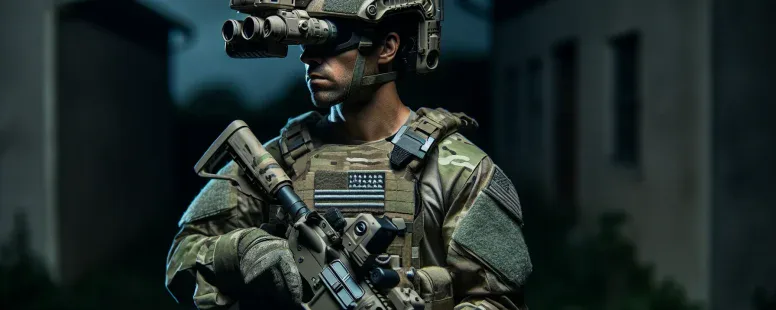
Picture navigating the darkest of nights with clarity that feels almost supernatural. Night vision technology has revolutionized how we perceive and operate in low-light environments, but not all devices are created equal. If you’ve ever wondered about the difference between traditional Night Vision Goggles (NVGs) and Ground Panoramic Night Vision Goggles (GPNVGs), you’re not alone.
While both tools amplify your ability to see in darkness, they serve distinct purposes and offer unique advantages. NVGs have long been a staple for military, law enforcement, and outdoor enthusiasts due to their reliability and simplicity. GPNVGs, on the other hand, take night vision to the next level with an expanded field of view that immerses you in unparalleled situational awareness.
Overview Of NVGs And GPNVGs
Night vision devices like NVGs and GPNVGs enhance visibility in darkness using advanced optical technologies. Both serve unique purposes, with key differences in their design and application.
What Are NVGs?
NVGs, or Night Vision Goggles, amplify minimal light to provide a clear view in low-light environments. These devices use image intensification technology to collect ambient light from sources like the moon or stars. By converting photons into electrons and amplifying them, they create visible images for the user.
Military personnel commonly rely on NVGs during nighttime operations due to their lightweight design and ease of use. Law enforcement officers also use them for surveillance, while outdoor enthusiasts adopt them for activities such as hunting or camping at night. For example, monocular NVGs are preferred by hunters who value mobility over depth perception.
Most traditional NVGs offer a 40-degree field of view (FOV), making them suitable for focused tasks but less ideal for monitoring wider areas. This narrow FOV can limit situational awareness when compared to more advanced systems.
What Are GPNVGs?
GPNVGs (Ground Panoramic Night Vision Goggles) provide an enhanced panoramic field of view by integrating four separate image intensifier tubes. Unlike traditional NVGs that restrict you to 40 degrees, GPNVGs extend your vision up to 97 degrees through overlapping optical fields.
These devices are specifically designed for tactical applications where situational awareness is critical—such as Special Operations missions. Their ability to detect threats across a broader area makes them invaluable in dynamic combat zones or urban warfare scenarios.
But, the increased functionality comes with added weight and cost. For instance, a standard pair of GPNVGs can weigh over two pounds and may require additional training due to their complex setup. Even though these challenges, elite military units favor these goggles because they significantly improve operational capabilities under challenging conditions.
Both NVGs and GPNVGs revolutionize how users perceive darkness but cater differently based on specific operational demands.
Key Features And Specifications
Night vision technology has evolved to meet diverse operational demands, with NVGs and GPNVGs showcasing distinct capabilities. Understanding their key features helps you choose the right tool for your specific needs.
Design And Build Quality
NVGs feature a compact design, prioritizing simplicity and durability. Their robust construction withstands harsh environments, making them reliable for extended use in military operations or outdoor activities. These devices often include adjustable head mounts for user comfort.
GPNVGs incorporate a more complex build with four image intensifier tubes housed in a wider frame. This design enhances functionality but adds bulk. Advanced materials improve durability, though their intricate structure requires careful handling during deployment.
Field Of View
NVGs typically offer a 40-degree field of view, suitable for focused tasks like navigation or surveillance in low-light conditions. This narrower perspective limits peripheral awareness but simplifies operation.
GPNVGs expand situational awareness with a panoramic 97-degree field of view. By integrating multiple intensifiers, they provide seamless coverage across a broader visual range. Tactical missions benefit significantly from this enhanced visibility.
Weight And Portability
NVGs are lightweight and portable, weighing approximately 1-2 pounds depending on the model. Their minimal weight reduces fatigue during prolonged wear and supports ease of mobility across diverse terrains.
GPNVGs weigh around 2-3 pounds due to additional components like extra lenses and housing structures. While manageable for trained personnel, they demand acclimation to prevent strain during extended missions or high-intensity scenarios.
Performance Comparison
Analyzing the performance of NVGs and GPNVGs reveals distinct strengths in specific operational scenarios. Both devices excel in enhancing vision during low-light conditions but differ significantly in their capabilities and design.
Night Vision Capabilities
NVGs leverage image intensification technology to amplify ambient light, such as moonlight or starlight, providing a clear monochromatic view. These goggles are effective for general navigation and observation tasks where precision isn’t critical. For example, military personnel conducting patrols benefit from NVGs’ ability to highlight terrain features within a 40-degree field of view.
GPNVGs, on the other hand, use four separate image intensifier tubes to extend the field of view up to 97 degrees. This panoramic perspective enables users to perceive peripheral movements without turning their heads, which proves invaluable during dynamic operations like room-clearing missions or urban combat environments.
Situational Awareness
Situational awareness is markedly superior with GPNVGs due to their wider coverage area. By offering nearly double the visual range compared to standard NVGs, GPNVGs minimize blind spots and provide a more comprehensive understanding of surroundings. Elite units operating in high-stakes environments gain tactical advantages by quickly identifying threats from multiple angles simultaneously.
In contrast, NVGs suit scenarios requiring focused attention on specific tasks rather than broad situational analysis. For instance, search-and-rescue teams often rely on NVGs when scanning narrow corridors or confined areas where peripheral vision holds less importance.
Durability And Reliability
NVGs are renowned for their robust construction and resilience under harsh conditions. Compact designs ensure durability during prolonged use in rugged terrains or adverse weather situations like heavy rain or sandstorms. Their lighter weight also reduces physical strain over extended deployments.
While GPNVGs maintain high build quality, their complex structure introduces additional components that could demand more maintenance over time. The increased weight might affect user endurance if worn for long periods without proper acclimation training; but, these trade-offs are offset by enhanced functionality tailored for specialized applications.
Use Cases And Applications
Both NVGs and GPNVGs serve distinct purposes across various fields. Their applications depend on their design, features, and operational capabilities.
Military And Tactical Use
NVGs are essential in military operations requiring navigation through low-light environments. Soldiers rely on these devices for patrols, reconnaissance missions, and target identification. Their 40-degree field of view offers a focused perspective suitable for tasks demanding precision. For example, infantry units often use NVGs to maintain stealth while observing enemy positions at night.
GPNVGs enhance tactical efficiency in complex scenarios like urban combat or special operations. The panoramic 97-degree field of view provides superior situational awareness by covering peripheral areas without head movement. Elite units such as Navy SEALs use GPNVGs during hostage rescue missions where split-second decisions are critical. But, the added weight requires physical conditioning and advanced training to maximize effectiveness.
Civilian And Recreational Use
NVGs have practical applications for civilians engaging in nighttime activities like hunting, wildlife observation, or hiking. These goggles amplify minimal ambient light, enabling clear vision even under starlight conditions. Outdoor enthusiasts frequently choose NVGs due to their lightweight design and user-friendly operation.
Although less common among civilians due to cost and complexity, GPNVGs find limited use in specialized recreational contexts such as high-end airsoft simulations or private security training exercises. Their expansive field of view enhances realism and tactical immersion but demands experience for proper handling.
Price And Accessibility
NVGs are generally more affordable and accessible compared to GPNVGs. Entry-level NVGs start around $1,000 and can reach up to $5,000 for high-end models with advanced features. These devices are widely available through military surplus stores, outdoor equipment retailers, and online platforms. Their lower price point and straightforward operation make them a popular choice among hobbyists, law enforcement agencies, and budget-conscious users.
GPNVGs, on the other hand, are significantly more expensive due to their advanced technology and specialized design. Prices typically range from $30,000 to $40,000 per unit. This cost reflects their cutting-edge panoramic field of view and superior situational awareness capabilities. Accessibility is limited as they’re primarily distributed through defense contractors or specialized suppliers catering to elite military units.
The higher cost of GPNVGs also stems from their complex build quality and additional training requirements for effective use. While some civilian enthusiasts might acquire them for niche activities like immersive simulations or collections, these goggles remain beyond the financial reach of most individuals.
Conclusion
Choosing between NVGs and GPNVGs eventually depends on your specific needs and operational priorities. If you require a lightweight, reliable option for general low-light tasks or outdoor activities, NVGs are an excellent choice. But, for advanced tactical missions where situational awareness is critical, the wider field of view provided by GPNVGs offers unmatched advantages even though their higher cost and complexity.
Each device serves distinct purposes, so understanding their strengths and limitations ensures you select the right tool for your environment. Whether you’re navigating rugged terrain or conducting high-stakes operations, both technologies continue to redefine visibility in darkness.
To provide the best experiences, we use technologies like cookies to store and/or access device information. Consenting to these technologies will allow us to process data such as browsing behaviour or unique IDs on this site. Not consenting or withdrawing consent, may adversely affect certain features and functions.
Functional
Always active
The technical storage or access is strictly necessary for the legitimate purpose of enabling the use of a specific service explicitly requested by the subscriber or user, or for the sole purpose of carrying out the transmission of a communication over an electronic communications network.
Preferences
The technical storage or access is necessary for the legitimate purpose of storing preferences that are not requested by the subscriber or user.
Statistics
The technical storage or access that is used exclusively for statistical purposes.The technical storage or access that is used exclusively for anonymous statistical purposes. Without a subpoena, voluntary compliance on the part of your Internet Service Provider, or additional records from a third party, information stored or retrieved for this purpose alone cannot usually be used to identify you.
Marketing
The technical storage or access is required to create user profiles to send advertising, or to track the user on a website or across several websites for similar marketing purposes.