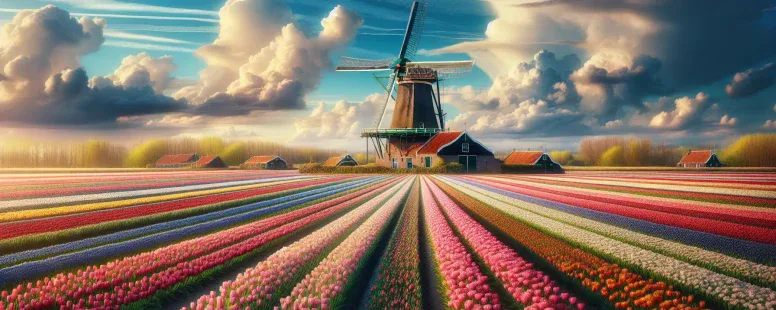
Picture yourself cycling past endless tulip fields as the salty North Sea breeze brushes your cheeks. You might call this place Holland—but is that really where you are? The names swirl together like windmills and canals in your mind, but there’s a twist most travelers miss.
What if understanding the real difference between the Netherlands and Holland unlocks a richer, more authentic adventure? Knowing the truth can help you avoid common mistakes, impress locals, and see hidden gems others overlook. Get ready to unravel a centuries-old mix-up that’s more fascinating than you’d expect.
Understanding the Terms: Netherlands vs. Holland
Parsing ‘Netherlands’ and ‘Holland’ brings up a classic linguistic puzzle, and you’ll run into it faster than a Dutch bike on an Amsterdam morning. Picture you’re at Schiphol Airport—someone asks if you’re excited about visiting Holland, but your ticket says ‘Netherlands’. Why’s that? The answer’s anchored in geography, history, and language.
‘Netherlands’ refers to the whole country: a sovereign state in northwestern Europe with 12 provinces, a flat landscape, and over 17 million people. The term translates to ‘low lands’, a nod to the nation’s rivers and polders below sea level. You’ve likely heard about cities like Utrecht, Groningen, or Maastricht—these are not in Holland, but each shapes the Dutch identity.
‘Holland’ points specifically to just two provinces: North Holland and South Holland. These regions housed historic ports, major trade centers, and cities like Amsterdam, Rotterdam, and The Hague. In the 17th century, Dutch naval power and commerce soared from these areas, so outsiders started using ‘Holland’ to mean the whole nation. Even local sports fans chant “Hup Holland Hup,” keeping the confusion alive at every World Cup.
You might wonder: Does it matter which term you use? Locals notice—using ‘Holland’ in Groningen can spark friendly correction. Think of it as mixing up New York City with New York State, only with centuries of national pride mixed in. Dutch government even campaigns internationally to shift branding from ‘Holland’ to ‘the Netherlands’ (source: DutchNews.nl, 2020).
Consider this: When someone offers you ‘Hollandse kaas’ (cheese), they might mean Gouda or Edam, both from Holland proper, but the Frisians up north will insist their yellow wheels are just as tasty. Why limit yourself? This subtle distinction maps out hidden destinations and stories that can transform your travels from typical snapshots to nuanced explorations.
So, next time you’re in Delft or hiking the Veluwe dunes, ask yourself—are you discovering the Netherlands, or just Holland? If curiosity guides you, both labels open doors, but knowing the difference marks you as a savvy explorer in the crowd.
Historical Background
This section provides historical context for the confusion between “Netherlands” and “Holland”. You see centuries of political change and regional influence layered into how these names took hold.
Origins of the Netherlands
The Netherlands started as a collection of regions under various rulers. You find early records in the 10th century when areas like Zeeland, Utrecht, and Friesland held local power. These regions often banded together—sometimes out of mutual defense, sometimes to drain land from the sea—forming a loose federation called the “Low Countries” (Nederlanden in Dutch), according to the Royal Dutch Library.
Spanish rule arrived in the 16th century, and soon sparked the Eighty Years’ War. The northern provinces, led by Utrecht and Gelderland, declared independence in 1581, creating the Republic of the Seven United Netherlands. Through turbulent alliances and shifting borders, these provinces gradually solidified the identity seen in today’s 12-province nation. Powerful trade cities like Utrecht and Groningen thrived alongside Amsterdam’s famous canals, each leaving an indelible mark on Dutch culture.
Emergence of Holland
Holland’s rise happens during the medieval period, as its two provinces—North Holland and South Holland—became economic heavyweights. Merchants in cities like Amsterdam, Rotterdam, and The Hague spearheaded global sea trade so successfully that by the 17th century, the “Dutch Golden Age,” Holland drove much of the country’s wealth and influence. Historical archives from Leiden University note that diplomats and traders abroad often referred to the entire country as “Holland” due to these provinces’ dominance.
Here’s a question: when you picture windmills, tulip fields, or vibrant cities in the Netherlands, are you unknowingly picturing Holland? Many visitors do. Ships emblazoned with “Holland” circled the globe, reinforcing the name internationally. Even today, major museums and art heritage—like the Rijksmuseum in Amsterdam or Mauritshuis in The Hague—sit squarely in Holland, amplifying this provincial legacy.
Contextual distinctions linger. The Dutch government sometimes uses “Holland” for tourism branding, but local Frisians or Limburgers likely prefer “Netherlands”. This echoes centuries of provincial pride embedded deep in language and geography.
Geographic Differences
Understanding the geographic differences between the Netherlands and Holland deepens your sense of place. Holland often steals the limelight, but its story represents only a fraction of the larger Dutch landscape.
Regions That Form Holland
Holland consists of just two provinces: North Holland and South Holland. These regions hug the western coast, featuring vibrant cities like Amsterdam, Rotterdam, and The Hague. Tulip fields paint the countryside in spring, while windmills stand like guardians on the horizon. Picture yourself cycling through Haarlem, discovering wind-blasted polders or tasting cheese at Alkmaar’s market—each experience reveals Holland’s specific charm.
Locals from other Dutch provinces may correct visitors who say “Holland” when they really mean the “Netherlands.” Someone from Utrecht or Friesland, for example, might ask, “Don’t you mean Neder-landen?” This correction reflects both regional pride and the desire to preserve their unique identity. According to the Dutch Office for Statistics (CBS), only about 40% of the country’s population lives in Holland, yet most tourists focus their journeys here, drawn to iconic sights and city life.
The Broader Dutch Country: The Netherlands
The Netherlands expands far beyond Holland’s borders, comprising 12 provinces, each with their own identity. Picture the peaceful Friesland, where lakes dominate the landscape and people speak Frisian alongside Dutch. Travel south, and Limburg offers rolling hills, unlike the famously flat terrain in Holland. Venture east to Gelderland, where the Hoge Veluwe National Park spreads out in leafy abundance, showcasing wildlife and sandy dunes.
If you’ve ever marveled at UNESCO-listed canals in Amsterdam or sipped coffee by the North Sea, you’ve sampled just a piece of this larger nation. Regional dialects, folk festivals, and even food shift noticeably from province to province—for example, Brabant is known for its soft “worstenbroodjes” rolls, while Zeeland boasts fresh mussels.
You might hear Dutch citizens joke, “In Holland, they cycle; in Drenthe, we walk through forests.” This captures the rich tapestry of culture and activity found throughout the Netherlands. The country’s compact size—just over 16,000 square miles—makes it easy to explore regions with distinct stories and natural wonder. So, are you ready to journey beyond Holland’s famous tulips and discover the Netherlands’ full spectrum?
Cultural and Political Distinctions
Knowing the split between the Netherlands and Holland’s more than a detail—it’s a window into layered traditions and decades of regional pride. When you walk the streets of Utrecht or Groningen, notice how identity shapes even the flags hanging from windows.
Administrative Structure
The Netherlands functions as a constitutional monarchy with a parliamentary system, which unite 12 provinces under one flag. North Holland and South Holland, while the economic engines are just one-sixth of the whole. Provincial councils, such as those in Friesland and Limburg, control regional policies, allocating budgets for infrastructure or culture— who funds those Frisian language schools? National governance stays central in The Hague, where the Dutch Parliament and government offices operate, even though Amsterdam rings in as the capital. Confusing, right? In 2020, the government even stopped using “Holland” in official tourism branding, seeking clarity (Netherlands Board of Tourism and Conventions, 2020).
Cultural Identity
Dutch identity isn’t a singular thread—it’s a tapestry, woven with dialects, cuisine, folklore, and sometimes, rivalry. People from Brabant celebrate Carnaval with boisterous parades, while those in South Holland gravitate towards quieter Sinterklaas traditions—picture chocolate letters exchanged in bustling Rotterdam markets. Ask a local from Drenthe if they hail from Holland, and you’ll likely meet a polite correction. Each region sets its own festivals and favorites: Limburgers eat vlaai pie at family gatherings, Friesians sing in their own language at rowing regattas. These variations show the country’s pride in nuance. Popular Dutch sayings often use local place names, and even primary school children learn provincial histories, reflecting the reach of historical context into daily life. Swapping “Holland” for “Netherlands” isn’t just linguistic—it bridges centuries-old divides and honors the voices of millions well beyond the Randstad’s canals.
Common Misconceptions
Many travelers assume “Holland” and “Netherlands” mean the same thing, but only a fragment of locals buy into that myth. Picture stepping into a quaint Limburg bakery and asking if it’s “Holland”—most bakers would chuckle, then say, “You’re in the Netherlands, but Holland’s over there.” That’s not just geography; that’s an identity marker.
Sometimes guidebooks and international sports teams amplifies the confusion by using “Holland” on merchandise or in their chants. Even global companies—Philips for electronics, Heineken for beer, and ING for banking—capitalize on the Holland brand, splashing it across ads for Olympics and expos (Source: Netherlands Board of Tourism). Yet, the Dutch government retired the “Holland” branding as of 2020, referencing the wish to represent all 12 provinces (Government of the Netherlands).
Suppose you ask locals in Groningen or Zeeland about “Holland pride,” you’ll likely uncover friendly retorts or heated debates. Here’s where old sea tales surface: in the 17th century, merchant fleets from Holland dominated world trade, so sailors abroad simply shouted “We’re from Holland!” instead of naming off the full country. That’s history writ in conversation.
Think about this: if someone called all of England “London,” or all of the US “New York,” would that spark notable reactions? The Dutch example fits the same tendency to reduce a diverse country to its most famous part—an easy shortcut, yet accuracy gets lost in translation.
Curiosity prompts a deeper look. Why emphasis “Holland” when the Netherlands includes provinces like Friesland, where Frisian language thrives, or Limburg, known for dialects and hills unlike Holland’s flatness? Such nuances carry weight. Try exploring regional festivals—carnival in Brabant or Elfstedentocht in Friesland—and notice how each corner of the Netherlands celebrates distinct roots that often gets overshadowed by Holland’s international fame.
Here’s a quick check. Are you calling the tulip fields of Flevoland “Holland” out of habit, or have you asked a local which province you’re standing in? Next time you plan your travels, challenge yourself to ask locals about their roots, and listen for the pride in the answer. Every region, every city, every village carries a story far bigger than the single word “Holland” can capture.
Why the Difference Matters
Saying “Holland” when you mean the “Netherlands” shapes how locals see your curiosity, so would you rather be seen as a tourist stuck in a travel brochure or as an explorer digging into the country’s real stories? When you step into Limburg’s rolling hills or grab a pastry in Friesland, people notice if you lump every province under “Holland.” For example, a local in Groningen might laugh and correct you, reminding you their home stretches far from tulips and canal houses. The word you pick acts as a handshake—a sign of respect for regional identity—don’t underestimate the power of a few syllables to spark conversation.
Confusion often comes from tour groups or global events like the Olympics, which sometimes call the national soccer team “Holland.” Media coverage, tourism campaigns, and pop culture sometimes repeat the myth, even though the Dutch government moved away from the “Holland” label in 2020 (“Nederland,” Rijksoverheid). You might see “Holland” on cheese packaging or tulip bulbs, but each time you use it, you leave out ten provinces—think Drenthe’s forests, Zeeland’s dykes, or Utrecht’s medieval streets. Would using the wrong name stop you from uncovering hidden gems across the Netherlands? If you treat the country as one monolithic Holland, you’d miss out on the diversity that makes each visit unique.
Schools in the Netherlands teach students early about civic pride and their province’s story. Picture a classroom in North Brabant—kids raise hands and compete to list local delicacies or festivals. Isn’t that regional awareness part of what makes travel richer? When the Dutch national anthem “Wilhelmus” plays, it unifies, but festivals like Carnaval or Elfstedentocht reveal different sides of Dutch identity based on province. You can see how misunderstanding the terms narrows your lens.
Historically, this linguistic mix-up links to trading power—merchants from Holland (North and South) branded their provinces as the gateway to Europe’s riches. Yet, history gives depth, not just confusion. If you travel to the Rijksmuseum and gaze at paintings of windmills, realize many are from Holland, but the painter might’ve come from Overijssel or Gelderland. A documentary on Dutch innovation, such as the Delta Works, covers solutions from Zeeland, not just Holland.
Culturally, using the correct term signals that you see the people, not just the postcard. Once you strike up a conversation in Friesland or Twente, questions pop up: “Where’s your home in the Netherlands?” or “What makes your region special?” Your vocabulary, accurate or lazy, sets the tone. Some say language builds bridges—why not craft yours from the full, vibrant map of the Netherlands? If you do, you discover not just places, but the pride and story behind each one. Don’t just memorize the difference—walk, taste, and experience it.
Conclusion
When you understand the real difference between the Netherlands and Holland you open the door to a much richer travel experience. Locals appreciate it when you show respect for their regional identities and you’ll find that your conversations become more genuine.
So next time you visit this beautiful country go beyond the usual stops and use the right names. You’ll not only impress the people you meet but also discover parts of the Netherlands that most travelers overlook.
To provide the best experiences, we use technologies like cookies to store and/or access device information. Consenting to these technologies will allow us to process data such as browsing behaviour or unique IDs on this site. Not consenting or withdrawing consent, may adversely affect certain features and functions.
Functional
Always active
The technical storage or access is strictly necessary for the legitimate purpose of enabling the use of a specific service explicitly requested by the subscriber or user, or for the sole purpose of carrying out the transmission of a communication over an electronic communications network.
Preferences
The technical storage or access is necessary for the legitimate purpose of storing preferences that are not requested by the subscriber or user.
Statistics
The technical storage or access that is used exclusively for statistical purposes.The technical storage or access that is used exclusively for anonymous statistical purposes. Without a subpoena, voluntary compliance on the part of your Internet Service Provider, or additional records from a third party, information stored or retrieved for this purpose alone cannot usually be used to identify you.
Marketing
The technical storage or access is required to create user profiles to send advertising, or to track the user on a website or across several websites for similar marketing purposes.