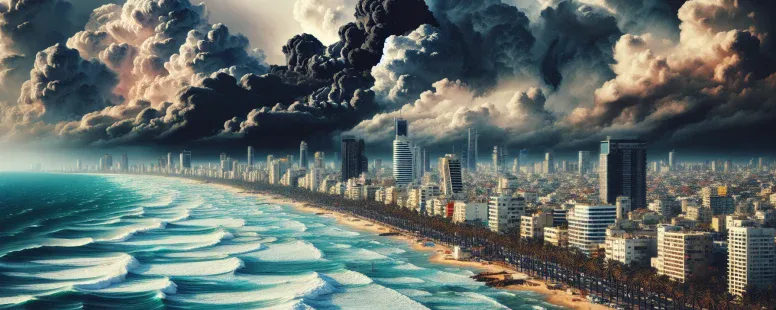
Picture the sky swirling with dark clouds, winds howling like a freight train, and rain pounding the earth in sheets. You might call it a hurricane or maybe a cyclone, but are they really the same beast with different names? The answer is more fascinating than you’d expect.
You’ll uncover how these storms shape coastlines, influence travel plans, and even impact global economies. Knowing the subtle differences between a hurricane and a cyclone isn’t just trivia—it can help you stay safer and more prepared. Get ready to explore the hidden world behind these powerful forces of nature and discover why their names matter more than you think.
Understanding Hurricanes and Cyclones
You often see the names hurricane and cyclone thrown around when storm coverage intensifies on TV or social media. These terms aren’t just labels—they each carry geographic, cultural, and scientific meanings. Hurricane describes a storm system with strong winds that swirl counterclockwise in the Northern Hemisphere over the Atlantic Ocean, like 2005’s Hurricane Katrina that devastated New Orleans [NOAA]. Cyclone, on the other hand, refers to the same type of storm when it develops over the Indian Ocean or South Pacific, such as Cyclone Idai, which left a massive impact on Mozambique in 2019 [World Meteorological Organization]. why the same spinning wall of rain gets a different name depending on where it forms? Picture the Earth as a spinning stage, with each storm dancer twirling across it and picking up a new moniker with each move. If you travel in the Caribbean, people talk about hurricanes. Fly to Bangladesh, you’d hear about cyclones tearing through villages and disrupting rivers.
Meteorologists define both hurricanes and cyclones as tropical cyclones—a larger semantic category that connects their shared origins. They’re both low-pressure systems that draw heat energy from warm ocean water, spiraling into powerful vortexes of wind and clouds. Local preparedness plans hinge on knowing whether a cyclone or a hurricane might be coming your way, as naming influences warnings and evacuation orders.
You might ask, do local traditions or languages shape these storm names? Yes, absolutely—cultural context affects scientific definitions, as coastal communities pass down stories of legendary storms. For instance: Did you know the deadliest tropical cyclone ever recorded, the 1970 Bhola cyclone in Bangladesh, killed at least 300,000 peoples? Or that the Saffir-Simpson Hurricane Wind Scale, used in the Atlantic, rate hurricanes from Category 1 (minimal) to Category 5 (catastrophic), but in the South Pacific, different national scales are in use?
When government agencies issue alerts, travelers and residents alike rely on instantly recognizing the term—cyclone in Chennai, hurricane in Miami. Would you pack a go-bag and evacuate if an alert said a “severe tropical cyclone” approaches? For millions, understanding these words is mandatory for responding quickly and safeguarding lives.
Global warming makes these storms more intense and unpredictable, according to the Intergovernmental Panel on Climate Change (IPCC). So when you read storm names scrolling across the screen, picture entire coastlines bracing for impact, each community using its own language to tell the same urgent story—a storm is coming, and you must be ready.
Key Differences Between Hurricanes and Cyclones
Both hurricanes and cyclones form from the same forces, but, like distant relatives gathering for a family reunion, they show up in entirely different places, with names that hold centuries of history. As you explore their unique stories, you’ll notice how geography, tradition, and climate shape not just their identities, but their impact.
Geographical Regions
Geography draws the battle lines for hurricanes and cyclones. You’ll hear “hurricane” rumbling across the Atlantic and Northeast Pacific, lashing places like Florida, the Caribbean, or Mexico. Meanwhile, “cyclone” sweeps into headlines in the Indian Ocean, Bangladesh, or Western Australia, leaving behind different tales of destruction.
Travelers might ask, “Is a hurricane ever coming to India?” That’s never. Instead, you’ll prepare for cyclones, as the Arabian Sea or Bay of Bengal roars to life from May to November. This regional identity isn’t just a technical footnote; it shapes disaster planning and emergency communication, and, as the NOAA points out, it’s critical for coordinating international relief efforts.
Naming Conventions
Naming conventions serve as both alarm bells and cultural mirrors. In Miami, meteorologists gift storms English or Spanish names—think Hurricane Katrina or Hurricane Maria—rotating through predetermined lists. Over in Kolkata, cyclones receive names from a roster contributed by countries surrounding the Indian Ocean; Amphan (2020) and Fani (2019) became household words overnight.
Ever wondered why these names matter? When a cyclone slams into Odisha or a hurricane barrels toward Texas, the name gets broadcast on radios, scrawled on social media, and etched into family memories. Research from the WMO shows that clear, locally relevant naming increases public response rates to warnings. So, in a very real way, these names save lives.
Formation and Seasonality
Formation for both hurricanes and cyclones depends on warm sea surface temperatures exceeding 26°C, moist air, and low wind shear. In the grammar of storms, these elements combine like clauses to create the sentence of devastation. Yet seasonality shifts across hemispheres: hurricanes typically arrive between June and November, pinning the Atlantic hurricane season on calendars from Texas to the Bahamas, while cyclones often peak from October to May, tailing the monsoon in the Indian Ocean and South Pacific.
Satellite imagery tells stories that mere words can’t. Think of Cyclone Nargis in 2008, spiraling into Myanmar in May, versus Hurricane Harvey spinning toward Houston in August 2017. You might assume these titans obey similar rules, but subtle distinctions—like how the Madden-Julian Oscillation boosts Indian Ocean cyclones—reveal surprising regional secrets.
If you picture Earth’s oceans as musical instruments, hurricanes and cyclones play different keys on a similar scale. Does your region expect one over the other? Tune in to forecasts, because the difference could alter your safety plan, your insurance, and maybe your story for years to come.
Similarities Between Hurricanes and Cyclones
You witness hurricanes and cyclones share almost identical birthplaces, spinning life up from warm, open oceans. Both monsters draw their rage from water that’s at least 26°C (79°F)—picture the ocean’s surface acting like a pot of boiling water that powers these engines of chaos (NOAA). You’ll notice in satellite imagery, their spiral arms stretch like dancers circling a silent eye. Energy gathers, winds accelerate, clouds tower thirty thousand feet—whether you’re tracking Cyclone Winston in Fiji or Hurricane Katrina in the Gulf of Mexico, their anatomy barely changes.
They’re labeled tropical cyclones in meteorological handbooks. Each possesses three basic ingredients: low air pressure at the center, rising saturated air, and high winds circling the calm “eye.” Does your city suddenly darken as winds howl and debris rattles against your window? That’s a classic sign of a tropical cyclone’s arrival, no matter what label local reporters stamp on it.
Communities across continents brace with similar strategies. Emergency agencies from Florida to Bangladesh reinforce roofs, stock up food, and prep evacuation plans. For example, both Cyclone Amphan (2020) and Hurricane Irma (2017) forced mass evacuations and damaged hundreds of thousands of homes. Families recalling those nights often describe cold fear, flickering candlelight, and radio static as the only connection to the outside world.
Early warnings use the same tools, such as Doppler radar and satellite data, gathering wind speed, direction, and barometric pressure. Questions arise: Can you tell hurricanes and cyclones apart if you strip away names and only measure their traits? Meteorologists can’t. The same atmospheric drama unfolds, wherever you find these storms.
Both reflect the growing impact of climate change. United Nations reports point to warmer ocean temperatures fueling more intense storms. You may recall news about longer hurricane seasons or unexpected cyclone paths; these patterns signal shared risks for millions. Would you rethink your plans, if storm tracks now threaten new regions?
Neighboring towns, sometimes half a world apart, recount eerily parallel tales—streets swamped, crops ruined, wildlife scattered. Experts say about 70% of global tropical cyclone losses stem from flooding and storm surges (WMO). In this, a hurricane becomes a cyclone, a cyclone morphs into a hurricane—names shifting, devastation remains a constant guest.
Impact and Preparedness
Hurricanes and cyclones impact you in profound ways, altering coastlines, flooding entire neighborhoods, and leaving long shadows over local economies. Picture a bustling coastal city—think Houston or Mumbai—suddenly plunged into darkness, wind lashing buildings, seawater flooding streets, families huddled close waiting for the storm’s fury to pass. The difference lies mostly in geography, but the devastation? Equally unforgettable. You’re never really ready, but preparedness decides whether the aftermath means rebuilding or merely coping.
Communities in the Atlantic, bracing for hurricane season, stockpile sandbags, board up windows, and review evacuation routes every June. In contrast, families in Bengal or Queensland recognize cyclone alerts differently. Their storm shutters close with practiced speed. But, do you wonder about the unseen stories—will the warning systems work in the night, or will powerlines fall before alarms sound? Real-time data from satellites, like those modeled by NOAA or the Indian Meteorological Department, now guide urgent texts and sirens, buying precious hours for evacuation.
Everywhere, technology quietly works behind the scenes. Predictive modeling, improved since the late 1990s by agencies like NASA and the Australian Bureau of Meteorology, stitches together temperature readings, Doppler radar, and drone footage. Yet, if you picture a rural coastal village with little access to smartphones, does the forecast ever reach every ear in time? That warning gap can kill—just as it did in the 1999 Odisha cyclone, when delayed communication contributed to over 10,000 deaths (Indian Red Cross Society).
Preparedness is local and deeply personal. Installing hurricane straps on your roof in Florida, building cyclone shelters in Bangladesh, or mapping stormwater runoff in New Orleans—each action ties mitigation efforts to regional risk. Consider how culture shapes readiness: Indigenous knowledge sometimes outpaces modern alerts, villagers reading animal behavior or the stillness of air before clouds gather. Would you trust satellite beeps over a grandmother’s weather sense?
Weather metaphors echo through shared language. “A hurricane of destruction,” “a cyclone of change.” These aren’t just words—they’re lived realities for the millions facing monster storms each year. Hurricanes Katrina, Harvey, and Cyclone Yasi left scars mapped in memory, insurance claims, and lost family photos. FEMA reports $81 billion in damages for Katrina alone, but personal loss can’t be measured so neatly.
Action, not fear, defines real preparedness. You can prepare by knowing your escape route, stocking non-perishable foods, scanning insurance papers, and setting out solar-powered lights. If you invest in community—joining CERT teams, volunteering in drill exercises, or sharing your knowledge—you shape your resilience and create a ripple effect. Isn’t it astonishing that a well-rehearsed evacuation can save thousands, while a single missed alert changes history?
Burstiness fills the skies as a cyclone forms; perplexity is wondering if the next hurricane will change your life or pass quietly out to sea. No matter where you stand—on a Gulf Coast pier, a Fijian beach, or a city rooftop—the difference in names is small. The impact and your preparedness? That’s the story people will tell for generations.
Conclusion
Whether you call it a hurricane or a cyclone, understanding these storms helps you stay informed and ready for whatever nature throws your way. Paying attention to local warnings and learning from past experiences can make a real difference in your safety. By staying connected with your community and keeping up with the latest technology, you’ll be better prepared to face the challenges these powerful storms bring. Remember, your knowledge and readiness could help protect not just your home, but your entire neighborhood.
To provide the best experiences, we use technologies like cookies to store and/or access device information. Consenting to these technologies will allow us to process data such as browsing behaviour or unique IDs on this site. Not consenting or withdrawing consent, may adversely affect certain features and functions.
Functional
Always active
The technical storage or access is strictly necessary for the legitimate purpose of enabling the use of a specific service explicitly requested by the subscriber or user, or for the sole purpose of carrying out the transmission of a communication over an electronic communications network.
Preferences
The technical storage or access is necessary for the legitimate purpose of storing preferences that are not requested by the subscriber or user.
Statistics
The technical storage or access that is used exclusively for statistical purposes.The technical storage or access that is used exclusively for anonymous statistical purposes. Without a subpoena, voluntary compliance on the part of your Internet Service Provider, or additional records from a third party, information stored or retrieved for this purpose alone cannot usually be used to identify you.
Marketing
The technical storage or access is required to create user profiles to send advertising, or to track the user on a website or across several websites for similar marketing purposes.