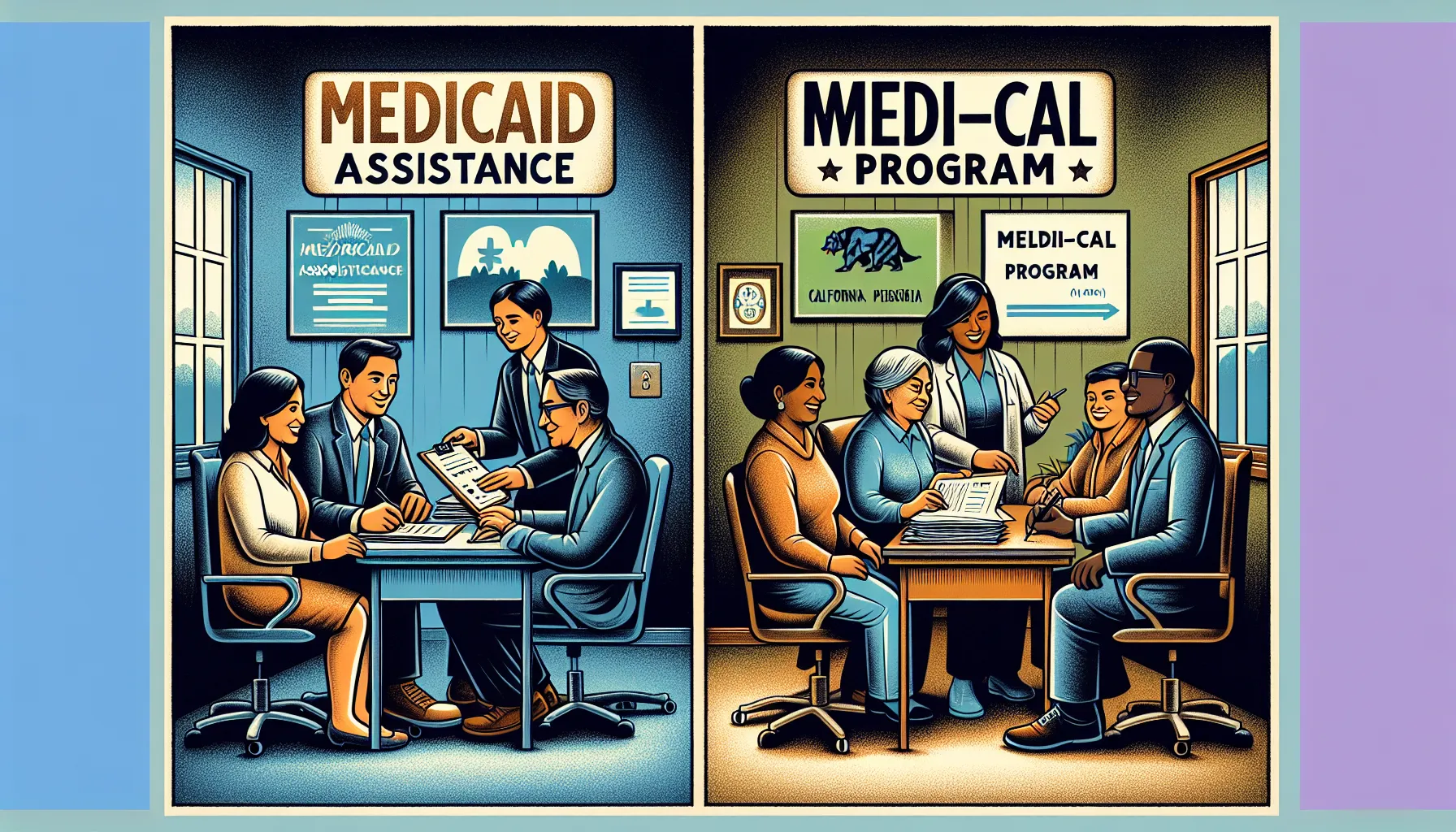
Navigating the intricacies of healthcare programs can often be challenging, especially when similar terms such as Medicaid and Medi-Cal are involved. These two vital programs provide essential health coverage to millions, yet understanding their distinctions is critical for informed decisions about your healthcare.
Understanding Medicaid
What Is Medicaid?
Medicaid is a joint federal and state program designed to provide healthcare coverage for individuals and families with limited income and resources. Established in 1965, its primary goal is to ensure that vulnerable populations have access to necessary medical services.
Eligibility Criteria for Medicaid
Eligibility for Medicaid generally depends on factors such as income level, household size, age, disability status, and other specific conditions as determined by the federal government and individual states. States may have variable cutoff points due to differing income thresholds.
Key Benefits Offered by Medicaid
Medicaid covers a broad range of medical services, including doctor visits, hospital stays, preventive care, mental health services, long-term care, and prescription medications. Preventive chronic disease screening is a particularly important component — routine metabolic tests that help distinguish A1C from blood glucose readings, for example, are typically covered, helping enrolled patients catch conditions like diabetes before they escalate. States may offer additional benefits tailored to meet their residents’ unique healthcare needs.
Introduction to Medi-Cal
What Is Medi-Cal?
Medi-Cal is California’s state-specific Medicaid program. It operates under the same overarching guidelines as Medicaid but includes provisions tailored to serve California residents effectively.
Eligibility Requirements for Medi-Cal
Medi-Cal eligibility criteria align with Medicaid but consider unique factors relevant to California. Income limits might differ slightly, and there are additional pathways for coverage, such as programs specifically for pregnant women and children. Families supporting children with developmental conditions such as Down Syndrome or Autism often rely heavily on Medi-Cal for access to specialist therapies, behavioural interventions, and long-term support services that private insurance may limit or exclude.
Benefits Coverage Under Medi-Cal
The services covered under Medi-Cal include those mandated by Medicaid, along with additional benefits complementary to California’s healthcare objectives, such as enhanced behavioral health services and support for underrepresented communities.
Comparison of Medicaid and Medi-Cal
Shared Characteristics Between the Programs
Both Medicaid and Medi-Cal aim to provide healthcare assistance to eligible beneficiaries. They offer essential benefits encompassing medical, preventative, and specialized care services.
Unique Features of Each Program
While Medicaid provides a broad structure applicable across states, Medi-Cal introduces California-specific modifications, focusing on local public health priorities, enhanced behavioral health services, and language accessibility programs. It is also worth understanding how these public programs differ from private insurance options — the choice between an HMO and a PPO plan, for example, represents a completely different tier of coverage with different trade-offs around cost, provider flexibility, and referral requirements compared to Medicaid or Medi-Cal.
Who Should Apply for Medicaid vs. Medi-Cal?
Residents outside California should consider Medicaid. Those within California must engage with Medi-Cal. The eligibility rules and application processes are state-specific, ensuring tailored healthcare assistance across jurisdictions.
Tips for Navigating Application Processes
Steps for Applying to Medicaid
Determine your eligibility by reviewing your household size and income level under federal guidelines.
Visit your state’s Medicaid website to initiate the application process.
Provide necessary documentation, such as income verification and identity proof.
Once submitted, review approval status and follow up promptly as needed.
Steps for Applying to Medi-Cal
California residents should access Medi-Cal through the Covered California platform or the county social services office.
Understand the Medi-Cal-specific programs applicable to your situation.
Submit accurate and comprehensive documentation to ensure efficient application processing.
Stay updated with continued eligibility reviews and renewals based on Medi-Cal’s requirements.
FAQs About Medicaid and Medi-Cal
Addressing Common Misconceptions
A common misconception is that “Medi-Cal” is an alternative name for Medicaid. In reality, Medi-Cal is California’s Medicaid implementation with state-specific features, and not an entirely separate entity.
Additional Resources for Assistance
For any uncertainties about Medicaid, visit the official Medicaid website. For Medi-Cal questions, the state-run Medi-Cal portal provides comprehensive guidance and access to live support representatives.
To provide the best experiences, we use technologies like cookies to store and/or access device information. Consenting to these technologies will allow us to process data such as browsing behaviour or unique IDs on this site. Not consenting or withdrawing consent, may adversely affect certain features and functions.
Functional
Always active
The technical storage or access is strictly necessary for the legitimate purpose of enabling the use of a specific service explicitly requested by the subscriber or user, or for the sole purpose of carrying out the transmission of a communication over an electronic communications network.
Preferences
The technical storage or access is necessary for the legitimate purpose of storing preferences that are not requested by the subscriber or user.
Statistics
The technical storage or access that is used exclusively for statistical purposes.The technical storage or access that is used exclusively for anonymous statistical purposes. Without a subpoena, voluntary compliance on the part of your Internet Service Provider, or additional records from a third party, information stored or retrieved for this purpose alone cannot usually be used to identify you.
Marketing
The technical storage or access is required to create user profiles to send advertising, or to track the user on a website or across several websites for similar marketing purposes.