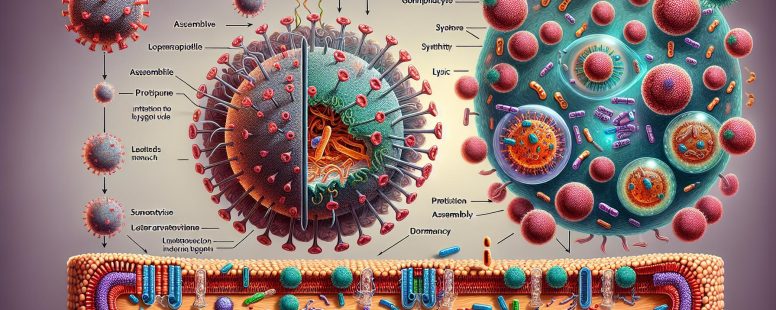
Ever wondered about the invisible wars waged inside your body? The battleground: every single cell. The warriors: viruses, with their unique strategies of invasion and replication. Two such tactics are the lytic and lysogenic cycles – seemingly similar yet starkly different in execution.
Understanding Viral Replication Cycles
Let’s investigate into the intricacies of viral replication cycles. These complex processes are at the core of how viruses multiply and spread within host organisms.
What is a Viral Replication Cycle?
A viral replication cycle describes the series of steps that a virus undertakes to reproduce itself inside a host cell. In general, these stages include attachment, penetration (or entry), uncoating, synthesis (replication), assembly, and release. But, there are variations in this process based on whether we’re discussing lytic or lysogenic cycles.
In brief terms:
Attachment: The virus latches onto specific molecules on the surface of its target cell.
Penetration: It enters the cell either by fusing with it or through endocytosis.
Uncoating: Once inside, protective protein coats around genetic material break down.
Synthesis: This stage involves copying viral genes using cellular machinery for new virions creation
5.Sssembly:: Newly formed components come together to form complete particles—viruses!
6.Release : Finally,the newly created viruses exit their current home , ready to infect other cells
The key distinction between lytic and lysogenic lies mainly in what occurs during synthesis phase; but more details about those will be covered later!
Importance of Viral Replication Cycles
Viral replication plays an essential role in understanding infectious diseases caused by viruses as well as strategies needed for prevention,treatment,and control.Grasping each step can provide insight into where interventions might work best.For instance,vaccines often aim at blocking attachment while antiviral drugs may interfere with various stages such as penetration,synthesis etc..Also,this knowledge also fuels advancements towards developing gene therapy tools which use modified harmless versions .On another level,it supports efforts aimed at curbing pandemics since predicting behaviour becomes easier when you know exactly how they reproduce and spread. It’s fair to say, decoding viral replication cycles holds the key to mastering our responses in the face of a virus attack.
Exploring the Lytic Cycle
Unraveling viral tactics, we’ll investigate into one prominent strategy – the lytic cycle. Here’s an intricate look at its unique characteristics and process.
Key Features of the Lytic Cycle
Primarily, it’s a destructive cycle. The virus commandeers your cell machinery with one purpose: to reproduce rapidly and release new viruses that continue their infectious mission. In this ruthless replication journey, destruction of host cells is inevitable.
Two standout features define this vicious cycle:
Replication: Viruses in a lytic phase hijack cellular functions for rapid reproduction (e.g., bacteriophage T4). They employ your cell’s resources to manufacture necessary components such as proteins or nucleic acids.
Cell Lysis: After using up resources from host cells for multiplication purposes, these deceitful invaders cause ‘lysis’ — bursting open of infected cells (example: influenza virus), releasing newly formed virions ready to attack other healthy hosts.
Process of Lythic Cycle
The relentless pursuit by viruses during their replicative siege unfolds systematically through five stages:
Attachment involves recognizing and binding specifically onto target receptors present on potential host surfaces – like lock meeting key.
With successful attachment comes penetration where they inject genetic material inside unsuspecting targets; think trojan horse!
3 . Once inside enemy lines begins uncoating—a stage unveiling hidden blueprints within protective layers—marking start line for construction activities ahead.
4 . Synthesis follows next—an assembly-line production churning out essential parts required for assembling progeny virions swiftly.
5 . Maturation sees orderly arrangement of produced parts forming complete units prepared strategically before final strike!
Diving into the Lysogenic Cycle
In this section, we’ll investigate deeper into another viral strategy – the lysogenic cycle. Unlike its counterpart, lytic cycle, which causes immediate harm to host cells through rapid reproduction and subsequent lysis; the lysogenic cycle takes a more covert approach.
Key Features of the Lysogenic Cycle
One primary characteristic of a lysogenic virus lies in its ability to integrate itself into a host cell’s genetic material. This feature allows it not only to remain dormant but also become part of that very cell’s DNA or RNA structure.
Another crucial aspect is their latency period: they don’t immediately go about reproducing after infecting a cell – unlike what happens during lytic cycles where replication starts post-haste upon infection. Instead, these viruses can lie low within infected cells for extended periods before initiating active replication.
Finally, an interesting quirk inherent in these types arises when external factors like stress or radiation trigger them out from dormancy and back into action—this phenomenon gets termed as induction.
Process of Lysogenic Cycle
Understanding how exactly this subtle invasion unfolds involves five stages:
Attachment: Much like in any other life form’s reproductive process begins with finding suitable hosts—the bacteriophage attaches onto susceptible bacteria using specialized structures called pili on bacterial surfaces.
Penetration/Integration: Post attachment phase comes penetration–wherein nucleic acids from phage enter bacterial cytoplasm leading up next towards integration step wherein incorporated phage DNA embeds seamlessly amongst original bacterial genome turning former essentially invisible now immune system wise so avoiding detection while simultaneously benefitting ongoing cellular machinery meant originally solely catering microbial growth requirements sans pathogen interference
Prophage Maintenance/Dormancy: Once integrated successfully prophages stay latent inside hosts without causing apparent damage unless certain environmental triggers incite activation cue transforming pathogens suddenly active entering dreaded lytic phase causing cell destruction later
Induction: This involves a switch from lysogenic to lytic mode, activated by certain environmental triggers or stressors such as UV light exposure or chemical agents.
Lysis/Release: In the final stage of this cycle—much like its more aggressive counterpart—the host bacterium undergoes lysis and releases multiple copies of newly formed phages.
Difference Between Lytic and Lysogenic Cycle
The complexity of the viral world unravels when we examine two principal strategies adopted by viruses: the lytic cycle and lysogenic cycle. While these processes may seem similar, they hold distinct characteristics that set them apart.
Comparing Lytic and Lysogenic Cycle’s Processes
As you investigate deeper into virology, it’s essential to compare both cycles’ processes side-by-side for a clearer understanding.
In terms of operation during infection:
The Lytic cycle follows an immediate course with rapid multiplication leading to cell destruction;
Contrarily, in a Lysogenic phase, latency is preferred over instant reproduction.
Now think about how their action influences cellular integrity:
Viruses adopting the Lytic strategy cause substantial damage resulting in host cell lysis;
On contrastingly lighter note,Lysogeny, being less destructive initially allows integration within host genetic material without causing apparent harm.
Yet there comes time even in lysogeny where tranquility breaks down:
Under certain stress factors like radiation or chemical influence,the latent virus switches gear from dormancy towards active replication which results inevitably in cellular demise.
Key Differences: Lytic Vs Lysogenic
Decoding differences between both paths helps enhance our grasp on infectious diseases caused by viruses thereby informing strategies for prevention,treatment,and control.
Let’s break down some key distinctions:
Timeframe : Immediate destruction versus Dormant Integration
In a nutshell,Lytics are hasty players who rush towards their end goal — creating new virions at cost of killing off hosts.On other hand,you find lysogens patiently integrating themselves into host DNA ,resting quietly until triggered back into activity.
2 . Impact on Host Cell
Clearly noticeable is fact that impact suffered under each path differs significantly.While intense havoc wrought upon host cell during lytic cycle is apparent,lysogens,maintain a relatively peaceful co-existence until external triggers awaken them.
Strategy for Replication
The replication strategies also differ: Lytic viruses hijack the cellular machinery immediately after infection, replicating and assembling new virions within infected cells, which then burst to release progeny.In stark contrast,**lysogenic virus’ integration into host’s DNA allows it to lie low,duplicating itself alongside normal cellular reproduction over time.
As you can see, comprehending these cycles becomes essential in managing viral infections effectively.Understanding this interplay between lytic and lysogenic pathways helps steer development of vaccines and antiviral drugs,critical factors in controlling pandemics.
Impact of Lytic and Lysogenic Cycles on Host Organisms
As you investigate deeper into the world of virology, it’s vital to grasp how lytic and lysogenic cycles impact host organisms. Both these viral replication strategies exert unique influences on infected cells.
Impact of Lytic Cycle on Host
The effect caused by the lytic cycle is nothing short of dramatic for host cells. The virus infiltrates a cell, takes over its machinery for protein synthesis, replicates rapidly using the resources available in that environment, and then initiates self-destruction—lysis—that leads to cellular death. This brutal process wreaks havoc at a microscopic level within an organism leading to observable symptoms such as fever or fatigue in larger life forms like humans.
Also, this violent method isn’t just harmful because it results in loss; rather every lysis releases thousands upon thousands new virions ready continue their deadly work elsewhere within body systems causing widespread damage very quickly if left unchecked.
This relentless multiplication can pose significant challenges when combating viral infections medically due cause severe inflammation tissue necrosis during later stages disease progression which complicating treatment options may even lead fatalities certain circumstances especially individuals with compromised immune defenses.
Impact of Lysogenic Cycle on Host
Contrasting sharply with destruction brought about by lytic cycle lies another path viruses choose tread called ‘lysogeny’. Unlike former pathway doesn’t immediately kill invaded hosts instead opting stealthier approach where genetic material from invading entity gets integrated directly DNA RNA target cell effectively becoming part biological processes inside without raising any alarms – least not right away!
Such integration allows dormant state known as prophage allowing virus evade detection while still being capable causing harm future once conditions become favorable activation i.e., induction triggered various external factors such radiation stress etc resulting sudden shift back destructive pattern associated with typical lifecycle seen previously mentioned scenario whereby eventually ends up killing releasing offspring spread further infection eventually even though appearing benign start has potential turn deadly long run.
Understanding these impacts not only aids in our comprehension of viral behavior, but also shapes strategies for developing effective antiviral medications and vaccines which are crucial tools pandemic control response efforts globally.
Practical Applications of Understanding Lytic and Lysogenic Cycles
Comprehending the nuances between lytic and lysogenic cycles isn’t merely academic. It’s got real-world implications in medicine, genetic engineering, and public health planning.
Medicine: From Diagnostics to Therapeutics
The contrast in action timescales gives healthcare professionals a diagnostic edge. For instance, viruses operating through the lytic cycle—like Influenza A or common cold Coronaviruses—are likely behind sudden onset symptoms due to their rapid multiplication strategy leading to cell destruction[^1^]. On the other hand, a latent infection suggesting involvement from a virus using lysogeny—such as Herpes Simplex Virus (HSV)—can be inferred when symptoms emerge long after initial exposure[^2^].
Treatment-wise, understanding these viral behaviors aids in designing antiviral drugs that target different stages of each replication cycle. Case-in-point being Acyclovir—an anti-HSV drug—that disrupts DNA synthesis during HSV’s active phase by pretending it’s part of its genome[^3^].
Genetic Engineering: Harnessing Viral Strategies
Viruses aren’t all doom-and-gloom; they’ve offered useful tools for genetic engineers too! The bacteriophage lambda—a classic example displaying both lytic/lysogenic strategies—is used for creating gene libraries because it can integrate foreign genes into host bacteria via its prophage state[^4^].
Another application is seen with retroviruses used as vectors—the carriers—in gene therapy protocols thanks largely to their integration abilities derived from typical behavior observed during lysogenesis^[5]^.
Public Health Planning: Proactive Instead Of Reactive
Knowledge about whether an infectious agent favors either one or alternatingly uses both cycles informs decision-making at local community levels up-to national pandemic response strategies.
Knowing SARS-CoV-2 operates on principles similar those employed by many acute respiratory illness-causing agents allows more accurate prediction of its spread patterns. That helps with timely imposition of measures like social distancing or travel restrictions to contain it[^6^].
It’s also why the World Health Organization maintains a global influenza surveillance program, which is based on an understanding that flu viruses generally use lytic cycles for replication making them highly contagious but limited in duration^[7]^.
To conclude, your grasp over these viral strategies—lytic and lysogenic—isn’t just for scientific curiosity. It’s got far-reaching implications across diverse fields all aimed at improving human health outcomes.
([^5]): Gene Therapy Using Retroviral Vectors – PubMed ([https://pubmed.ncbi.nlm.nih.gov/29099766/)
(^6): From SARS-CoV-2 emergence to COVID-19 control—a review.
| Nature Reviews Immunology| vol21 pp665–675|
Conclusion
So you’ve navigated the complex world of viral replication, deciphering the difference between lytic and lysogenic cycles. You’ve seen how viruses adopt these strategies to replicate within host cells – one quick and destructive, the other slow yet insidious.
You now understand that knowing these distinct paths is vital in many ways. It’s crucial for diagnosing diseases based on symptom onset, designing effective antiviral drugs or planning public health strategies against infectious disease outbreaks.
But it doesn’t stop at healthcare! Your newfound knowledge also extends its influence into genetic engineering where scientists harness these natural processes as tools to advance their research.
With this understanding under your belt, you’re better equipped not just to comprehend current viral threats but also contribute towards solutions aimed at improving human health outcomes worldwide.
To provide the best experiences, we use technologies like cookies to store and/or access device information. Consenting to these technologies will allow us to process data such as browsing behaviour or unique IDs on this site. Not consenting or withdrawing consent, may adversely affect certain features and functions.
Functional
Always active
The technical storage or access is strictly necessary for the legitimate purpose of enabling the use of a specific service explicitly requested by the subscriber or user, or for the sole purpose of carrying out the transmission of a communication over an electronic communications network.
Preferences
The technical storage or access is necessary for the legitimate purpose of storing preferences that are not requested by the subscriber or user.
Statistics
The technical storage or access that is used exclusively for statistical purposes.The technical storage or access that is used exclusively for anonymous statistical purposes. Without a subpoena, voluntary compliance on the part of your Internet Service Provider, or additional records from a third party, information stored or retrieved for this purpose alone cannot usually be used to identify you.
Marketing
The technical storage or access is required to create user profiles to send advertising, or to track the user on a website or across several websites for similar marketing purposes.