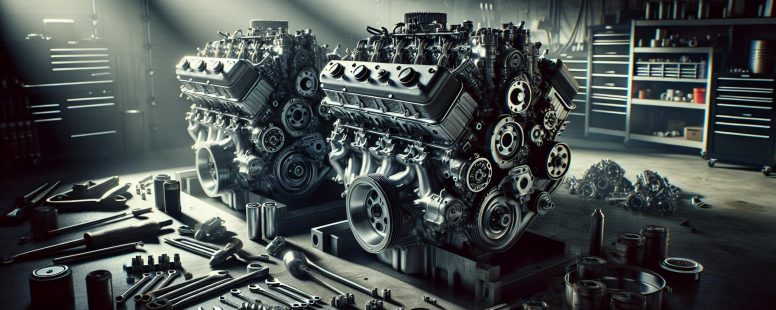
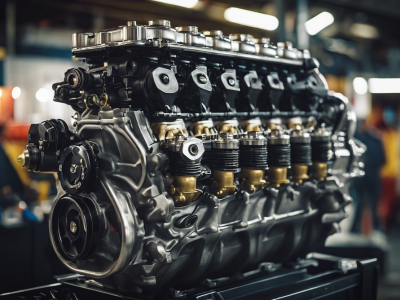
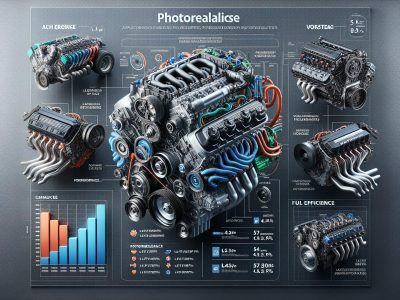
powerhouse engines, the LQ4 and LQ9 have cemented their place in automotive history. But what really sets these two apart? If you’re diving into the world of performance upgrades or engine swaps, understanding their differences could mean the difference between good and exceptional results.
Picture unlocking hidden potential under your hood—whether it’s towing heavy loads or chasing raw speed on an open road. The LQ4 and LQ9 might look similar at first glance, but subtle distinctions in design and performance make each one uniquely suited for specific needs. Ready to uncover which is right for you? Let’s break it down step by step.
Overview Of LQ4 And LQ9 Engines
The LQ4 and LQ9 engines, part of General Motors’ LS-based family, are popular for their durability and performance. Both originated from the Vortec series, designed for trucks and SUVs.
History And Background
The LQ4 debuted in 1999 as a versatile iron-block engine. It powered heavy-duty vehicles like the Chevrolet Silverado 2500HD and GMC Sierra 3500HD. Built for towing and hauling, it became a reliable choice for work-focused applications.
The LQ9 followed in 2002 with more power to cater to high-performance needs. Designed for premium vehicles like the Cadillac Escalade and Silverado SS, it offered greater horsepower while maintaining robustness. This made it ideal for drivers seeking a balance between utility and speed.
Core Specifications
Both engines share an iron block with aluminum heads but differ in compression ratios and output. The LQ4 has a lower compression ratio of 9.4:1, producing up to 300-325 horsepower depending on model years. Its design prioritizes reliability under demanding conditions.
In contrast, the LQ9 features a higher compression ratio of 10:1, delivering increased power at 345 horsepower across compatible platforms. This adjustment enhances acceleration but requires premium fuel to maximize efficiency.
Specification
LQ4
LQ9
Compression Ratio
9.4:1
10:1
Horsepower
Up to 325 HP
Up to 345 HP
Block Material
Iron
Iron
Usage
Work Vehicles
Performance Vehicles
These differences highlight their distinct roles within GM’s lineup while showcasing shared engineering excellence suitable for various automotive projects or upgrades.
Key Differences Between LQ4 And LQ9
Understanding the key differences between the LQ4 and LQ9 engines helps you make informed decisions for upgrades or swaps. Their distinctions lie in crucial areas like compression ratios, cylinder head designs, and performance outputs.
Compression Ratio
The compression ratio is a primary difference between these two engines. The LQ4 features a 9.4:1 compression ratio, while the LQ9 has a higher 10:1 ratio. This increase in the LQ9 allows it to generate more power by efficiently compressing air-fuel mixtures before combustion. If you’re aiming for high-performance applications, this detail could influence your choice.
Higher compression ratios in the LQ9 deliver enhanced throttle response but may require premium fuel to avoid knocking under heavy loads. In comparison, the lower ratio of the LQ4 makes it more forgiving with regular-grade fuel usage.
Cylinder Head Design
Both engines share aluminum cylinder heads but differ in their casting identifiers and flow characteristics. The LQ4 uses 317-casting heads optimized for durability rather than maximum airflow efficiency. These heads are ideal for heavy-duty tasks like towing due to their robust design.
The LQ9 employs similar 317-casting heads but benefits from a flat-top piston design that complements its higher compression setup. This combination contributes to increased combustion chamber pressure and overall power output when compared to the dished pistons found in an LQ4.
Performance And Output
Performance metrics further distinguish these engines. The stock configuration of an LQ4 produces up to 325 horsepower at 5,200 rpm with 370 lb-ft of torque at 4,000 rpm—well-suited for workhorse vehicles prioritizing reliability over speed.
On the other hand, the factory-tuned output of an LQ9 reaches up to 345 horsepower at identical RPM levels alongside torque ratings up to 380 lb-ft. These enhancements make it suitable for performance-focused builds or luxury vehicles requiring extra acceleration capabilities straight off assembly lines.
Applications Of LQ4 And LQ9
The LQ4 and LQ9 engines find unique applications based on their design and performance characteristics. Their differences in compression ratios, horsepower, and torque define their suitability for specific automotive projects.
Common Uses Of LQ4
You often see the LQ4 engine in heavy-duty vehicles like trucks and SUVs. Its 9.4:1 compression ratio ensures reliability under demanding conditions, making it ideal for towing trailers or hauling heavy loads. For example, the Chevrolet Silverado HD series utilizes the LQ4 to deliver consistent performance during long hauls.
Many off-road enthusiasts also prefer the LQ4 due to its robust iron block construction. It withstands harsh terrains without compromising durability, which makes it suitable for modified 4×4 builds. If you’re planning an engine swap focusing on endurance over speed, the LQ4 is a practical choice.
Common Uses Of LQ9
The higher-performance-focused LQ9 commonly appears in premium vehicles like Cadillac Escalade models from early 2000s. With a 10:1 compression ratio delivering up to 345 horsepower, it’s tailored for luxurious rides that demand both power and smoothness.
Performance vehicle builders frequently select the LQ9 when prioritizing speed-oriented upgrades or drag racing setups. The flat-top piston design enhances power output significantly while maintaining compatibility with aluminum cylinder heads optimized for high-combustion efficiency.
If your project involves creating a muscle car or boosting acceleration metrics in a street racer build, consider integrating the versatile capabilities of an LQ9 engine into your setup.
Pros And Cons Of LQ4 And LQ9
Understanding the pros and cons of the LQ4 and LQ9 engines helps you make informed decisions based on reliability, performance, and application needs.
Advantages Of LQ4
Durability for Heavy-Duty Use
The LQ4’s iron block provides exceptional durability under heavy loads. This makes it suitable for towing, hauling, or use in trucks and SUVs like Chevrolet Silverado 2500HD.
Cost-Effectiveness
The engine is more budget-friendly compared to the LQ9 due to its lower compression ratio (9.4:1) and simpler design.
Compatibility with Regular Fuel
Unlike the premium-fuel-dependent LQ9, the LQ4 operates efficiently on regular gasoline, reducing long-term fuel expenses.
Advantages Of LQ9
Higher Power Output
With a 10:1 compression ratio and flat-top pistons, the LQ9 delivers 345 horsepower and 380 lb-ft of torque—ideal for high-performance vehicles like Cadillac Escalade or custom racing setups.
Enhanced Throttle Response
Its increased power improves throttle response during acceleration, offering superior driving dynamics in sports-oriented applications.
Performance Upgrades Potential
The higher base output allows easier tuning for even greater performance gains when paired with aftermarket modifications such as turbochargers or camshaft upgrades.
Which One Should You Choose?
Deciding between the LQ4 and LQ9 depends on your specific needs, budget, and intended application. Both engines excel in different scenarios, offering unique advantages.
Factors To Consider
Performance goals play a vital role in your decision. If you prioritize greater horsepower and throttle response, the LQ9’s 345 horsepower output and 10:1 compression ratio deliver superior performance for high-speed applications. Conversely, if durability under heavy loads is more important to you, the LQ4’s 325 horsepower output and lower 9.4:1 compression ratio provide reliability ideal for towing or hauling.
Fuel requirements also differ between the two engines. The LQ4 runs efficiently on regular fuel, reducing operating costs over time. Meanwhile, the LQ9 demands premium fuel due to its higher compression ratio but rewards this with enhanced power delivery and responsiveness.
Budget is another critical factor. The LQ4 generally costs less upfront than the LQ9 because of its focus on utility over performance. But, if you’re planning modifications or performance upgrades later on, consider how these costs align with your overall goals.
Use Cases For Each Option
The LQ4 suits heavy-duty vehicles like Chevrolet Silverado HD trucks or GMC Yukon XL SUVs that frequently tow trailers or carry heavy cargo. Its robust iron block design ensures long-term durability under strain.
The LQ9 fits premium SUVs like Cadillac Escalades or sports-oriented projects such as classic car restorations aiming for modernized high-performance engines. Its flat-top pistons and higher power output make it a favorite among enthusiasts pursuing speed-focused builds.
Conclusion
Choosing between the LQ4 and LQ9 comes down to understanding your performance goals, budget, and vehicle application. Each engine offers unique advantages tailored to specific needs, whether you’re prioritizing towing reliability or high-performance upgrades. By evaluating their capabilities and aligning them with your requirements, you can make an well-informed choice that enhances your vehicle’s potential. Both engines have proven themselves as reliable powerhouses, so the choice eventually depends on what matters most for your project.
To provide the best experiences, we use technologies like cookies to store and/or access device information. Consenting to these technologies will allow us to process data such as browsing behaviour or unique IDs on this site. Not consenting or withdrawing consent, may adversely affect certain features and functions.
Functional
Always active
The technical storage or access is strictly necessary for the legitimate purpose of enabling the use of a specific service explicitly requested by the subscriber or user, or for the sole purpose of carrying out the transmission of a communication over an electronic communications network.
Preferences
The technical storage or access is necessary for the legitimate purpose of storing preferences that are not requested by the subscriber or user.
Statistics
The technical storage or access that is used exclusively for statistical purposes.The technical storage or access that is used exclusively for anonymous statistical purposes. Without a subpoena, voluntary compliance on the part of your Internet Service Provider, or additional records from a third party, information stored or retrieved for this purpose alone cannot usually be used to identify you.
Marketing
The technical storage or access is required to create user profiles to send advertising, or to track the user on a website or across several websites for similar marketing purposes.