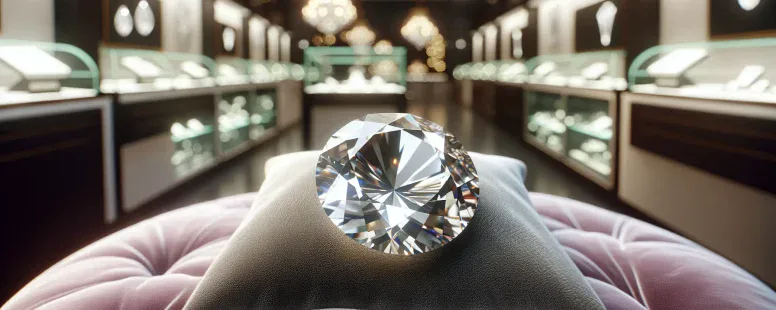
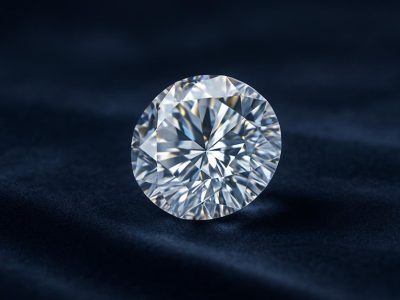
Picture a diamond glinting under the light—a tiny universe of fire and brilliance captured in your hand. But what if you could choose the origin of that sparkle? Picture standing at the crossroads of ancient earth and cutting-edge science, where one stone is born deep within the planet over billions of years, while the other emerges from a laboratory in just weeks.
You might think all diamonds are created equal, yet the story behind each one is a world apart. Lab-grown diamonds don’t just offer a stunning alternative—they bring unexpected benefits that might surprise you, from ethical sourcing to environmental impact. As you weigh your options, the differences between these dazzling gems could change the way you see luxury forever.
What Are Lab-Grown Diamonds?
You probably heard some jeweler whisper, “lab-grown diamonds are real diamonds,” and that’s not just sales talk. Laboratory-grown diamonds, created by mimicking the planet’s tectonic symphony in a controlled chamber, capture carbon atoms and align them into a dazzling crystal lattice. These gems emerge not in ancient earth, but in factories run by specialists using advanced methods like Chemical Vapor Deposition (CVD) or High Pressure High Temperature (HPHT). For example, a CVD diamond forms when methane gas breaks down in a plasma reactor, carbon raining onto a tiny diamond seed until it blossoms into a sparkling stone—sometimes taking little more than a month.
Why go this route? Synthetic diamonds instantly sidestep the destructive legacies tied with mines in Botswana or Russia. You get the hardness of a Mohs 10, the fiery dispersion you see in a Tiffany’s showcase, and ethical sourcing you could explain at a dinner party. Some people say, “But is it a real diamond?” According to the Federal Trade Commission and the Gemological Institute of America, yes, it is (see FTC, GIA). The carbon structure, refractive index, and Mohs hardness match. Even seasoned gemologists sometimes need specialized equipment to spot differences—such as unique growth lines or minor trace elements.
Picture giving a proposal ring, knowing no one dug deeper into the earth, no river rerouted, no community displaced for your gemstone. Ethical shoppers and eco-conscious celebrities—Leonardo DiCaprio, for example—champion lab-grown diamonds for precisely these reasons. Still, ask yourself: If two icebergs float by, identical but for their journey, do you value origin or outcome?
What Are Natural Diamonds?
Natural diamonds, in the context of geology and luxury, begin far underground. You might picture deep volcanic pipes, called kimberlite pipes, channeling ancient carbon atoms upward from Earth’s mantle. Over 1 to 3 billion years ago, intense heat and pressure transformed pure carbon into the crystalline atomic lattice you now recognize as a diamond (National Geographic, 2021). Every diamond emerged through a cosmic lottery of geological forces, their formation often predating the earliest complex life on the planet.
Think about how a single rough diamond crystal, hidden for eons, gets unearthed during a modern mining operation in Botswana or Russia. Picture this: workers expose the stone after sifting thousands of tons of rock, hoping for that telltale sparkle. Could you picture yourself holding a gemstone that predates the dinosaurs? For example, the Cullinan Diamond—now part of the British Crown Jewels—was discovered in South Africa in 1905 and weighed 3,106 carats as a rough stone. Wouldn’t a stone like this carry the mysterious energy of Earth’s ancient past?
Worldwide, natural diamond reserves concentrate in just a few countries. According to the US Geological Survey (2023), over 70% of natural diamonds come from Russia, Botswana, and Canada, with diamond mines like Jwaneng (Botswana) or Mirny (Russia) serving as modern treasure sites. Gem-quality natural diamonds comprise only a small percentage—less than 20%—of all mined stones. The rest are industrial grade, used in drills, saws, and lasers (De Beers Group, 2022). Did you realized that your jewelry may share its origin with a tool on an offshore oil rig?
No two natural diamonds have identical inclusions; tiny trapped minerals, fractures, or subtle shades testify to the chaotic conditions deep within the Earth. Gemologists use these “fingerprints”—differences in nitrogen concentrations, crystal distortions, or phosphate inclusions—to confirm geographic origin and age (GIA, 2023). Whenever you admire a natural diamond’s fire, remember that its identity is written in the very atoms and scars it carries.
Why do natural diamonds provoke such longing and controversy? Maybe it’s the stories of fortunes changed by diamond rushes, or the persistent mystery: How many more diamond riches lies still hidden beneath Arctic permafrost or African deserts? Could natural diamonds be a storyteller’s fossil, carrying not just the memory of deep time but the marks of every hand and technology that’s ever touched them?
Entity Type
Example
Notable Fact
Country of origin
Botswana, Russia, Canada
Three countries produce over 70% of natural diamonds
Famous diamond
Cullinan Diamond
Largest gem-quality rough diamond ever found
Geological structure
Kimberlite pipe
Volcanic channel delivering diamonds to surface
Natural inclusion
Phosphate, Nitrogen
Used to verify geographic origin in gem labs
Natural diamonds, forged under Earth’s immense forces, are more than gemstones—they’re physical chronicles of planetary history and human ambition. When you wear one, you’re not just displaying a stone but embracing a story written across geologic ages.
Key Differences Between Lab-Grown and Natural Diamonds
Diamonds capture stories—either painstakingly written by Earth itself or rapidly stitched together in a laboratory. You keep hearing they look identical, but deeper contrasts keep surfacing when you trace their journeys, test their brilliance, or check their impacts.
Origin and Formation Process
Lab-grown and natural diamond origins don’t overlap. Natural diamonds reveal Earth’s ancient narrative, where carbon atoms locked under colossal pressure and heat form gemstones over 1-3 billion years—most emerging from volcanic kimberlite pipes (GIA, 2023). In contrast, lab-grown diamonds like those produced using CVD or HPHT don’t echo geologic drama but mirror high-tech ingenuity, forming in just 6-10 weeks inside hermetic chambers. You won’t see volcanic rock with a lab diamond, only computer screens and precise machinery. Think about it: could a diamond grown in weeks ever tell the same story as one forged with dinosaurs walking the land?
Physical and Chemical Properties
Both diamonds share atomic structure—carbon atoms packed in rigid latticework—so their hardness, dispersion, and luster always match. Gemologists using standard optical tools can’t visually separate them. But, subtle “growth marks” or trace elements, detectable only with advanced spectroscopy, sometimes tip off experts to a diamond’s human-made origin (IGI, 2024). You’d get 10 out of 10 for guessing hardness on the Mohs scale for either diamond every time. Still, lab diamonds might show metallic inclusions from catalysts, while natural ones can include tiny minerals older than any living thing you’ll ever meet.
Value and Pricing
You often see steep price divides. Lab-grown diamonds usually retail for up to 60% less than mined stones of matching size and clarity (Rapaport, 2024). Supply chain differences play a starring role—companies grow labs to meet market demand, but natural reserves don’t replenish. Many buyers love the lower sticker price, but some collectors treat rarity as the ultimate cachet. Which would you rather wear: a marvel of affordability or a piece of Earth’s ancient lottery?
Type
Average Formation Time
Typical Retail Price (1 ct, VS1, G color)
Notable Inclusions
Lab-Grown
6-10 weeks
$1,000 – $2,000
Metallic flux/synthetic features
Natural
1-3 billion years
$5,000 – $8,000
Minerals, ancient crystal growth
Environmental Impact
Lab-grown diamonds often come with a lighter footprint, especially in water use and habitat disruption (Stanford, 2021). Mining 1 carat of natural diamond sometimes disturbs 100 sq ft of earth, requires 126 gallons of water, and emits up to 140 lbs of CO2. Lab-grown equivalents typically cut emissions and water waste by 60-80%. Still, lab diamond growth demands significant electricity, especially from fossil fuels in some factories. If energy grids run dirty, eco gains shrink. Could your sparkle be greener? Only if you trace the factory’s power source.
Ethical Considerations
You hear debates rage: Are all diamonds innocent? Lab-grown diamonds don’t fuel ancient mining conflicts or displace communities—buyers trace origins to sterile labs, not shadowy mines. Some luxury brands push “beyond conflict free,” yet natural supply chains still face watchdog scrutiny, especially in West African nations like Sierra Leone. You’ll see celebrities, like Leonardo DiCaprio, choosing lab-grown stones for red-carpet ethics (Forbes, 2022). Does knowing your jewelry avoided human suffering increase its value for you, or does only geological ancestry appeal?
Every diamond you encounter—regardless of history—reflects an intersection of science, ethics, and ambition.
How to Identify Lab-Grown vs. Natural Diamonds
When standing in a jewelry store, gazing at a glittering array of diamonds, you might wonder: “How could anyone spot the difference?” Both lab-grown and natural diamonds shimmer with promises—yet hidden beneath their radiant surfaces are stories only science could tell. GIA gemologists and advanced gem labs hold the keys to unlock these tales, but you, too, can start to look for subtle clues.
Picture a diamond’s journey. A natural diamond, born deep in Earth’s mantle, gathers ancient memories—tiny mineral inclusions, sometimes called “nature’s birthmarks.” These inclusions, like flecks of graphite or minute crystals, appear under a microscope and acts as signatures of their billion-year genesis. In contrast, lab-grown diamonds, crafted using HPHT or CVD methods, carry their own identifying features. HPHT stones could show metallic flux inclusions—think of tiny metallic spots that glimmer differently than anything you’d find in a geological vault. CVD-grown diamonds often show distinctive growth patterns called striations; these lines look almost as if the gem was painted layer by invisible layer.
Curious about tools and tests? Gem testers with UV light can reveal phosphorescence, a trait sometimes present in HPHT lab diamonds. Phosphorescent glow remains after the lamp is switched off, a phenomenon rare among natural stones. Lasers and spectrometers add another layer—labs like IGI or GIA analyze light absorption, searching for atomic traces left by a stone’s origin. Even diamond inscriptions could tell a story: reputable labs engraves tiny ID numbers on the girdle, linking the gem to a certificate showing lab-grown or natural origins.
Let’s complicate the matter. Some lab-grown diamonds could even fool traditional testers like moissanite probes or standard UV light pens. Tiffany’s anecdote: in 2018, a Paris jeweler mistook a premium CVD diamond for a rare natural stone, until advanced spectroscopy revealed the truth. So you probably want to ask for a grading report from a trusted source before purchasing.
Ask yourself: Do you care more about Earth’s narrative, or modern innovation? If you crave stories forged in magma and time, an inclusion-laden stone beckons. Prefer the clean ethics and environmental story told by science? Phosphorescence and laser-inscribed codes mark a fresh paradigm. Either way, if you use a loupe, request a certificate, and quiz your jeweler, you’re already closer to decoding the diamond’s true identity—so the next time you admire a diamond’s fire, remember that its sparkle is more than surface deep, it’s proof of a journey encoded in atoms.
Pros and Cons of Lab-Grown and Natural Diamonds
Explore the advantages and drawbacks of lab-grown and natural diamonds by considering stories, science, and global trends. Which narrative pulls at your heart more: a diamond’s billion-year journey through Earth’s mantle or the futuristic hum of plasma chambers replicating nature in weeks? These stones share optical splendor but diverge in legacy, ethics, and value.
Lab-Grown Diamonds: Contextual Vectors of Modernity and Ethics
Visualize a diamond born not of volcanic pressure but of Silicon Valley ingenuity. In labs across Antwerp and New York, you’re now witnessing carbon crystals assemble atom-by-atom, powered by renewable energy and monitored by spectrometers. Over 65% of eco-conscious couples (The Knot, 2023) now choose lab-grown diamonds for engagement rings, hoping to sidestep mining’s legacy of conflict. That ring you see shimmering under LED lights? It symbolizes transparency and a traceable supply chain—values that matter more as buyer scrutiny grows.
But what about exclusivity? Lab-grown stones, mass-produced in controlled batches, don’t quite echo the rarity that generations have equated with romance. Resale markets, led by jewelers such as Sotheby’s and Christie’s, consistently fetch higher prices for natural stones. So, if you ask yourself, “Will my heirloom last?” lab-grown value tends to drop, more like owning tech than treasure.
Natural Diamonds: Geological Storytelling and Enduring Value
Think of a natural diamond as a time traveler, a messenger from an era when continents were colliding. These gems—certified by the Gemological Institute of America and tracked through the Kimberley Process—carry scientific clues about Earth’s mantle, making each inclusion a chapter in an ancient book. Stories abound from Botswana to Yakutia about miners striking stones that become royal heirlooms or museum exhibits (Smithsonian’s Hope Diamond dazzles millions yearly).
Yet, the industry’s shadows still linger. Mines change landscapes. Villages are moved. Your stone might have crossed borders stenciled by conflict, even though traceability efforts. Would you ask your jeweler about sourcing? Over half of Gen Z (Bain & Co., 2022) now do, reshaping the conversation around luxury.
A Contextual Comparison Table
Factor
Lab-Grown Diamonds
Natural Diamonds
Formation Time
6-10 weeks (CVD/HPHT methods)
1-3 billion years (Earth’s mantle)
Rarity
Readily available, mass-produced
Less than 2% are gem-quality; rare
Environmental Impact
Lower; minimal habitat disruption, renewable energy
Higher; mining, CO2 emissions, habitat loss
Ethical Sourcing
Non-conflict, transparent supply chain
Conflict potential, variable traceability
Resale Value
Depreciates quickly, limited secondary market
Often retains/appreciates, auction-worthy
Price (Engagement Ring, 1ct)
$1,200–$1,800 USD
$3,500–$7,000 USD
Active Considerations for Discerning Buyers
If you crave innovation, want assurance about ethical sourcing, or support sustainability, lab-grown diamonds will align closely with your values. If you’re drawn to geological rarity, prefer legacy investments, or want a diamond that bridges eras, you may find natural diamonds resonate more deeply.
Which origin sparks your imagination? Each stone tells a story—and you becomes the narrator who choose which legacy to wear.
Conclusion
Choosing between lab-grown and natural diamonds comes down to what matters most to you—whether that’s the allure of Earth’s ancient history or the appeal of modern ethical innovation. Each diamond type offers its own unique story and set of values. As you explore your options, consider not just the beauty and brilliance but also the legacy you want your diamond to represent. Your choice reflects your priorities and becomes a personal statement that lasts a lifetime.
To provide the best experiences, we use technologies like cookies to store and/or access device information. Consenting to these technologies will allow us to process data such as browsing behaviour or unique IDs on this site. Not consenting or withdrawing consent, may adversely affect certain features and functions.
Functional
Always active
The technical storage or access is strictly necessary for the legitimate purpose of enabling the use of a specific service explicitly requested by the subscriber or user, or for the sole purpose of carrying out the transmission of a communication over an electronic communications network.
Preferences
The technical storage or access is necessary for the legitimate purpose of storing preferences that are not requested by the subscriber or user.
Statistics
The technical storage or access that is used exclusively for statistical purposes.The technical storage or access that is used exclusively for anonymous statistical purposes. Without a subpoena, voluntary compliance on the part of your Internet Service Provider, or additional records from a third party, information stored or retrieved for this purpose alone cannot usually be used to identify you.
Marketing
The technical storage or access is required to create user profiles to send advertising, or to track the user on a website or across several websites for similar marketing purposes.